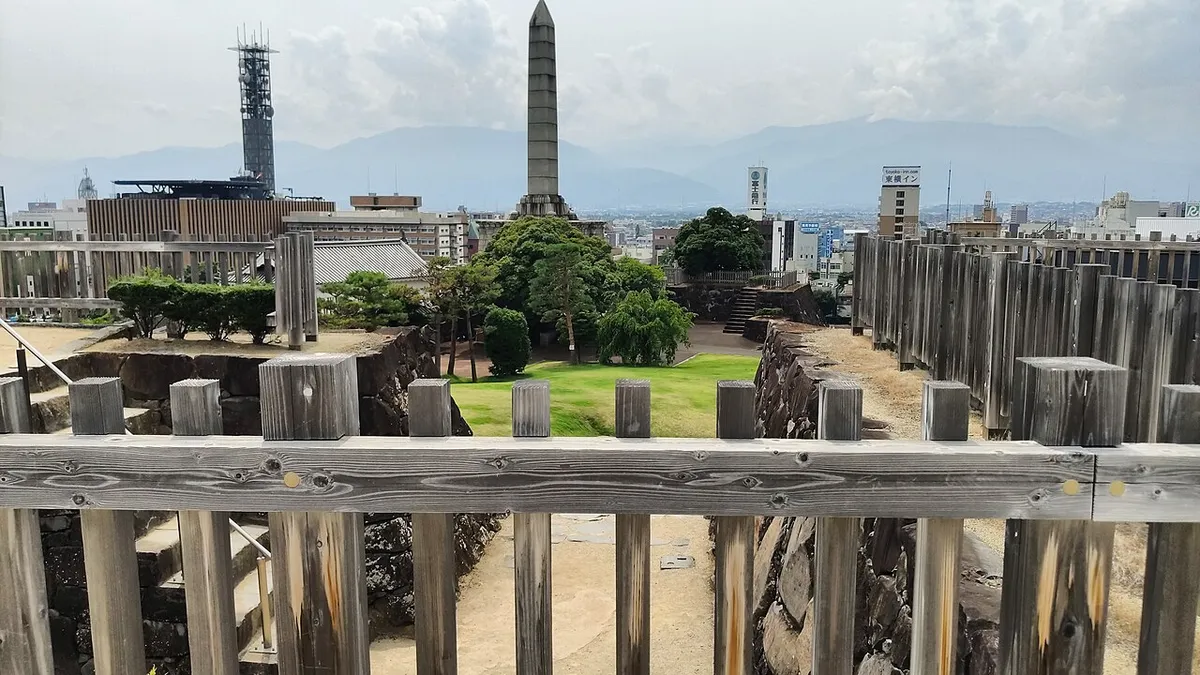
Kofu Castle

甲府城·Kofu-jo

D Tourism Score 50/100
C Defense Score 65/100

The castle Takeda Shingen never built — now a free urban park of excellent stone walls with Mount Fuji views, seconds from the train station.

#25 — 100 Famous Castles Ruins
Kofu Castle (甲府城)
Photo:Drivephotographer/Wikimedia Commons/CC0

Quick Facts

Quick Facts

Admission
Free Free
Hours
09:00 – 16:30

Last entry 16:00

Nearest Station
Kofu Station (JR Chuo Main Line)
Walk from Station
5 min walk
Time Needed
30-45 minutes

Kofu Castle ruins park (Maizuru-jo Park) is completely free. No admission fee for any part of the site.

Defense Overview

Defense Overview

Why Kofu Castle was hard to attack

This castle is hard to attack because it combines managed outer defenses on relatively level ground with enough defensive depth to slow attackers before the center.

An attacker would not simply arrive at the center on open flat ground. They would have to cross water barriers or moat lines and push through successive outer areas before the core.

Overall score

65/100

Estimated range

59–71

Confidence

B

Usable estimate with some inference

This is a site-original comparison score for learning and comparison, not a reconstruction of one historical battle.

Radar view

Terrain 10/20 Entrance 11/20 Internal 15/20 Siege 16/20 Oversight 13/20
How this estimate was built+

This estimate combines broad terrain, approach, layout, and route-control signals. It is meant to explain the castle's defensive logic in plain English, not reconstruct a single historical attack.

Terrain Advantage

How much the terrain itself seems to help: height, slope, ridges, cliffs, water edges, and limited approach directions.

10/20

Entrance Defense

How awkward and dangerous the first entry looks: gates, bridge or moat crossings, chokepoints, and forced turns.

11/20

Internal Complexity

How hard it seems to keep pushing after entry: layered baileys, depth, compartmentalization, and repeated defensive lines.

15/20

Siege Endurance

A rough sense of long-hold potential: moats, water access, space, storage plausibility, and defensive staying power.

16/20

Strategic Oversight

How much the castle appears to command nearby roads, plains, rivers, basins, harbors, or town approaches.

13/20

Why Visit

Kofu Castle is a quick, free, low-effort castle visit that rewards those passing through Kofu on the way to other destinations. The stone walls are genuinely impressive and represent high-quality construction. For Takeda Shingen enthusiasts, the Takeda Shrine and Shingen's actual fortresses in the surrounding mountains are more historically direct, but the castle provides good context for post-Takeda Kofu. The combination of free entry, station proximity, and pleasant park setting makes it worth a 45-minute detour.

Highlights

1

After Takeda Shingen: The Castle Shingen Never Had

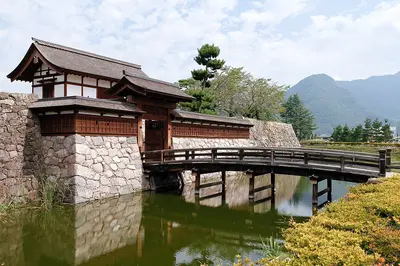
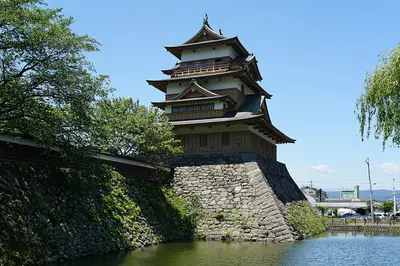
Kofu was the home base of Takeda Shingen, one of the most celebrated warlords of the Sengoku period — but Shingen himself never built a proper castle here, preferring the mountains. Kofu Castle was built after Shingen's death, when Toyotomi Hideyoshi reorganized the region following his conquest. It was then the Tokugawa who completed and used it as a strategic strongpoint on the road to Edo.
2

Beautiful Stone Walls Beside the Station

The most notable feature of Kofu Castle today is its striking stone walls — high-quality kirikomi-hagi (fitted cut stone) construction typical of the late Sengoku and early Edo periods. Rising immediately beside Kofu Station, the walls are among the finest surviving castle stonework in the Chubu region, particularly impressive given that no tower stands above them.

3

Mount Fuji Views

On clear days, the castle grounds offer excellent views of Mount Fuji rising to the south. Kofu sits in the Kofu Basin surrounded by mountains on all sides, with Fuji visible through the southern gap — a dramatic backdrop for the stone wall ruins.

Structure Details

Visitor tip

This is a quick, free stop that works well as a complement to a day in Kofu city or as a brief detour between trains. The stone walls are the highlight — walk the full circuit of the surviving walls before exploring the inner compound. The park is pleasant for a short rest and the station proximity makes it the most convenient castle visit in the Chubu region.

Castle type

Flatland castle

Flatland castle — built on a low natural rise in the Kofu Basin, surrounded by flat agricultural land

Layout type

Concentric layout

Enclosure style — layered compounds with stone walls on the central rise

Main tower

Ruins only — the main tower was demolished in the early Edo period. Stone walls, foundation platforms, and earthworks survive across the site.

Stone walls

Fitted cut-stone masonry

The stone walls of Kofu Castle are among its most impressive surviving elements — high-quality kirikomi-hagi construction with well-fitted blocks rising several meters in well-preserved sections throughout the park. The walls around the Tenjin Yagura turret platform and the main compound are particularly fine examples.

Moats

Partial moat remains survive on some sides of the castle site. The urban development of Kofu city has eliminated most of the original moat system, but the castle's inner earthwork and stone wall perimeter remains identifiable.

Key defensive features

Natural Basin Position

The Kofu Basin is surrounded by mountains on all sides, making the basin itself a naturally defensible region. The castle sat on a low rise controlling the basin's central lowlands, with the mountain wall providing strategic depth.

Cut-Stone Walls

The high-quality kirikomi-hagi stone walls represented significant defensive investment — smooth, steep faces that were extremely difficult to climb, unlike the rougher nozurazumi walls of earlier periods.

The Story of Kofu Castle

Originally built 1583 / Tokugawa Ieyasu / Asahina Yasukage
Current form 1600 / Tokugawa clan administrators
    1330

    An earlier fortification on the site is recorded, though the area's dominant power during the Sengoku period, Takeda Shingen, preferred mountain fortresses and never developed a major castle in the basin.

    1583

    After Takeda Shingen's death and Toyotomi Hideyoshi's unification, construction of a formal stone castle begins at Kofu under the direction of Hideyoshi's administrators, replacing the ad-hoc mountain castle tradition of the Takeda era.

    1600

    Following the Battle of Sekigahara, the Tokugawa take control of Kofu. The castle becomes a strategic Tokugawa strongpoint controlling the routes between eastern and western Honshu. Tokugawa family members govern from the castle.

    1705

    Control of the castle passes directly to the shogunate as a tenryo (shogunate-administered domain), administered by a succession of shogunate officials rather than hereditary lords.

    1868

    During the Boshin War, the castle briefly changes hands as both the old shogunate and the new Imperial government race to control this strategic position. Imperial forces prevail and the Meiji period begins.

In Pop Culture

TV

Furin Kazan (NHK Taiga Drama 1969)

The NHK Taiga drama dramatizing Takeda Shingen's life featured the Kofu region and Takeda clan history prominently, bringing historical attention to the area though the castle depicted is primarily the mountain fortresses of the Takeda era.

Did You Know?

  • Takeda Shingen famously said 'People are castles, people are stone walls, people are moats' — suggesting he valued loyal warriors over stone fortifications. His successors clearly disagreed, building the stone castle he never constructed.
  • The castle is officially called 'Maizuru-jo' (Dancing Crane Castle) — the name Kofu Castle is the modern designation. The crane motif appears in the castle's design and the park's landscaping.
  • Kofu city is the capital of Yamanashi Prefecture and the gateway to the wine country around the city — the castle visit pairs well with wine tasting at one of the many wineries in the surrounding mountains.
  • The Kofu Basin's flat, fertile land was among the most agriculturally productive areas of medieval Japan, which explains why the Takeda clan based their power here despite preferring mountain castles for their headquarters.

Score Breakdown

Tourism Score

D 50/100
  • Accessibility 17 /20
  • Foreign-Friendly 9 /20
  • Historical Value 10 /20
  • Visual Impact 8 /20
  • Facilities 6 /20

Defense Score

C 65/100
  • Terrain Advantage 10 /20
  • Entrance Defense 11 /20
  • Internal Complexity 15 /20
  • Siege Endurance 16 /20
  • Strategic Oversight 13 /20

Planning Your Visit

Best Time to Visit

Cherry blossoms in April, autumn foliage in November. Clear autumn and winter days offer the best Mount Fuji views.

Time Needed

30-45 minutes

Insider Tip

After the castle, walk five minutes to the Takeda Shrine (built on the site of Shingen's actual residence) for the Takeda clan connection — the shrine museum has genuine Takeda-era artifacts. Then consider the short trip to Enzan for Takeda Shingen's grave and the spectacular mountain scenery of eastern Yamanashi.

Map

Getting There

Nearest station: Kofu Station (JR Chuo Main Line)
Walk from station: 5 min walk
Accessible with a JR Pass

Admission

Free

Kofu Castle ruins park (Maizuru-jo Park) is completely free. No admission fee for any part of the site.

Opening Hours

Open09:00 – 16:30
Last entry16:00

Buildings: 9:00–16:30. Park grounds open year-round, free.

Facilities

  • – English guides
  • – Audio guide
  • ✓ Wheelchair access
  • ✓ Restrooms
  • – Gift shop
  • ✓ Food nearby

Nearby Castles

Featured in collections

FAQ

Frequently Asked Questions

How do I get to Kofu Castle?

The nearest station is Kofu Station (JR Chuo Main Line). From there it is about 5 minutes on foot.

How much does Kofu Castle cost to enter?

Kofu Castle is free to enter.

Is Kofu Castle worth visiting?

Kofu Castle is a quick, free, low-effort castle visit that rewards those passing through Kofu on the way to other destinations. The stone walls are genuinely impressive and represent high-quality construction. For Takeda Shingen enthusiasts, the Takeda Shrine and Shingen's actual fortresses in the surrounding mountains are more historically direct, but the castle provides good context for post-Takeda Kofu. The combination of free entry, station proximity, and pleasant park setting makes it worth a 45-minute detour.

What are the opening hours of Kofu Castle?

09:00 to 16:30, last entry 16:00.

How long should I spend at Kofu Castle?

Plan for about 30-45 minutes, depending on how closely you want to explore the grounds.