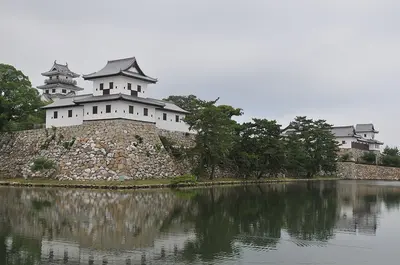
Marugame Castle

丸亀城·Marugame-jo

C Tourism Score 65/100
B Defense Score 73/100

Tiny tower, titanic walls — Marugame Castle's stacked stone masonry is some of Japan's finest, at a price that's almost embarrassingly cheap.

#78 — 100 Famous Castles Surviving
Marugame Castle (丸亀城)
Photo:Toto-tarou/Wikimedia Commons/CC BY-SA 3.0

Quick Facts

Quick Facts

Admission
¥400

¥0

Hours
09:00 – 16:30

Last entry 16:00

Nearest Station
Marugame Station (JR Yosan Line)
Walk from Station
10 min walk
Time Needed
1-1.5 hours

Admission increased to ¥400 from April 2024. Children (junior high and under) free. Castle grounds are free; fee is for the tower.

Defense Overview

Defense Overview

Why Marugame Castle was hard to attack

This castle is hard to attack because it combines a raised core with defended outer space with enough defensive depth to slow attackers before the center.

An attacker would not get a simple direct approach to the center. They would have to cross water barriers or moat lines, approach through at least some constrained entry space, and push through successive outer areas before the core.

Overall score

73/100

Estimated range

67–79

Confidence

A

Strong multi-source support

This is a site-original comparison score for learning and comparison, not a reconstruction of one historical battle.

Radar view

Terrain 16/20 Entrance 16/20 Internal 16/20 Siege 13/20 Oversight 12/20
How this estimate was built+

This estimate combines broad terrain, approach, layout, and route-control signals. It is meant to explain the castle's defensive logic in plain English, not reconstruct a single historical attack.

Terrain Advantage

How much the terrain itself seems to help: height, slope, ridges, cliffs, water edges, and limited approach directions.

16/20

Entrance Defense

How awkward and dangerous the first entry looks: gates, bridge or moat crossings, chokepoints, and forced turns.

16/20

Internal Complexity

How hard it seems to keep pushing after entry: layered baileys, depth, compartmentalization, and repeated defensive lines.

16/20

Siege Endurance

A rough sense of long-hold potential: moats, water access, space, storage plausibility, and defensive staying power.

13/20

Strategic Oversight

How much the castle appears to command nearby roads, plains, rivers, basins, harbors, or town approaches.

12/20

Why Visit

Marugame Castle is worth a visit precisely because of its contradictions: one of Japan's smallest original towers sitting atop some of its most spectacular stone walls. The low admission price and easy train access from Takamatsu make it a natural add-on to any Shikoku itinerary. The climb through four tiers of stone walls is a genuinely satisfying physical experience, and the views over the Seto Inland Sea area are lovely.

Highlights

1

Japan's Highest Stone Walls

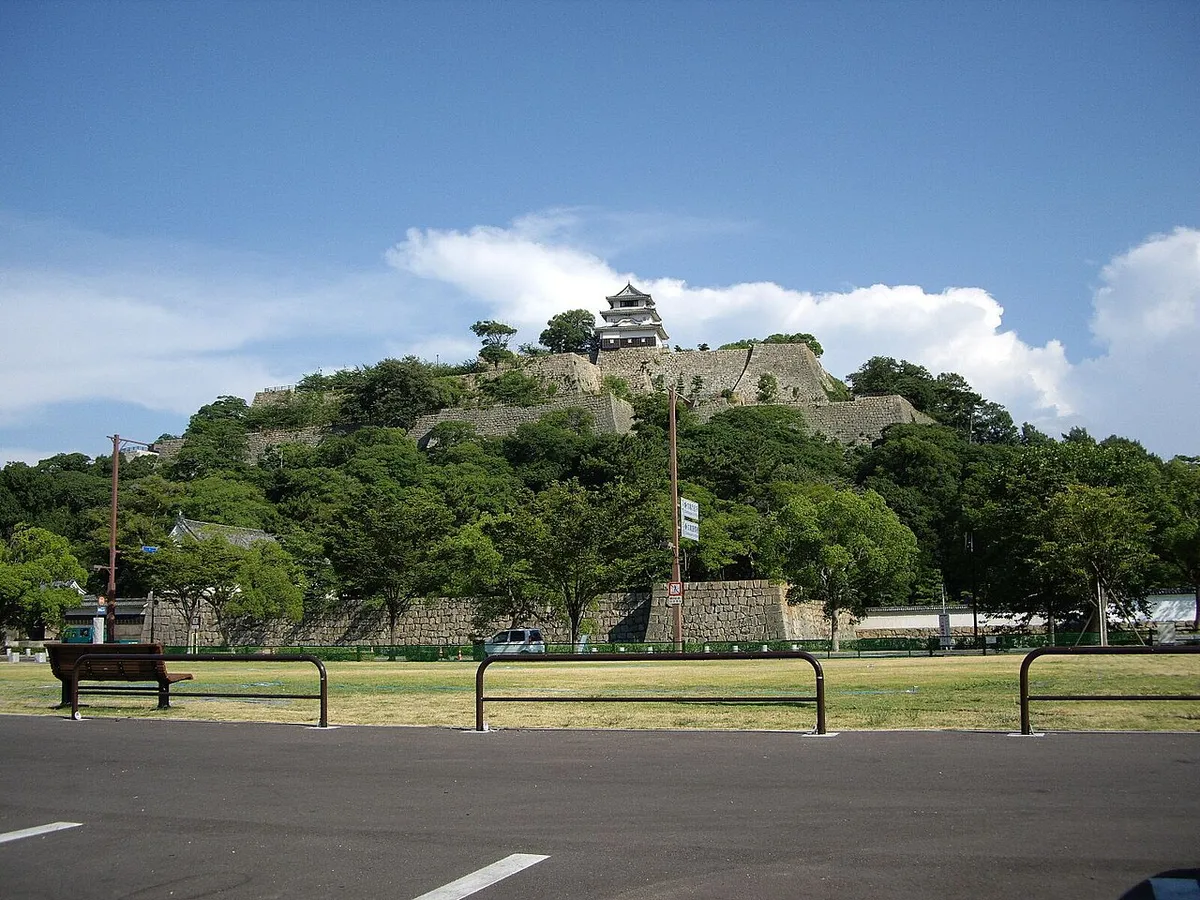
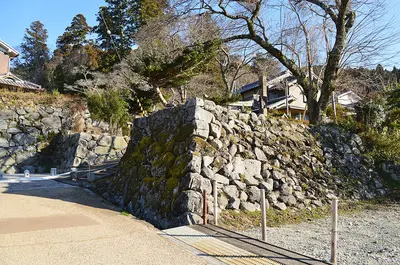
Marugame Castle may have one of Japan's smallest original towers, but it sits atop some of Japan's most impressive stone walls — reaching nearly 60 meters in total height from base to tower roof, with the stone walls alone rising up to 22 meters. The four-layered walls, each built on top of the previous one, create a dramatic staircase effect of stacked stone that is considered among the finest stonework in Japan.
2

The Smallest Original Tower, the Grandest Foundation

The contrast is striking: one of Japan's tiniest original castle towers (three floors, about 15 meters tall) perched on walls that dwarf almost everything else in the country. Marugame Castle proves that a great castle is not just about the tower — the engineering of the approach, the stone walls, and the visual drama of the ascent are what make it memorable.

3

An Original Tower for ¥200

At just ¥200 admission, Marugame Castle is one of the best-value original castle towers in Japan. You're paying less than a cup of coffee to walk inside a genuine 17th-century original wooden castle tower — one of only 12 in the world.

Structure Details

Visitor tip

The climb to the top is the experience here — take it slowly and appreciate each level of stone walls as you ascend. The tower itself is small and the interior is sparse, but the views from the top over the Sanuki Plain and toward the Seto Inland Sea are lovely. On clear days you can see across to Honshu.

Castle type

Hill castle

Hill-top flatland castle — built on Kameyama Hill rising from the flat Sanuki Plain, with the Seto Inland Sea visible in the distance

Layout type

Linked compound layout

Compound style — multiple walled compounds stacked up the hillside

Main tower

Original wooden tenshu (main keep) — one of 12 surviving original castle towers in Japan. Japan's smallest surviving original main tower.

15m3 floors, 1 below

Stone walls

Natural stone stacking

The four successive layers of stone walls are Marugame Castle's defining feature. Each layer was built at a different period in the castle's history, creating a stratified record of Edo-period stone masonry. The total height from base to tower roof approaches 60 meters — among the tallest stone wall complexes in Japan — despite the small tower on top.

Moats

A moat surrounds the base of Kameyama Hill. The stone-lined inner moat is well preserved and clearly visible from the main approach.

Key defensive features

Four-Layered Stone Walls

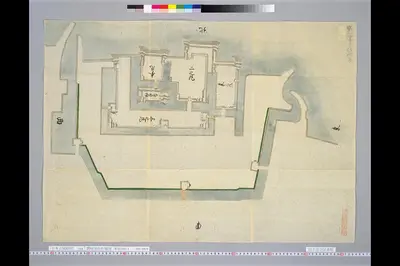
The four tiers of stone walls — each set back slightly from the one below — create a massive visual impact and a formidable physical barrier. An attacker who scaled the first wall would face a second wall immediately behind it, then a third, then a fourth.

Narrow, Steep Approach

The path from the outer gate up through the compounds is steep and narrow. The combination of height, confinement, and overlooking walls from multiple directions made this approach extremely dangerous for any force trying to fight its way up.

The Story of Marugame Castle

Originally built 1597 / Ikoma Chikamasa
Current form 1660 / Kyogoku Takatomo (reconstruction after 1657 lightning strike)
    1597

    Ikoma Chikamasa, lord of Sanuki Province (modern Kagawa), begins construction of a castle at Kameyama Hill to control the sea routes of the Seto Inland Sea.

    1615

    After the Tokugawa shogunate issues regulations restricting castles to one per domain, many subsidiary castles are demolished. Marugame survives because it becomes the main castle of its domain.

    1641

    The Kyogoku clan takes over Marugame domain. They embark on major improvements to the castle, adding more stone walls and refining the defensive compound layout.

    1657

    Lightning strikes the main tower and destroys it. The Kyogoku clan immediately begins reconstruction.

    1660

    The reconstructed main tower is completed — this is the tower that stands today. It is built in a traditional style true to the original, making it effectively the authentic expression of the castle as originally intended.

    1869

    The Meiji government takes control of Marugame Castle. The building structures are gradually abandoned but the tower survives through neglect rather than deliberate preservation.

    1950

    Marugame Castle is designated an Important Cultural Property, beginning a formal preservation program that stabilizes the structure and begins regular maintenance.

Did You Know?

  • Marugame Castle is often called the 'stone wall castle' (ishigaki no shiro) because the four-tiered walls are so dramatically disproportionate to the small tower that sits on top — the walls are the attraction, not the tower.
  • The city of Marugame is the self-proclaimed 'uchiwa (Japanese round fan) capital of Japan' — over 90% of Japan's uchiwa fans are produced here, and cheap, beautiful fans are sold everywhere near the castle.
  • The tower was rebuilt in 1660 after a lightning strike destroyed the original. Because it was rebuilt so faithfully to the original design using traditional techniques, it is counted among Japan's original 12 surviving towers.
  • On very clear days in winter, visitors at the top of the castle can see the Seto Ohashi Bridge — one of the world's longest road-rail bridges — connecting Shikoku to Honshu across the Seto Inland Sea.

Score Breakdown

Tourism Score

C 65/100
  • Accessibility 14 /20
  • Foreign-Friendly 9 /20
  • Historical Value 17 /20
  • Visual Impact 14 /20
  • Facilities 11 /20

Defense Score

B 73/100
  • Terrain Advantage 16 /20
  • Entrance Defense 16 /20
  • Internal Complexity 16 /20
  • Siege Endurance 13 /20
  • Strategic Oversight 12 /20

Planning Your Visit

Best Time to Visit

Spring cherry blossoms fill the castle grounds and the walls look spectacular. Autumn is quieter and the light is good for photography. Avoid midsummer — the climb is hot.

Time Needed

1-1.5 hours

Insider Tip

After the castle, walk 10 minutes to the nearby covered shopping arcade (shotengai) and try local Sanuki udon — Kagawa Prefecture is Japan's udon heartland, and even small shops here serve exceptional noodles for ¥300–400. Marugame is also famous for producing most of Japan's uchiwa (round fans) — pick up a beautiful hand-painted fan as a far more practical souvenir than the usual tourist fare.

Map

Getting There

Nearest station: Marugame Station (JR Yosan Line)
Walk from station: 10 min walk
Parking: Free parking available near the castle grounds.
Accessible with a JR Pass

Admission

Adult¥400
ChildFree

Admission increased to ¥400 from April 2024. Children (junior high and under) free. Castle grounds are free; fee is for the tower.

Opening Hours

Open09:00 – 16:30
Last entry16:00

Open year-round. No regular closures.

Facilities

  • – English guides
  • – Audio guide
  • – Wheelchair access
  • ✓ Restrooms
  • – Gift shop
  • ✓ Food nearby

Nearby Castles

Featured in collections

FAQ

Frequently Asked Questions

How do I get to Marugame Castle?

The nearest station is Marugame Station (JR Yosan Line). From there it is about 10 minutes on foot.

How much does Marugame Castle cost to enter?

Adult admission is ¥400 and child admission is ¥0.

Is Marugame Castle worth visiting?

Marugame Castle is worth a visit precisely because of its contradictions: one of Japan's smallest original towers sitting atop some of its most spectacular stone walls. The low admission price and easy train access from Takamatsu make it a natural add-on to any Shikoku itinerary. The climb through four tiers of stone walls is a genuinely satisfying physical experience, and the views over the Seto Inland Sea area are lovely.

What are the opening hours of Marugame Castle?

09:00 to 16:30, last entry 16:00.

How long should I spend at Marugame Castle?

Plan for about 1-1.5 hours, depending on how closely you want to explore the grounds.