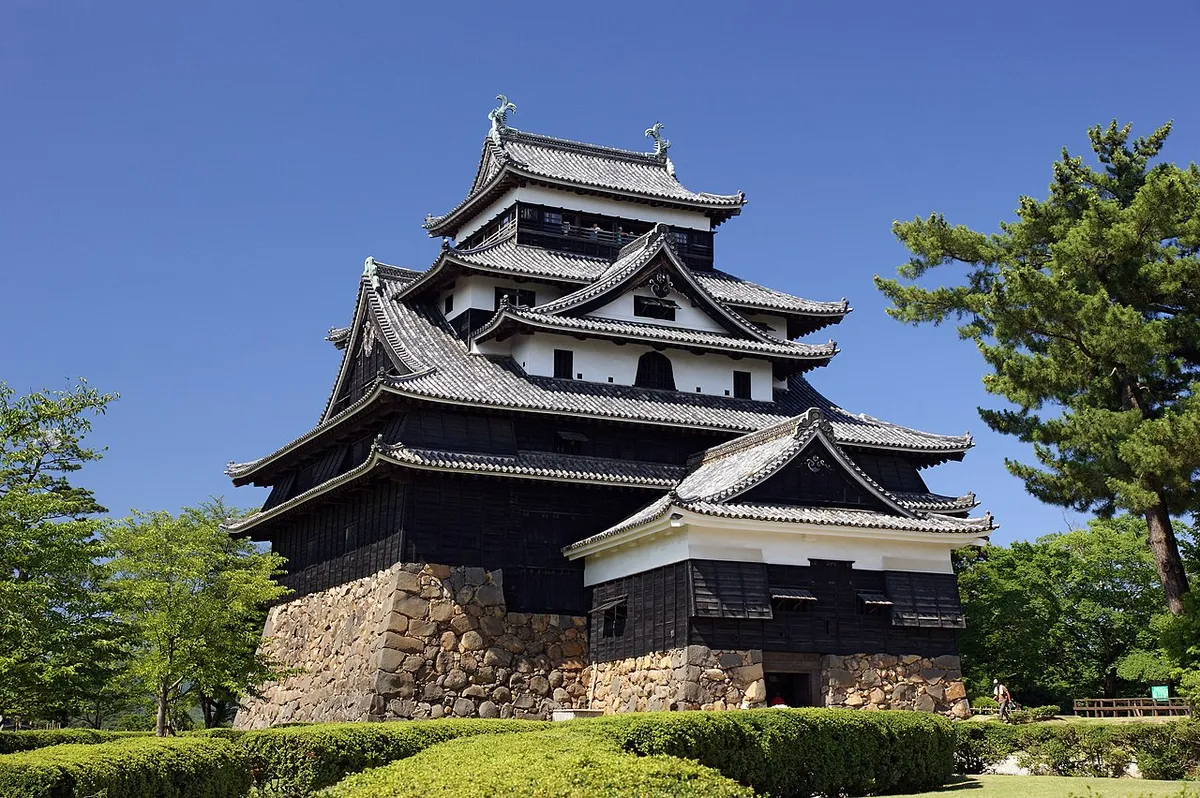
Matsue Castle

松江城·Matsue-jo

B Tourism Score 74/100
B Defense Score 74/100

Japan's newest National Treasure castle — dark, atmospheric, and best arrived at by boat through the city's ancient canal network.

#64 — 100 Famous Castles Surviving
Matsue Castle (松江城)
Photo:663highland/Wikimedia Commons/CC BY 2.5

Quick Facts

Quick Facts

Admission
¥800

¥400

Hours
08:30 – 18:00

Last entry 17:30

Nearest Station
Matsue Station (JR San'in Main Line)
Walk from Station
25 min walk

Bus also available

Time Needed
2-3 hours (add 1 hour for the Horikawa boat tour)

Admission increased from April 2025. Further increase planned for July 2026 (Adult ¥1,200, children free). Combined tickets with Lafcadio Hearn Memorial Museum and other city attractions available.

Defense Overview

Defense Overview

Why Matsue Castle was hard to attack

This castle is hard to attack because it combines a raised core with defended outer space with enough defensive depth to slow attackers before the center.

An attacker would not get a simple direct approach to the center. They would have to cross water barriers or moat lines, approach through at least some constrained entry space, and push through successive outer areas before the core.

Overall score

74/100

Estimated range

68–80

Confidence

A

Strong multi-source support

This is a site-original comparison score for learning and comparison, not a reconstruction of one historical battle.

Radar view

Terrain 16/20 Entrance 16/20 Internal 16/20 Siege 13/20 Oversight 13/20
How this estimate was built+

This estimate combines broad terrain, approach, layout, and route-control signals. It is meant to explain the castle's defensive logic in plain English, not reconstruct a single historical attack.

Terrain Advantage

How much the terrain itself seems to help: height, slope, ridges, cliffs, water edges, and limited approach directions.

16/20

Entrance Defense

How awkward and dangerous the first entry looks: gates, bridge or moat crossings, chokepoints, and forced turns.

16/20

Internal Complexity

How hard it seems to keep pushing after entry: layered baileys, depth, compartmentalization, and repeated defensive lines.

16/20

Siege Endurance

A rough sense of long-hold potential: moats, water access, space, storage plausibility, and defensive staying power.

13/20

Strategic Oversight

How much the castle appears to command nearby roads, plains, rivers, basins, harbors, or town approaches.

13/20

Why Visit

Matsue Castle delivers an experience that more famous castles cannot: genuine atmosphere. The water city setting, the Horikawa boat tour that circles the castle moat, the preserved samurai district nearby, and the literary ghost of Lafcadio Hearn all combine to make Matsue one of Japan's most evocative destinations. The castle tower itself is original and recently confirmed as a National Treasure. This is Japan off the beaten path at its best.

Highlights

1

A Living Fortress in a Water City

Matsue is built around water — the castle sits near the shores of Lake Shinji, and an extensive canal system (Horikawa) threads through the city. Arriving at the castle by traditional flat-bottomed boat (which ducks under low stone bridges throughout the tour) is one of Japan's most atmospheric arrival experiences.
2

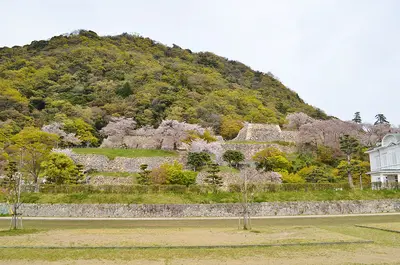
The Fifth National Treasure Castle

In 2015, Matsue Castle's main tower was designated a National Treasure — the fifth and most recently added to the exclusive list. The designation came after historians discovered a document in the castle's ceiling that confirmed the original construction date, settling a long debate and proving its authenticity.

3

Lafcadio Hearn's Beloved Castle

The Greek-Irish writer Lafcadio Hearn (known in Japan as Koizumi Yakumo) lived in Matsue in the 1890s and fell deeply in love with the city — particularly the castle and its surrounding landscape. His writings about Matsue helped introduce Japan's ghost stories and folklore to Western audiences. His former residence is a short walk from the castle.

Structure Details

Visitor tip

Matsue Castle is best experienced as part of the Horikawa canal boat tour — small flat-bottomed boats cruise the castle moat and city canals, with passengers ducking flat under low stone bridges at several points. The tour takes about 50 minutes and gives you a unique water-level perspective on the castle's setting. After the boat, enter the castle grounds and climb the tower for views over the city and Lake Shinji.

Castle type

Hill castle

Hill-top flatland castle — built on a low hill in a water-rich landscape, with the city's canals serving as extended defensive moats

Layout type

Linked compound layout

Compound style — multiple towers and structures forming a connected defensive complex

Main tower

Original wooden tenshu (main keep) — one of 12 surviving original towers in Japan, designated a National Treasure in 2015

30m5 floors, 1 below

Stone walls

Natural stone stacking

The stone walls have a characteristically dark, slightly rough appearance. The walls around the main tower have been well preserved and give a strong sense of the original fortress character.

Moats

The castle moat connects to Matsue's Horikawa canal system, allowing traditional boats to navigate around the castle as part of a city-wide sightseeing tour. This living use of the historical water system is unique in Japan.

Key defensive features

Water Network Defense

The castle's moat connects to an extensive canal system that covers much of the city — effectively extending the water defense outward. An attacking army would have to navigate multiple canals before even reaching the castle hill.

Double-Doored Storage Room

Inside the tower, a special double-door fire-resistant storage room was designed to protect weapons and supplies from fire. The thick walls and two-door design could slow the spread of flames long enough to save critical stores.

The Story of Matsue Castle

Originally built 1611 / Horio Yoshiharu
Current form 1611 / Horio Yoshiharu
National Treasure
    1607

    Horio Yoshiharu, who had fought at the Battle of Sekigahara on the Tokugawa side, receives Izumo Province (modern Shimane) as his reward. He immediately begins planning a new castle for his capital at Matsue.

    1611

    Matsue Castle is completed after five years of construction. It is the last castle built in Japan before the Tokugawa shogunate issues strict regulations limiting castle construction and modification.

    1638

    The Matsudaira clan — close relatives of the Tokugawa — takes over Matsue domain and rules for the rest of the Edo period. Their most famous lord, Matsudaira Harusato (known as 'Fumai'), becomes celebrated for his mastery of the tea ceremony.

    1871

    The Meiji government abolishes feudal domains. The castle is sold at auction — most of the buildings are demolished, but the main tower is purchased by a group of concerned citizens for 180 yen.

    1903

    A preservation effort keeps the tower standing as the city develops around it. The castle becomes a beloved local landmark.

    1935

    The main tower is designated an Important Cultural Property, providing legal protection and government support for its preservation.

    2015

    Historians discover a document hidden in the ceiling of the castle confirming its original construction date, resolving decades of debate. The government upgrades Matsue Castle's designation to National Treasure — the first new castle to receive this status in over 60 years.

In Pop Culture

TV

Lafcadio Hearn's 'Glimpses of Unfamiliar Japan' (1894)

While not a media appearance, Hearn's influential book — which has inspired numerous documentaries and NHK programs — vividly describes Matsue Castle and its surroundings, shaping how many Western visitors perceive the castle.

Did You Know?

  • The document that secured Matsue Castle's National Treasure designation was found hidden inside the ceiling of the first floor in 2009. Written in 1608, it confirmed the exact construction timeline and builder, ending decades of scholarly debate.
  • Matsue is called the 'City of Water' — the castle moat connects to a canal network that you can still navigate by traditional flat-bottomed boat, ducking under low bridges as boats have done for 400 years.
  • The castle's top floor offers a view of both Lake Shinji (the seventh-largest lake in Japan) to the west and Lake Nakaumi to the east — you can see two large lakes simultaneously from a single vantage point.
  • Matsue Castle holds a special nightly autumn illumination event called 'Castle Night' where the entire tower and grounds are lit dramatically. The reflection in the moat is considered one of the most beautiful castle-light displays in western Japan.

Score Breakdown

Tourism Score

B 74/100
  • Accessibility 12 /20
  • Foreign-Friendly 13 /20
  • Historical Value 19 /20
  • Visual Impact 17 /20
  • Facilities 13 /20

Defense Score

B 74/100
  • Terrain Advantage 16 /20
  • Entrance Defense 16 /20
  • Internal Complexity 16 /20
  • Siege Endurance 13 /20
  • Strategic Oversight 13 /20

Planning Your Visit

Best Time to Visit

Autumn (October–November) for the illumination events and fall foliage reflected in the moat. Cherry blossom season (late March to early April) is also beautiful. The boat tour runs year-round but is most comfortable in spring and autumn.

Time Needed

2-3 hours (add 1 hour for the Horikawa boat tour)

Insider Tip

Take the Horikawa canal boat tour before entering the castle grounds — it sets the scene perfectly and the perspective from water level is something you cannot get any other way. Then walk through the Shiomi Nawate samurai residence street on your way back to the station — the preserved samurai houses here are among the best in Japan.

Map

Getting There

Nearest station: Matsue Station (JR San'in Main Line)
Walk from station: 25 min walk
Bus: Lake Line sightseeing bus from Matsue Station stops at the castle. Also possible by boat via Horikawa canal cruise — a highly recommended approach.
Parking: Parking available near the castle grounds.
Accessible with a JR Pass

Admission

Adult¥800
Child¥400

Admission increased from April 2025. Further increase planned for July 2026 (Adult ¥1,200, children free). Combined tickets with Lafcadio Hearn Memorial Museum and other city attractions available.

Opening Hours

Open08:30 – 18:00
Last entry17:30

April–September open until 18:00 (last entry 17:30). October–March open until 17:00 (last entry 16:30).

Facilities

  • – English guides
  • ✓ Audio guide
  • – Wheelchair access
  • ✓ Restrooms
  • ✓ Gift shop
  • ✓ Food nearby

Audio guide languages: English, Japanese

Nearby Castles

Featured in collections

FAQ

Frequently Asked Questions

How do I get to Matsue Castle?

The nearest station is Matsue Station (JR San'in Main Line). From there it is about 25 minutes on foot. Lake Line sightseeing bus from Matsue Station stops at the castle. Also possible by boat via Horikawa canal cruise — a highly recommended approach.

How much does Matsue Castle cost to enter?

Adult admission is ¥800 and child admission is ¥400.

Is Matsue Castle worth visiting?

Matsue Castle delivers an experience that more famous castles cannot: genuine atmosphere. The water city setting, the Horikawa boat tour that circles the castle moat, the preserved samurai district nearby, and the literary ghost of Lafcadio Hearn all combine to make Matsue one of Japan's most evocative destinations. The castle tower itself is original and recently confirmed as a National Treasure. This is Japan off the beaten path at its best.

What are the opening hours of Matsue Castle?

08:30 to 18:00, last entry 17:30.

How long should I spend at Matsue Castle?

Plan for about 2-3 hours (add 1 hour for the Horikawa boat tour), depending on how closely you want to explore the grounds.