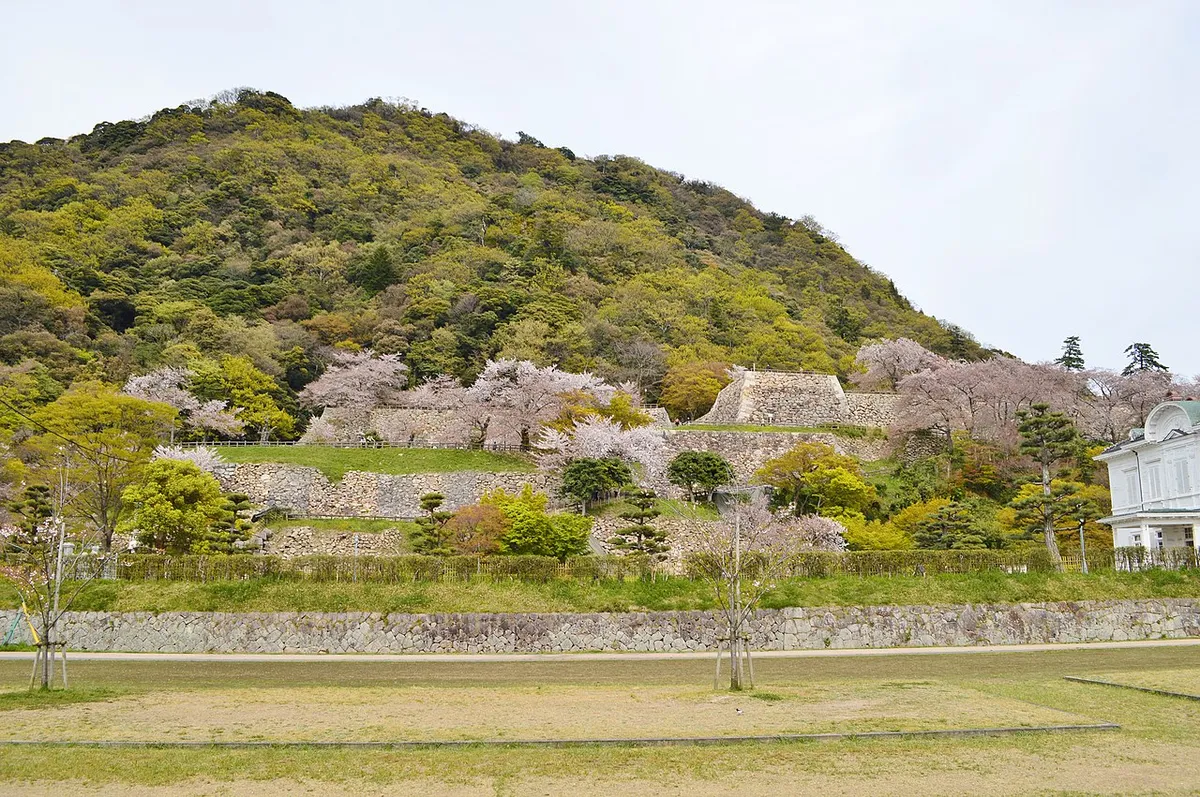
Tottori Castle

鳥取城·Tottori-jo

D Tourism Score 42/100
A Defense Score 88/100

Where Hideyoshi's most ruthless siege unfolded — a dramatic mountain ruin whose history is written in starvation, not stone.

#63 — 100 Famous Castles Ruins
Tottori Castle (鳥取城)
Photo:Saigen Jiro/Wikimedia Commons/CC0

Quick Facts

Quick Facts

Admission
Free Free
Hours
00:00 – 23:59
Nearest Station
Tottori Station (JR San'in Main Line)
Walk from Station
15 min walk

Bus also available

Time Needed
1.5-2 hours (including the summit hike)

The castle ruins and Jinpukaku villa (exterior) are free. The Jinpukaku villa museum interior charges ¥200 for adults. A small exhibition pavilion (Kyukaku) near the castle entrance charges ¥100.

Defense Overview

Defense Overview

Why Tottori Castle was hard to attack

This castle is hard to attack because it combines high ground and difficult natural access with enough defensive depth to slow attackers before the center.

An attacker would first have to fight the site itself before reaching the main defenses. They would have to cross water barriers or moat lines, approach through at least some constrained entry space, push through successive outer areas before the core, and do so under a position that also watches the surrounding routes.

Overall score

88/100

Estimated range

82–94

Confidence

B

Usable estimate with some inference

This is a site-original comparison score for learning and comparison, not a reconstruction of one historical battle.

Radar view

Terrain 19/20 Entrance 18/20 Internal 16/20 Siege 16/20 Oversight 19/20
How this estimate was built+

This estimate combines broad terrain, approach, layout, and route-control signals. It is meant to explain the castle's defensive logic in plain English, not reconstruct a single historical attack.

Terrain Advantage

How much the terrain itself seems to help: height, slope, ridges, cliffs, water edges, and limited approach directions.

19/20

Entrance Defense

How awkward and dangerous the first entry looks: gates, bridge or moat crossings, chokepoints, and forced turns.

18/20

Internal Complexity

How hard it seems to keep pushing after entry: layered baileys, depth, compartmentalization, and repeated defensive lines.

16/20

Siege Endurance

A rough sense of long-hold potential: moats, water access, space, storage plausibility, and defensive staying power.

16/20

Strategic Oversight

How much the castle appears to command nearby roads, plains, rivers, basins, harbors, or town approaches.

19/20

Why Visit

Tottori Castle's physical ruins are good but not exceptional — the main reason to visit is historical imagination: standing on the isolated summit and understanding what Hideyoshi's siege meant for the thousands trapped inside. The views over the Tottori Basin and toward the Japan Sea coast are genuinely lovely, and the combination of the Meiji-era Jinpukaku villa at the base with the Sengoku ruins above gives the site unusual historical layering. Combine with a visit to the Tottori Sand Dunes — Japan's most dramatic coastal landscape — which are easily reached from the same city.

Highlights

1

Scene of Japan's Most Brutal Siege

In 1581, Toyotomi Hideyoshi besieged Tottori Castle not by storming its walls but by buying up all the rice in the surrounding region before the siege began, then encircling the castle with a double perimeter of earthworks and patrols. The garrison, swelled by thousands of refugees who had taken shelter inside, ran out of food within months. What followed was recorded by contemporaries with horror: soldiers and civilians ate horses, then leather, then grass, then corpses. When the castle finally surrendered after 200 days, survivors were too weak to walk.
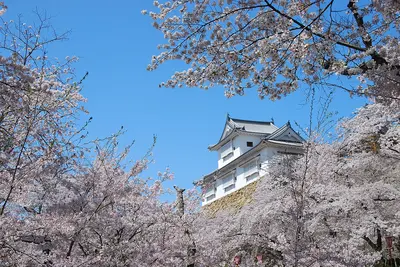
2

Dramatic Mountain Position

Tottori Castle climbs a steep isolated mountain (Kyusho-zan, 263 meters) that rises abruptly from the flat Tottori Basin. The mountain-top summit ruins, accessible by a 30-minute hike, give sweeping views across the city to the Japan Sea and — on clear days — the Tottori Sand Dunes on the coast. The visual contrast between the gentle city below and the stone ruins above is dramatic.

3

The Jinpukaku Villa Below

At the mountain's base, the elegant Western-style Jinpukaku villa (1907) was built to host the Meiji Emperor during an inspection tour. This unusual pairing — Edo-period mountain castle ruins above, a delicate European-influenced wooden villa below — creates one of the more architecturally eclectic castle sites in western Japan.

Structure Details

Visitor tip

Start at the castle park entrance near the Jinpukaku villa and take the stone-paved path up through the Ninomaru ruins. The hike to the summit takes 25–30 minutes. The views from the top over the Tottori city and coastline are the highlight — bring binoculars if you have them. The mountain ruins are better appreciated with some knowledge of the 1581 siege; the atmosphere of the isolated summit takes on a different quality when you understand what happened here.

Castle type

Mountain castle

Mountain castle — built on 263-meter Kyusho-zan, rising steeply from the Tottori Basin, with a lower compound section (Ninomaru) at the mountain's base

Layout type

Linked compound layout

Compound style — upper mountain summit compounds (Honmaru) and lower base compound (Ninomaru) connected by a steep approach path

Main tower

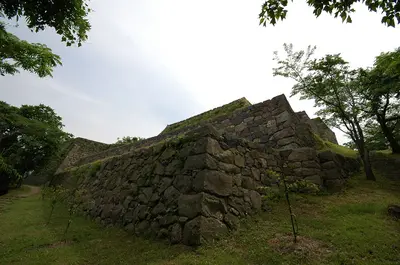
Stone ruins only — all wooden structures have been lost. Extensive stone walls survive on both the mountain summit and the lower compound, including the well-preserved Ninomaru stone wall foundations.

Stone walls

Natural stone stacking

The stone walls at Tottori Castle survive in varying states of preservation on the mountain's multiple terraces. The lower Ninomaru area preserves particularly well-defined stone wall sections that give a clear sense of the compound layout. Upper summit walls are more fragmentary but visible across the broad hilltop.

Key defensive features

Isolated Mountain Position

Kyusho-zan rises sharply and in isolation from the surrounding flat basin — it is not part of a range but a standalone mountain, making approach from any direction a steep visible climb. The 263-meter elevation provides commanding views over all surrounding terrain.

Sendai River Water Barrier

The Sendai River flowed along the northern base of the mountain, creating a natural water barrier that complicated any approach from that direction. The combination of river, steep slopes, and stone walls made the castle exceptionally difficult to invest on a short timescale.

Self-Sufficient Water Supply

The castle maintained wells on the mountain summit — a critical defensive feature for long sieges. Ironically, as the 1581 siege demonstrated, water was never the castle's vulnerability. It was food.

The Story of Tottori Castle

Originally built 1545 / Yamana Nakamura (Yamana clan retainer)
Current form 1591 / Miyabe Keijun (Toyotomi-era expansion)
    1545

    A mountain fort is established on Kyusho-zan by the Yamana clan, then dominant lords of the San'in region. The position overlooking Tottori Basin and the Japan Sea coast makes it a natural headquarters for the region.

    1570

    The Yamana clan's power declines as Oda Nobunaga rises. Tottori Castle becomes a focal point of the conflict between local powers and Nobunaga's expanding coalition, changing hands multiple times.

    1581

    Toyotomi Hideyoshi, acting on Nobunaga's orders, lays siege to Tottori Castle. By purchasing all available rice in the region before investing the castle, he creates a food crisis of devastating proportions. After 200 days, the garrison commander Kikkawa Tsuneie surrenders and commits seppuku. Contemporary accounts describe scenes of mass starvation that shocked even hardened Sengoku warriors.

    1591

    Under Toyotomi rule, Miyabe Keijun carries out major construction works, expanding the stone wall system and developing the lower Ninomaru compound. The castle takes on a more refined military architecture reflecting the building standards of the late Sengoku period.

    1617

    The Ikeda clan takes control of Tottori domain under Tokugawa authority, making further improvements to the castle. Under Ikeda rule, Tottori prospers as a regional administrative center, and the castle is refined rather than reinforced.

    1871

    Abolition of feudal domains under the Meiji government leads to abandonment of the castle. Wooden structures are dismantled over subsequent years, leaving the stone walls alone.

Did You Know?

  • The 1581 starvation siege of Tottori is one of the most documented events in Sengoku history precisely because of its horror — even Hideyoshi's own chroniclers recorded the suffering with evident discomfort. It became a byword for the ruthlessness of total economic warfare.
  • Kikkawa Tsuneie, the castle commander who surrendered and committed seppuku in 1581, is remembered in Tottori with considerable local respect — his sacrifice, allowing the surviving garrison and civilians to be spared, is seen as an act of great personal courage and responsibility.
  • Tottori Castle is sometimes called 'Kiri-no-shiro' (Castle of Mist) because the mountain summit often disappears into low cloud — a poetic nickname shared with Nihonmatsu Castle in Fukushima, which sometimes creates confusion in historical texts.
  • The Tottori Sand Dunes — Japan's largest coastal dune system and a major tourist attraction — are visible from the castle summit on clear days. The combination of mountain castle ruins and Pacific coastal dunes in the same view is unique in Japan.

Score Breakdown

Tourism Score

D 42/100
  • Accessibility 9 /20
  • Foreign-Friendly 7 /20
  • Historical Value 14 /20
  • Visual Impact 8 /20
  • Facilities 4 /20

Defense Score

A 88/100
  • Terrain Advantage 19 /20
  • Entrance Defense 18 /20
  • Internal Complexity 16 /20
  • Siege Endurance 16 /20
  • Strategic Oversight 19 /20

Planning Your Visit

Best Time to Visit

Autumn (October–November) for clear mountain views and comfortable hiking temperatures. Spring cherry blossom season (early to mid-April in this region) is also pleasant. The summit is exposed in winter and hot in summer.

Time Needed

1.5-2 hours (including the summit hike)

Insider Tip

The best view of the castle in its mountain setting is not from the summit but from the flat area of the Jinpukaku villa grounds — look up at the stone walls climbing the steep hillside above the Meiji villa to appreciate the verticality of the site. The contrast between the elegant European-influenced architecture and the rough mountain ruins above makes for an excellent photograph.

Map

Getting There

Nearest station: Tottori Station (JR San'in Main Line)
Walk from station: 15 min walk
Bus: Loop buses from Tottori Station reach the castle area. Bus stop 'Jinpukaku-mae' is at the castle entrance. The loop bus also serves the Tottori Sand Dunes.
Parking: Free parking lot at the castle park entrance. Accessible and well-signed from the city center.
Accessible with a JR Pass

Admission

Free

The castle ruins and Jinpukaku villa (exterior) are free. The Jinpukaku villa museum interior charges ¥200 for adults. A small exhibition pavilion (Kyukaku) near the castle entrance charges ¥100.

Opening Hours

Open00:00 – 23:59

Castle ruins are freely accessible at all times. The Jinpukaku villa museum is open Tuesday–Sunday, 09:00–17:00 (closed Monday and Dec 29–Jan 3).

Facilities

  • – English guides
  • – Audio guide
  • – Wheelchair access
  • ✓ Restrooms
  • – Gift shop
  • ✓ Food nearby

Nearby Castles

Featured in collections

FAQ

Frequently Asked Questions

How do I get to Tottori Castle?

The nearest station is Tottori Station (JR San'in Main Line). From there it is about 15 minutes on foot. Loop buses from Tottori Station reach the castle area. Bus stop 'Jinpukaku-mae' is at the castle entrance. The loop bus also serves the Tottori Sand Dunes.

How much does Tottori Castle cost to enter?

Tottori Castle is free to enter.

Is Tottori Castle worth visiting?

Tottori Castle's physical ruins are good but not exceptional — the main reason to visit is historical imagination: standing on the isolated summit and understanding what Hideyoshi's siege meant for the thousands trapped inside. The views over the Tottori Basin and toward the Japan Sea coast are genuinely lovely, and the combination of the Meiji-era Jinpukaku villa at the base with the Sengoku ruins above gives the site unusual historical layering. Combine with a visit to the Tottori Sand Dunes — Japan's most dramatic coastal landscape — which are easily reached from the same city.

What are the opening hours of Tottori Castle?

00:00 to 23:59.

How long should I spend at Tottori Castle?

Plan for about 1.5-2 hours (including the summit hike), depending on how closely you want to explore the grounds.