Castles Near Hiroshima
Hiroshima is far better known for the Peace Memorial than for its castle, but Hiroshima Castle — rebuilt in 1958 on the site destroyed by the atomic bomb — stands as a striking symbol of the city's reconstruction. Beyond the city itself, the Chugoku region stretching east toward Okayama and north toward Tottori contains some of Japan's most atmospheric castle ruins and best-preserved castle towns.
Fukuyama Castle, 30 minutes east by shinkansen, is notable as a rare Japanese castle with a western-style turret. Bicchu-Matsuyama in Okayama Prefecture is one of Japan's three genuine mountain castles with an original tower, and in autumn it becomes famous for its sea of clouds. Matsue Castle in Shimane, about two hours away, is one of only twelve castles in Japan with its original wooden tower. From Hiroshima, the San'yo Shinkansen and local JR lines give efficient access to most of the region.
In Hiroshima
Hiroshima Prefecture castles — within the city and its surroundings
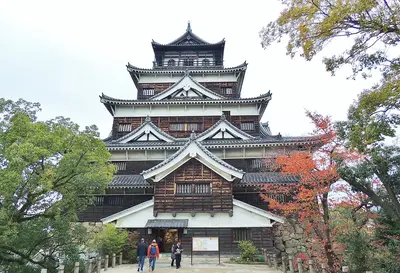
Hiroshima Castle
広島城 · Hiroshima-jo
📍 Hiroshima — Chugoku
The castle that atomic fire erased and Hiroshima's spirit rebuilt — visiting here is inseparable from the city's most profound history.
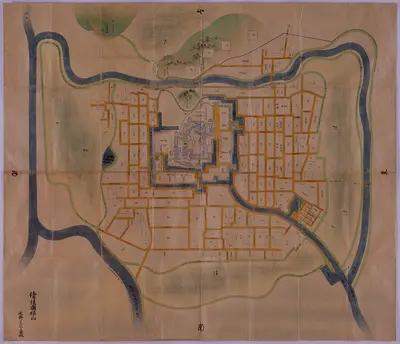
Fukuyama Castle
福山城 · Fukuyama-jo
📍 Hiroshima — Chugoku
The castle you see from the bullet train — Japan's most accessible castle with a 2022 renovation that gave its iron-clad walls back.
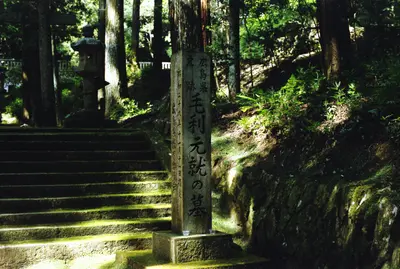
Yoshida-Koriyama Castle
吉田郡山城 · Yoshida-Koriyama-jo
📍 Hiroshima — Chugoku
The remote mountain headquarters of Mori Motonari — Japan's most brilliant Sengoku warlord — where 3,000 defenders defeated 20,000 attackers and the 'three arrows' lesson was born.
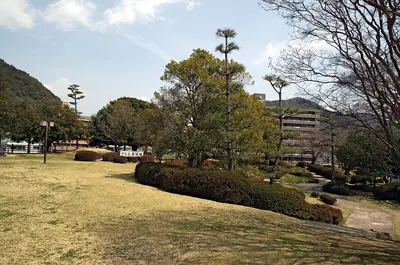
Mihara Castle
三原城 · Mihara-jo
📍 Hiroshima — Chugoku
The only castle in Japan with a bullet train running through it — look down from the platform and you are looking at 16th-century stone walls.
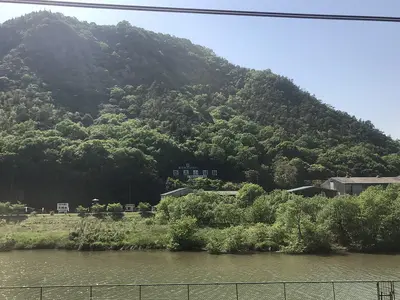
Niiyama Castle
新高山城 · Niiyama-jo
📍 Hiroshima — Chugoku
The Kobayakawa clan's mountain fortress — 30+ compounds on a 280-meter peak, one of western Japan's most complex yamajiro ruins.
Nearby: Okayama & Shimane
Okayama and Shimane prefecture castles — 1–2 hours from Hiroshima by JR
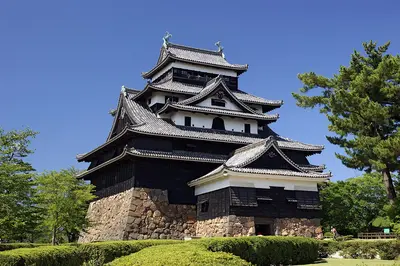
Matsue Castle
松江城 · Matsue-jo
📍 Shimane — Chugoku
Japan's newest National Treasure castle — dark, atmospheric, and best arrived at by boat through the city's ancient canal network.
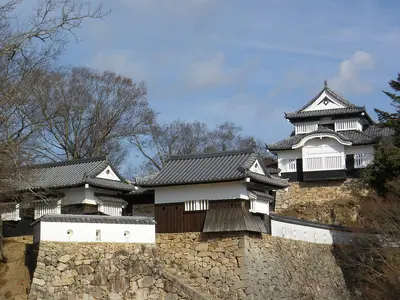
Bicchu-Matsuyama Castle
備中松山城 · Bicchu-Matsuyama-jo
📍 Okayama — Chugoku
The highest original tenshu in Japan, hovering above autumn cloud seas — Bicchu-Matsuyama rewards the effort of the climb with an atmosphere no other castle can match.
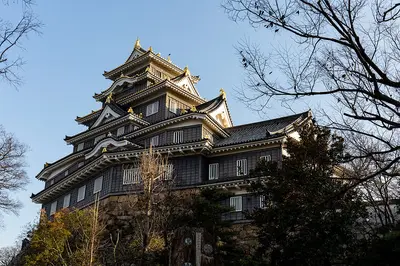
Okayama Castle
岡山城 · Okayama-jo
📍 Okayama — Chugoku
Japan's Black Crow Castle — freshly renovated, beautifully reflected in the Asahi River, and paired with one of Japan's finest gardens just across the water.
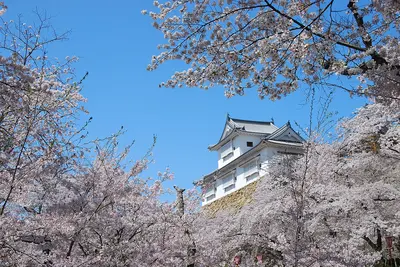
Tsuyama Castle
津山城 · Tsuyama-jo
📍 Okayama — Chugoku
Stone walls without a tower — Tsuyama's vast terraced ishigaki are a lesson in how much castle architecture is really about the ground, not the building on top of it.
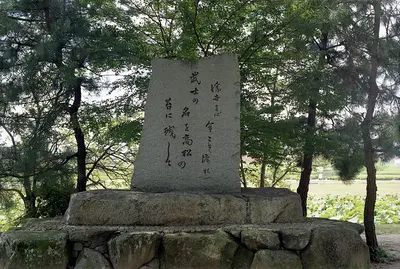
Bitchu-Takamatsu Castle
備中高松城 · Bitchu-Takamatsu-jo
📍 Okayama — Chugoku
Almost nothing stands here — but this is where Hideyoshi flooded a castle and then, on learning Nobunaga was dead, sprinted 200 km in three days to seize Japan.
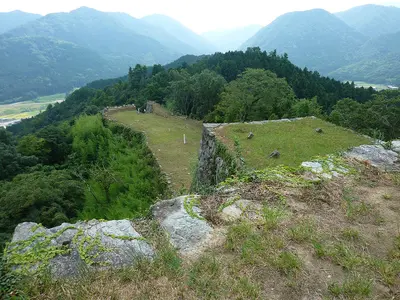
Tsuwano Castle
津和野城 · Tsuwano-jo
📍 Shimane — Chugoku
Mountain ruins above one of western Japan's most charming preserved castle towns — the chairlift ride and town stroll are as memorable as the ruins themselves.
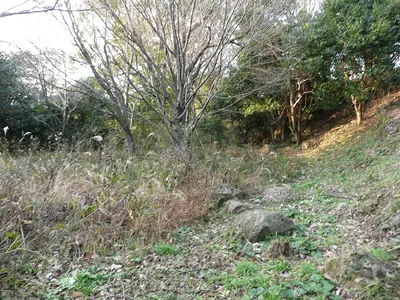
Hamada Castle
浜田城 · Hamada-jo
📍 Shimane — Chugoku
The castle that was blown up to stop an army — a dramatic end in 1866, and some of San'in's most intact stone walls remain to tell the story.
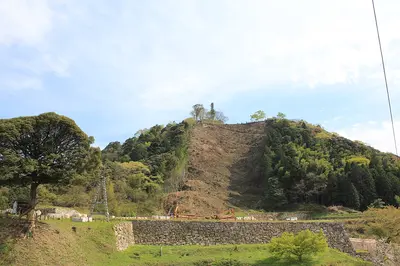
Gassan-Toda Castle
月山富田城 · Gassan-Toda-jo
📍 Shimane — Chugoku
Japan's most impregnable mountain fortress — the Amago clan's stronghold that Mori Motonari besieged twice (failing the first time entirely), and the birthplace of Yamanaka Shikanosuke's legendary loyalty.
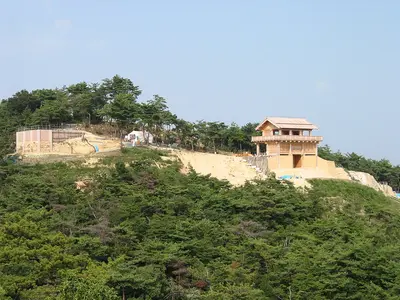
Onogajo (Demon's Castle)
鬼ノ城 · Onogajo
📍 Okayama — Chugoku
Japan's most mysterious fortress — 1,400-year-old stone walls on a mountain summit, no known builder, and a legendary connection to the Momotaro demon-slaying story.
Extended Day Trips: Tottori & Yamaguchi
Tottori and Yamaguchi castles — 2–3 hours by limited express or local line
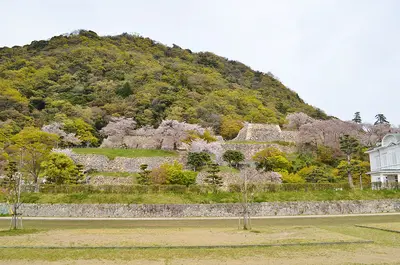
Tottori Castle
鳥取城 · Tottori-jo
📍 Tottori — Chugoku
Where Hideyoshi's most ruthless siege unfolded — a dramatic mountain ruin whose history is written in starvation, not stone.
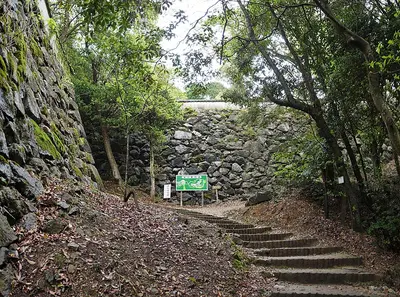
Iwakuni Castle
岩国城 · Iwakuni-jo
📍 Yamaguchi — Chugoku
Kintai Bridge is the star, but the mountain castle above completes one of western Japan's best half-day heritage circuits.
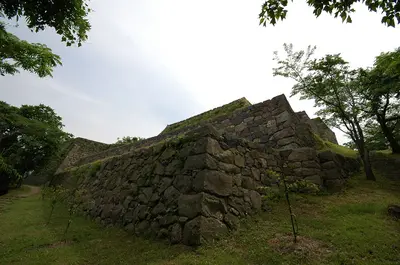
Yonago Castle
米子城 · Yonago-jo
📍 Tottori — Chugoku
Solid stone walls on a rocky hill with an outstanding view of Mount Daisen — an easy and rewarding stop in Yonago.
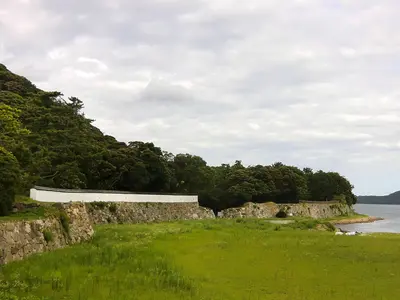
Hagi Castle
萩城 · Hagi-jo
📍 Yamaguchi — Chugoku
The castle where Japan's feudal age ended — from these ruins and the samurai streets around them, the Meiji Restoration was born.
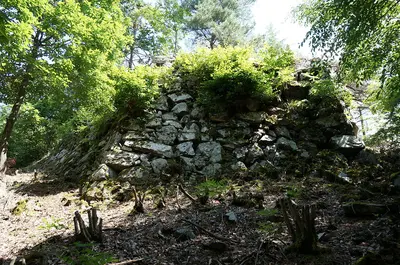
Wakasa Onigajo Castle
若桜鬼ヶ城 · Wakasa Onigajo
📍 Tottori — Chugoku
The Yamana clan's 'Demon's Castle' — impressive stone walls on steep mountain slopes above a remarkably preserved Edo-period castle town.
Getting There from Hiroshima
- Hiroshima Castle: 15 minutes from Hiroshima Station by tram (streetcar line 2 or 6 to Kamiyacho, then 10-min walk); or 20-min walk directly from the station.
- Fukuyama Castle: 30 minutes from Hiroshima by Nozomi shinkansen. The castle is directly visible from the shinkansen platform — a 3-min walk from Fukuyama Station north exit.
- Bicchu-Matsuyama: About 2 hours from Hiroshima (Sanyo Shinkansen to Okayama, then JR Hakubi Line to Bitchu-Takahashi Station, then bus or taxi). One of Japan's three true mountain castles with an original keep.
- Matsue Castle: About 2–2.5 hours by JR (Hiroshima to Okayama, then limited express Yakumo to Matsue). One of the twelve original wooden tower castles.
- San'yo Shinkansen: Connects Hiroshima east to Fukuyama (30 min), Okayama (45 min), and Himeji (75 min). JR Pass valid.
Frequently Asked Questions
Is there a castle in Hiroshima?
Yes — Hiroshima Castle (広島城), also known as Carp Castle, stands in the city center about 1 kilometer from Hiroshima Peace Memorial Park. The original castle was destroyed by the atomic bomb on August 6, 1945; the current five-story tower is a concrete reconstruction completed in 1958. The surrounding park and moats are pleasant to walk through, and the tower houses a historical museum covering Hiroshima's feudal history.
What is the best castle near Hiroshima?
For proximity and ease of access, Fukuyama Castle is excellent — just 30 minutes by shinkansen, with the castle visible directly from the station. For historical significance, Matsue Castle (2–2.5 hours) is one of only twelve original wooden tower castles in Japan and a National Treasure. For drama, Bicchu-Matsuyama Castle (2 hours) is a real mountain castle in a spectacular setting, particularly famous in autumn for its sea of clouds.
How far is Matsue Castle from Hiroshima?
Matsue Castle is about 2 to 2.5 hours from Hiroshima by JR — take the Sanyo Shinkansen to Okayama (around 45 minutes) and then the limited express Yakumo to Matsue (about 1 hour 20 minutes). JR Pass is valid for the entire journey. Matsue is one of Japan's twelve surviving original tower castles and is a National Treasure.
What is Bicchu-Matsuyama Castle famous for?
Bicchu-Matsuyama Castle is famous for two things: it is one of only three genuine mountain castles in Japan with an original wooden tower still standing, and it is renowned for its autumn sea of clouds (unkai). On cold, clear mornings in late October and November, the castle appears to float above a layer of fog in the valley below — an effect that draws photographers before dawn. It is also a National Treasure.
Is the JR Pass useful for castles near Hiroshima?
Very much so. The San'yo Shinkansen (JR) gives fast access east toward Fukuyama and Okayama, and the Yakumo limited express to Matsue is also JR. For Bicchu-Matsuyama, the JR Hakubi Line to Bitchu-Takahashi is JR-covered. Most of the Chugoku region's key castle towns are accessible by JR from Hiroshima without additional passes.