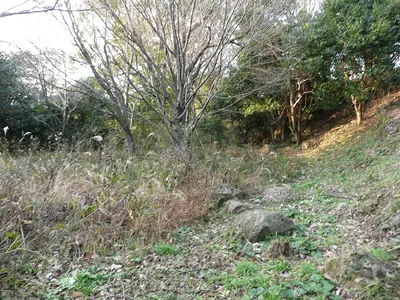
Wakasa Onigajo Castle

若桜鬼ヶ城·Wakasa Onigajo

F Tourism Score 30/100
A Defense Score 84/100

The Yamana clan's 'Demon's Castle' — impressive stone walls on steep mountain slopes above a remarkably preserved Edo-period castle town.

#168 — Continued 100 Castles Ruins
Wakasa Onigajo Castle (若桜鬼ヶ城)
Photo:Reggaeman/Wikimedia Commons/CC BY-SA 3.0

Quick Facts

Quick Facts

Admission
Free Free
Hours
00:00 – 23:59
Nearest Station
Wakasa Station (Wakasa Railway Wakasa Line)
Walk from Station
30 min walk
Time Needed
2 hours (including hike to summit and return)

Ruins freely accessible. The Wakasa Town Historical Museum at the base provides context and issues the Zoku-100 stamp.

Defense Overview

Defense Overview

Why Wakasa Onigajo Castle was hard to attack

This castle is hard to attack because natural ground and added defensive depth work together to make every push inward more difficult.

An attacker would first have to fight the site itself before reaching the main defenses. They would have to cross water barriers or moat lines and face more defensive depth after the first line.

Overall score

84/100

Estimated range

78–90

Confidence

B

Usable estimate with some inference

This is a site-original comparison score for learning and comparison, not a reconstruction of one historical battle.

Radar view

Terrain 19/20 Entrance 17/20 Internal 17/20 Siege 14/20 Oversight 17/20
How this estimate was built+

This estimate combines broad terrain, approach, layout, and route-control signals. It is meant to explain the castle's defensive logic in plain English, not reconstruct a single historical attack.

Terrain Advantage

How much the terrain itself seems to help: height, slope, ridges, cliffs, water edges, and limited approach directions.

19/20

Entrance Defense

How awkward and dangerous the first entry looks: gates, bridge or moat crossings, chokepoints, and forced turns.

17/20

Internal Complexity

How hard it seems to keep pushing after entry: layered baileys, depth, compartmentalization, and repeated defensive lines.

17/20

Siege Endurance

A rough sense of long-hold potential: moats, water access, space, storage plausibility, and defensive staying power.

14/20

Strategic Oversight

How much the castle appears to command nearby roads, plains, rivers, basins, harbors, or town approaches.

17/20

Why Visit

Wakasa Onigajo offers the combination that makes a mountain castle visit worthwhile: genuinely impressive stone walls in good condition on a mountain with real elevation gain, a compelling historical connection (the Yamana clan's extraordinary rise and fall), and a castle town below with its own surviving historic streetscape. The access requires effort — a mountain hike in rural Tottori — but the stone walls that emerge from the forested slopes as you ascend are one of the better visual rewards in the San'in castle circuit.

Highlights

1

Stone Walls That Rise From the Mountain

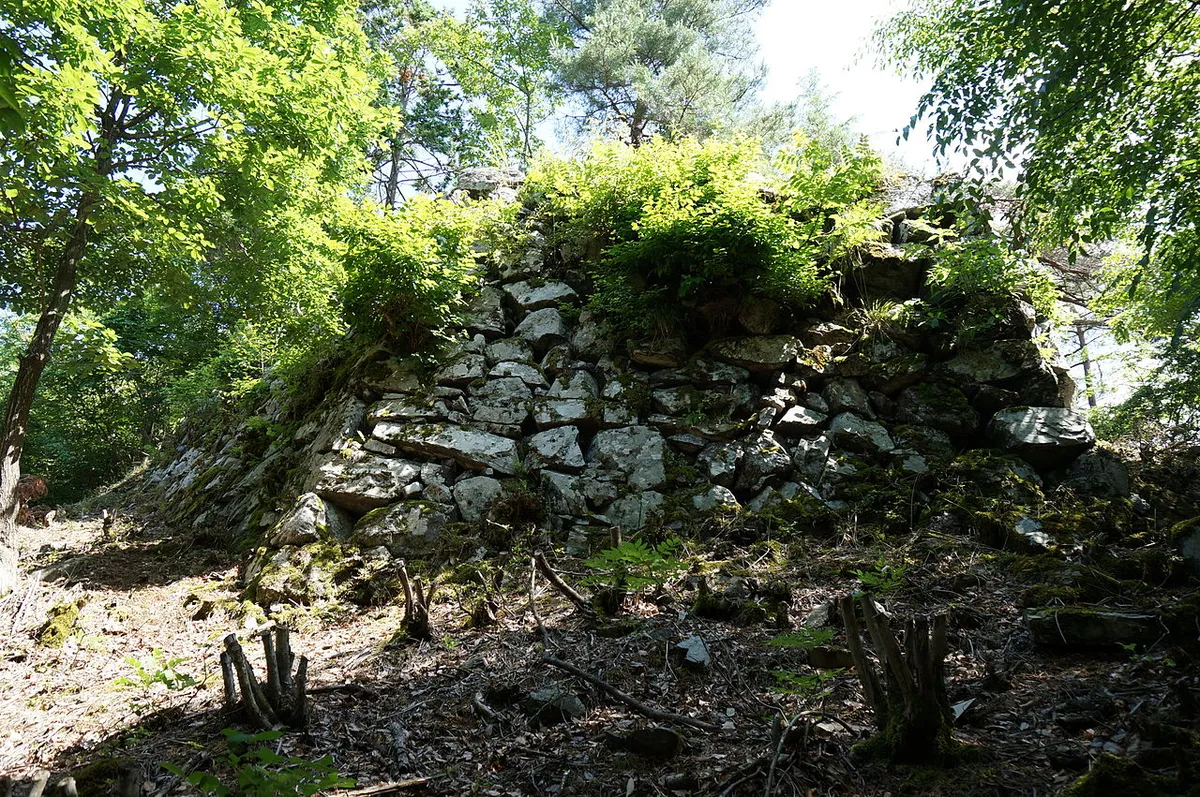
Wakasa Onigajo Castle is celebrated for the quality and extent of its surviving stone walls — remarkable for a mountain castle in the San'in region. The ishigaki walls climb the steep slopes of the castle mountain in tiered sections, creating an imposing series of stone faces that emerge from the forested hillside. For a Zoku-100 ruin in a rural location, the stone wall survival rate is exceptional.
2

Demon's Castle in the Mountains of Tottori

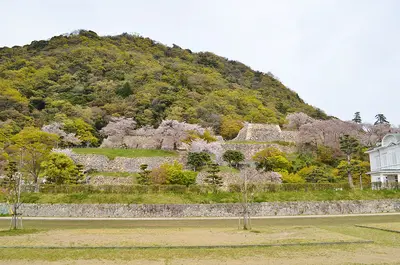
'Onigajo' means 'Demon's Castle' — a name given to the mountain fortress for its fearsome, precipitous appearance rising from the forested peaks above the town of Wakasa. The castle's reputation for impregnability gave rise to the supernatural name, which persists today. Standing below the upper stone walls and looking up, the name makes intuitive sense: the combination of sheer stone walls and mountain elevation creates an almost theatrical impression of a fortress that shouldn't be climbed.

3

The Yamana Clan's Mountain Stronghold

Wakasa Onigajo Castle was the primary stronghold of the Yamana clan in this part of Inaba Province (eastern Tottori). The Yamana were one of the most powerful clans in the San'in region during the Muromachi period — at their peak they controlled a staggering one-sixth of Japan's provinces, earning the nickname 'Lord of One-Sixth of the Country' (Rokubun no Ichi-dono). This mountain castle was the physical expression of Yamana power in their eastern territories.

Structure Details

Visitor tip

The hike to Wakasa Onigajo is steep but rewarding — the stone walls that emerge from the forested slopes as you ascend are genuinely impressive. Wear good hiking footwear and bring water. The trail is maintained but steep. Allow 1.5–2 hours for the round trip plus time at the ruins. The Zoku-100 stamp is obtained at the Wakasa Town Historical Museum in the town before or after the hike.

Castle type

Mountain castle

Mountain castle — built on a steep mountain peak above the town of Wakasa in eastern Tottori Prefecture (former Inaba Province), with impressive stone wall terraces on the upper slopes

Layout type

Linked compound layout

Compound style — tiered compounds ascending steep mountain slopes, with stone walls on upper sections and earthworks on lower approaches

Main tower

No tower survives. Extensive stone walls (ishigaki) on the upper compounds and earthwork terraces on the lower slopes are the primary surviving features.

Stone walls

Natural stone stacking

The stone walls of Wakasa Onigajo are among the most impressive surviving features of any mountain castle in Tottori Prefecture. Built in the nozurazumi style using natural local stone, the walls rise in tiered sections on the steep upper mountain slopes. Their preservation under forest cover has kept them visually striking.

Key defensive features

Steep Mountain Slopes

The castle mountain's extreme steepness is its most fundamental defense — the slopes are genuinely precipitous on the approach sides, reducing any assault to a slow, exhausting climb under observation and fire from above. The 'Demon's Castle' name reflects this characteristic.

Tiered Stone Wall Compounds

Multiple stone-walled compound terraces ascending the upper mountain create successive defensive lines. An attacker who managed the initial slope approach would then face repeated stone wall barriers, each requiring direct assault while defenders had the advantage of elevation.

Mountain Observation Dominance

The summit commands extensive views across the mountain valleys of eastern Tottori — any movement through the Wakasa valley area was observable from the castle. The visual dominance of the position made tactical surprise against the castle essentially impossible.

The Story of Wakasa Onigajo Castle

Originally built 1300 / Yamana clan
Current form 1550 / Yamana clan (final expanded form)
    1300

    The Yamana clan establishes a fortification on the mountain above Wakasa as part of their expanding control over Inaba Province in what is now eastern Tottori.

    1391

    The Yamana clan reaches the peak of their power — controlling six of Japan's 66 provinces simultaneously, earning the nickname 'Rokubun no Ichi-dono' (Lord of One-Sixth). Wakasa Onigajo is maintained as a key military fortress in their San'in holdings.

    1441

    The Yamana clan's power is dramatically reduced following the Kakitsu Rebellion and its aftermath. Inaba Province and Wakasa Onigajo remain under Yamana control, but the clan's national reach is sharply curtailed.

    1550

    The Yamana clan expands and strengthens Wakasa Onigajo during the Sengoku period, constructing the stone wall terraces that are the castle's most impressive surviving feature. The Yamana face increasing pressure from the rising Mori clan to the west.

    1580

    Oda Nobunaga's general Hashiba Hideyoshi (later Toyotomi Hideyoshi) conducts campaigns in San'in, systematically reducing Yamana and Mori clan power. Wakasa Onigajo is taken after resistance and the Yamana clan's independent power effectively ends.

    1615

    The Tokugawa one-castle-per-domain law effectively ends Wakasa Onigajo's active use. The castle is abandoned and the stone walls gradually become overgrown, preserving them in largely original condition under forest cover.

In Pop Culture

TV

NHK Tottori regional historical documentaries

Wakasa Onigajo appears in regional historical coverage of the Yamana clan and the San'in region during the Muromachi and Sengoku periods.

Did You Know?

  • The Yamana clan's extraordinary peak power — controlling one-sixth of Japan's provinces in 1391 — made them the single most powerful family in the country for a brief period, eclipsing even the Ashikaga shogunate in military force. Their subsequent decline, partly through the devastating Onin War (1467–1477) which they helped trigger, is one of the great reversals in Japanese medieval history. Wakasa Onigajo's stone walls are a remnant of that brief moment of near-supreme power.
  • The name 'Onigajo' (Demon's Castle) is shared by another famous site in Mie Prefecture — a dramatic rock formation on the coast. The Tottori Wakasa Onigajo is the mountain castle, not the coastal rocks, and the two sites are frequently confused in casual references. Castle enthusiasts specify 'Wakasa Onigajo' to distinguish the Tottori castle from the Mie coastal formations.
  • Wakasa Town in Tottori Prefecture is known for its extensive samurai residence preservation district — traditional samurai house plots and their stone boundary walls survive along the castle town streets, creating one of the more complete Edo-period townscapes in the San'in region. The castle ruins above and the samurai district below make Wakasa a rewarding visit for those interested in the full spectrum of Japanese castle town architecture.

Score Breakdown

Tourism Score

F 30/100
  • Accessibility 5 /20
  • Foreign-Friendly 3 /20
  • Historical Value 10 /20
  • Visual Impact 8 /20
  • Facilities 4 /20

Defense Score

A 84/100
  • Terrain Advantage 19 /20
  • Entrance Defense 17 /20
  • Internal Complexity 17 /20
  • Siege Endurance 14 /20
  • Strategic Oversight 17 /20

Planning Your Visit

Best Time to Visit

Spring (April–May) and autumn (October–November) for comfortable hiking temperatures. Summer is hot and humid in Tottori's inland valleys. Winter snowfall can close the trail.

Time Needed

2 hours (including hike to summit and return)

Insider Tip

Get the Zoku-100 stamp at the Wakasa Town Historical Museum before hiking — the museum's brief exhibits on the Yamana clan provide context that makes the stone walls more meaningful when you reach them. After the hike, walk the samurai district streets in the town below the castle mountain — the stone boundary walls of former samurai residences survive along several streets, giving a sense of the castle town as a complete settlement rather than just the mountain fortress above.

Map

Getting There

Nearest station: Wakasa Station (Wakasa Railway Wakasa Line)
Walk from station: 30 min walk
Parking: Free parking at the castle trailhead. The hike to the summit takes approximately 30–40 minutes on a maintained trail.

Admission

Free

Ruins freely accessible. The Wakasa Town Historical Museum at the base provides context and issues the Zoku-100 stamp.

Opening Hours

Open00:00 – 23:59

Accessible year-round but heavy snow can close mountain trails November–March. Best visited April–November.

Facilities

  • – English guides
  • – Audio guide
  • – Wheelchair access
  • ✓ Restrooms
  • – Gift shop
  • ✓ Food nearby

Nearby Castles

Featured in collections

FAQ

Frequently Asked Questions

How do I get to Wakasa Onigajo Castle?

The nearest station is Wakasa Station (Wakasa Railway Wakasa Line). From there it is about 30 minutes on foot.

How much does Wakasa Onigajo Castle cost to enter?

Wakasa Onigajo Castle is free to enter.

Is Wakasa Onigajo Castle worth visiting?

Wakasa Onigajo offers the combination that makes a mountain castle visit worthwhile: genuinely impressive stone walls in good condition on a mountain with real elevation gain, a compelling historical connection (the Yamana clan's extraordinary rise and fall), and a castle town below with its own surviving historic streetscape. The access requires effort — a mountain hike in rural Tottori — but the stone walls that emerge from the forested slopes as you ascend are one of the better visual rewards in the San'in castle circuit.

What are the opening hours of Wakasa Onigajo Castle?

00:00 to 23:59.

How long should I spend at Wakasa Onigajo Castle?

Plan for about 2 hours (including hike to summit and return), depending on how closely you want to explore the grounds.