Onogajo (Demon's Castle)

鬼ノ城·Onogajo

F Tourism Score 40/100
A Defense Score 81/100

Japan's most mysterious fortress — 1,400-year-old stone walls on a mountain summit, no known builder, and a legendary connection to the Momotaro demon-slaying story.

#179 — Continued 100 Castles Ruins
Onogajo (Demon's Castle) (鬼ノ城)
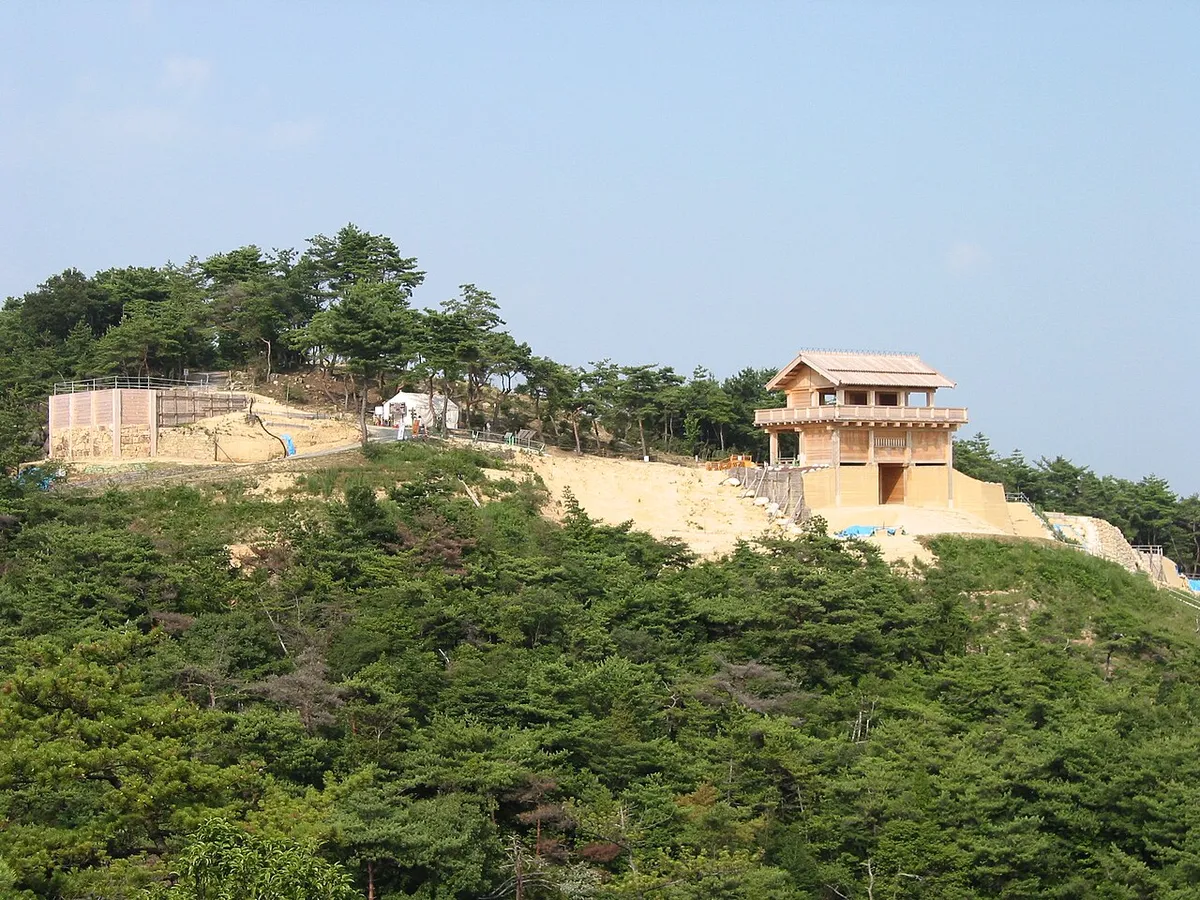
Photo:by Reggaeman/Wikimedia Commons/CC BY-SA 3.0

Quick Facts

Quick Facts

Admission
Free Free
Hours
00:00 – 23:59
Nearest Station
Kibitsu Station or Soja Station (JR Kibi Line from Okayama — 20 minutes)
Walk from Station
60 min walk

Bus also available

Time Needed
2–2.5 hours (hiking + ruins circuit)

The castle ruins and hiking trails are free. The Kibiji Visitor Center at the trailhead has a small exhibit on the castle history.

Defense Overview

Defense Overview

Why Onogajo (Demon's Castle) was hard to attack

This castle is hard to attack because it holds stronger ground above the surrounding approaches instead of letting attackers close on the core from easy footing.

An attacker would first have to fight the site itself before reaching the main defenses. They would have to cross water barriers or moat lines.

Overall score

81/100

Estimated range

75–87

Confidence

B

Usable estimate with some inference

This is a site-original comparison score for learning and comparison, not a reconstruction of one historical battle.

Radar view

Terrain 19/20 Entrance 17/20 Internal 14/20 Siege 14/20 Oversight 17/20
How this estimate was built+

This estimate combines broad terrain, approach, layout, and route-control signals. It is meant to explain the castle's defensive logic in plain English, not reconstruct a single historical attack.

Terrain Advantage

How much the terrain itself seems to help: height, slope, ridges, cliffs, water edges, and limited approach directions.

19/20

Entrance Defense

How awkward and dangerous the first entry looks: gates, bridge or moat crossings, chokepoints, and forced turns.

17/20

Internal Complexity

How hard it seems to keep pushing after entry: layered baileys, depth, compartmentalization, and repeated defensive lines.

14/20

Siege Endurance

A rough sense of long-hold potential: moats, water access, space, storage plausibility, and defensive staying power.

14/20

Strategic Oversight

How much the castle appears to command nearby roads, plains, rivers, basins, harbors, or town approaches.

17/20

Why Visit

Onogajo is a genuinely unique and deeply atmospheric site — nothing else in Japan quite matches the experience of hiking to a 1,400-year-old stone perimeter fortress. The hiking is accessible (30–45 minutes), the views are excellent, the stone walls are impressive, and the Momotaro connection adds mythological depth.

Highlights

1

An Ancient Mystery — Japan's Most Enigmatic Fortress

Onogajo is one of the most mysterious sites in Japanese history: a massive stone wall fortress on a mountain summit whose builder, date, and purpose remain uncertain after 1,300 years. Scholars believe it was constructed in the late 7th century (possibly 660s–670s AD) — making it older than almost all samurai castles. The working theory is that it was built by the Yamato government as a defense against possible Tang Chinese invasion following Japan's naval defeat at the Battle of Hakusukinoe (663 AD).
2

The Momotaro Connection — Where the Demon Lived

Onogajo means 'Demon's Castle' — and local tradition connects the fortress to the legend of Momotaro (the Peach Boy), one of Japan's most beloved folk tales. Local tradition in Kibi (ancient Okayama) holds that the 'demon' of the story was Ura, a king who ruled from Onogajo. The connection gives Onogajo a legendary atmosphere unlike any other castle site.

3

Massive Stone Walls Without Mortar — 1,400 Years Old

The stone walls of Onogajo are built in 'Korean-style' (chosen-style) — massive irregular stones stacked without mortar, running for approximately 2.8 km around the mountain summit. The scale and construction quality are extraordinary for 7th-century Japan, suggesting sophisticated engineering knowledge possibly imported from the Korean kingdom of Baekje.

Structure Details

Visitor tip

The hike to Onogajo takes 30–45 minutes from the visitor center parking lot on a well-maintained trail. At the summit, follow the stone wall circuit trail for views of the Kibiji Plain and the restored west gate. Allow 2 hours total. Bring water and appropriate footwear.

Castle type

Mountain castle

Mountain castle (built on a mountain summit at 397 meters — more accurately a kogusoku-type ancient fortress predating the samurai castle tradition)

Layout type

Concentric layout

Ring-style — the stone walls follow the mountain summit perimeter in a continuous ring enclosing the plateau

Main tower

No tower structures survive — the castle consisted of stone perimeter walls with wooden buildings inside. A section of the west gate has been reconstructed based on archaeological evidence.

Stone walls

Natural Korean-style stacking

The stone walls of Onogajo are among the oldest surviving stone construction in Japan. Built in the 7th century without mortar, the walls used massive irregular stones stacked to heights of 5–6 meters. Approximately 2.8 km of walls originally enclosed the summit plateau.

Key defensive features

397-Meter Mountain Summit Position

The castle occupied a mountain summit with steep slopes on all sides — requiring attackers to climb several hundred meters of rough terrain before even reaching the stone walls.

2.8 km Continuous Stone Perimeter Wall

The continuous stone wall enclosing the summit plateau created a formidable barrier even after the mountain slope had been climbed.

Watchtower Positions — The Kibiji Plain Under Observation

The summit's height gave defenders complete observation of the surrounding Kibiji Plain and the approaches from the Seto Inland Sea coast.

The Story of Onogajo (Demon's Castle)

Originally built 665 / Unknown (attributed to Yamato government — possibly with Korean Baekje technical assistance)
Current form 665 / Unknown
    663

    The Battle of Hakusukinoe — Japan's naval force supporting the Korean kingdom of Baekje suffers decisive defeat against Tang China. Fear of Tang invasion of Japan's main islands follows.

    665

    The Yamato government constructs a network of Korean-style mountain fortresses along the western Japan coast. Onogajo is believed to be one of these fortresses — built with technical assistance from Baekje refugees.

    700

    The Tang invasion feared after Hakusukinoe never materializes. Onogajo gradually loses its strategic function. The fortress is slowly abandoned.

    1985

    Systematic archaeological excavations begin at Onogajo, revealing the scale and construction method of the ancient stone walls. The site is designated a National Historic Site.

    2003

    The reconstructed west gate opens, based on archaeological evidence of the original gate foundations and post-hole patterns.

In Pop Culture

folklore

Momotaro (Japanese folk tale)

Local Kibi tradition connects Onogajo to the Momotaro legend — the 'demon castle' from which the story's oni antagonist ruled.

Did You Know?

  • Onogajo was built approximately 1,000 years before the Japanese castles that most visitors associate with the country — it predates Himeji, Osaka, and every samurai castle by nearly a millennium.
  • The construction technique at Onogajo — Korean-style stone walls without mortar — is fundamentally different from the later Japanese ishigaki technique used in samurai castles.
  • The Battle of Hakusukinoe (663 AD) is the first documented Japanese military engagement outside the home islands — Japan's defeat triggered the fortress-building program of which Onogajo was part.
  • The name 'Onogajo' (Demon's Castle) is a relatively modern name derived from the Momotaro folklore connection. The original name of the fortress is unknown.

Score Breakdown

Tourism Score

F 40/100
  • Accessibility 5 /20
  • Foreign-Friendly 5 /20
  • Historical Value 12 /20
  • Visual Impact 12 /20
  • Facilities 6 /20

Defense Score

A 81/100
  • Terrain Advantage 19 /20
  • Entrance Defense 17 /20
  • Internal Complexity 14 /20
  • Siege Endurance 14 /20
  • Strategic Oversight 17 /20

Planning Your Visit

Best Time to Visit

Spring and autumn for the most comfortable hiking. Avoid midsummer heat.

Time Needed

2–2.5 hours (hiking + ruins circuit)

Insider Tip

The Kibi Plain cycling route connects Onogajo area with the Kibi Tsunu Shrine, Bitchu Kokubun-ji, and several ancient burial mounds (kofun) — cycling the flat lowland route while looking up at Onogajo's mountain is an extraordinary way to understand the ancient landscape.

Map

Getting There

Nearest station: Kibitsu Station or Soja Station (JR Kibi Line from Okayama — 20 minutes)
Walk from station: 60 min walk
Bus: No direct bus to the summit. Car or taxi from Soja Station (15 minutes by car) is strongly recommended.
Parking: Free parking at the Kibiji Visitor Center trailhead.
Accessible with a JR Pass

Admission

Free

The castle ruins and hiking trails are free. The Kibiji Visitor Center at the trailhead has a small exhibit on the castle history.

Opening Hours

Open00:00 – 23:59

Trails open at all times, but best visited in daylight. The trailhead visitor center opens 09:00–17:00, closed Mondays and December 29–January 3.

Facilities

  • – English guides
  • – Audio guide
  • – Wheelchair access
  • ✓ Restrooms
  • – Gift shop
  • – Food nearby

Nearby Castles

Featured in collections

FAQ

Frequently Asked Questions

How do I get to Onogajo (Demon's Castle)?

The nearest station is Kibitsu Station or Soja Station (JR Kibi Line from Okayama — 20 minutes). From there it is about 60 minutes on foot. No direct bus to the summit. Car or taxi from Soja Station (15 minutes by car) is strongly recommended.

How much does Onogajo (Demon's Castle) cost to enter?

Onogajo (Demon's Castle) is free to enter.

Is Onogajo (Demon's Castle) worth visiting?

Onogajo is a genuinely unique and deeply atmospheric site — nothing else in Japan quite matches the experience of hiking to a 1,400-year-old stone perimeter fortress. The hiking is accessible (30–45 minutes), the views are excellent, the stone walls are impressive, and the Momotaro connection adds mythological depth.

What are the opening hours of Onogajo (Demon's Castle)?

00:00 to 23:59.

How long should I spend at Onogajo (Demon's Castle)?

Plan for about 2–2.5 hours (hiking + ruins circuit), depending on how closely you want to explore the grounds.