Yonago Castle

米子城·Yonago-jo

D Tourism Score 42/100
B Defense Score 72/100

Solid stone walls on a rocky hill with an outstanding view of Mount Daisen — an easy and rewarding stop in Yonago.

#65 — 100 Famous Castles Ruins
Yonago Castle (米子城)
Photo:by Reggaeman/Wikimedia Commons/CC BY-SA 3.0

Quick Facts

Quick Facts

Admission
Free Free
Hours
00:00 – 23:59
Nearest Station
Yonago Station (JR Sanin Main Line / Hakubi Line)
Walk from Station
20 min walk

Bus also available

Time Needed
45 minutes to 1 hour

The ruins and Shiroshima Park are completely free. No admission is charged.

Defense Overview

Defense Overview

Why Yonago Castle was hard to attack

This castle is hard to attack because it combines a raised core with defended outer space with enough defensive depth to slow attackers before the center.

An attacker would not get a simple direct approach to the center. They would have to cross water barriers or moat lines and push through successive outer areas before the core.

Overall score

72/100

Estimated range

66–78

Confidence

B

Usable estimate with some inference

This is a site-original comparison score for learning and comparison, not a reconstruction of one historical battle.

Radar view

Terrain 15/20 Entrance 14/20 Internal 16/20 Siege 14/20 Oversight 13/20
How this estimate was built+

This estimate combines broad terrain, approach, layout, and route-control signals. It is meant to explain the castle's defensive logic in plain English, not reconstruct a single historical attack.

Terrain Advantage

How much the terrain itself seems to help: height, slope, ridges, cliffs, water edges, and limited approach directions.

15/20

Entrance Defense

How awkward and dangerous the first entry looks: gates, bridge or moat crossings, chokepoints, and forced turns.

14/20

Internal Complexity

How hard it seems to keep pushing after entry: layered baileys, depth, compartmentalization, and repeated defensive lines.

16/20

Siege Endurance

A rough sense of long-hold potential: moats, water access, space, storage plausibility, and defensive staying power.

14/20

Strategic Oversight

How much the castle appears to command nearby roads, plains, rivers, basins, harbors, or town approaches.

13/20

Why Visit

Yonago Castle is not a destination in itself but earns its place as a quality addition to any San'in coast itinerary. The kirikomi-hagi stone walls are better than expected, the Daisen panorama is genuinely impressive, and the free admission and short climb make the commitment minimal. Use it as a 1-hour break while passing through Yonago between Tottori and Matsue.

Highlights

1

Stone Walls with a View of Mount Daisen

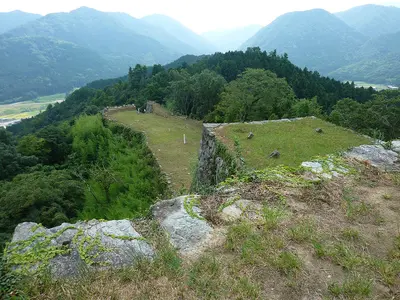
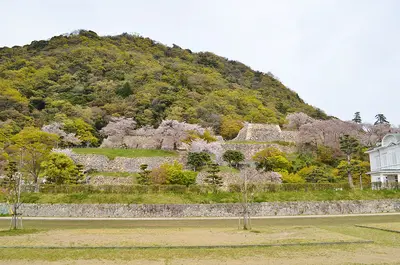
Yonago Castle occupies a rocky hill (Shiroshima Hill) at the edge of the city, with the surviving stone walls providing a natural vantage point for one of San'in's great panoramic views: Mount Daisen, the highest peak in the Chugoku region at 1,729 meters, dominates the skyline to the north. On clear days the combination of the castle's stone walls, the Yonago lowlands, and Daisen's volcanic cone is one of the most striking mountain-castle-view combinations in western Japan.
2

Remarkable Stone Wall Preservation

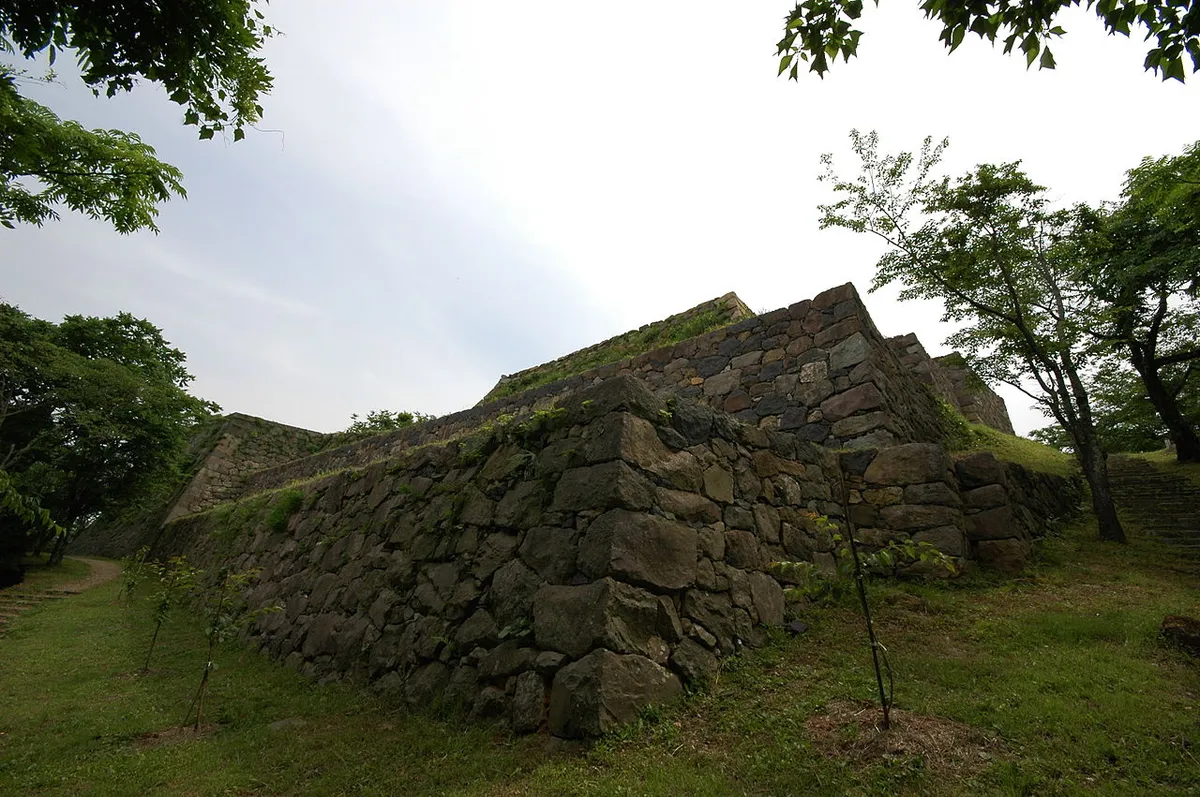
Yonago Castle's stone walls are better preserved than the castle's low regional profile might suggest. The primary compound walls use kirikomi-hagi (fitted stone) construction and have survived in impressive condition. For castle stone wall enthusiasts visiting the San'in coast, Yonago offers genuinely high-quality masonry in an easily accessible city location.

3

Gateway to Tottori and the San'in Coast

Yonago is a practical transportation hub for the San'in coast — a starting point for Tottori sand dunes, Matsue and Izumo Grand Shrine, and the Oki Islands. The castle ruins on Shiroshima Hill provide a pleasant 1-hour excursion while waiting for connections or beginning/ending a San'in circuit.

Structure Details

Visitor tip

Yonago Castle is a compact and easy stop — the hill climb is moderate (15–20 minutes), the stone walls are well-preserved, and the Daisen panorama from the summit is the main reward. Allow 45 minutes total. Good as a quick stop when passing through Yonago on the San'in coast.

Castle type

Hill castle

Hill-top flatland castle — built on a rocky promontory hill (Shiroshima Hill) projecting into the Yonago lowlands near the Sea of Japan coast

Layout type

Linked compound layout

Compound style — main compound and secondary compounds following the rocky hill contour

Main tower

Stone wall ruins only — the castle had a four-story tower, dismantled in 1692. Well-preserved stone walls from the kirikomi-hagi construction tradition survive on the hill summit.

Stone walls

Fitted cut-stone masonry

The stone walls of the main compound use kirikomi-hagi construction and survive in good condition. The rocky hill foundation provides a dramatic setting for the walls, and views from within the ruins extend to Mount Daisen and across the Yonago lowlands.

Key defensive features

Rocky Hill Position

Shiroshima Hill's rocky natural formation provides an elevated foundation for the stone walls — the combination of sheer rocky outcrops and fitted stone walls above makes scaling the walls extremely difficult.

Well-Preserved Kirikomi-hagi Walls

The fitted stone walls of the main compound provide a robust defensive perimeter that has survived 400 years in good condition. The quality of the construction reflects Nakamura Kazuuji's investment in the castle's defensive strength.

The Story of Yonago Castle

Originally built 1591 / Yoshikawa Hiroie
Current form 1601 / Nakamura Kazuuji
    1591

    Yoshikawa Hiroie begins construction of a castle on Shiroshima Hill as part of western Honshu military consolidation under Toyotomi Hideyoshi's direction.

    1601

    Nakamura Kazuuji, granted the Hoki domain after Sekigahara, significantly expands the castle — constructing the four-story main tower and the kirikomi-hagi stone walls that survive today. Yonago briefly flourishes as a regional administrative center.

    1692

    The Ikeda clan, which had taken over the domain, dismantles the main tower and various structures. The stone walls are left in place. The site gradually transitions from active castle to historic park.

Did You Know?

  • Yonago is the closest major city to Mount Daisen — the volcano-shaped mountain that dominates the Tottori landscape and is sacred to the region's Shinto tradition. The view of Daisen from Yonago Castle ruins is a local landmark, appearing on many regional tourism materials.
  • The Nakamura Kazuuji who expanded Yonago Castle is not to be confused with later Nakamura lords — he was a prominent Toyotomi-era lord who invested significantly in the castle's construction before the Sekigahara reshuffle reorganized domain assignments across western Japan.
  • Yonago Airport is one of the few Japanese regional airports with regular international routes to Korea — making Yonago a gateway for Korean visitors exploring the San'in coast. The castle ruins are sometimes among the first Japanese historical sites Korean visitors encounter on this route.

Score Breakdown

Tourism Score

D 42/100
  • Accessibility 12 /20
  • Foreign-Friendly 6 /20
  • Historical Value 11 /20
  • Visual Impact 9 /20
  • Facilities 4 /20

Defense Score

B 72/100
  • Terrain Advantage 15 /20
  • Entrance Defense 14 /20
  • Internal Complexity 16 /20
  • Siege Endurance 14 /20
  • Strategic Oversight 13 /20

Planning Your Visit

Best Time to Visit

Clear days for the Daisen view (most reliable in autumn and winter, when atmospheric haze is minimal). Spring cherry blossoms in the park are also pleasant.

Time Needed

45 minutes to 1 hour

Insider Tip

Climb to the highest point of the ruins and turn north toward Mount Daisen — when the mountain is clear, the view is the reason to make the climb. Early morning tends to give the clearest mountain visibility before afternoon haze develops. Combine with a stop at the Yonago City Museum of Art in the park grounds for the complete Shiroshima Hill experience.

Map

Getting There

Nearest station: Yonago Station (JR Sanin Main Line / Hakubi Line)
Walk from station: 20 min walk
Bus: City bus from Yonago Station to the castle area. Walking is also feasible.
Parking: Parking available at Shiroshima Park.
Accessible with a JR Pass

Admission

Free

The ruins and Shiroshima Park are completely free. No admission is charged.

Opening Hours

Open00:00 – 23:59

The castle hill is accessible at all times. A short climb is required to reach the stone wall ruins at the summit.

Facilities

  • – English guides
  • – Audio guide
  • – Wheelchair access
  • ✓ Restrooms
  • – Gift shop
  • ✓ Food nearby

Nearby Castles

Featured in collections

FAQ

Frequently Asked Questions

How do I get to Yonago Castle?

The nearest station is Yonago Station (JR Sanin Main Line / Hakubi Line). From there it is about 20 minutes on foot. City bus from Yonago Station to the castle area. Walking is also feasible.

How much does Yonago Castle cost to enter?

Yonago Castle is free to enter.

Is Yonago Castle worth visiting?

Yonago Castle is not a destination in itself but earns its place as a quality addition to any San'in coast itinerary. The kirikomi-hagi stone walls are better than expected, the Daisen panorama is genuinely impressive, and the free admission and short climb make the commitment minimal. Use it as a 1-hour break while passing through Yonago between Tottori and Matsue.

What are the opening hours of Yonago Castle?

00:00 to 23:59.

How long should I spend at Yonago Castle?

Plan for about 45 minutes to 1 hour, depending on how closely you want to explore the grounds.