Bicchu-Matsuyama Castle

備中松山城·Bicchu-Matsuyama-jo

D Tourism Score 55/100
A Defense Score 85/100

The highest original tenshu in Japan, hovering above autumn cloud seas — Bicchu-Matsuyama rewards the effort of the climb with an atmosphere no other castle can match.

#68 — 100 Famous Castles Surviving
Bicchu-Matsuyama Castle (備中松山城)
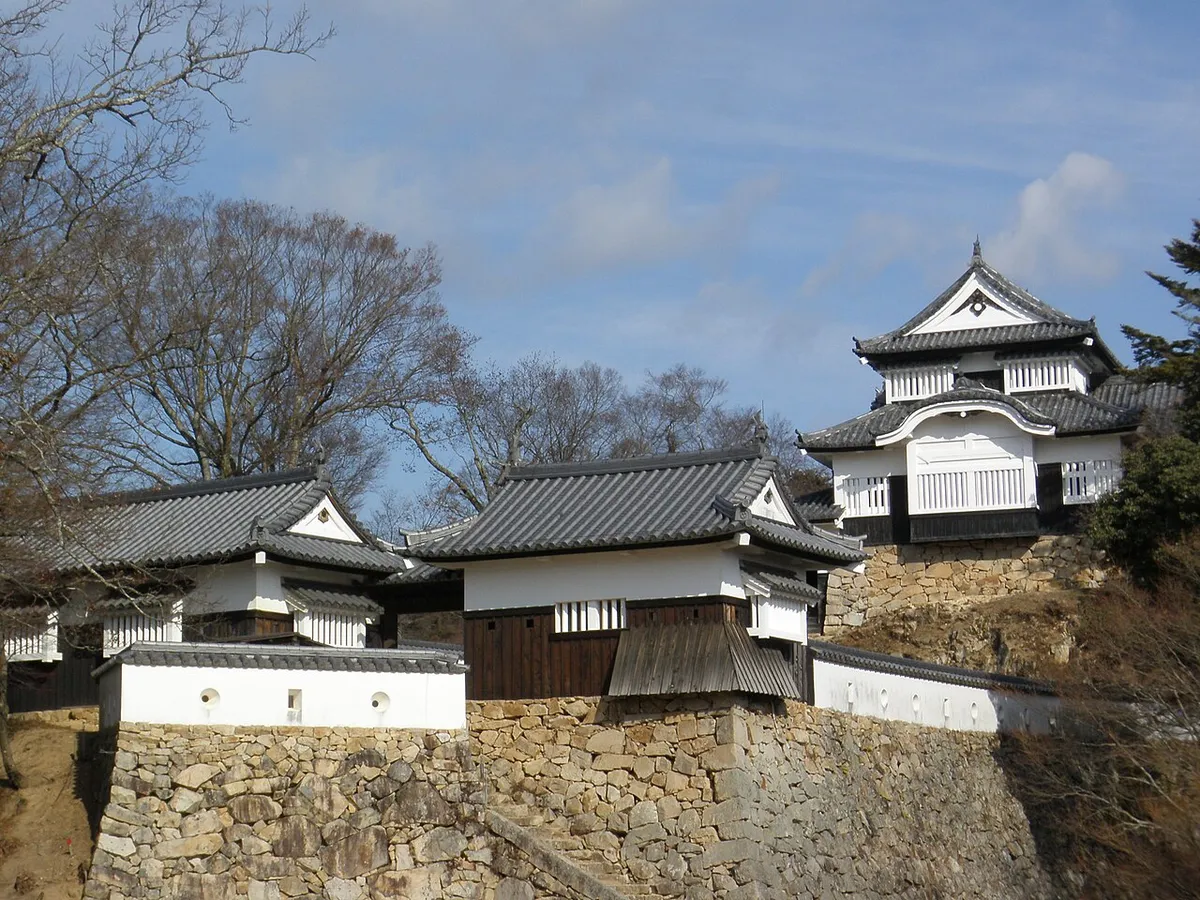
Photo:User: (WT-shared) ChubbyWimbus at wts wikivoyage/Wikimedia Commons/Public domain

Quick Facts

Quick Facts

Admission
¥500

¥200

Hours
09:00 – 17:30

Last entry 17:00

Nearest Station
Bitchu-Takahashi Station (JR Hakubi Line)
Walk from Station
40 min walk

Bus also available

Time Needed
3-4 hours (including travel from Bitchu-Takahashi Station)

Elementary/junior high ¥200. Combined 3-site ticket ¥1,000 (castle + samurai residences + Raikyuji Temple). Shuttle bus from base parking required; final approach on foot.

Defense Overview

Defense Overview

Why Bicchu-Matsuyama Castle was hard to attack

This castle is hard to attack because it uses high ground and difficult natural access to deny attackers an easy approach.

An attacker would first have to fight the site itself before reaching the main defenses. They would have to cross water barriers or moat lines, pass tighter turns and chokepoints, and push through successive outer areas before the core.

Overall score

85/100

Estimated range

79–91

Confidence

A

Strong multi-source support

This is a site-original comparison score for learning and comparison, not a reconstruction of one historical battle.

Radar view

Terrain 20/20 Entrance 20/20 Internal 16/20 Siege 13/20 Oversight 16/20
How this estimate was built+

This estimate combines broad terrain, approach, layout, and route-control signals. It is meant to explain the castle's defensive logic in plain English, not reconstruct a single historical attack.

Terrain Advantage

How much the terrain itself seems to help: height, slope, ridges, cliffs, water edges, and limited approach directions.

20/20

Entrance Defense

How awkward and dangerous the first entry looks: gates, bridge or moat crossings, chokepoints, and forced turns.

20/20

Internal Complexity

How hard it seems to keep pushing after entry: layered baileys, depth, compartmentalization, and repeated defensive lines.

16/20

Siege Endurance

A rough sense of long-hold potential: moats, water access, space, storage plausibility, and defensive staying power.

13/20

Strategic Oversight

How much the castle appears to command nearby roads, plains, rivers, basins, harbors, or town approaches.

16/20

Why Visit

Bicchu-Matsuyama is for visitors who want to experience a Japanese castle as it truly was — not a museum piece in a city park, but a genuine mountain fortress in a wild setting. The combination of original architecture, dramatic elevation, and the autumn cloud-sea phenomenon makes it one of the most rewarding castle visits in Japan for those willing to put in the physical effort.

Highlights

1

Japan's Highest Original Tenshu Castle

Bicchu-Matsuyama Castle sits atop Mt. Gagyu at an elevation of 430 meters — making it the highest mountain castle in Japan to retain its original wooden tenshu. The climb is genuinely demanding, but the reward is standing beside a real 17th-century castle tower on a rocky mountain peak, with views across the valleys below.
2

The Castle Above the Clouds

On autumn mornings from late September to mid-November, valley fog fills the lowlands while the castle peaks above it — creating the famous 'castle in the sea of clouds' view that has made Bicchu-Matsuyama one of Japan's most photogenic destinations. Visitors willing to wake before dawn and hike to a viewpoint are rewarded with one of Japan's most dramatic landscapes.

3

Authentic Mountain Fortress Atmosphere

Unlike castles that have been converted into manicured tourist parks, Bicchu-Matsuyama retains the raw, atmospheric quality of a real mountain fortress. The stone walls emerge directly from natural rock outcroppings, the approach is genuinely rugged, and the entire site feels like history barely touched.

Structure Details

Visitor tip

Wear sturdy shoes — the approach involves a genuine mountain hike on rocky paths. The ascent from the shuttle drop-off takes about 20 minutes one-way. The castle interior is small but atmospheric. The cloud-sea viewpoint is at a separate location on the other side of the mountain and requires an early start (pre-dawn) during autumn.

Castle type

Mountain castle

Mountain castle — built on a high mountain peak, relying entirely on elevation for defense

Layout type

Linked compound layout

Compound style — main tower connected to subsidiary structures across rocky mountain terrain

Main tower

Original wooden tenshu (main keep) — the highest-elevation original tenshu castle in Japan, at 430 meters above sea level

11m2 floors, 1 below

Stone walls

Natural stone stacking

The stone walls of Bicchu-Matsuyama grow organically from the mountain's rock faces. In many places, natural granite outcroppings serve as the foundation, and the built stonework continues upward from them seamlessly. This integration of natural and constructed fortification is one of the site's most striking features.

Key defensive features

430-Meter Elevation

The castle's greatest defensive asset is simply its height. An attacking army would have to climb a steep mountain under fire, arriving exhausted before even reaching the first walls. The approach path is narrow, single-file, and completely dominated by the heights above.

Rock-Face Integration

The castle walls incorporate natural cliff faces and rock outcroppings, making them effectively impossible to undermine or breach in many places. Where nature provided vertical rock, the builders needed only add a few courses of stone on top.

Narrow Choke-Point Approaches

Only a handful of narrow paths lead up to the castle, each of which could be defended by a small number of men against a much larger attacking force. The terrain channeled attackers into killing grounds with no room to maneuver.

The Story of Bicchu-Matsuyama Castle

Originally built 1240 / Akiba Shigenobu
Current form 1683 / Mizunoya Katsutaka
    1240

    Akiba Shigenobu constructs the first fortification on Mt. Gagyu — a basic mountain stronghold that exploits the commanding position over the surrounding valleys.

    1331

    The castle plays a role in the brief restoration of Emperor Go-Daigo, who temporarily reconquered Japan from the Kamakura shogunate. The castle's strategic position makes it relevant in the regional power struggles of the era.

    1600

    After the Battle of Sekigahara, the castle passes through several lords as Tokugawa Ieyasu redistributes land rewards. The mountain fortress retains its strategic importance in the pacified country.

    1683

    Mizunoya Katsutaka constructs the current main tower and subsidiary structures. This is the two-story tower that survives today — one of Japan's most authentic surviving castle buildings.

    1874

    The Meiji government orders the castle abandoned and its structures removed. The main tower is saved from demolition when locals appeal for its preservation.

    1929

    The main tower is designated a National Important Cultural Property, beginning the formal preservation effort that protects it today.

In Pop Culture

social_media

Cloud Sea Photography

Autumn cloud-sea photographs of Bicchu-Matsuyama circulate widely on social media each year, drawing increasing numbers of international visitors to what was once an obscure regional castle.

Did You Know?

  • At 430 meters above sea level, Bicchu-Matsuyama holds the record as the highest-elevation original tenshu castle in Japan — no other surviving original tower sits higher.
  • The famous cloud-sea (unkai) view is most reliable from late September to mid-November, roughly between 7am and 8am on mornings following cool nights. Local weather websites track conditions.
  • A cat named 'Sanjuro' lived at the castle for years and became a minor celebrity, inspiring a naming campaign and significant media coverage — a reminder that even remote mountain fortresses attract their share of tourists.
  • The castle was the site of a famous episode during the Sengoku period when Takamatsu Castle (a lowland fort nearby) was flooded by Toyotomi Hideyoshi's forces using diverted river water — the mountain castle watched helplessly as the lowland fort drowned.

Score Breakdown

Tourism Score

D 55/100
  • Accessibility 5 /20
  • Foreign-Friendly 8 /20
  • Historical Value 17 /20
  • Visual Impact 16 /20
  • Facilities 9 /20

Defense Score

A 85/100
  • Terrain Advantage 20 /20
  • Entrance Defense 20 /20
  • Internal Complexity 16 /20
  • Siege Endurance 13 /20
  • Strategic Oversight 16 /20

Planning Your Visit

Best Time to Visit

Late September to mid-November for cloud-sea views — arrive at the viewpoint by 6am. Spring and summer are beautiful but miss the famous mist. The castle is open year-round.

Time Needed

3-4 hours (including travel from Bitchu-Takahashi Station)

Insider Tip

The cloud-sea viewpoint is not at the castle itself but at 'Unkai Viewing Spot' across the mountain. Check the Takahashi City website for cloud-sea forecasts and plan to be at the viewpoint before sunrise. If you miss the mist, the castle itself is still worth the trip — the atmosphere on the mountain peak is remarkable even on clear days.

Map

Getting There

Nearest station: Bitchu-Takahashi Station (JR Hakubi Line)
Walk from station: 40 min walk
Bus: Shuttle bus from Fuigo-mae parking area (paid) to near the castle. A 20-minute steep walk from the shuttle drop-off to the castle gate. Taxi from station to parking area recommended.
Parking: Fuigo-mae parking area at the base (fee applies). Do not attempt to drive up the mountain road without guidance.
Accessible with a JR Pass

Admission

Adult¥500
Child¥200

Elementary/junior high ¥200. Combined 3-site ticket ¥1,000 (castle + samurai residences + Raikyuji Temple). Shuttle bus from base parking required; final approach on foot.

Opening Hours

Open09:00 – 17:30
Last entry17:00

Apr–Sep: 9:00–17:30 (last entry 17:00). Oct–Mar: 9:00–16:30 (last entry 16:00). Closed December 29–January 3.

Facilities

  • – English guides
  • – Audio guide
  • – Wheelchair access
  • ✓ Restrooms
  • ✓ Gift shop
  • – Food nearby

Nearby Castles

Featured in collections

FAQ

Frequently Asked Questions

How do I get to Bicchu-Matsuyama Castle?

The nearest station is Bitchu-Takahashi Station (JR Hakubi Line). From there it is about 40 minutes on foot. Shuttle bus from Fuigo-mae parking area (paid) to near the castle. A 20-minute steep walk from the shuttle drop-off to the castle gate. Taxi from station to parking area recommended.

How much does Bicchu-Matsuyama Castle cost to enter?

Adult admission is ¥500 and child admission is ¥200.

Is Bicchu-Matsuyama Castle worth visiting?

Bicchu-Matsuyama is for visitors who want to experience a Japanese castle as it truly was — not a museum piece in a city park, but a genuine mountain fortress in a wild setting. The combination of original architecture, dramatic elevation, and the autumn cloud-sea phenomenon makes it one of the most rewarding castle visits in Japan for those willing to put in the physical effort.

What are the opening hours of Bicchu-Matsuyama Castle?

09:00 to 17:30, last entry 17:00.

How long should I spend at Bicchu-Matsuyama Castle?

Plan for about 3-4 hours (including travel from Bitchu-Takahashi Station), depending on how closely you want to explore the grounds.