Fukuyama Castle

福山城·Fukuyama-jo

C Tourism Score 68/100
B Defense Score 73/100

The castle you see from the bullet train — Japan's most accessible castle with a 2022 renovation that gave its iron-clad walls back.

#71 — 100 Famous Castles Reconstructed
Fukuyama Castle (福山城)
Photo:Fukuyama Domain/Wikimedia Commons/Public domain

Quick Facts

Quick Facts

Admission
¥500

¥0

Hours
09:00 – 17:00

Last entry 16:30

Nearest Station
Fukuyama Station (JR San'yo Shinkansen / JR San'yo Main Line)
Walk from Station
5 min walk
Time Needed
1-1.5 hours

High school students and under free. Castle grounds (moat exterior) are free; fee is for the castle museum tower.

Defense Overview

Defense Overview

Why Fukuyama Castle was hard to attack

This castle is hard to attack because it combines a raised core with defended outer space with enough defensive depth to slow attackers before the center.

An attacker would not get a simple direct approach to the center. They would have to cross water barriers or moat lines, approach through at least some constrained entry space, and push through successive outer areas before the core.

Overall score

73/100

Estimated range

67–79

Confidence

A

Strong multi-source support

This is a site-original comparison score for learning and comparison, not a reconstruction of one historical battle.

Radar view

Terrain 15/20 Entrance 15/20 Internal 16/20 Siege 14/20 Oversight 13/20
How this estimate was built+

This estimate combines broad terrain, approach, layout, and route-control signals. It is meant to explain the castle's defensive logic in plain English, not reconstruct a single historical attack.

Terrain Advantage

How much the terrain itself seems to help: height, slope, ridges, cliffs, water edges, and limited approach directions.

15/20

Entrance Defense

How awkward and dangerous the first entry looks: gates, bridge or moat crossings, chokepoints, and forced turns.

15/20

Internal Complexity

How hard it seems to keep pushing after entry: layered baileys, depth, compartmentalization, and repeated defensive lines.

16/20

Siege Endurance

A rough sense of long-hold potential: moats, water access, space, storage plausibility, and defensive staying power.

14/20

Strategic Oversight

How much the castle appears to command nearby roads, plains, rivers, basins, harbors, or town approaches.

13/20

Why Visit

Fukuyama Castle is the ideal spontaneous stop on the Sanyo Shinkansen — five minutes from the platform to the castle gate, a renovated museum worth 45 minutes of your time, and stone walls worth a quiet circuit. It is not the most dramatic or historically important castle in western Japan, but it is the easiest to fit into a travel day, and the 2022 renovation means the experience is genuinely good rather than perfunctory. The Rose Festival in May makes it one of the most pleasant seasonal castle visits in the Chugoku region.

Highlights

1

The Castle You Can See from the Shinkansen

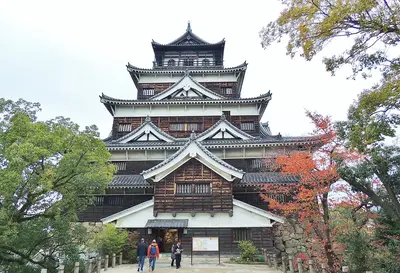
Fukuyama Castle has the most extraordinary access of any castle in Japan: from the shinkansen platform at Fukuyama Station, you can see the main tower directly, a few hundred meters away. Passengers on the Sanyo Shinkansen get a fleeting view of the castle at 250km/h — and those who choose to stop find themselves at the castle gate in five minutes flat. No other castle in Japan sits this close to a shinkansen line.
2

The 400th Anniversary Renovation

In 2022, Fukuyama Castle celebrated its 400th anniversary with a comprehensive renovation that restored the iron-clad northern wall — a unique defensive feature of the original castle — and overhauled the museum interior with modern displays. The renovation revealed and preserved historical fabric that had been obscured for decades, giving the castle a renewed authenticity alongside its concrete reconstruction exterior.

3

Fuchū no Sho: An Engineered Castle Town

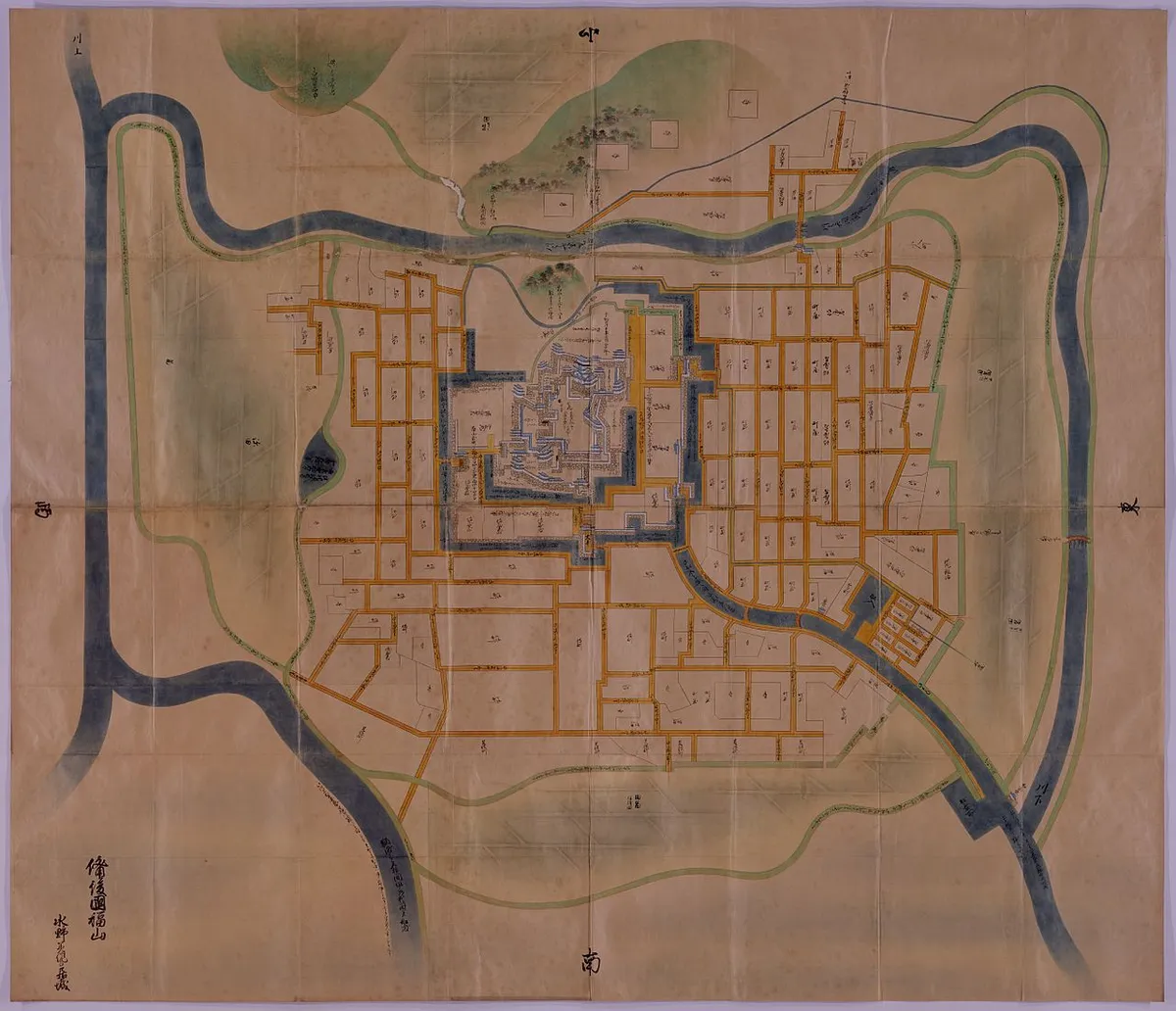
Fukuyama Castle was not just a fortress but the centerpiece of a planned castle town, carefully designed by its builder Mizuno Katsunari in 1622. The layout of the city streets, the positioning of temples and shrines as defensive barriers, and the integration of water channels from the Ashida River all reflect a comprehensive urban planning philosophy rare in castle construction. Elements of this planned town structure survive in the modern city grid.

Structure Details

Visitor tip

Fukuyama is the easiest castle in Japan to visit spontaneously — walk off the shinkansen and you are there in five minutes. The tower interior was fully renovated in 2022 and is among the better concrete castle museums in western Japan. If you are passing through on the Sanyo Shinkansen with even one spare hour, Fukuyama is worth the stop.

Castle type

Hill castle

Hill-top flatland castle — built on a low hill in the Fukuyama plain near the Seto Inland Sea coast, directly adjacent to what is now a shinkansen station

Layout type

Linked compound layout

Compound style — main tower with subsidiary towers and gate complexes on a rectangular hilltop compound

Main tower

Concrete reconstruction (1966, comprehensively renovated 2022) — the original five-story main tower, built in 1622, was destroyed in an Allied bombing raid on August 8, 1945. The 2022 renovation restored the historically significant iron-clad northern wall cladding and updated the museum interior.

32m5 floors, 2 below

Stone walls

Cut-stone masonry

The stone walls at Fukuyama are well-preserved examples of early Edo-period kirizumi (cut stone) masonry — stones cut and fitted more precisely than the Sengoku-era nozurazumi natural stacking found at older castles. Several original sections of the stone walls remain intact alongside the concrete tower, particularly on the main compound's south and east sides.

Moats

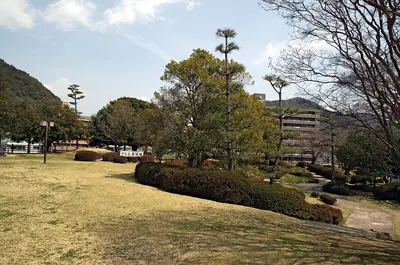
The original castle had inner and outer moat systems fed by the Ashida River. The inner moat partially survives as a park water feature. The outer moat system has largely been absorbed into the modern city, including the area now occupied by Fukuyama Station.

Key defensive features

Iron-Clad North Wall

The original castle featured an unusual iron-plated cladding on the northern wall of the main tower — an expensive and highly practical fireproofing measure that also served as a visible symbol of the lord's technological sophistication and wealth. This iron cladding was restored in the 2022 renovation, making it once again visible on the reconstructed tower.

River and Moat Water System

The Ashida River and the engineered moat system created a comprehensive water barrier around the castle perimeter, integrating natural and constructed defenses in a coherent system characteristic of mature early Edo castle engineering.

The Story of Fukuyama Castle

Originally built 1622 / Mizuno Katsunari
Current form 1622 / Mizuno Katsunari
    1622

    Mizuno Katsunari, a senior Tokugawa retainer, builds Fukuyama Castle as a new seat for the Bingo domain. The castle is designed from the outset as both a fortress and an administrative center, with an innovative iron-clad north wall and a comprehensive planned town layout. It is one of the last great castle construction projects in Japan before the Tokugawa shogunate restricts new castle building.

    1632

    The Mizuno clan is transferred out of Fukuyama domain. The Matsudaira (a Tokugawa branch) and then the Abe clan take over — the Abe clan rules Fukuyama until the Meiji Restoration, a remarkably stable tenure of over 200 years.

    1871

    Abolition of the domain system under Meiji. The castle is taken over by the new government and various wooden structures are demolished, though the main tower survives into the 20th century.

    1945

    An Allied bombing raid on August 8, 1945 — just two days after the Hiroshima bomb — destroys the main tower and most surviving wooden structures. The stone walls survive.

    1966

    A concrete reconstruction of the main tower is completed. The exterior reproduces the original five-story form, though the interior is a modern museum.

    2022

    The castle's 400th anniversary prompts a comprehensive renovation. The historically distinctive iron-clad north wall is restored, and the tower museum interior is fully updated with modern displays and improved accessibility. The renovation is widely praised as a model for how concrete castle reconstructions can be improved without complete rebuilding.

Did You Know?

  • Fukuyama Castle is visible from the shinkansen platform at Fukuyama Station — possibly the only castle in Japan where you can see the main tower from the bullet train platform while still on the train. The shinkansen platform was built on land that was originally the castle's outer compound.
  • The iron-clad north wall was a rare and expensive feature — iron plating on castle walls was unusual because of the cost and weight. Its purpose was primarily fireproofing: the north wall faced the direction from which fire attacks were most likely, and the iron cladding was a practical military investment.
  • Fukuyama is known as the 'City of Roses' — the annual Rose Festival (early to mid-May) fills the castle park and city with flowers, and the combination of a rose garden with the castle backdrop is one of western Japan's most pleasant spring events.
  • The castle was built in 1622, making it one of the last major castle construction projects in Japan — just seven years before the Tokugawa shogunate's 1629 prohibition on new castle construction effectively ended the castle-building era.

Score Breakdown

Tourism Score

C 68/100
  • Accessibility 20 /20
  • Foreign-Friendly 13 /20
  • Historical Value 14 /20
  • Visual Impact 13 /20
  • Facilities 8 /20

Defense Score

B 73/100
  • Terrain Advantage 15 /20
  • Entrance Defense 15 /20
  • Internal Complexity 16 /20
  • Siege Endurance 14 /20
  • Strategic Oversight 13 /20

Planning Your Visit

Best Time to Visit

Rose Festival (early to mid-May) for the most photogenic season — roses in the castle park with the tower backdrop. Cherry blossom season (late March to early April) is also popular. The 2022 renovation means the interior is worth visiting year-round.

Time Needed

1-1.5 hours

Insider Tip

Walk to the north side of the main tower to see the restored iron-clad wall section — this is the historically distinctive feature of Fukuyama Castle and is rarely photographed compared to the standard south-facing tower shot. The iron cladding has a gunmetal visual quality that looks completely different from the standard white plaster walls of most Japanese castles. If you are on the shinkansen heading west from Tokyo, Fukuyama is the last reasonable stop before Hiroshima — consider breaking your journey here for a quick visit before continuing.

Map

Getting There

Nearest station: Fukuyama Station (JR San'yo Shinkansen / JR San'yo Main Line)
Walk from station: 5 min walk
Parking: Paid parking available in the castle park. However, the proximity to the shinkansen station makes driving largely unnecessary.
Accessible with a JR Pass

Admission

Adult¥500
ChildFree

High school students and under free. Castle grounds (moat exterior) are free; fee is for the castle museum tower.

Opening Hours

Open09:00 – 17:00
Last entry16:30

Closed Mondays (or Tuesday if Monday is a holiday) and December 28–January 3. Open daily during the annual Fukuyama Rose Festival (early to mid-May).

Facilities

  • – English guides
  • ✓ Audio guide
  • ✓ Wheelchair access
  • ✓ Restrooms
  • ✓ Gift shop
  • ✓ Food nearby

Audio guide languages: Japanese, English

Nearby Castles

Featured in collections

FAQ

Frequently Asked Questions

How do I get to Fukuyama Castle?

The nearest station is Fukuyama Station (JR San'yo Shinkansen / JR San'yo Main Line). From there it is about 5 minutes on foot.

How much does Fukuyama Castle cost to enter?

Adult admission is ¥500 and child admission is ¥0.

Is Fukuyama Castle worth visiting?

Fukuyama Castle is the ideal spontaneous stop on the Sanyo Shinkansen — five minutes from the platform to the castle gate, a renovated museum worth 45 minutes of your time, and stone walls worth a quiet circuit. It is not the most dramatic or historically important castle in western Japan, but it is the easiest to fit into a travel day, and the 2022 renovation means the experience is genuinely good rather than perfunctory. The Rose Festival in May makes it one of the most pleasant seasonal castle visits in the Chugoku region.

What are the opening hours of Fukuyama Castle?

09:00 to 17:00, last entry 16:30.

How long should I spend at Fukuyama Castle?

Plan for about 1-1.5 hours, depending on how closely you want to explore the grounds.