Mihara Castle

三原城·Mihara-jo

F Tourism Score 38/100
C Defense Score 66/100

The only castle in Japan with a bullet train running through it — look down from the platform and you are looking at 16th-century stone walls.

#174 — Continued 100 Castles Ruins
Mihara Castle (三原城)
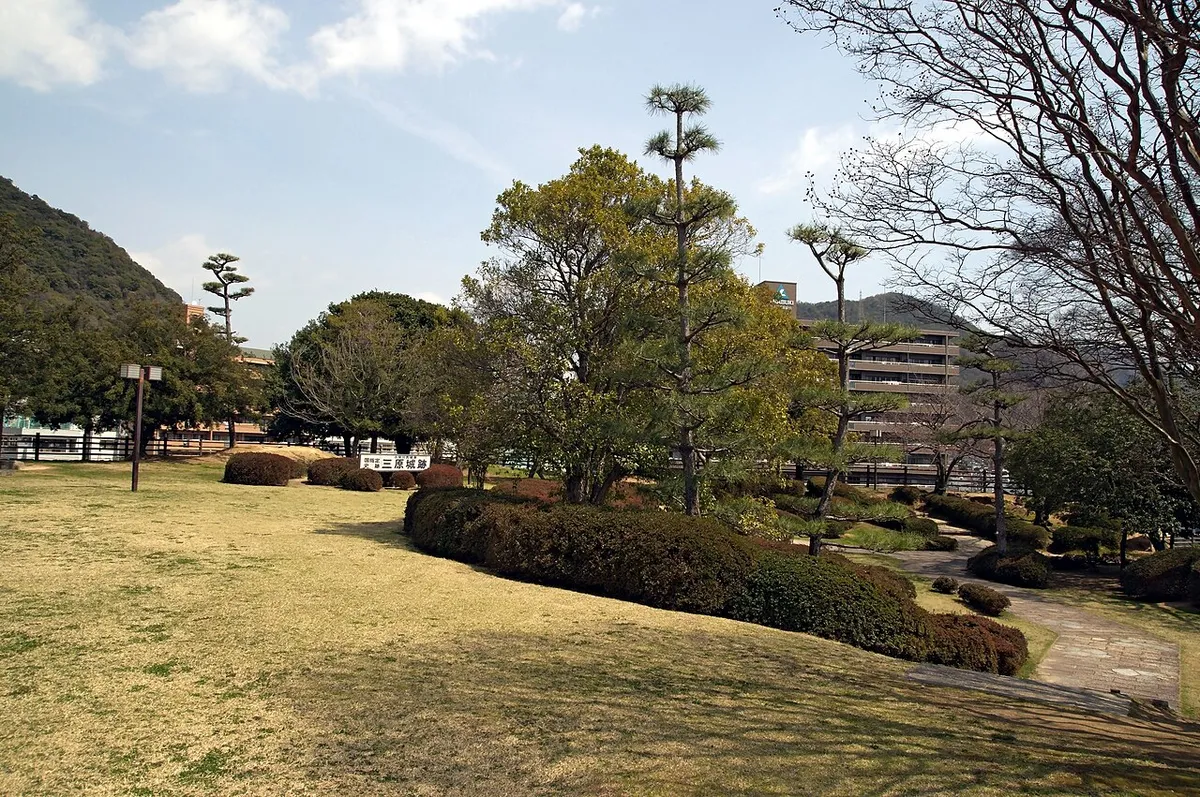
Photo:日:Jnn/Wikimedia Commons/CC BY 2.1 jp

Quick Facts

Quick Facts

Admission
Free Free
Hours
00:00 – 23:59
Nearest Station
Mihara Station (JR San'yo Main Line / Sanyo Shinkansen)
Walk from Station
0 min walk
Time Needed
30 minutes to 1 hour

The castle ruins and stone walls are freely accessible. The Mihara City History Museum has a small admission fee.

Defense Overview

Defense Overview

Why Mihara Castle was hard to attack

This castle is hard to attack because it combines managed outer defenses on relatively level ground with enough defensive depth to slow attackers before the center.

An attacker would not simply arrive at the center on open flat ground. They would have to cross water barriers or moat lines and push through successive outer areas before the core.

Overall score

66/100

Estimated range

60–72

Confidence

B

Usable estimate with some inference

This is a site-original comparison score for learning and comparison, not a reconstruction of one historical battle.

Radar view

Terrain 10/20 Entrance 11/20 Internal 16/20 Siege 16/20 Oversight 13/20
How this estimate was built+

This estimate combines broad terrain, approach, layout, and route-control signals. It is meant to explain the castle's defensive logic in plain English, not reconstruct a single historical attack.

Terrain Advantage

How much the terrain itself seems to help: height, slope, ridges, cliffs, water edges, and limited approach directions.

10/20

Entrance Defense

How awkward and dangerous the first entry looks: gates, bridge or moat crossings, chokepoints, and forced turns.

11/20

Internal Complexity

How hard it seems to keep pushing after entry: layered baileys, depth, compartmentalization, and repeated defensive lines.

16/20

Siege Endurance

A rough sense of long-hold potential: moats, water access, space, storage plausibility, and defensive staying power.

16/20

Strategic Oversight

How much the castle appears to command nearby roads, plains, rivers, basins, harbors, or town approaches.

13/20

Why Visit

Mihara Castle is worth a stop if only for the extraordinary station-over-castle situation, which takes seconds to experience but is unlike anything else in Japan. Standing on the Sanyo Shinkansen platform and looking at original Sengoku-era ishigaki walls beneath your feet is one of those genuinely unexpected castle experiences. The historical story — Kobayakawa Takakage's sea-island fortress, the Mori clan's naval power — adds depth. For enthusiasts doing the Chugoku castle circuit, Mihara is a natural stop between Hiroshima and Fukuyama.

Highlights

1

The Castle Under the Train Station

Mihara Castle holds one of the most bizarre distinctions in Japanese castle history: JR Mihara Station was built directly on top of its stone walls and former compound. Today, passengers waiting on the Sanyo Shinkansen platform can lean over the railing and look down at original 16th-century ishigaki stone walls. This accidental juxtaposition of Sengoku military engineering and bullet train infrastructure is unique in Japan.
2

Kobayakawa Takakage's Water Fortress

Mihara Castle was constructed in 1567 by Kobayakawa Takakage — one of the Mori clan's most capable generals and adopted son of Kobayakawa Okimoto. The castle was originally built on a small island in Mihara Bay, connected to the shore only by bridges. This 'water castle' (mizujiro) design made it virtually unassailable from land, turning the sea itself into a moat. Land reclamation has since connected the former island to the mainland.

3

The Mori Clan's Naval Base

Under the Mori clan, Mihara served as a critical naval staging point for operations across the Seto Inland Sea. The Kobayakawa branch of the Mori clan controlled the sea lanes from here, and the castle's island position gave it direct access to the water for deploying warships. The Mori navy — one of the most powerful in Sengoku Japan — operated from this base.

Structure Details

Visitor tip

The most interesting thing to do at Mihara Castle is simply to stand on the JR Mihara Station platform and look at the original stone walls incorporated into the station foundations below. It takes about 10 seconds to grasp that you are standing on a 16th-century castle, and it is genuinely surprising every time. The small castle ruins park adjacent to the station has additional wall sections and an explanatory board.

Castle type

Flatland castle

Flatland castle — originally built on a small island in Mihara Bay; subsequent land reclamation has connected the former island site to the mainland

Layout type

Linked compound layout

Compound style — original island layout with water on all sides acting as a natural moat

Main tower

No tower survives. The former Honmaru area is now occupied by JR Mihara Station. Original stone walls (ishigaki) are visible from the station platform and in the adjacent park.

Stone walls

Natural stone stacking

The most remarkable surviving feature of Mihara Castle is the original stone walls (ishigaki) that are now incorporated into the foundation of JR Mihara Station. Passengers on the platform can observe the Sengoku-era stonework immediately below the modern station infrastructure. Additional wall sections are preserved in the small park adjacent to the station.

Moats

Mihara Castle was originally surrounded entirely by sea water — the castle was built on a tidal island in Mihara Bay. This natural water moat was the defining defensive feature. Edo-period land reclamation gradually filled in the surrounding water, and the castle's original island character is no longer visually apparent.

Key defensive features

Island Sea Moat

The castle's original island position surrounded by Mihara Bay waters was its primary defensive feature — effectively a natural moat of open seawater. Attackers would need boats to approach, and the Kobayakawa naval forces could engage them at sea before they even reached the walls.

Naval Control of Seto Inland Sea

The castle's position gave the Kobayakawa and Mori clan direct control of the sea lanes through this section of the Seto Inland Sea. Any enemy naval force attempting to pass through the Mihara channel could be intercepted by the garrison's warships.

The Story of Mihara Castle

Originally built 1567 / Kobayakawa Takakage
Current form 1619 / Fukushima Masanori (major renovations)
    1567

    Kobayakawa Takakage — one of the Mori clan's most capable generals, later one of Toyotomi Hideyoshi's 'Five Elders' — constructs Mihara Castle on a tidal island in Mihara Bay. The island position, accessible only by bridges, makes the castle a formidable naval fortress.

    1582

    Following the death of Oda Nobunaga (Honnoji Incident), Kobayakawa Takakage and the Mori clan negotiate with Toyotomi Hideyoshi. Mihara becomes an important base during the subsequent consolidation of western Japan.

    1600

    After the Battle of Sekigahara, the Mori clan is reduced in territory. Fukushima Masanori takes control of Hiroshima domain and expands and renovates the castle over the following decades.

    1619

    Asano Nagaakira becomes the new lord of Hiroshima domain. The Asano clan administers Mihara as a sub-domain seat for the remainder of the Edo period.

    1873

    The Meiji government orders the castle's structures demolished under the army's castle clearance policies. The tower, gates, and remaining buildings are removed.

    1897

    The San'yo Railway constructs Mihara Station directly over the former castle Honmaru — building the station on the castle's stone foundations. Original ishigaki walls are incorporated into the station structure. The juxtaposition of feudal engineering and modern rail infrastructure becomes unique in Japan.

In Pop Culture

TV

Various Sengoku and Mori clan historical documentaries

Mihara Castle appears in NHK historical coverage of the Mori clan's Seto Inland Sea naval power and Kobayakawa Takakage's role as one of Toyotomi Hideyoshi's Five Elders.

Did You Know?

  • The JR Mihara Station-over-castle situation is so well known among Japanese castle enthusiasts that Mihara is sometimes called 'the castle you pass through without realizing it' — thousands of Sanyo Shinkansen passengers stop at Mihara Station every day without knowing they are standing on a 16th-century military fortress.
  • Kobayakawa Takakage, Mihara's builder, was one of the most significant figures in late Sengoku politics. As one of Toyotomi Hideyoshi's 'Five Elders' (Go-Tairo), he held political authority second only to Hideyoshi himself. His career ranged from Mihara across all of western Japan and even to Korea during the invasions of 1592–1598.
  • The Seto Inland Sea around Mihara was the site of several major Sengoku naval battles. The Mori clan's navy fought the Oda clan's fleet in the First and Second Battles of Kizugawaguchi (1576 and 1578) — two of the largest naval engagements of the Sengoku period, in which the Mori navy won the first but lost the second when Nobunaga deployed ironclad vessels (atakebune).

Score Breakdown

Tourism Score

F 38/100
  • Accessibility 10 /20
  • Foreign-Friendly 6 /20
  • Historical Value 12 /20
  • Visual Impact 5 /20
  • Facilities 5 /20

Defense Score

C 66/100
  • Terrain Advantage 10 /20
  • Entrance Defense 11 /20
  • Internal Complexity 16 /20
  • Siege Endurance 16 /20
  • Strategic Oversight 13 /20

Planning Your Visit

Best Time to Visit

Year-round. The stone walls are accessible any time the station is open. Cherry blossom season in the adjacent park is pleasant.

Time Needed

30 minutes to 1 hour

Insider Tip

When you arrive at Mihara Station, go to the platform edge closest to the town side and look down over the railing. The original ishigaki stone walls of the castle are clearly visible below the platform edge. Most passengers miss this entirely. A short walk to the adjacent ruins park shows additional wall sections with better explanatory signage.

Map

Getting There

Nearest station: Mihara Station (JR San'yo Main Line / Sanyo Shinkansen)
Walk from station: 0 min walk
Parking: Public parking available near Mihara Station. The castle ruins are immediately adjacent.
Accessible with a JR Pass

Admission

Free

The castle ruins and stone walls are freely accessible. The Mihara City History Museum has a small admission fee.

Opening Hours

Open00:00 – 23:59

The ruins around Mihara Station are accessible at all times. The former Honmaru area adjacent to the station is open as a park.

Facilities

  • – English guides
  • – Audio guide
  • ✓ Wheelchair access
  • ✓ Restrooms
  • – Gift shop
  • ✓ Food nearby

Nearby Castles

Featured in collections

FAQ

Frequently Asked Questions

How do I get to Mihara Castle?

The nearest station is Mihara Station (JR San'yo Main Line / Sanyo Shinkansen). From there it is about 0 minutes on foot.

How much does Mihara Castle cost to enter?

Mihara Castle is free to enter.

Is Mihara Castle worth visiting?

Mihara Castle is worth a stop if only for the extraordinary station-over-castle situation, which takes seconds to experience but is unlike anything else in Japan. Standing on the Sanyo Shinkansen platform and looking at original Sengoku-era ishigaki walls beneath your feet is one of those genuinely unexpected castle experiences. The historical story — Kobayakawa Takakage's sea-island fortress, the Mori clan's naval power — adds depth. For enthusiasts doing the Chugoku castle circuit, Mihara is a natural stop between Hiroshima and Fukuyama.

What are the opening hours of Mihara Castle?

00:00 to 23:59.

How long should I spend at Mihara Castle?

Plan for about 30 minutes to 1 hour, depending on how closely you want to explore the grounds.