Hiroshima Castle

広島城·Hiroshima-jo

B Tourism Score 72/100
C Defense Score 67/100

The castle that atomic fire erased and Hiroshima's spirit rebuilt — visiting here is inseparable from the city's most profound history.

#73 — 100 Famous Castles Reconstructed
Hiroshima Castle (広島城)
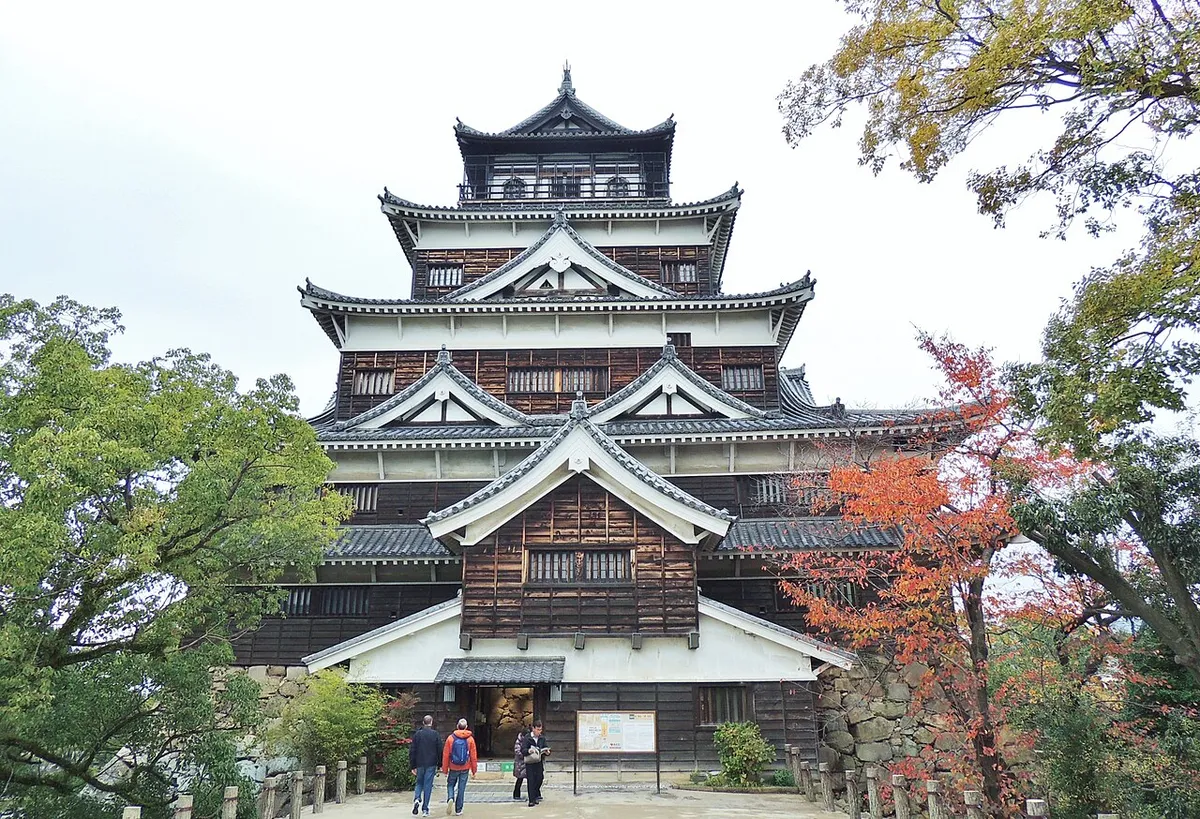
Photo:Yoshio Kohara/Wikimedia Commons/CC BY 3.0

Quick Facts

Quick Facts

Admission
¥370

¥180

Hours
09:00 – 18:00

Last entry 17:30

Nearest Station
Hiroshima Station (JR / Shinkansen), then streetcar to Kamiyacho
Walk from Station
25 min walk

Bus also available

Time Needed
1.5-2 hours for the castle; combine with Peace Memorial Museum and Park for a full day

Children (elementary and junior high school age) ¥180. Castle grounds (moat exterior) are free to enter; fee is for the main tower museum.

Defense Overview

Defense Overview

Why Hiroshima Castle was hard to attack

This castle is hard to attack because attackers have to cross barriers and then keep working through constrained entry points before the core.

An attacker would not simply arrive at the center on open flat ground. They would have to cross water barriers or moat lines, pass tighter turns and chokepoints, and face more defensive depth after the first line.

Overall score

67/100

Estimated range

61–73

Confidence

A

Strong multi-source support

This is a site-original comparison score for learning and comparison, not a reconstruction of one historical battle.

Radar view

Terrain 11/20 Entrance 14/20 Internal 16/20 Siege 15/20 Oversight 11/20
How this estimate was built+

This estimate combines broad terrain, approach, layout, and route-control signals. It is meant to explain the castle's defensive logic in plain English, not reconstruct a single historical attack.

Terrain Advantage

How much the terrain itself seems to help: height, slope, ridges, cliffs, water edges, and limited approach directions.

11/20

Entrance Defense

How awkward and dangerous the first entry looks: gates, bridge or moat crossings, chokepoints, and forced turns.

14/20

Internal Complexity

How hard it seems to keep pushing after entry: layered baileys, depth, compartmentalization, and repeated defensive lines.

16/20

Siege Endurance

A rough sense of long-hold potential: moats, water access, space, storage plausibility, and defensive staying power.

15/20

Strategic Oversight

How much the castle appears to command nearby roads, plains, rivers, basins, harbors, or town approaches.

11/20

Why Visit

Hiroshima Castle is best understood alongside the Peace Memorial Museum and Park nearby. The castle itself is a solid concrete reconstruction with a good museum, but its real power comes from its context: standing on the spot where a castle once stood, knowing that 900 meters away the modern world's most destructive weapon erased everything in an instant, gives the reconstruction a meaning that purely aesthetic castles cannot match. The moat and stone walls provide genuine historical atmosphere.

Highlights

1

Destroyed and Reborn: Ground Zero Castle

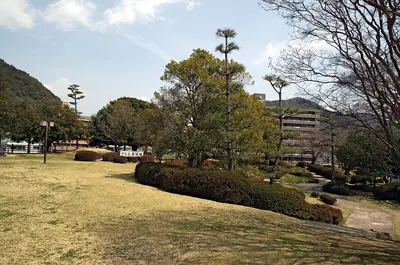
Hiroshima Castle stood just 900 meters from the hypocenter of the atomic bomb dropped on August 6, 1945. The entire castle complex — every building, every tower, every wooden structure — was obliterated instantly. What stands today is a 1958 concrete reconstruction, but the castle site carries an emotional weight unlike anywhere else in Japan: it is an emblem of Hiroshima's total destruction and its extraordinary reconstruction.
2

A Carp's Domain

Hiroshima Castle's nickname 'Rijojo' (Carp Castle) gave the city its beloved baseball team its name: the Hiroshima Toyo Carp. The carp motif appears throughout the castle's decorations. For locals, the castle and the Carp baseball team are deeply intertwined symbols of postwar Hiroshima's resilience.

3

The Museum Inside

The reconstructed tower houses one of the better castle museums in western Japan, covering the castle's history from its construction by Mori Terumoto through the Edo period and into its tragic fate in 1945. Exhibits include samurai armor, period maps, and documentation of the atomic bomb's impact on the castle site itself.

Structure Details

Visitor tip

The castle sits within a pleasant moat-ringed park. The tower interior museum is compact but informative — budget about 45 minutes inside. The atomic bomb connection is not heavily emphasized inside the castle itself; the Peace Memorial Museum nearby handles that history in depth. Combine both for a complete Hiroshima experience.

Castle type

Flatland castle

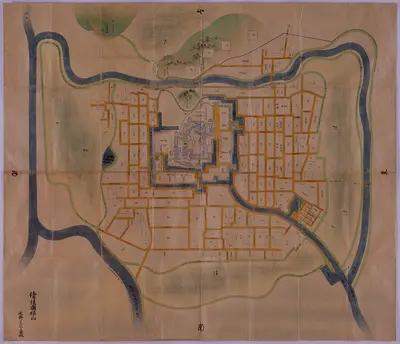
Flatland castle — built on the Ota River delta, relying on multiple river channels and moats rather than natural elevation

Layout type

Concentric layout

Enclosure style — concentric moats and stone walls surrounding the central compound

Main tower

Concrete reconstruction (1958) — the original five-story main tower, completed in 1599, was completely destroyed by the atomic bomb on August 6, 1945, along with every other structure. The current tower is a faithful exterior reconstruction in reinforced concrete.

26.6m5 floors, 1 below

Stone walls

Natural stone stacking

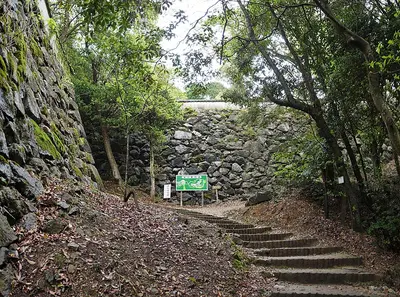
The stone walls and moat system partially survive from the original castle. The inner moat remains intact and gives the reconstruction its authentic setting, though all wooden structures above the stone foundations are postwar rebuilds.

Moats

The inner moat surrounding the main compound survives from the original Edo-period castle. The Ota River's multiple channels originally served as the castle's outer defensive water barrier, making the entire delta island a natural fortress.

Key defensive features

River Delta Island Position

The castle was built on a low island in the Ota River delta, surrounded by multiple river channels that acted as natural moats. Approaching the castle required crossing water at multiple points, making any large-scale assault logistically difficult.

Surviving Inner Moat

The inner stone-walled moat still encircles the main compound, giving a clear sense of the castle's original defensive perimeter. The combination of water, stone walls, and controlled gate access made the inner compound well-protected.

Multiple Gate System

The original castle featured several masugata (square killing-ground) gate complexes between the outer approaches and the main compound, forcing any attacking force to fight through a series of confined spaces under fire.

The Story of Hiroshima Castle

Originally built 1589 / Mori Terumoto
Current form 1958 / Hiroshima City Government
    1589

    Mori Terumoto, one of Toyotomi Hideyoshi's five regents, begins construction on the Ota River delta. The castle is designed as the administrative center for western Honshu, reflecting Mori's enormous regional power.

    1600

    After Mori supports the losing side at the Battle of Sekigahara, Tokugawa Ieyasu strips him of most of his territory. The Fukushima clan and later the Asano clan take control of Hiroshima, governing from the castle through the entire Edo period.

    1894

    During the First Sino-Japanese War, Emperor Meiji moves the Imperial General Headquarters to Hiroshima Castle, briefly making the city Japan's de facto wartime capital. The castle's military significance makes it a major garrison base.

    1945

    At 8:15 AM on August 6, the United States drops the first atomic bomb used in warfare. The castle, 900 meters from the hypocenter, is instantly obliterated — every wooden structure destroyed, the stone walls partially collapsed by the blast. Thousands of soldiers garrisoned in the castle grounds are killed immediately.

    1958

    Hiroshima City completes a concrete reconstruction of the main tower, designed to match the exterior appearance of the 1599 original. The rebuilt castle becomes a symbol of Hiroshima's postwar recovery and resilience.

In Pop Culture

documentary

Various WWII documentaries

Hiroshima Castle frequently appears in documentary footage and photographs taken immediately after the atomic bombing, showing the devastation at ground zero and the castle's obliteration.

Did You Know?

  • The Imperial General Headquarters operated from Hiroshima Castle during the First Sino-Japanese War (1894–95) — Emperor Meiji himself resided at the castle for several months, making it the seat of the Japanese government during the conflict.
  • The stone walls and moat that survived the atomic bomb are original Edo-period construction — the bomb destroyed the wooden structures but left significant stone and earthwork remains, which form the foundation of today's castle park.
  • Hiroshima Castle's nickname 'Rijojo' (Carp Castle) comes from the carp (鯉, koi/ri) used as a decorative motif on the castle's roof ornaments. This same carp became the namesake of the Hiroshima Toyo Carp professional baseball team, founded in 1950 as a symbol of postwar recovery.
  • Before the bombing, the castle complex was one of the largest in western Japan — the outer compound encompassed what is now a significant portion of central Hiroshima city.

Score Breakdown

Tourism Score

B 72/100
  • Accessibility 15 /20
  • Foreign-Friendly 14 /20
  • Historical Value 17 /20
  • Visual Impact 14 /20
  • Facilities 12 /20

Defense Score

C 67/100
  • Terrain Advantage 11 /20
  • Entrance Defense 14 /20
  • Internal Complexity 16 /20
  • Siege Endurance 15 /20
  • Strategic Oversight 11 /20

Planning Your Visit

Best Time to Visit

Cherry blossom season (late March to early April) is excellent — the moat is lined with cherry trees and the castle grounds become a popular hanami (blossom viewing) spot. Spring and autumn are ideal; summer in Hiroshima is very hot and humid.

Time Needed

1.5-2 hours for the castle; combine with Peace Memorial Museum and Park for a full day

Insider Tip

Walk the outer perimeter of the moat first before entering — the stone walls and water still convey genuine atmosphere, and the approach from the south through the old Omotemon gate area gives the best sense of the castle's original scale. Then pair the castle visit with the Peace Memorial Museum for the complete Hiroshima experience.

Map

Getting There

Nearest station: Hiroshima Station (JR / Shinkansen), then streetcar to Kamiyacho
Walk from station: 25 min walk
Bus: Hiroshima's streetcar (tram) network serves the area. Alight at Kamiyacho and walk north approximately 10 minutes.
Parking: Paid parking available near the castle grounds. Train and streetcar recommended given central location.
Accessible with a JR Pass

Admission

Adult¥370
Child¥180

Children (elementary and junior high school age) ¥180. Castle grounds (moat exterior) are free to enter; fee is for the main tower museum.

Opening Hours

Open09:00 – 18:00
Last entry17:30

IMPORTANT: The castle tower closed on March 22, 2026 for approximately 2.5 years of earthquake-resistance renovation. Ninomaru (free) remains open: Apr–Sep 9:00–17:30, Oct–Mar 9:00–16:30. Closed December 29–31.

Facilities

  • ✓ English guides
  • – Audio guide
  • – Wheelchair access
  • ✓ Restrooms
  • ✓ Gift shop
  • ✓ Food nearby

Nearby Castles

Featured in collections

FAQ

Frequently Asked Questions

How do I get to Hiroshima Castle?

The nearest station is Hiroshima Station (JR / Shinkansen), then streetcar to Kamiyacho. From there it is about 25 minutes on foot. Hiroshima's streetcar (tram) network serves the area. Alight at Kamiyacho and walk north approximately 10 minutes.

How much does Hiroshima Castle cost to enter?

Adult admission is ¥370 and child admission is ¥180.

Is Hiroshima Castle worth visiting?

Hiroshima Castle is best understood alongside the Peace Memorial Museum and Park nearby. The castle itself is a solid concrete reconstruction with a good museum, but its real power comes from its context: standing on the spot where a castle once stood, knowing that 900 meters away the modern world's most destructive weapon erased everything in an instant, gives the reconstruction a meaning that purely aesthetic castles cannot match. The moat and stone walls provide genuine historical atmosphere.

What are the opening hours of Hiroshima Castle?

09:00 to 18:00, last entry 17:30.

How long should I spend at Hiroshima Castle?

Plan for about 1.5-2 hours for the castle; combine with Peace Memorial Museum and Park for a full day, depending on how closely you want to explore the grounds.