Yoshida-Koriyama Castle

吉田郡山城·Yoshida-Koriyama-jo

F Tourism Score 32/100
A Defense Score 83/100

The remote mountain headquarters of Mori Motonari — Japan's most brilliant Sengoku warlord — where 3,000 defenders defeated 20,000 attackers and the 'three arrows' lesson was born.

#72 — 100 Famous Castles Ruins
Yoshida-Koriyama Castle (吉田郡山城)
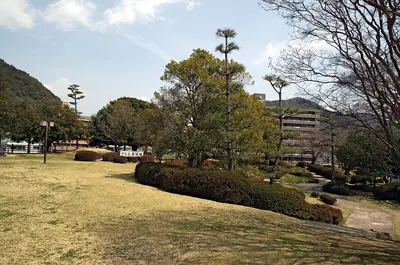
Photo:shikabane taro/Wikimedia Commons/CC BY 3.0

Quick Facts

Quick Facts

Admission
Free Free
Hours
00:00 – 23:59
Nearest Station
Yoshida-guchi Station (JR Geibi Line)
Walk from Station
40 min walk

Bus also available

Time Needed
3–4 hours (museum + mountain hike + summit ruins)

The ruins are freely accessible at all times. The Mori Terumoto Historical Museum (Mori Motonari Museum) in the adjacent Yoshida town charges admission for exhibits on the Mori clan.

Defense Overview

Defense Overview

Why Yoshida-Koriyama Castle was hard to attack

This castle is hard to attack because it holds stronger ground above the surrounding approaches instead of letting attackers close on the core from easy footing.

An attacker would first have to fight the site itself before reaching the main defenses. They would have to cross water barriers or moat lines, approach through at least some constrained entry space, and face more defensive depth after the first line.

Overall score

83/100

Estimated range

77–89

Confidence

B

Usable estimate with some inference

This is a site-original comparison score for learning and comparison, not a reconstruction of one historical battle.

Radar view

Terrain 19/20 Entrance 18/20 Internal 14/20 Siege 15/20 Oversight 17/20
How this estimate was built+

This estimate combines broad terrain, approach, layout, and route-control signals. It is meant to explain the castle's defensive logic in plain English, not reconstruct a single historical attack.

Terrain Advantage

How much the terrain itself seems to help: height, slope, ridges, cliffs, water edges, and limited approach directions.

19/20

Entrance Defense

How awkward and dangerous the first entry looks: gates, bridge or moat crossings, chokepoints, and forced turns.

18/20

Internal Complexity

How hard it seems to keep pushing after entry: layered baileys, depth, compartmentalization, and repeated defensive lines.

14/20

Siege Endurance

A rough sense of long-hold potential: moats, water access, space, storage plausibility, and defensive staying power.

15/20

Strategic Oversight

How much the castle appears to command nearby roads, plains, rivers, basins, harbors, or town approaches.

17/20

Why Visit

Yoshida-Koriyama Castle demands real commitment: it is remote, requires a mountain hike, and offers only earthwork ruins with limited visible stone walls. What it offers in return is a direct connection to one of the Sengoku period's most remarkable figures and the site of one of its most dramatic siege victories. The 200+ compound terrace earthworks spread across the mountain are tangible evidence of what made this fortress effectively impregnable. Combine with the Mori Motonari Museum at the base for essential context.

Highlights

1

Mori Motonari's Mountain Fortress — The Largest Castle in Western Japan

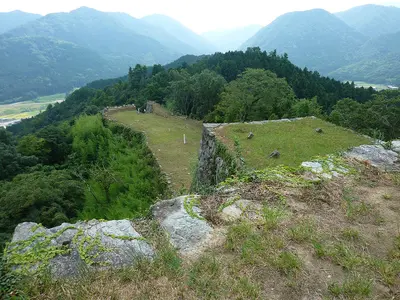
Yoshida-Koriyama Castle was the headquarters of Mori Motonari — the warlord who started as the minor lord of a single castle and, through brilliance and ruthlessness, built an empire spanning 10 provinces across western Japan. At its peak, the castle complex covered the entire 390-meter mountain with over 200 compound terraces — arguably the largest mountain castle complex in western Honshu. The earthwork and stone remains of this enormous fortress spread across the mountain in fascinating ruins.
2

The 'Three Arrows' Lesson — Japan's Most Famous Parenting Story

Mori Motonari is famous throughout Japan for the 'three arrows' lesson he reportedly gave his three sons: a single arrow breaks easily, but three arrows bound together cannot be broken. He used this demonstration to teach his sons to remain united after his death. The lesson — 'Ichiya no oshie' in Japanese — is one of the most widely known proverbs about family unity in Japanese culture, and it originated at Yoshida-Koriyama, making this one of the culturally resonant castle sites in Japan regardless of its remoteness.

3

The 1540 Siege — 20,000 vs 3,000

In 1540, Yoshida-Koriyama Castle was besieged by 20,000 troops of the Ouchi clan while Mori Motonari had only 3,000 defenders. The siege lasted several months, and Mori's brilliant defensive tactics — combined with relief from his Amago clan allies — eventually forced the vastly larger attacking force to withdraw. This victory established Mori Motonari's reputation as a military genius and launched his career of expansion. The castle's physical layout, with its multiple terrace compounds, was central to this defensive achievement.

Structure Details

Visitor tip

Yoshida-Koriyama is for dedicated castle enthusiasts only — the remote location, the mountain hike, and the absence of dramatic stone walls or buildings make this a challenging visit to justify without strong interest in Mori Motonari and Sengoku history. Those who make the effort are rewarded by the sheer scale of earthwork remains, excellent mountain views, and a direct connection to one of the Sengoku period's most fascinating warlords.

Castle type

Mountain castle

Mountain castle — built across an entire 390-meter mountain, with over 200 identified compound terraces covering the slopes from base to summit

Layout type

Ladder layout

Stepped terrace style — over 200 separate compound terraces arranged across the mountain, an extraordinary scale for a mountain castle complex

Main tower

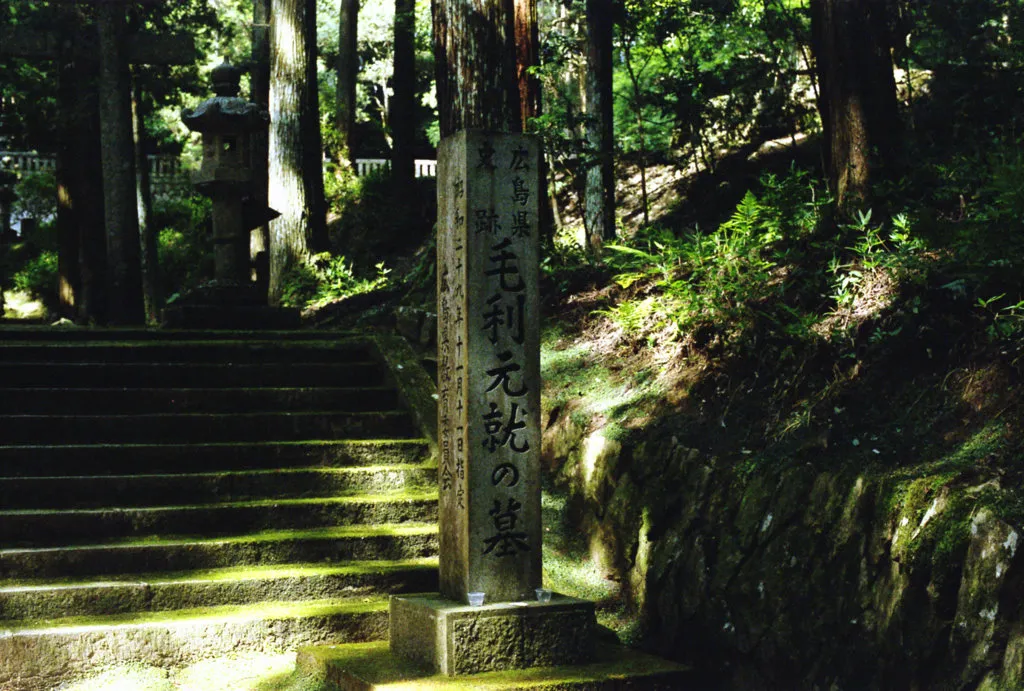
Earthwork and stone foundation ruins — the mountain retains earthwork terracing for over 200 separate compounds, with stone foundation traces and some partial stone walls surviving. The castle was dismantled in 1600 when the Mori clan moved to Hiroshima.

Stone walls

Natural stone stacking

The castle's stone remains are spread across an enormous mountain area — over 200 compound terraces have been identified by archaeologists. Individual terrace walls show characteristic nozurazumi (rough stone stacking) construction. The sheer scale of the earthwork and stone remains gives a sense of the castle's extraordinary size.

Key defensive features

390-Meter Mountain Position with 200+ Compounds

The castle occupied the entirety of a 390-meter mountain with over 200 separate compound terraces. This created an extraordinary depth of defense — an attacking army would need to fight through dozens of fortified positions before reaching the summit, each providing a fallback for the defenders.

Comprehensive Valley Observation

The 390-meter summit gave the garrison complete observation of all approaches through the Yoshida valley. No force could approach without detection, and the castle's mountain position denied any possibility of surprise attack.

Multiple Defensive Lines

The castle's 200+ compound terraces on the mountain slopes created multiple successive defensive lines. The 1540 siege demonstrated this effectiveness — 20,000 attackers could not overwhelm 3,000 defenders organized across the castle's depth of fortification.

The Story of Yoshida-Koriyama Castle

Originally built 1336 / Mori clan
Current form 1540 / Mori Motonari
    1336

    The Mori clan establishes a fortification on the Koriyama mountain as their clan headquarters in Aki Province. The castle serves as the base for a minor regional lord with limited power.

    1540

    The 'Battle of Yoshida-Koriyama' — 20,000 Ouchi forces besiege Mori Motonari's 3,000 defenders. After months of failed assault, the Ouchi forces withdraw. This victory establishes Mori Motonari's reputation and launches his career of westward expansion.

    1555

    Mori Motonari defeats the Ouchi and Amago clans in a series of campaigns, expanding his domain to cover 10 provinces across western Honshu. Yoshida-Koriyama remains the center of his expanding power.

    1571

    Mori Motonari dies at Yoshida-Koriyama Castle at age 75. His grandson Mori Terumoto inherits the domain and continues the family's dominance of western Japan.

    1600

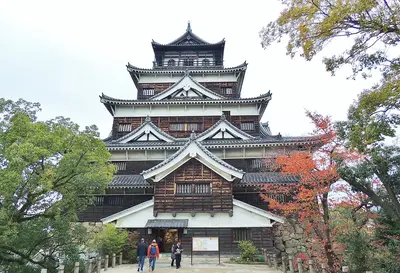
    After the Battle of Sekigahara (where the Mori supported the losing side), Mori Terumoto is forced to abandon most of his territory and relocate to Hiroshima. He moves to Hiroshima Castle, and Yoshida-Koriyama Castle is demolished and abandoned. The mountain returns to forest.

In Pop Culture

TV

Gunshi Kanbei (NHK Taiga Drama, 2014)

The 2014 NHK Taiga Drama covering the Sengoku period included episodes dealing with the Mori clan and their western Honshu power base, bringing Mori Motonari's legacy to wider national attention.

TV

Mori Motonari (NHK Taiga Drama, 1997)

The 1997 NHK Taiga Drama dedicated entirely to Mori Motonari brought enormous attention to Yoshida-Koriyama Castle and the 'three arrows' legend, significantly boosting tourism to the Akitakata area.

Did You Know?

  • The 'three arrows' lesson attributed to Mori Motonari is one of Japan's most famous historical anecdotes, but historians debate whether he actually performed this demonstration. Regardless of its literal truth, the story encapsulates the clan unity that allowed the Mori to maintain their western Honshu domain across generations.
  • The castle's 200+ compound terraces make it one of the largest mountain castle complexes ever built in Japan — a scale that was only practical because the Mori clan controlled the labor and resources of 10 provinces at their peak. The logistics of supplying such a vast fortification were themselves a demonstration of military-administrative power.
  • Mori Motonari is one of the Sengoku period's most fascinating warlords — he started as a minor lord of a single castle, survived multiple assassination attempts and political crises through intelligence and cunning, and built a 10-province empire entirely through strategic brilliance rather than the brute military power that characterized figures like Oda Nobunaga.

Score Breakdown

Tourism Score

F 32/100
  • Accessibility 6 /20
  • Foreign-Friendly 4 /20
  • Historical Value 14 /20
  • Visual Impact 5 /20
  • Facilities 3 /20

Defense Score

A 83/100
  • Terrain Advantage 19 /20
  • Entrance Defense 18 /20
  • Internal Complexity 14 /20
  • Siege Endurance 15 /20
  • Strategic Oversight 17 /20

Planning Your Visit

Best Time to Visit

Spring (cherry blossoms in Yoshida town) and autumn (foliage). Avoid wet weather — the mountain paths become slippery.

Time Needed

3–4 hours (museum + mountain hike + summit ruins)

Insider Tip

Start at the Mori Motonari Museum (Akitakata City Museum) before the mountain hike — the exhibits on the 1540 siege and Mori Motonari's campaigns give the earthwork ruins their full meaning. When on the mountain, try to identify the scale of the terrace system across the slopes — the sheer number of compound terraces is more impressive than any individual feature, and understanding what you're looking at transforms the experience.

Map

Getting There

Nearest station: Yoshida-guchi Station (JR Geibi Line)
Walk from station: 40 min walk
Bus: Bus from Hiroshima to Yoshida town approximately 1 hour. The ruins require a hike of 30–40 minutes from the town.
Parking: Parking available in Yoshida town at the base of the mountain. The ruins require hiking.
Accessible with a JR Pass

Admission

Free

The ruins are freely accessible at all times. The Mori Terumoto Historical Museum (Mori Motonari Museum) in the adjacent Yoshida town charges admission for exhibits on the Mori clan.

Opening Hours

Open00:00 – 23:59

The ruins are an outdoor site accessible year-round. The mountain path can be slippery in wet weather. Winter snowfall may affect access.

Facilities

  • – English guides
  • – Audio guide
  • – Wheelchair access
  • ✓ Restrooms
  • – Gift shop
  • ✓ Food nearby

Nearby Castles

Featured in collections

FAQ

Frequently Asked Questions

How do I get to Yoshida-Koriyama Castle?

The nearest station is Yoshida-guchi Station (JR Geibi Line). From there it is about 40 minutes on foot. Bus from Hiroshima to Yoshida town approximately 1 hour. The ruins require a hike of 30–40 minutes from the town.

How much does Yoshida-Koriyama Castle cost to enter?

Yoshida-Koriyama Castle is free to enter.

Is Yoshida-Koriyama Castle worth visiting?

Yoshida-Koriyama Castle demands real commitment: it is remote, requires a mountain hike, and offers only earthwork ruins with limited visible stone walls. What it offers in return is a direct connection to one of the Sengoku period's most remarkable figures and the site of one of its most dramatic siege victories. The 200+ compound terrace earthworks spread across the mountain are tangible evidence of what made this fortress effectively impregnable. Combine with the Mori Motonari Museum at the base for essential context.

What are the opening hours of Yoshida-Koriyama Castle?

00:00 to 23:59.

How long should I spend at Yoshida-Koriyama Castle?

Plan for about 3–4 hours (museum + mountain hike + summit ruins), depending on how closely you want to explore the grounds.