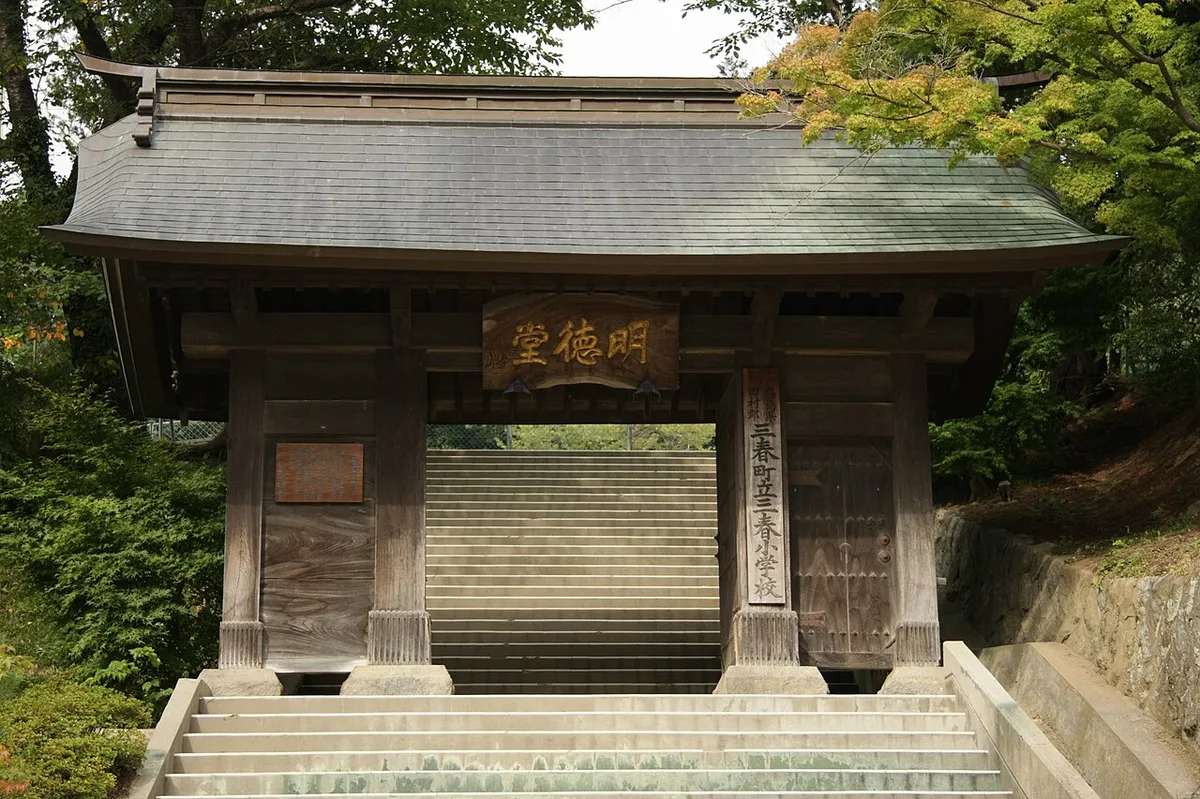
Miharu Castle

三春城·Miharu-jo

D Tourism Score 42/100
B Defense Score 77/100

The castle hill of Japan's most famous cherry tree town — where a 1,000-year-old weeping sakura makes the entire region bloom in late April.

#111 — Continued 100 Castles Ruins
Miharu Castle (三春城)
Photo:小池 隆/Wikimedia Commons/CC BY 3.0

Quick Facts

Quick Facts

Admission
Free Free
Hours
00:00 – 23:59
Nearest Station
Miharu Station (JR Ban-etsu East Line)
Walk from Station
25 min walk

Bus also available

Time Needed
1.5–2 hours including the Takizakura and castle hill walk.

Free admission to the castle hill park. The town's Takizakura cherry tree viewing site nearby charges a small seasonal fee during peak bloom.

Defense Overview

Defense Overview

Why Miharu Castle was hard to attack

This castle is hard to attack because it combines a raised core with defended outer space with enough defensive depth to slow attackers before the center.

An attacker would not get a simple direct approach to the center. They would have to cross water barriers or moat lines, push through successive outer areas before the core, and do so under a position that also watches the surrounding routes.

Overall score

77/100

Estimated range

71–83

Confidence

B

Usable estimate with some inference

This is a site-original comparison score for learning and comparison, not a reconstruction of one historical battle.

Radar view

Terrain 15/20 Entrance 14/20 Internal 16/20 Siege 16/20 Oversight 16/20
How this estimate was built+

This estimate combines broad terrain, approach, layout, and route-control signals. It is meant to explain the castle's defensive logic in plain English, not reconstruct a single historical attack.

Terrain Advantage

How much the terrain itself seems to help: height, slope, ridges, cliffs, water edges, and limited approach directions.

15/20

Entrance Defense

How awkward and dangerous the first entry looks: gates, bridge or moat crossings, chokepoints, and forced turns.

14/20

Internal Complexity

How hard it seems to keep pushing after entry: layered baileys, depth, compartmentalization, and repeated defensive lines.

16/20

Siege Endurance

A rough sense of long-hold potential: moats, water access, space, storage plausibility, and defensive staying power.

16/20

Strategic Oversight

How much the castle appears to command nearby roads, plains, rivers, basins, harbors, or town approaches.

16/20

Why Visit

The castle ruins themselves are modest — earthwork terracing and stone remnants on a pleasant hill park. The overwhelming reason to visit Miharu is the Takizakura: a 1,000-year-old weeping cherry tree that is among the most spectacular natural sights in Japan. The castle site is the broader landscape context. In cherry blossom season, the entire town — including the castle hill's own trees — is transformed. Outside of April, Miharu is a quiet rural town with the ruins as a peaceful walk.

Highlights

1

Japan's Most Famous Cherry Tree Grows Here

Miharu Castle town is home to the Takizakura — a weeping cherry tree estimated to be over 1,000 years old, classified as a Special Natural Monument of Japan. Every late April, its cascading branches explode in deep pink blossoms, drawing tens of thousands of visitors. The tree has been photographed so many times it's one of the defining images of Japanese spring. The castle hill offers a broader view of the surrounding cherry-blossomed landscape.
2

The Town Named for Three Springs

Miharu — literally 'three springs' — takes its name from the simultaneous blooming of three different trees in the town: cherry, plum, and forsythia. This triple-blossom spectacle, unique to this location, made the town famous enough to name after the phenomenon. The castle was simply the fortress of this celebrated blooming town.

3

Frontier Castle Between Domains

Miharu Castle sat on the frontier between the Soma, Date, and Ashina domains — some of the most powerful and aggressive daimyo in Tohoku. The castle changed hands multiple times as these powers competed for control of central Fukushima, making its history a microcosm of Tohoku's turbulent Sengoku period.

Structure Details

Visitor tip

Miharu Castle is earthwork ruins on a hill park. The historical structures are gone. Come for the views over the Miharu landscape and, above all, for the connection to the extraordinary Takizakura cherry tree a short distance away. The castle hill itself in cherry blossom season is beautiful, with trees in bloom on its slopes, even though the Takizakura is the headline attraction.

Castle type

Hill castle

Hill castle — built on a prominent isolated hill rising above the Miharu plain, with clear views over the surrounding agricultural basin and the approaches from all directions

Layout type

Linked compound layout

Compound style — honmaru at summit with descending secondary compounds using the hill's natural terracing

Main tower

Complete ruins — no structures survive above ground. The castle hill is a park with earthwork terracing and some stone wall remnants as the only physical evidence of the original castle.

Stone walls

Natural stone stacking

Stone wall remnants on the castle hill are the primary surviving architectural feature. The earthwork terracing of the original compounds is visible in the hill's shape. No structures stand above ground. The hill is now a public park, pleasant year-round but transformative in cherry blossom season.

Key defensive features

Isolated Hill Command Position

The castle hill rises prominently above the Miharu plain, providing 360-degree observation over the surrounding area. Any approaching force — from the Date domain to the north, the Soma domain to the east, or the Ashina domain to the west — was visible from the hilltop long before reaching the castle.

Central Tohoku Frontier Position

Miharu's location in central Fukushima placed it at the intersection of competing domain territories, making the castle a prize for Tohoku's most powerful daimyo. This same position made it perpetually contested — a strategic crossroads castle that changed hands regularly.

The Story of Miharu Castle

Originally built 1504 / Tamura clan
Current form 1589 / Tamura clan (expanded and strengthened)
    1504

    The Tamura clan, local lords of the Miharu area, establish a substantial hilltop castle. The Tamura are a mid-tier Tohoku daimyo who will navigate carefully between the region's larger powers throughout the Sengoku period.

    1589

    Date Masamune — the ambitious young lord of the Date clan known as the 'One-Eyed Dragon' — begins his campaign to dominate all of Tohoku. The Tamura clan is absorbed into Date influence. Miharu sits directly in the zone of Date expansion.

    1590

    Following Toyotomi Hideyoshi's Odawara campaign and national reorganization, the Tohoku domains are redistricted. Miharu Castle passes through several administrations as the region is resettled under the new Tokugawa-aligned order.

    1627

    The Akita clan is assigned Miharu Domain under the Tokugawa redistribution system. The castle serves as the domain's administrative center through the Edo period.

    1868

    During the Boshin War, Miharu Domain navigates the conflict between pro-Tokugawa Aizu forces and the imperial army. Following the imperial victory, the castle is dismantled as part of the Meiji demilitarization of domains.

In Pop Culture

other

National Geographic and international travel media

The Takizakura cherry tree near the castle site is one of the most photographed natural subjects in Japan, appearing regularly in international travel media and photography publications focused on Japanese spring.

Did You Know?

  • The Miharu Takizakura — 'waterfall cherry' — gets its name from the way its weeping branches cascade downward like a waterfall of blossoms. The tree is a shidare-zakura (weeping cherry) of the Edohigan variety, estimated at over 1,000 years old, and stands approximately 13 meters tall with a branch spread of 25 meters. It is classified as a Special Natural Monument of Japan and is considered one of the three most beautiful cherry trees in the country.
  • The name 'Miharu' (三春 — three springs) comes from the town's unique position where cherry, plum, and forsythia bloom simultaneously — three different species of tree putting on their spring display at the same time, in the same small town. This phenomenon was considered remarkable enough to name the entire settlement after it.
  • During the Sengoku period, Miharu's central position made it one of the most contested small castles in Fukushima. The Tamura clan, who held it longest, were remarkable diplomatic survivors — they maintained independence between the Date, Soma, and Ashina powers through a combination of strategic marriages, careful alliances, and timely submission to whoever held regional dominance at any given moment.

Score Breakdown

Tourism Score

D 42/100
  • Accessibility 6 /20
  • Foreign-Friendly 6 /20
  • Historical Value 10 /20
  • Visual Impact 11 /20
  • Facilities 9 /20

Defense Score

B 77/100
  • Terrain Advantage 15 /20
  • Entrance Defense 14 /20
  • Internal Complexity 16 /20
  • Siege Endurance 16 /20
  • Strategic Oversight 16 /20

Planning Your Visit

Best Time to Visit

Late April (typically April 20–30, varying by year) for peak Takizakura bloom. Arrive on a weekday to avoid the largest crowds. Early morning visits have the best light for photography.

Time Needed

1.5–2 hours including the Takizakura and castle hill walk.

Insider Tip

The Takizakura is the headline, but walk the castle hill itself during blossom season — the views from the summit over the blooming countryside and the town below, with the Ou Mountains as backdrop, are beautiful in their own right. Sunrise visits to the Takizakura (before the crowds arrive around 9am) offer the most atmospheric experience, with mist still in the valley and no tour buses in the frame.

Map

Getting There

Nearest station: Miharu Station (JR Ban-etsu East Line)
Walk from station: 25 min walk
Bus: Seasonal shuttle buses run from Miharu Station to the Takizakura cherry tree and castle area during peak blossom season (late April). Outside of cherry blossom season, walking or taxi from the station is the main option.
Parking: Free parking at the base of the castle hill. Additional parking areas are set up during cherry blossom season to handle the large crowds visiting the Takizakura.
Accessible with a JR Pass

Admission

Free

Free admission to the castle hill park. The town's Takizakura cherry tree viewing site nearby charges a small seasonal fee during peak bloom.

Opening Hours

Open00:00 – 23:59

Castle hill park is open at all times year-round. The park is particularly visited during cherry blossom season (late April in this region) when Miharu's famous Takizakura attracts large crowds to the town.

Facilities

  • – English guides
  • – Audio guide
  • – Wheelchair access
  • ✓ Restrooms
  • – Gift shop
  • ✓ Food nearby

Nearby Castles

Featured in collections

FAQ

Frequently Asked Questions

How do I get to Miharu Castle?

The nearest station is Miharu Station (JR Ban-etsu East Line). From there it is about 25 minutes on foot. Seasonal shuttle buses run from Miharu Station to the Takizakura cherry tree and castle area during peak blossom season (late April). Outside of cherry blossom season, walking or taxi from the station is the main option.

How much does Miharu Castle cost to enter?

Miharu Castle is free to enter.

Is Miharu Castle worth visiting?

The castle ruins themselves are modest — earthwork terracing and stone remnants on a pleasant hill park. The overwhelming reason to visit Miharu is the Takizakura: a 1,000-year-old weeping cherry tree that is among the most spectacular natural sights in Japan. The castle site is the broader landscape context. In cherry blossom season, the entire town — including the castle hill's own trees — is transformed. Outside of April, Miharu is a quiet rural town with the ruins as a peaceful walk.

What are the opening hours of Miharu Castle?

00:00 to 23:59.

How long should I spend at Miharu Castle?

Plan for about 1.5–2 hours including the Takizakura and castle hill walk., depending on how closely you want to explore the grounds.