Miki Castle

三木城·Miki-jo

F Tourism Score 35/100
C Defense Score 69/100

Where Hideyoshi invented the starvation siege — 22 months of blockade ending in Bessho Nagaharu's seppuku, one of Japanese history's most celebrated acts of sacrifice.

#130 — Continued 100 Castles Ruins
Miki Castle (三木城)
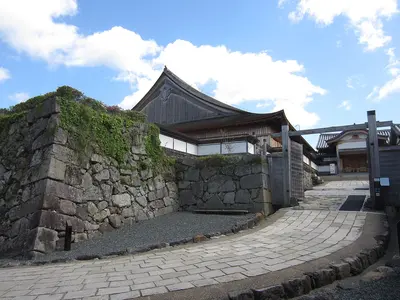
Photo:投稿者が撮影/Wikimedia Commons/Public domain

Quick Facts

Quick Facts

Admission
Free Free
Hours
00:00 – 23:59
Nearest Station
Miki Station (Kobe Dentetsu Ao Line from Shinkaichi Station, Kobe)
Walk from Station
10 min walk
Time Needed
45 minutes–1 hour

Castle ruins and Oshiro Park are free to enter at all times.

Defense Overview

Defense Overview

Why Miki Castle was hard to attack

This castle is hard to attack because it combines a raised core with defended outer space with a controlled route inward.

An attacker would not get a simple direct approach to the center. They would have to cross water barriers or moat lines and face more defensive depth after the first line.

Overall score

69/100

Estimated range

63–75

Confidence

B

Usable estimate with some inference

This is a site-original comparison score for learning and comparison, not a reconstruction of one historical battle.

Radar view

Terrain 14/20 Entrance 14/20 Internal 16/20 Siege 13/20 Oversight 12/20
How this estimate was built+

This estimate combines broad terrain, approach, layout, and route-control signals. It is meant to explain the castle's defensive logic in plain English, not reconstruct a single historical attack.

Terrain Advantage

How much the terrain itself seems to help: height, slope, ridges, cliffs, water edges, and limited approach directions.

14/20

Entrance Defense

How awkward and dangerous the first entry looks: gates, bridge or moat crossings, chokepoints, and forced turns.

14/20

Internal Complexity

How hard it seems to keep pushing after entry: layered baileys, depth, compartmentalization, and repeated defensive lines.

16/20

Siege Endurance

A rough sense of long-hold potential: moats, water access, space, storage plausibility, and defensive staying power.

13/20

Strategic Oversight

How much the castle appears to command nearby roads, plains, rivers, basins, harbors, or town approaches.

12/20

Why Visit

Miki Castle is a pilgrimage site for Sengoku history lovers. The ruins are modest, but the historical atmosphere is strong and the monument to Nagaharu is touching. It pairs well with Himeji Castle (45 minutes by train) for a day of Harima Province castle history.

Highlights

1

Hideyoshi's Brutal 22-Month Siege — The 'Starvation Strategy' That Made Him Famous

Miki Castle is famous throughout Japan for the siege of 1578–1580 — one of the most celebrated and brutal episodes in the career of Toyotomi Hideyoshi. Rather than attacking the well-fortified castle directly, Hideyoshi surrounded it with a network of blockade forts (totori semegun), cutting off all supplies. For 22 months, the garrison and the town starved. Castle lord Bessho Nagaharu finally surrendered and committed ritual suicide, famously choosing to die in place of his starving men.
2

Bessho Nagaharu's Seppuku — One of History's Most Celebrated Final Acts

On January 17, 1580, Bessho Nagaharu performed seppuku along with his brother and uncle, after negotiating with Hideyoshi for the lives of his surviving garrison. The sacrifice — a lord dying so his followers might live — was immediately celebrated in Japanese culture as the highest expression of samurai loyalty and compassion.

3

The Siege That Defined a Tactic

Hideyoshi's siege of Miki Castle established 'totori-zeme' (starvation siege) as a formalized military tactic. By constructing a ring of 30+ fortified positions, Hideyoshi showed how a well-supplied besieger could defeat a castle strong enough to resist direct assault.

Structure Details

Visitor tip

The castle ruins are in Oshiro Park. Look for the interpretive boards explaining the siege and the locations of the 30+ blockade forts Hideyoshi constructed around the castle. The town of Miki has a small castle museum with artifacts from the siege period.

Castle type

Hill castle

Hill-top flatland castle (built on a low hill at the confluence of two rivers in the Miki basin, surrounded by river valleys on multiple sides)

Layout type

Linked compound layout

Compound style — multiple compounds on the castle hill, with extensive outer compounds extending into the town

Main tower

No tenshu survives — the castle was demolished after Hideyoshi's victory in 1580.

Stone walls

Natural stone stacking

The castle hill retains earthen embankments and some stone arrangements from the Bessho clan construction.

Moats

The rivers flanking the castle hill served as natural moats. Most moat traces are now absorbed into the park landscape.

Key defensive features

River Confluence Position

Miki Castle sat at the confluence of two rivers — the Mino and Hosokawakami rivers — which created natural water barriers on the east and west sides of the castle hill.

Salt Store Discovery

During the siege, Hideyoshi's forces discovered a hidden salt store in one of the castle compounds. The compound where it was found is still called 'Shioke-no-maru' (Salt Compound) today.

The Story of Miki Castle

Originally built 1520 / Bessho Masaharu
Current form 1578 / Bessho Nagaharu
    1520

    The Bessho clan, powerful lords of eastern Harima Province, construct Miki Castle as their domain headquarters.

    1578

    Bessho Nagaharu, initially an Oda Nobunaga ally, suddenly rebels — switching to the Mori clan. Toyotomi Hideyoshi is dispatched to suppress the rebellion and begins the starvation siege.

    1580

    After 22 months of siege, Bessho Nagaharu performs ritual suicide on January 17, 1580, along with his brother and uncle. The garrison is spared.

    1580

    Hideyoshi demolishes Miki Castle after the surrender. The 'totori-zeme' tactic is celebrated as a strategic masterstroke.

In Pop Culture

literature

Taiko-ki and related historical literature

The siege of Miki Castle and Bessho Nagaharu's sacrifice are documented in numerous Edo-period chronicles about Toyotomi Hideyoshi's rise to power.

Did You Know?

  • The 22-month siege of Miki Castle (1578–1580) is the longest successful starvation siege in Sengoku history.
  • Bessho Nagaharu's sacrifice — surrendering and performing seppuku so his garrison could live — has been called one of the most exemplary acts of samurai leadership in Japanese history.
  • Hideyoshi's siege tactics at Miki established the 'totori-zeme' playbook that he then applied at Tottori (1581), Bicchu-Takamatsu (1582), and other resistant castles.
  • The compound where the hidden salt store was discovered during the siege is still called 'Shioke-no-maru' (Salt Compound) today — over 440 years after the siege.

Score Breakdown

Tourism Score

F 35/100
  • Accessibility 10 /20
  • Foreign-Friendly 4 /20
  • Historical Value 11 /20
  • Visual Impact 6 /20
  • Facilities 4 /20

Defense Score

C 69/100
  • Terrain Advantage 14 /20
  • Entrance Defense 14 /20
  • Internal Complexity 16 /20
  • Siege Endurance 13 /20
  • Strategic Oversight 12 /20

Planning Your Visit

Best Time to Visit

Spring for cherry blossoms in the park. Year-round for historical interest.

Time Needed

45 minutes–1 hour

Insider Tip

Walk the perimeter of the castle hill to understand the river-flanking position that made the castle so difficult to assault directly — you can see why Hideyoshi chose the starvation approach.

Map

Getting There

Nearest station: Miki Station (Kobe Dentetsu Ao Line from Shinkaichi Station, Kobe)
Walk from station: 10 min walk
Parking: Free parking at Oshiro Park.

Admission

Free

Castle ruins and Oshiro Park are free to enter at all times.

Opening Hours

Open00:00 – 23:59

Open year-round. The ruins are a public park.

Facilities

  • – English guides
  • – Audio guide
  • ✓ Wheelchair access
  • ✓ Restrooms
  • – Gift shop
  • ✓ Food nearby

Nearby Castles

Featured in collections

FAQ

Frequently Asked Questions

How do I get to Miki Castle?

The nearest station is Miki Station (Kobe Dentetsu Ao Line from Shinkaichi Station, Kobe). From there it is about 10 minutes on foot.

How much does Miki Castle cost to enter?

Miki Castle is free to enter.

Is Miki Castle worth visiting?

Miki Castle is a pilgrimage site for Sengoku history lovers. The ruins are modest, but the historical atmosphere is strong and the monument to Nagaharu is touching. It pairs well with Himeji Castle (45 minutes by train) for a day of Harima Province castle history.

What are the opening hours of Miki Castle?

00:00 to 23:59.

How long should I spend at Miki Castle?

Plan for about 45 minutes–1 hour, depending on how closely you want to explore the grounds.