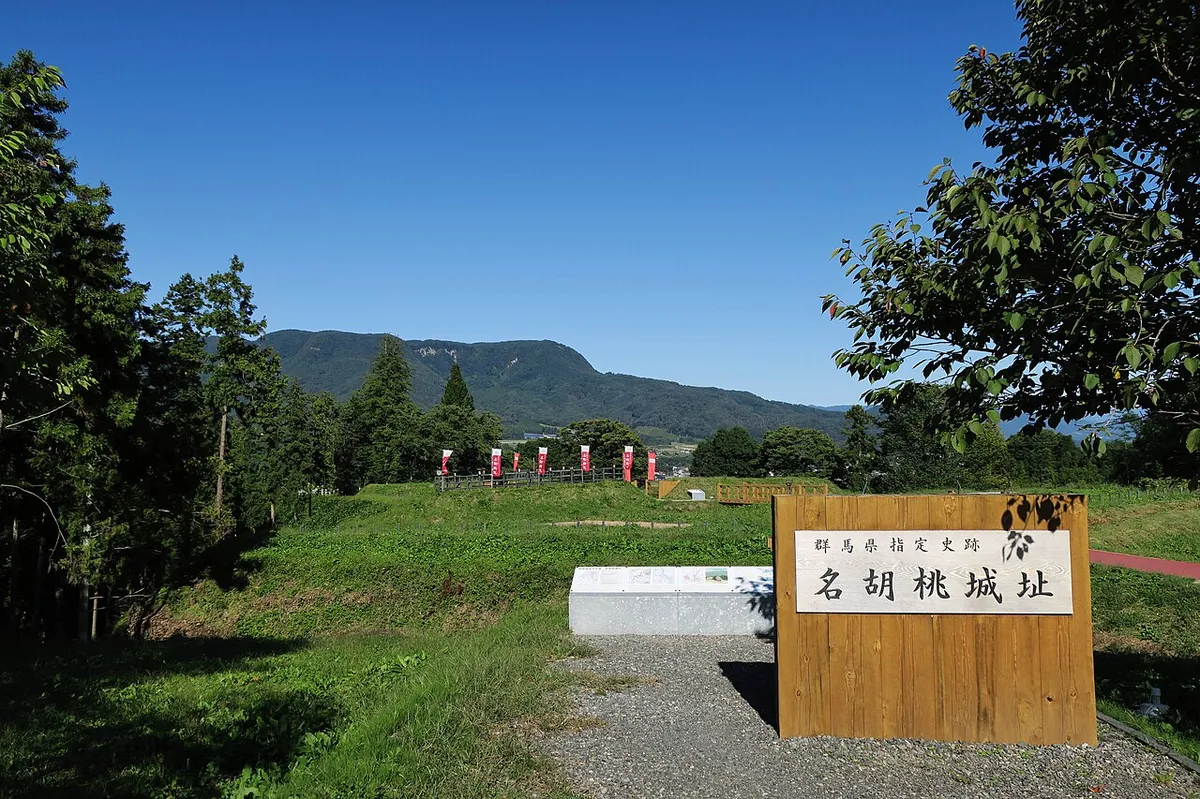
Nagurumi Castle

名胡桃城·Nagurumi-jo

F Tourism Score 30/100
A Defense Score 81/100

The tiny castle whose seizure triggered Hideyoshi's Odawara campaign — Japan's unification started here on a narrow Gunma ridgeline in 1589.

#115 — Continued 100 Castles Ruins
Nagurumi Castle (名胡桃城)
Photo:photo: Qurren (talk) Taken with Canon PowerShot G9 X/Wikimedia Commons/CC BY-SA 3.0

Quick Facts

Quick Facts

Admission
Free Free
Hours
00:00 – 23:59
Nearest Station
Jomo-Kogen Station (JR Joetsu Shinkansen)
Walk from Station
40 min walk

Bus also available

Time Needed
45 minutes to 1 hour

Free admission. The ruins are preserved as a public park and National Historic Site. No structures survive — earthworks and stone remnants only.

Defense Overview

Defense Overview

Why Nagurumi Castle was hard to attack

This castle is hard to attack because it uses high ground and difficult natural access to deny attackers an easy approach.

An attacker would first have to fight the site itself before reaching the main defenses. They would have to cross water barriers or moat lines, pass tighter turns and chokepoints, and push through successive outer areas before the core.

Overall score

81/100

Estimated range

75–87

Confidence

B

Usable estimate with some inference

This is a site-original comparison score for learning and comparison, not a reconstruction of one historical battle.

Radar view

Terrain 20/20 Entrance 20/20 Internal 11/20 Siege 14/20 Oversight 16/20
How this estimate was built+

This estimate combines broad terrain, approach, layout, and route-control signals. It is meant to explain the castle's defensive logic in plain English, not reconstruct a single historical attack.

Terrain Advantage

How much the terrain itself seems to help: height, slope, ridges, cliffs, water edges, and limited approach directions.

20/20

Entrance Defense

How awkward and dangerous the first entry looks: gates, bridge or moat crossings, chokepoints, and forced turns.

20/20

Internal Complexity

How hard it seems to keep pushing after entry: layered baileys, depth, compartmentalization, and repeated defensive lines.

11/20

Siege Endurance

A rough sense of long-hold potential: moats, water access, space, storage plausibility, and defensive staying power.

14/20

Strategic Oversight

How much the castle appears to command nearby roads, plains, rivers, basins, harbors, or town approaches.

16/20

Why Visit

Nagurumi Castle is one of those rare sites where the historical significance is completely out of proportion to the physical remains. The earthworks are well-preserved and the horikiri ditches are a textbook example of mountain castle defense design. But the real reason to visit is the history — stand on this modest ridgeline and understand that the act of seizing this small outpost set off the chain of events that unified Japan. Combine with Numata Castle (15 minutes by car) for a full Sanada clan day.

Highlights

1

The Castle That Unified Japan

Nagurumi Castle is historically tiny — a minor Sanada clan outpost on a ridge above the Tone River. But its seizure in 1589 by a Hojo retainer triggered Toyotomi Hideyoshi's massive Odawara campaign, which ended with the fall of the Hojo, the unification of all Japan under Hideyoshi, and the establishment of the political order that led directly to the Tokugawa shogunate. No other castle in Japan had such outsized consequences for such modest size.
2

Sanada Clan's Strategic Ridge Fort

Nagurumi Castle was built by the Sanada clan to control the Tone River valley between Numata and the mountains to the north. Its position on a narrow ridge made it a classic yamajiro — compact, difficult to approach, and commanding the river route below. The Sanada used it as part of their network of mountain strongholds that allowed them to maintain independence between the great powers of the Sengoku period.

3

Well-Preserved Earthwork Ridgeline Layout

Despite its tiny size and the absence of any standing structures, Nagurumi Castle's earthworks are among the best-preserved examples of a compact Sengoku ridgeline fort in Kanto. The series of defensive ditches (horikiri) cutting across the ridge, the small main compound, and the connecting approach earthworks are all clearly visible and well-maintained as a National Historic Site.

Structure Details

Visitor tip

Nagurumi Castle is a great introduction to yamajiro (mountain castle) earthwork design. The horikiri ditches are clearly visible and easy to understand as defensive features. The ridgeline walk from the parking area to the Honmaru takes about 10-15 minutes and is not strenuous. The historical significance is wildly disproportionate to the castle's physical size — read the interpretive signs carefully.

Castle type

Mountain castle

Mountain castle — compact ridgeline fort above the Tone River valley, relying entirely on terrain for defense

Layout type

Rope-linked layout

Rope-style — compounds arranged in linear sequence along the narrow ridge, connected by a single approach path

Main tower

Ruins — earthworks, defensive ditches (horikiri), and stone remnants survive; no standing structures

Stone walls

Natural stone stacking

Nagurumi Castle relied primarily on earthwork defenses — ditches cut across the ridge (horikiri) and raised earthen platforms (kuruwa) carved from the ridgeline itself. Stone walls were minimal at this small frontier outpost.

Key defensive features

Horikiri (Ridge-Cutting Ditches)

Ditches cut perpendicular across the narrow ridge prevented attackers from moving along the ridgeline approach. Anyone assaulting the castle had to descend into and climb out of each successive ditch under fire from the compound above — exhausting and deadly.

Ridge Constriction

The natural ridge narrows to the point where only a few men can advance abreast, making frontal assault impossible on any scale. The defenders' advantage in these conditions was overwhelming — a small garrison could hold a much larger attacking force indefinitely.

River Gorge Below

The Tone River gorge below the castle's flanks made flanking approaches impossible. The only viable approach was directly along the ridge — funneled directly into the castle's prepared defenses.

The Story of Nagurumi Castle

Originally built 1579 / Sanada Masayuki
Current form 1579 / Sanada clan
    1579

    Sanada Masayuki builds Nagurumi Castle as part of the Sanada clan's mountain fortress network in the Joshu highlands. The castle guards the Tone River valley approach to Numata Castle and serves as an outpost in the contested border region between Sanada, Hojo, and Uesugi territories.

    1589

    A Hojo retainer seizes Nagurumi Castle in violation of the peace agreement that Toyotomi Hideyoshi had brokered between the Sanada and Hojo clans. Hideyoshi, who had issued an order prohibiting all unauthorized military action, uses this violation as his legal pretext to declare war on the Hojo.

    1590

    Hideyoshi launches the Odawara campaign — one of the largest military operations in Japanese history, with over 200,000 soldiers converging on the Hojo stronghold of Odawara Castle. The Hojo surrender after a siege of approximately three months. The fall of Odawara effectively completes the unification of Japan under Hideyoshi.

    1590

    Following the Hojo defeat, Nagurumi Castle is rendered obsolete by the post-unification peace and is subsequently abandoned.

    2017

    Nagurumi Castle is designated a continued 100 Famous Castles site, bringing renewed attention to this historically pivotal but physically modest ridgeline ruin.

In Pop Culture

TV

Hideyoshi (NHK Taiga Drama, 1996)

The NHK Taiga Drama about Toyotomi Hideyoshi depicted the Nagurumi Castle incident as the trigger for the Odawara campaign — the pivotal moment that allowed Hideyoshi to unite Japan.

other

Various Sengoku period novels and games

Nagurumi Castle's role as the trigger for Japan's unification makes it a recurring reference in Sengoku period historical fiction and strategy games.

Did You Know?

  • Nagurumi Castle is arguably the most historically consequential tiny castle in Japan. A minor border outpost seized in a local dispute became the legal pretext Hideyoshi needed to launch the campaign that unified Japan — a chain of causation with world-historical consequences from an otherwise forgotten ridgeline fort.
  • The Hojo retainer who seized Nagurumi Castle may have been acting on Hojo orders in an attempt to provoke a confrontation on advantageous terms — or may have been acting independently. Historians still debate whether the Nagurumi incident was a calculated gamble or a catastrophic miscalculation by the Hojo leadership.
  • The Sanada clan turned the Odawara campaign to their advantage through characteristic political cunning. While they lost the castle that triggered the war, they ended up with confirmed control of their core territories under Hideyoshi's new order.

Score Breakdown

Tourism Score

F 30/100
  • Accessibility 5 /20
  • Foreign-Friendly 3 /20
  • Historical Value 14 /20
  • Visual Impact 5 /20
  • Facilities 3 /20

Defense Score

A 81/100
  • Terrain Advantage 20 /20
  • Entrance Defense 20 /20
  • Internal Complexity 11 /20
  • Siege Endurance 14 /20
  • Strategic Oversight 16 /20

Planning Your Visit

Best Time to Visit

Spring and autumn for best walking conditions. Avoid winter as the mountain paths can be icy.

Time Needed

45 minutes to 1 hour

Insider Tip

Walk the full ridgeline to the Honmaru rather than stopping at the first compound — the view from the summit over the Tone River valley is the payoff, and the series of horikiri ditches you cross on the way up make the castle's defensive logic immediately clear.

Map

Getting There

Nearest station: Jomo-Kogen Station (JR Joetsu Shinkansen)
Walk from station: 40 min walk
Bus: Local bus toward Minakami from Jomo-Kogen Station. Taxi available from Jomo-Kogen Station.
Parking: Small free parking area at the castle ruins site.
Accessible with a JR Pass

Admission

Free

Free admission. The ruins are preserved as a public park and National Historic Site. No structures survive — earthworks and stone remnants only.

Opening Hours

Open00:00 – 23:59

Open at all times. Winter snow may make the mountain paths slippery.

Facilities

  • – English guides
  • – Audio guide
  • – Wheelchair access
  • ✓ Restrooms
  • – Gift shop
  • – Food nearby

Nearby Castles

Featured in collections

FAQ

Frequently Asked Questions

How do I get to Nagurumi Castle?

The nearest station is Jomo-Kogen Station (JR Joetsu Shinkansen). From there it is about 40 minutes on foot. Local bus toward Minakami from Jomo-Kogen Station. Taxi available from Jomo-Kogen Station.

How much does Nagurumi Castle cost to enter?

Nagurumi Castle is free to enter.

Is Nagurumi Castle worth visiting?

Nagurumi Castle is one of those rare sites where the historical significance is completely out of proportion to the physical remains. The earthworks are well-preserved and the horikiri ditches are a textbook example of mountain castle defense design. But the real reason to visit is the history — stand on this modest ridgeline and understand that the act of seizing this small outpost set off the chain of events that unified Japan. Combine with Numata Castle (15 minutes by car) for a full Sanada clan day.

What are the opening hours of Nagurumi Castle?

00:00 to 23:59.

How long should I spend at Nagurumi Castle?

Plan for about 45 minutes to 1 hour, depending on how closely you want to explore the grounds.