Numata Castle

沼田城·Numata-jo

D Tourism Score 42/100
B Defense Score 75/100

Sanada clan cliff fortress above three river gorges — one of Sengoku Japan's most dramatic natural defensive positions, destroyed by Tokugawa political fiat in 1681.

#116 — Continued 100 Castles Ruins
Numata Castle (沼田城)
Photo:デジタルカメラ/Wikimedia Commons/Public domain

Quick Facts

Quick Facts

Admission
Free Free
Hours
00:00 – 23:59
Nearest Station
Numata Station (JR Joetsu Line)
Walk from Station
25 min walk

Bus also available

Time Needed
45 minutes to 1 hour

Free admission. The site is a public park (Numata Castle Park / Jonai Park). No structures survive — ruins only.

Defense Overview

Defense Overview

Why Numata Castle was hard to attack

This castle is hard to attack because it combines a raised core with defended outer space with a controlled route inward.

An attacker would not get a simple direct approach to the center. They would have to cross water barriers or moat lines, approach through at least some constrained entry space, and face more defensive depth after the first line.

Overall score

75/100

Estimated range

69–81

Confidence

B

Usable estimate with some inference

This is a site-original comparison score for learning and comparison, not a reconstruction of one historical battle.

Radar view

Terrain 15/20 Entrance 15/20 Internal 17/20 Siege 14/20 Oversight 14/20
How this estimate was built+

This estimate combines broad terrain, approach, layout, and route-control signals. It is meant to explain the castle's defensive logic in plain English, not reconstruct a single historical attack.

Terrain Advantage

How much the terrain itself seems to help: height, slope, ridges, cliffs, water edges, and limited approach directions.

15/20

Entrance Defense

How awkward and dangerous the first entry looks: gates, bridge or moat crossings, chokepoints, and forced turns.

15/20

Internal Complexity

How hard it seems to keep pushing after entry: layered baileys, depth, compartmentalization, and repeated defensive lines.

17/20

Siege Endurance

A rough sense of long-hold potential: moats, water access, space, storage plausibility, and defensive staying power.

14/20

Strategic Oversight

How much the castle appears to command nearby roads, plains, rivers, basins, harbors, or town approaches.

14/20

Why Visit

Numata Castle rewards visitors who understand the Sanada clan's extraordinary history — one of Japan's great underdog stories. The cliff position above the river confluence is genuinely dramatic, and the park setting is pleasant. Combine with a visit to nearby Iwabitsu Castle (the Sanada mountain stronghold) for a full Sanada clan day in the Gunma highlands. Good soba in town afterward is mandatory.

Highlights

1

The Sanada Clan's Mountain Stronghold

Numata Castle was one of the Sanada clan's key fortresses — strategic masters whose exploits are legendary in Japanese history. The Sanada held Numata as part of their impressive network of mountain strongholds in the Joshu highlands, using it to control the critical supply routes between the Kanto Plain and Echigo (Niigata) Province to the north. The castle was central to their strategy of maintaining independence between the great powers of Takeda, Uesugi, and later Tokugawa.
2

Built on a Cliff Above Three Rivers

Numata Castle's position is dramatic — it sits on a natural plateau (Sobadai) above the confluence of three rivers: the Tone, Katashina, and Usune. The cliff edges drop steeply on three sides, creating a natural fortress that required minimal additional fortification. The remaining approach from the city side was protected by gates and earthworks. Today the plateau is a park, but the steep river gorges below are still visible.

3

Destroyed by Tokugawa Order

In 1681, Tokugawa authorities ordered the demolition of Numata Castle after a succession dispute within the ruling Sanada family — making it one of the few castles deliberately destroyed in the peaceful Edo period, on Tokugawa political authority rather than by war. The incident resulted in the execution of the castle's last Sanada lord and the transfer of the domain. It's a reminder that the Tokugawa peace had its own brutal enforcement mechanisms.

Structure Details

Visitor tip

Numata Castle Park is a pleasant public space on the plateau, with the dramatic river gorges visible at the edges if you walk to the viewpoints. A reconstructed clock tower serves as the main photographic landmark. The original stone wall fragments near the Honmaru area reward careful exploration. The town of Numata below has good soba restaurants — the Joshu highlands are excellent soba country.

Castle type

Hill castle

Hill-top flatland castle — built on a natural plateau (sobadai) above steep river gorges, combining hilltop position with river water barriers on three sides

Layout type

Linked compound layout

Compound style — multiple compounds arranged along the plateau from south (approach) to north (Honmaru summit)

Main tower

Ruins — no standing structures remain; only earthworks, stone wall fragments, and a reconstructed clock tower (local landmark) survive

Stone walls

Natural stone stacking

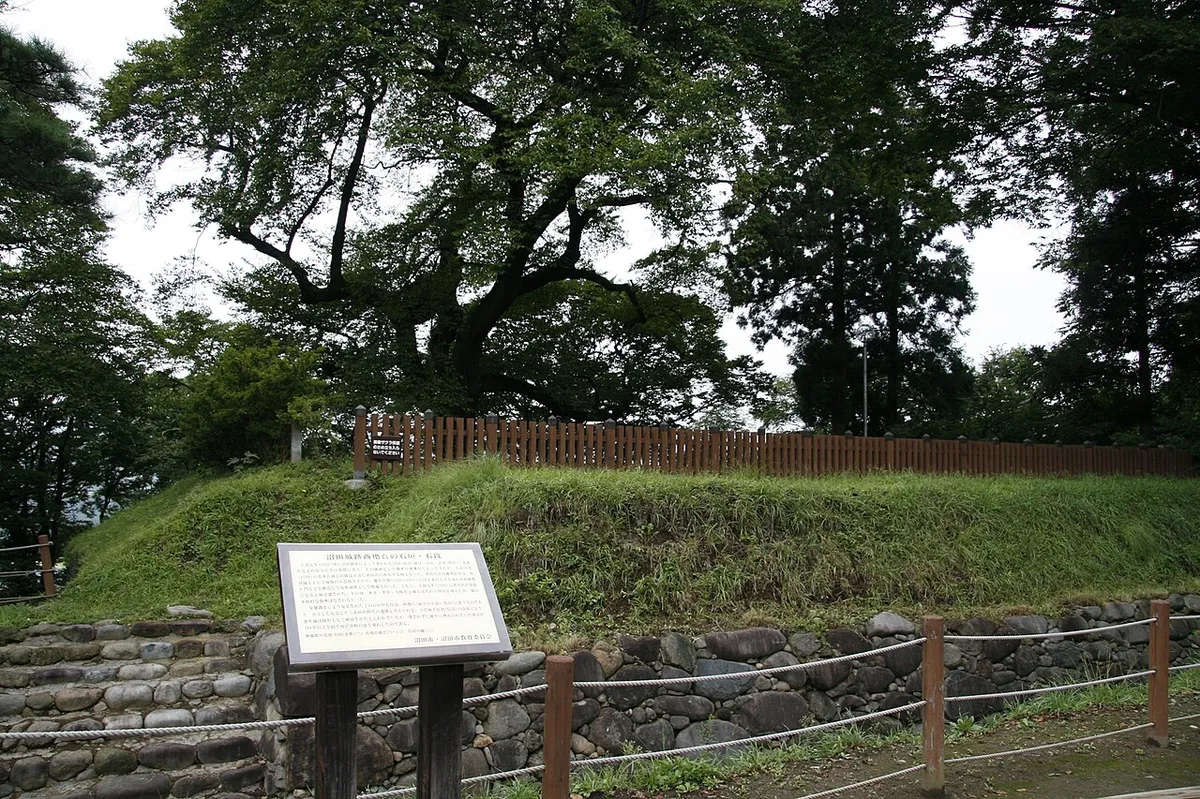
Fragments of original stone walls survive around the Honmaru area, providing evidence of the castle's 16th-century construction. The Tokugawa-ordered demolition in 1681 was thorough but incomplete — enough stonework remains to understand the original scale.

Moats

Dry moat ditches supplemented the natural river gorges on the city-side approach, creating a multi-layer defensive barrier on the one direction that natural terrain did not protect.

Key defensive features

River Gorge on Three Sides

The confluence of the Tone, Katashina, and Usune rivers created sheer cliff faces on three sides of the castle plateau. No conventional assault was possible from those directions — attackers would have had to descend into a deep gorge and scale a vertical cliff under fire.

Natural Plateau Position

The sobadai plateau sits significantly above the surrounding river valleys, providing commanding views and eliminating the possibility of overlooking fire from adjacent high ground.

Dry Moat on City Approach

The one vulnerable side — the city approach from the south — was protected by dry moat ditches and successive gate complexes, funneling attackers into a controlled killing ground.

The Story of Numata Castle

Originally built 1532 / Numata Akiyasu
Current form 1579 / Sanada Masayuki
    1532

    Numata Akiyasu establishes a fortress on the natural plateau above the river confluence, taking advantage of the dramatic natural defensive position. The Numata clan controls the strategic mountain routes between the Kanto Plain and Echigo Province.

    1579

    Sanada Masayuki seizes Numata Castle, incorporating it into the Sanada clan's defensive network of mountain fortresses in the Joshu highlands. Masayuki develops the castle significantly, adding stone walls and expanding the compound system. Numata becomes a key strategic asset in the Sanada's complex balancing act between Takeda, Uesugi, and Tokugawa power.

    1582

    Following the assassination of Oda Nobunaga and the death of Takeda Katsuyori, Sanada Masayuki navigates the resulting power vacuum with extraordinary political agility — playing Uesugi, Tokugawa, and Toyotomi against each other to maintain Sanada independence. Numata Castle is central to his negotiating position.

    1600

    The Sanada clan famously splits for the Battle of Sekigahara — elder son Nobuyuki fights for Tokugawa, younger son Yukimura fights for Toyotomi. This deliberate hedge ensures Sanada survival regardless of the outcome. Numata remains under Sanada control as a Tokugawa-affiliated domain.

    1681

    A succession dispute within the Sanada family of Numata leads Tokugawa authorities to order the demolition of Numata Castle and the transfer of the domain. The last Sanada lord of Numata, Sanada Nobumichi, is executed. This is one of the most dramatic castle demolitions of the peaceful Edo period — a Tokugawa enforcement action with no military pretext.

In Pop Culture

TV

Sanada-maru (NHK Taiga Drama, 2016)

The NHK historical drama centered on Sanada Yukimura featured the broader Sanada clan story, bringing renewed interest in Sanada strongholds including Numata Castle.

other

Various Sanada clan novels and manga

The Sanada clan's extraordinary history — particularly their famous split at Sekigahara — has inspired numerous novels, manga, and games featuring Numata Castle as part of the Sanada defensive network.

Did You Know?

  • Numata Castle is one of very few Edo-period castles deliberately demolished on Tokugawa political authority during the peaceful era — not by war, fire, or Meiji modernization but by shogunal order in 1681. The demolition was punishment for a succession dispute that the Tokugawa used as a pretext to eliminate a potentially independent power center.
  • Sanada Masayuki, who developed Numata into a major fortress, is widely considered one of the most brilliant strategic minds of the Sengoku period. He successfully maintained Sanada independence against overwhelming odds through a combination of military skill and political cunning — using the threat of defection to each major power to extract concessions from all of them simultaneously.
  • The Joshu highlands around Numata are one of Japan's premier soba (buckwheat noodle) producing regions — the cool mountain climate and volcanic soil produce buckwheat of exceptional quality. Numata soba is a local specialty worth trying at any of the town's traditional restaurants.

Score Breakdown

Tourism Score

D 42/100
  • Accessibility 8 /20
  • Foreign-Friendly 4 /20
  • Historical Value 13 /20
  • Visual Impact 10 /20
  • Facilities 7 /20

Defense Score

B 75/100
  • Terrain Advantage 15 /20
  • Entrance Defense 15 /20
  • Internal Complexity 17 /20
  • Siege Endurance 14 /20
  • Strategic Oversight 14 /20

Planning Your Visit

Best Time to Visit

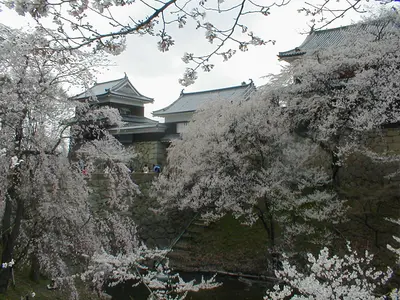
Autumn (October–November) when the mountain foliage turns — the river gorges below the castle plateau are spectacular in fall color. Spring cherry blossoms in the park are also popular with locals.

Time Needed

45 minutes to 1 hour

Insider Tip

Walk to the cliff edges of the castle park to see the steep river gorges below — this is what makes the site special, not the modest park itself. The drop to the Tone River below gives an immediate physical sense of why the Sanada chose this position. The gorge viewpoints are unmarked but easy to find by following the plateau edge.

Map

Getting There

Nearest station: Numata Station (JR Joetsu Line)
Walk from station: 25 min walk
Bus: Local bus from Numata Station toward the castle area. Taxi available.
Parking: Free parking at Jonai Park adjacent to castle ruins.
Accessible with a JR Pass

Admission

Free

Free admission. The site is a public park (Numata Castle Park / Jonai Park). No structures survive — ruins only.

Opening Hours

Open00:00 – 23:59

Open at all times as public parkland.

Facilities

  • – English guides
  • – Audio guide
  • ✓ Wheelchair access
  • ✓ Restrooms
  • – Gift shop
  • ✓ Food nearby

Nearby Castles

Featured in collections

FAQ

Frequently Asked Questions

How do I get to Numata Castle?

The nearest station is Numata Station (JR Joetsu Line). From there it is about 25 minutes on foot. Local bus from Numata Station toward the castle area. Taxi available.

How much does Numata Castle cost to enter?

Numata Castle is free to enter.

Is Numata Castle worth visiting?

Numata Castle rewards visitors who understand the Sanada clan's extraordinary history — one of Japan's great underdog stories. The cliff position above the river confluence is genuinely dramatic, and the park setting is pleasant. Combine with a visit to nearby Iwabitsu Castle (the Sanada mountain stronghold) for a full Sanada clan day in the Gunma highlands. Good soba in town afterward is mandatory.

What are the opening hours of Numata Castle?

00:00 to 23:59.

How long should I spend at Numata Castle?

Plan for about 45 minutes to 1 hour, depending on how closely you want to explore the grounds.