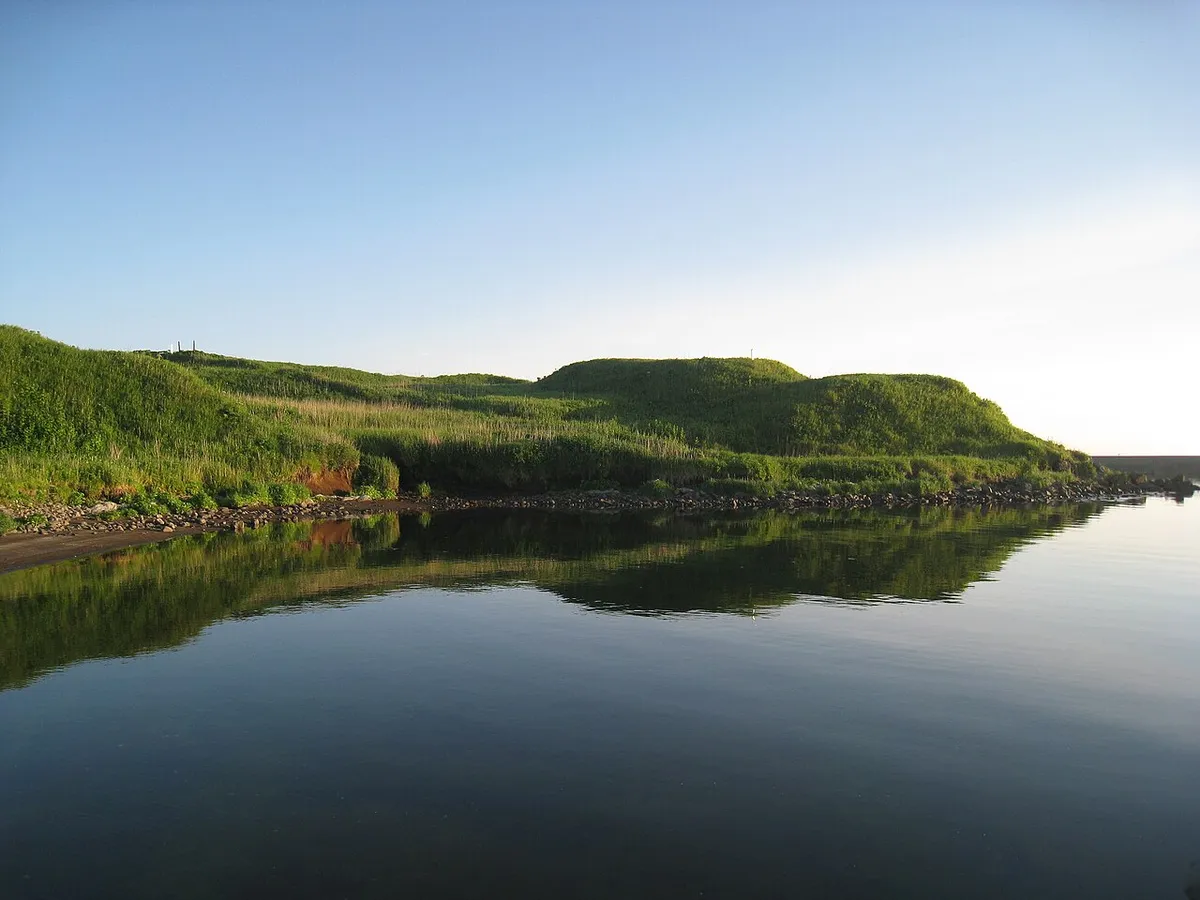
Nemuro Peninsula Chashi Ruins

根室半島チャシ跡群·Nemuro-hanto Chashiato-gun

F Tourism Score 20/100
C Defense Score 60/100

Japan's #1 on the famous castles list — remote Ainu earthwork fortresses on clifftops at the easternmost tip of Japan, newly UNESCO-designated.

#1 — 100 Famous Castles Ruins
Nemuro Peninsula Chashi Ruins (根室半島チャシ跡群)
Photo:1467jp/Wikimedia Commons/CC BY-SA 3.0

Quick Facts

Quick Facts

Admission
Free Free
Hours
00:00 – 23:59
Nearest Station
Nemuro Station (JR Nemuro Main Line — terminus)
Walk from Station
60 min walk

Bus also available

Time Needed
Half day to full day (requires visiting multiple dispersed sites by car)

Free admission at all times. Outdoor site — no facility infrastructure at most chashi locations.

Defense Overview

Defense Overview

Why Nemuro Peninsula Chashi Ruins was hard to attack

This castle is hard to attack because attackers have to work across water barriers before pressing inward instead of getting a direct run at the core.

An attacker would not simply arrive at the center on open flat ground. They would have to cross water barriers or moat lines and approach through at least some constrained entry space.

Overall score

60/100

Estimated range

54–66

Confidence

B

Usable estimate with some inference

This is a site-original comparison score for learning and comparison, not a reconstruction of one historical battle.

Radar view

Terrain 10/20 Entrance 12/20 Internal 14/20 Siege 13/20 Oversight 11/20
How this estimate was built+

This estimate combines broad terrain, approach, layout, and route-control signals. It is meant to explain the castle's defensive logic in plain English, not reconstruct a single historical attack.

Terrain Advantage

How much the terrain itself seems to help: height, slope, ridges, cliffs, water edges, and limited approach directions.

10/20

Entrance Defense

How awkward and dangerous the first entry looks: gates, bridge or moat crossings, chokepoints, and forced turns.

12/20

Internal Complexity

How hard it seems to keep pushing after entry: layered baileys, depth, compartmentalization, and repeated defensive lines.

14/20

Siege Endurance

A rough sense of long-hold potential: moats, water access, space, storage plausibility, and defensive staying power.

13/20

Strategic Oversight

How much the castle appears to command nearby roads, plains, rivers, basins, harbors, or town approaches.

11/20

Why Visit

The Nemuro chashi are worth the journey only for dedicated castle completionists, serious Ainu cultural history enthusiasts, or those combining the visit with Hokkaido wildlife tourism (Nemuro is world-class for birdwatching, particularly for rare seabirds and eagles). The earthworks themselves are subtle, but the landscape — Pacific Ocean cliffs, wetlands, and the distant silhouette of the Northern Territories — is haunting and unlike anywhere else in Japan. The 2024 UNESCO designation is bringing new interpretation infrastructure. Come knowing what you're here to see.

Highlights

1

Japan's #1 — and Most Remote — Listed Castle Site

The Nemuro Peninsula chashi sites hold the unlikely distinction of being number one on Japan's 100 Famous Castles list. They are also among the most remote: Nemuro is the easternmost city in Japan, a 2.5-hour train ride from Kushiro across open wetlands, and the chashi earthworks are scattered along clifftops and headlands facing the Pacific Ocean and the contested Northern Territories. Coming here is an act of pilgrimage for castle completionists.
2

Ainu Chashi — A Completely Different Fortress Tradition

Chashi (チャシ) are Ainu earthwork fortresses — a tradition completely distinct from the stone-and-timber castles built by Japanese feudal lords. They consist of ditches and earthen embankments cut into clifftops and promontories, creating defensible enclosures with commanding views over the sea. Over 500 chashi sites have been identified in Hokkaido; the Nemuro peninsula has the greatest concentration of significant examples, with 24 recognized as a collective World Heritage site.

3

UNESCO World Heritage: Japan's Newest

The Nemuro Peninsula Chashi Ruins were designated a UNESCO World Heritage Site in 2024 as part of the 'Jomon Prehistoric Sites in Northern Japan' serial property, recognizing the Ainu earthwork tradition as a significant contribution to world prehistory and indigenous cultural heritage. This recognition has begun to put Nemuro on the international cultural tourism map after decades of obscurity.

Structure Details

Visitor tip

This is an extremely specialist destination — come with a clear understanding of what chashi are before visiting. The earthworks are subtle and require imagination to read as fortifications. The Nemuro City Museum provides essential context. The surrounding landscape (wetlands, seabirds, the distant silhouette of the Northern Territories islands) is the real visual experience here.

Castle type

Flatland castle

Flatland/clifftop earthwork — Ainu chashi built on coastal promontories and clifftops using earthen ditches and embankments rather than stone walls

Layout type

Concentric layout

Enclosure style — simple enclosed areas defined by ditches and earthen banks on clifftop spurs

Main tower

Earthwork ruins only — no stone construction or wooden structures. Surviving ditches and embankments of Ainu origin.

Stone walls

Earthen walls

Chashi consist of V-shaped ditches (sometimes multiple concentric) and earthen ramparts cut into clifftop promontories. The ditches are typically 2–3 meters deep and several meters wide, with earthen banks on the inner side. The natural cliff edges serve as the primary barrier on seaward sides.

Key defensive features

Clifftop Promontory Position

Most chashi are built on narrow coastal promontories with steep cliff faces dropping to the sea on multiple sides. The earthwork ditches only needed to defend the narrow landward approaches, making them efficient with limited labor.

Concentric Ditch System

The more elaborate chashi feature multiple concentric ditches, requiring an attacker to cross successive earthwork barriers under fire from defenders protected behind each embankment.

Sea Observation

The clifftop positions provided commanding views of the surrounding sea and coastline, giving defenders early warning of approaching threats — particularly important in the Ainu context of inter-clan raiding and Japanese encroachment.

The Story of Nemuro Peninsula Chashi Ruins

Originally built 1600 / Ainu clans of the Nemuro peninsula
Current form 1800 / Various Ainu groups
UNESCO World Heritage 2024
    1600

    The majority of Nemuro peninsula chashi are estimated to have been built or actively used during the 17th–18th centuries, a period of increasing tension between Ainu clans and expanding Japanese (Wajin) presence in Hokkaido. Exact construction dates are unknown from written records.

    1789

    The Menashi-Kunashiri Battle — a major Ainu uprising against Japanese traders in the Nemuro and Kunashiri area — marks the final significant armed resistance of Ainu groups in the region. Many chashi may have been used or reactivated during this period.

    1800

    With Japanese control firmly established in eastern Hokkaido and the Ainu population under severe pressure, the active use of chashi as fortifications effectively ends. Sites gradually become overgrown.

    1979

    The Nemuro Peninsula chashi sites are designated a National Historic Site of Japan, formally recognizing their significance within the national heritage framework.

    2024

    The chashi sites receive UNESCO World Heritage designation as part of the serial nomination 'Jomon Prehistoric Sites in Northern Japan,' bringing international recognition to Ainu cultural heritage for the first time at the UNESCO level.

Did You Know?

  • The word 'chashi' in the Ainu language means 'fenced enclosure' or 'palisaded place' — a direct description of the earthwork construction method. Over 500 chashi sites have been identified across Hokkaido, but the Nemuro peninsula's 24 recognized examples are the most significant and best-preserved concentration.
  • Being #1 on Japan's 100 Famous Castles list makes Nemuro chashi the starting point of every completionist's journey — yet it is almost certainly the last site most people visit due to its extreme remoteness. The train journey on the JR Nemuro Main Line through the Kushiro wetlands is one of Japan's most scenic and untouched rail routes.
  • The Northern Territories (Kuril Islands) are visible from some Nemuro peninsula chashi sites on clear days — islands that Russia has controlled since 1945 but Japan continues to claim. The chashi sites thus occupy one of the most geopolitically loaded landscapes in Japan.

Score Breakdown

Tourism Score

F 20/100
  • Accessibility 2 /20
  • Foreign-Friendly 3 /20
  • Historical Value 7 /20
  • Visual Impact 4 /20
  • Facilities 4 /20

Defense Score

C 60/100
  • Terrain Advantage 10 /20
  • Entrance Defense 12 /20
  • Internal Complexity 14 /20
  • Siege Endurance 13 /20
  • Strategic Oversight 11 /20

Planning Your Visit

Best Time to Visit

June to September for clear weather and wildflowers on the clifftops. Autumn is beautiful but brief. Winter is very harsh and most access becomes difficult. The region is famous for early morning sea fog that creates ethereal clifftop conditions.

Time Needed

Half day to full day (requires visiting multiple dispersed sites by car)

Insider Tip

Start at the Nemuro City Museum to understand chashi before attempting to read the earthworks on-site. The Onnemoto Chashi site is the most accessible and best-interpreted. From the clifftops on a clear day, look east toward the Northern Territories — you can see Kunashiri Island. The train ride from Kushiro on the Nemuro Main Line (SL Fuyu-no-Shitsugen steam locomotive in winter) through the Kushiro wetlands is one of Japan's great scenic rail journeys.

Map

Getting There

Nearest station: Nemuro Station (JR Nemuro Main Line — terminus)
Walk from station: 60 min walk
Bus: City bus from Nemuro Station to Onnemoto area (approx. 20 min). Scattered chashi sites require a car or bicycle to visit multiple locations. Rental cars available in Nemuro city.
Parking: Small parking areas at major chashi sites including Onnemoto. Unpaved in some locations.
Accessible with a JR Pass

Admission

Free

Free admission at all times. Outdoor site — no facility infrastructure at most chashi locations.

Opening Hours

Open00:00 – 23:59

Open year-round but conditions can be harsh in winter (heavy snow, freezing fog). The main Onnemoto Chashi site has a small visitor center with limited seasonal hours. Summer (June–September) is the recommended visiting window.

Facilities

  • – English guides
  • – Audio guide
  • – Wheelchair access
  • – Restrooms
  • – Gift shop
  • – Food nearby

Nearby Castles

Featured in collections

FAQ

Frequently Asked Questions

How do I get to Nemuro Peninsula Chashi Ruins?

The nearest station is Nemuro Station (JR Nemuro Main Line — terminus). From there it is about 60 minutes on foot. City bus from Nemuro Station to Onnemoto area (approx. 20 min). Scattered chashi sites require a car or bicycle to visit multiple locations. Rental cars available in Nemuro city.

How much does Nemuro Peninsula Chashi Ruins cost to enter?

Nemuro Peninsula Chashi Ruins is free to enter.

Is Nemuro Peninsula Chashi Ruins worth visiting?

The Nemuro chashi are worth the journey only for dedicated castle completionists, serious Ainu cultural history enthusiasts, or those combining the visit with Hokkaido wildlife tourism (Nemuro is world-class for birdwatching, particularly for rare seabirds and eagles). The earthworks themselves are subtle, but the landscape — Pacific Ocean cliffs, wetlands, and the distant silhouette of the Northern Territories — is haunting and unlike anywhere else in Japan. The 2024 UNESCO designation is bringing new interpretation infrastructure. Come knowing what you're here to see.

What are the opening hours of Nemuro Peninsula Chashi Ruins?

00:00 to 23:59.

How long should I spend at Nemuro Peninsula Chashi Ruins?

Plan for about Half day to full day (requires visiting multiple dispersed sites by car), depending on how closely you want to explore the grounds.