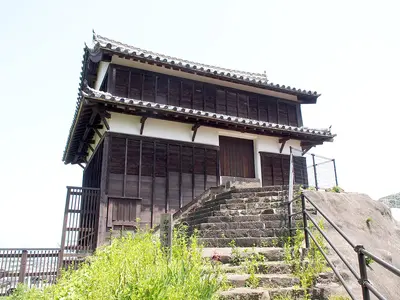
Oita Funai Castle

大分府内城·Oita Funai-jo

F Tourism Score 38/100
C Defense Score 62/100

Where Francis Xavier met Japan's first Christian daimyo — Funai Castle's four surviving turrets guard a site where medieval Japan and European Catholicism collided most dramatically.

#86 — 100 Famous Castles Ruins
Oita Funai Castle (大分府内城)
Photo:663highland/Wikimedia Commons/CC BY 2.5

Quick Facts

Quick Facts

Admission
Free Free
Hours
09:00 – 21:00

Last entry 20:30

Nearest Station
Oita Station (JR Nippo Main Line / JR Hohi Main Line)
Walk from Station
10 min walk
Time Needed
45 minutes to 1 hour for the ruins and turrets

Castle ruins park (Shiroshima Park) is free to enter. The surviving turrets can be viewed freely from outside; interior access on certain days may have a small fee — check locally.

Defense Overview

Defense Overview

Why Oita Funai Castle was hard to attack

This castle is hard to attack because attackers have to work across water barriers before pressing inward instead of getting a direct run at the core.

An attacker would not simply arrive at the center on open flat ground. They would have to cross water barriers or moat lines, approach through at least some constrained entry space, and push through successive outer areas before the core.

Overall score

62/100

Estimated range

56–68

Confidence

B

Usable estimate with some inference

This is a site-original comparison score for learning and comparison, not a reconstruction of one historical battle.

Radar view

Terrain 10/20 Entrance 12/20 Internal 15/20 Siege 14/20 Oversight 11/20
How this estimate was built+

This estimate combines broad terrain, approach, layout, and route-control signals. It is meant to explain the castle's defensive logic in plain English, not reconstruct a single historical attack.

Terrain Advantage

How much the terrain itself seems to help: height, slope, ridges, cliffs, water edges, and limited approach directions.

10/20

Entrance Defense

How awkward and dangerous the first entry looks: gates, bridge or moat crossings, chokepoints, and forced turns.

12/20

Internal Complexity

How hard it seems to keep pushing after entry: layered baileys, depth, compartmentalization, and repeated defensive lines.

15/20

Siege Endurance

A rough sense of long-hold potential: moats, water access, space, storage plausibility, and defensive staying power.

14/20

Strategic Oversight

How much the castle appears to command nearby roads, plains, rivers, basins, harbors, or town approaches.

11/20

Why Visit

Funai Castle is a supplementary site rather than a destination — its physical remains are modest, but its historical context is rich for visitors who know the Christian Japan story. The four original turrets are architecturally significant. The Francis Xavier and Otomo Sorin narrative connects Oita to one of Japanese history's most extraordinary episodes: a powerful Kyushu lord embracing European Christianity in defiance of the political winds that would soon turn violently against it. Best visited as part of an Oita/Beppu itinerary rather than as a sole reason to visit Oita.

Highlights

1

Four Original Turrets — Rare Survivors

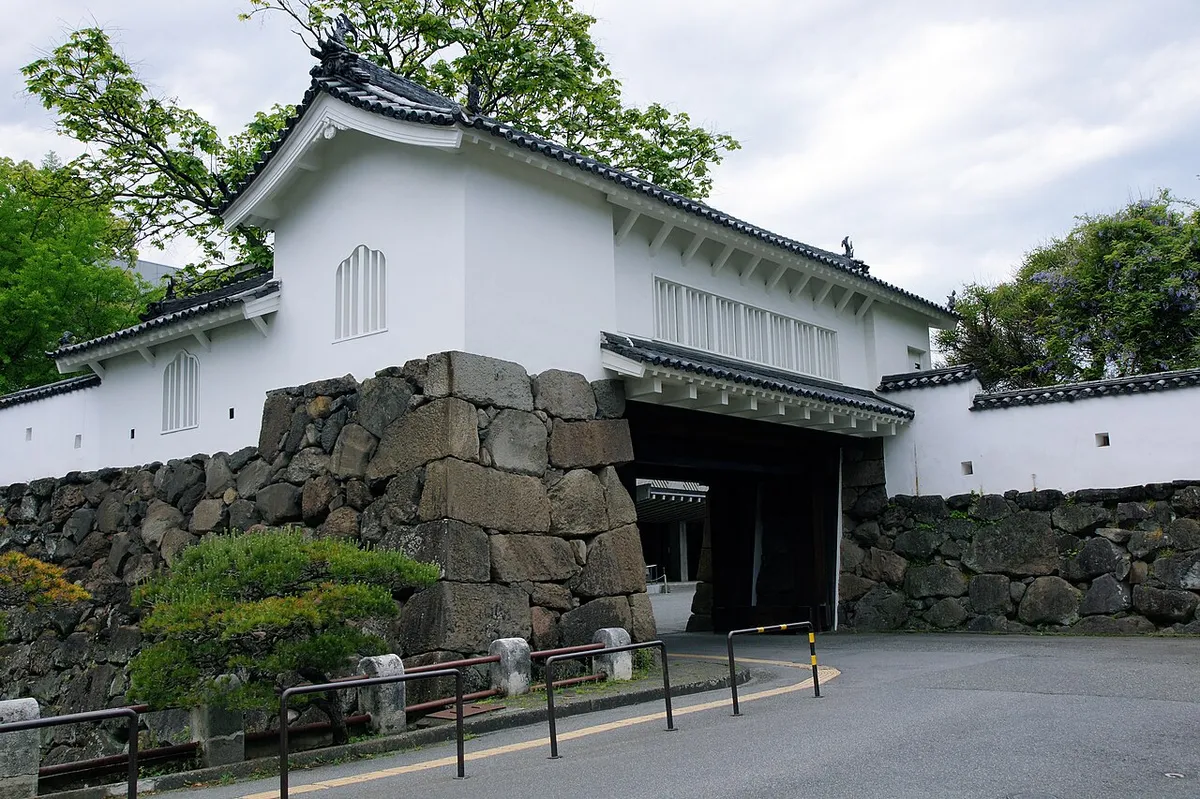
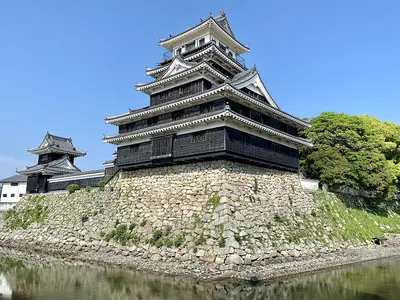
Oita Funai Castle is architecturally significant for having four original Edo-period turrets (yagura) still standing — a rare survival given the Meiji demolition orders and subsequent WWII damage. Most of the castle's structures were lost, but these four turrets constitute one of the more substantial collections of original castle buildings surviving in Kyushu. Two are designated Important Cultural Properties.
2

Francis Xavier's Japan Landing Point

Oita (historically called Funai, then府内) was one of the earliest cities in Japan to receive Catholic missionaries. Francis Xavier himself visited Funai in 1551 and met with the powerful Otomo Sorin, the local daimyo who became one of Japan's first Christian lords. The castle grounds were at the center of one of the most dramatic encounters between feudal Japan and 16th-century Christian Europe.

3

Otomo Sorin's Christian Kingdom

The Otomo clan, whose castle Funai Castle replaced and succeeded, were among Japan's most powerful and most Christianized lords. Otomo Sorin (Francisco, after his baptism) governed a domain that was effectively a Christian principality in 16th-century Kyushu — with churches, hospitals run by Jesuit missionaries, and a court that blended samurai culture with European Catholic practice. The castle that rose at Funai after his era inherited this extraordinary cultural legacy.

Structure Details

Visitor tip

Funai Castle is a city-center ruin — surrounded by urban Oita. The four turrets are the real draw; the overall setting is modest. Good as a 45-minute addition to a Oita/Beppu itinerary rather than a destination in its own right. The Francis Xavier and Otomo Sorin context rewards visitors who know the Christian Japan story.

Castle type

Flatland castle

Flatland castle — built on flat terrain in Funai (Oita) town, relying on river channels and cut moats rather than natural elevation

Layout type

Concentric layout

Enclosure style — concentric moat and stone-wall rings on flat lowland terrain near the Oita River

Main tower

No main tower — the main tower (tenshu) was lost in the Edo period, long before Meiji demolition orders. Four original turrets (yagura) survive, two of which are Important Cultural Properties.

Stone walls

Natural stone stacking

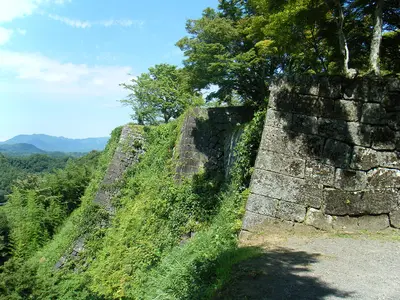
Portions of the original stone walls survive and are visible in Shiroshima Park. The castle's stone wall construction reflects early Edo-period practice in Kyushu — competent but without the monumental scale of the great Toyotomi-era construction projects visible at Osaka or Himeji.

Moats

The inner moat partially survives and gives the castle park its setting. The Oita River channels served as the outer natural moat. Much of the original moat system was filled during urban development.

Key defensive features

River Channel Water Defense

The castle's position near the Oita River gave it natural water defenses supplemented by cut moats. The flat lowland terrain required water barriers as the primary defensive system.

Four Surviving Turrets

The four surviving original turrets provided overlapping fields of fire across the castle's approaches. Their survival — unusual given the completeness of demolition elsewhere — reflects both their structural robustness and the administrative decisions of the Meiji era garrison that occupied the site.

The Story of Oita Funai Castle

Originally built 1597 / Fukuhara Naotaka (under Toyotomi administration)
    1551

    Francis Xavier visits Funai and meets Otomo Sorin, finding a receptive audience for Catholic Christianity among the Otomo clan's leadership. Funai becomes one of the most important early Christian mission centers in Japan.

    1578

    Otomo Sorin is baptized as a Catholic, taking the name Francisco. His domain becomes effectively a Christian principality, with Jesuit-run churches, hospitals, and schools operating throughout Funai and the broader Oita region.

    1586

    Shimazu invasion of Kyushu results in the destruction of the earlier Funai castle structures. The Otomo power in Kyushu collapses under the military assault.

    1597

    Under Toyotomi administration following Hideyoshi's pacification of Kyushu, a new castle is constructed at Funai. The castle undergoes subsequent development under Edo-period lords.

    1871

    Meiji government abolishes domains. The main tower had already been lost earlier in the Edo period; surviving structures include the four turrets that stand today.

Did You Know?

  • Otomo Sorin, the Christian lord who made Funai one of Japan's most Christianized cities, is the subject of Shusaku Endo's historical novel 'The Golden Country' (Ogon no Kuni) — one of the most significant Japanese novels exploring the Christian Japan experience. The castle town of Funai that Sorin governed is the backdrop to one of Japanese literature's deepest engagements with the collision of samurai culture and European Christianity.
  • Francis Xavier's visit to Funai in 1551 took place just two years after his arrival in Japan — making Oita one of the very first places in Japan where sustained Catholic missionary activity occurred. The Jesuit records of Xavier's Funai visit are among the earliest detailed European descriptions of Japanese court culture and Sengoku-period political dynamics.
  • The four surviving turrets at Oita Funai Castle include one of the few examples in Kyushu of a tamon-yagura (long corridor turret) — a turret style designed to connect other structures rather than stand alone, which was typically the first to be demolished when castles were dismantled. Its survival at Oita is architecturally unusual.
  • Modern Oita City hosts J-League football club Oita Trinita and is closely associated with the hot spring resort of Beppu — one of Japan's most visited onsen destinations. The castle ruins sit in the middle of this contemporary city, a quiet historical footnote in a city better known for geothermal geography than samurai heritage.

Score Breakdown

Tourism Score

F 38/100
  • Accessibility 12 /20
  • Foreign-Friendly 6 /20
  • Historical Value 10 /20
  • Visual Impact 6 /20
  • Facilities 4 /20

Defense Score

C 62/100
  • Terrain Advantage 10 /20
  • Entrance Defense 12 /20
  • Internal Complexity 15 /20
  • Siege Endurance 14 /20
  • Strategic Oversight 11 /20

Planning Your Visit

Best Time to Visit

Year-round — the park setting is pleasant in any season. Combine with the Beppu hot springs for a full Oita day.

Time Needed

45 minutes to 1 hour for the ruins and turrets

Insider Tip

The Oita Prefectural Art Museum (OPAM), a striking modern building designed by Shigeru Ban, is a five-minute walk from the castle ruins — an excellent pairing of historical and contemporary cultural sites in a single Oita city walk.

Map

Getting There

Nearest station: Oita Station (JR Nippo Main Line / JR Hohi Main Line)
Walk from station: 10 min walk
Parking: Paid parking available near Shiroshima Park. Oita is a major Kyushu city with good transport links to Beppu (15 min by JR) and Fukuoka (2 hours by limited express).
Accessible with a JR Pass

Admission

Free

Castle ruins park (Shiroshima Park) is free to enter. The surviving turrets can be viewed freely from outside; interior access on certain days may have a small fee — check locally.

Opening Hours

Open09:00 – 21:00
Last entry20:30

Park open year-round. Turret interior access hours are more limited — confirm before visiting.

Facilities

  • – English guides
  • – Audio guide
  • ✓ Wheelchair access
  • ✓ Restrooms
  • – Gift shop
  • ✓ Food nearby

Nearby Castles

Featured in collections

FAQ

Frequently Asked Questions

How do I get to Oita Funai Castle?

The nearest station is Oita Station (JR Nippo Main Line / JR Hohi Main Line). From there it is about 10 minutes on foot.

How much does Oita Funai Castle cost to enter?

Oita Funai Castle is free to enter.

Is Oita Funai Castle worth visiting?

Funai Castle is a supplementary site rather than a destination — its physical remains are modest, but its historical context is rich for visitors who know the Christian Japan story. The four original turrets are architecturally significant. The Francis Xavier and Otomo Sorin narrative connects Oita to one of Japanese history's most extraordinary episodes: a powerful Kyushu lord embracing European Christianity in defiance of the political winds that would soon turn violently against it. Best visited as part of an Oita/Beppu itinerary rather than as a sole reason to visit Oita.

What are the opening hours of Oita Funai Castle?

09:00 to 21:00, last entry 20:30.

How long should I spend at Oita Funai Castle?

Plan for about 45 minutes to 1 hour for the ruins and turrets, depending on how closely you want to explore the grounds.