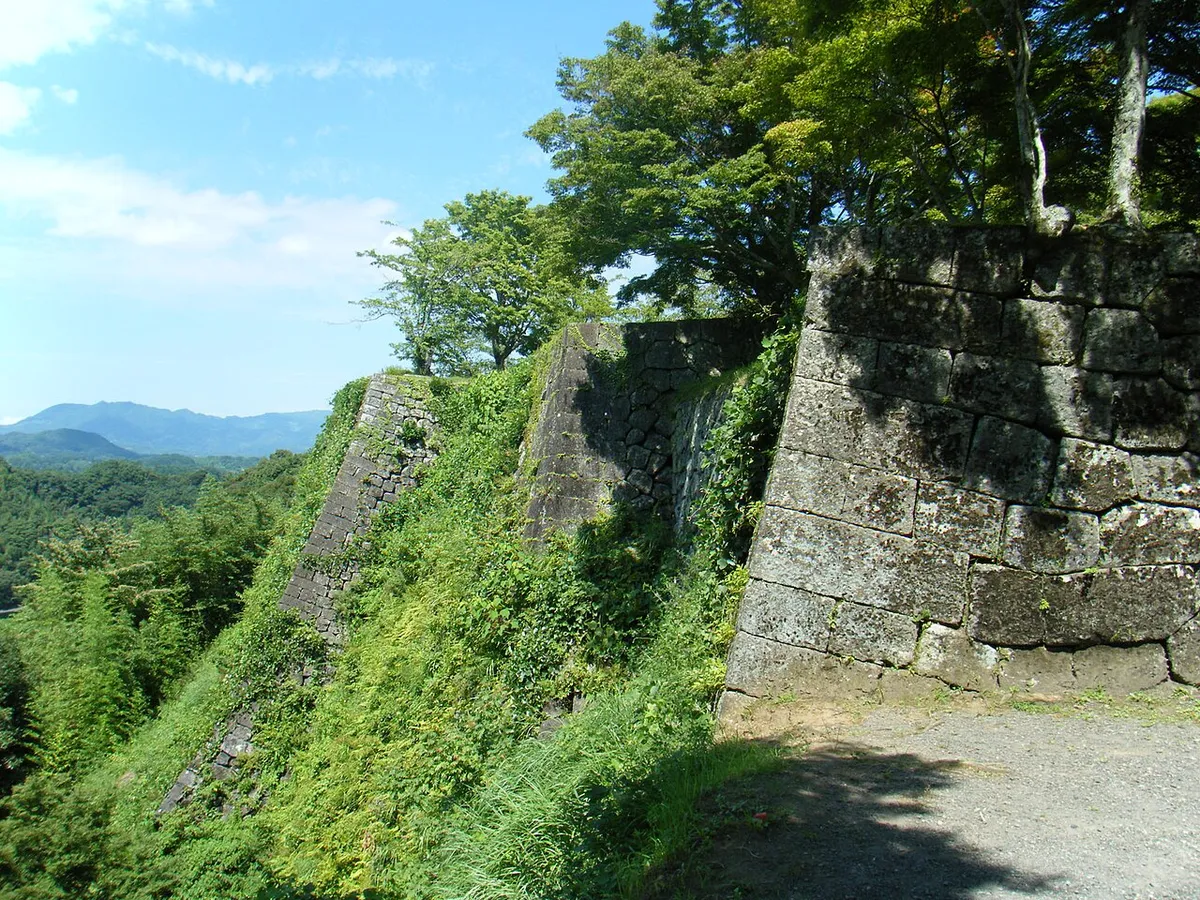
Oka Castle

岡城·Oka-jo

D Tourism Score 50/100
B Defense Score 78/100

The castle that inspired Japan's most beloved song — moonlit stone walls above sheer ravine cliffs, where Rentaro Taki heard the melancholy of fallen glory.

#94 — 100 Famous Castles Ruins
Oka Castle (岡城)
Photo:As6673/Wikimedia Commons/Public domain

Quick Facts

Quick Facts

Admission
¥300

¥150

Hours
09:00 – 17:00

Last entry 16:30

Nearest Station
Bungo-Taketa Station (JR Hohi Main Line)
Walk from Station
20 min walk
Time Needed
1.5–2 hours (ruins) + 30 minutes (castle town walk)

Children (elementary and junior high) ¥150. The fee covers the entire ruins site including all terrace compounds. Audio guide rentals available at the entrance for an additional fee.

Defense Overview

Defense Overview

Why Oka Castle was hard to attack

This castle is hard to attack because natural ground and added defensive depth work together to make every push inward more difficult.

An attacker would first have to fight the site itself before reaching the main defenses. They would have to cross water barriers or moat lines, approach through at least some constrained entry space, and face more defensive depth after the first line.

Overall score

78/100

Estimated range

72–84

Confidence

B

Usable estimate with some inference

This is a site-original comparison score for learning and comparison, not a reconstruction of one historical battle.

Radar view

Terrain 18/20 Entrance 18/20 Internal 13/20 Siege 13/20 Oversight 16/20
How this estimate was built+

This estimate combines broad terrain, approach, layout, and route-control signals. It is meant to explain the castle's defensive logic in plain English, not reconstruct a single historical attack.

Terrain Advantage

How much the terrain itself seems to help: height, slope, ridges, cliffs, water edges, and limited approach directions.

18/20

Entrance Defense

How awkward and dangerous the first entry looks: gates, bridge or moat crossings, chokepoints, and forced turns.

18/20

Internal Complexity

How hard it seems to keep pushing after entry: layered baileys, depth, compartmentalization, and repeated defensive lines.

13/20

Siege Endurance

A rough sense of long-hold potential: moats, water access, space, storage plausibility, and defensive staying power.

13/20

Strategic Oversight

How much the castle appears to command nearby roads, plains, rivers, basins, harbors, or town approaches.

16/20

Why Visit

Oka Castle is one of Kyushu's finest castle ruin experiences, combining impressive kirikomi-hagi stone walls, dramatic ravine cliff scenery, outstanding seasonal beauty (cherry blossoms and autumn foliage), and the cultural resonance of 'Kojo no Tsuki' — a song that virtually every Japanese person knows. The castle requires no deep castle expertise to appreciate: the sheer physical setting above the gorge is immediately dramatic, and the 'Moon Over the Ruined Castle' connection adds emotional depth that purely historical sites cannot match. Make the effort to visit — Taketa is remote, but the combination of the castle, the charming castle town, and the musical heritage makes it one of the most distinctive half-day experiences in Kyushu.

Highlights

1

The Inspiration for Japan's Most Famous Castle Song

Oka Castle is the inspiration for 'Kojo no Tsuki' (荒城の月, 'Moon Over the Ruined Castle') — a 1901 song by composer Rentaro Taki with lyrics by Doi Bansui, widely considered the most beloved castle-themed song in Japan. Taki, who grew up near Oka Castle, was moved by the sight of moonlight on the ruins. The song, which captures the melancholy of fallen glory, is known by virtually every Japanese person and is performed at school concerts across the country. A bronze bust of Taki stands at the castle entrance.
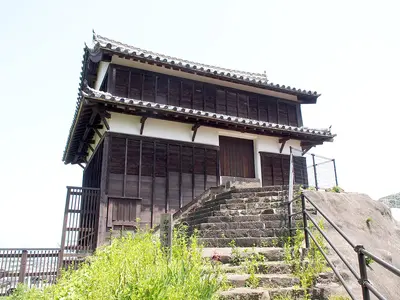
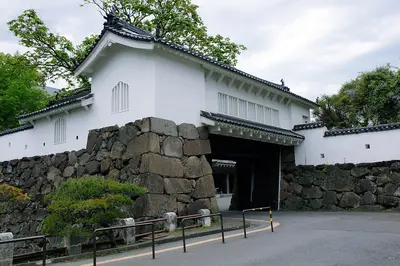
2

Sheer Cliff Fortress — Nature's Perfect Moat

Oka Castle was built on a narrow plateau surrounded on three sides by sheer ravine cliffs — the Ono River gorge drops dramatically away from the castle walls, creating a natural moat of extraordinary depth. The combination of sheer cliffs and stone walls is visually spectacular, and the castle's elevated position above the gorge gives it a dramatic atmosphere unlike any flatland castle site. Walking the castle perimeter above the ravines is one of the most dramatic castle experiences in Kyushu.

3

Stone Walls Emerging from Cherry Blossoms and Autumn Foliage

Oka Castle is famous as one of Kyushu's finest seasonal nature sites. In spring, the ruins are surrounded by cherry blossoms that soften the grey stone walls and create romantic compositions. In autumn, the ravines below fill with red and gold foliage that contrasts dramatically with the stone walls above. The seasonal beauty layered over the famous melancholy of the ruins makes Oka Castle one of the most atmospherically distinctive castle sites in western Japan.

Structure Details

Visitor tip

Oka Castle is one of Kyushu's finest ruin experiences — the combination of cliff-edge scenery, high-quality stone walls, and famous cultural associations makes it accessible and rewarding even without deep castle knowledge. Walk the full perimeter of the ruins to experience the ravine views on multiple sides. The entrance area has exhibits on Rentaro Taki and 'Kojo no Tsuki.' Cherry blossom season is strongly recommended if timing permits.

Castle type

Mountain castle

Mountain castle — built on a narrow plateau surrounded by steep ravine cliffs on three sides, with the Ono River gorge providing natural defensive barriers

Layout type

Ladder layout

Stepped terrace style — compounds arranged on terraced levels following the plateau contour, with the ravine cliffs providing natural outer defense

Main tower

Stone wall ruins only — the main tower and all buildings were dismantled in 1874 following the Meiji Restoration. Impressive stone walls on multiple terrace levels survive across the plateau, with sections of kirikomi-hagi construction representing some of Kyushu's finest castle masonry.

Stone walls

Fitted cut-stone masonry

Oka Castle's stone walls are widely regarded as among the finest in Kyushu. The kirikomi-hagi construction across multiple terrace levels shows sophisticated masonry skill, with walls that have survived four centuries of mountain weather in impressive condition. The combination of high-quality stone walls above sheer ravine cliffs creates some of the most dramatic castle ruins scenery in Japan.

Key defensive features

Ravine Cliff Natural Moat

The Ono River gorge surrounds three sides of the castle plateau with sheer cliffs dropping tens of meters to the river below. No conventional assault on these sides was possible — the castle's natural position eliminated the need for water moats and required only the stone walls on the accessible approach side to be strongly fortified.

Kirikomi-hagi Stone Walls of High Quality

The fitted stone walls of the main and secondary compounds represent some of Kyushu's finest castle masonry. The walls combine aesthetic quality with defensive effectiveness, rising above the cliff edges to complete the castle's formidable perimeter.

Single Controlled Approach

The ravine cliff position meant attackers could approach from only one direction — the narrow land approach from the town side. All the castle's gate and wall defenses were concentrated at this single vulnerable point, maximizing the defensive value of the garrison.

The Story of Oka Castle

Originally built 1185 / Ogata Koreyoshi
Current form 1594 / Shiga Chikatsugu
    1185

    Ogata Koreyoshi, a local warrior, constructs the first fortification on the cliff plateau above the Ono River gorge, establishing the foundation of what would become Oka Castle.

    1594

    Shiga Chikatsugu, under Toyotomi Hideyoshi's authority, undertakes major reconstruction and expansion of the castle — constructing the stone walls and compound system that survive today. The castle reaches its greatest extent and defensive sophistication.

    1600

    The Shiga clan loses the domain after the Battle of Sekigahara. Oka Castle passes through several lords before being granted to the Nakagawa clan, who govern the domain from the castle through the entire Edo period.

    1873

    The Meiji government orders castle demolition. All buildings are dismantled. The stone walls, cliff positions, and earthwork remains are left in place, preserving the castle's physical form as ruins.

    1901

    Composer Rentaro Taki, inspired by his memories of Oka Castle from childhood in nearby Taketa, composes 'Kojo no Tsuki' (Moon Over the Ruined Castle) with lyrics by Doi Bansui. The song becomes one of Japan's most beloved musical works.

In Pop Culture

other

Kojo no Tsuki (Song, 1901)

The song 'Kojo no Tsuki' (Moon Over the Ruined Castle) by Rentaro Taki, directly inspired by Oka Castle, is one of Japan's most performed and recognized classical songs — appearing in school music curricula, concert programs, and cultural events across the country for over 120 years. A bronze bust of Taki stands at the castle entrance.

Did You Know?

  • Rentaro Taki, who composed 'Kojo no Tsuki' at age 23, died of tuberculosis just two years later at age 25 — making the melancholy of the song he wrote about fallen glory an unwitting premonition of his own early death. The song's endurance for over 120 years has made Taki one of Japan's most beloved composers despite his tiny catalogue.
  • Oka Castle's ravine cliff position was so effective that the castle was never taken by direct military assault throughout its 700-year operational history — it was surrendered peacefully to Imperial forces in 1871 without any attempt at defense.
  • The Ono River gorge below the castle walls has seasonal characteristics that amplify the castle's visual drama: in autumn, the valley fills with red and gold foliage; in winter, morning mist rises from the river creating a 'fog castle' effect similar to Iwamura; in spring, cherry blossoms soften the grey stone walls. Each season offers a distinctly different version of the same ruins.
  • The castle town of Taketa below Oka Castle contains one of Oita Prefecture's finest collections of preserved Edo-period architecture and Christian heritage sites — multiple hidden Christian burial sites and artifacts survive from the Sengoku period, reflecting the active Christian missionary activity in Kyushu during the 16th century.

Score Breakdown

Tourism Score

D 50/100
  • Accessibility 9 /20
  • Foreign-Friendly 7 /20
  • Historical Value 14 /20
  • Visual Impact 13 /20
  • Facilities 7 /20

Defense Score

B 78/100
  • Terrain Advantage 18 /20
  • Entrance Defense 18 /20
  • Internal Complexity 13 /20
  • Siege Endurance 13 /20
  • Strategic Oversight 16 /20

Planning Your Visit

Best Time to Visit

Late March to early April for cherry blossoms (peak season — very popular). November for autumn foliage. Clear evenings for the moonlit ruins experience that inspired the famous song.

Time Needed

1.5–2 hours (ruins) + 30 minutes (castle town walk)

Insider Tip

If you can time a visit for late afternoon into early evening, stay for the moment when the light fades on the stone walls and the surrounding mountain ridges turn dark — this is the atmosphere that inspired Rentaro Taki's song, and it remains genuinely powerful. The castle is illuminated on some evenings in cherry blossom season. Also explore the castle town of Taketa below — the preserved Edo merchant street and the hidden Christian heritage sites (marked on town maps) make for a rich additional hour of exploration.

Map

Getting There

Nearest station: Bungo-Taketa Station (JR Hohi Main Line)
Walk from station: 20 min walk
Parking: Free parking at the castle site entrance.
Accessible with a JR Pass

Admission

Adult¥300
Child¥150

Children (elementary and junior high) ¥150. The fee covers the entire ruins site including all terrace compounds. Audio guide rentals available at the entrance for an additional fee.

Opening Hours

Open09:00 – 17:00
Last entry16:30

Open year-round except December 29–31. Spring cherry blossoms (late March to early April) and autumn leaves (November) are peak seasons with extended visitor hours possible.

Facilities

  • – English guides
  • ✓ Audio guide
  • – Wheelchair access
  • ✓ Restrooms
  • ✓ Gift shop
  • ✓ Food nearby

Audio guide languages: Japanese

Nearby Castles

Featured in collections

FAQ

Frequently Asked Questions

How do I get to Oka Castle?

The nearest station is Bungo-Taketa Station (JR Hohi Main Line). From there it is about 20 minutes on foot.

How much does Oka Castle cost to enter?

Adult admission is ¥300 and child admission is ¥150.

Is Oka Castle worth visiting?

Oka Castle is one of Kyushu's finest castle ruin experiences, combining impressive kirikomi-hagi stone walls, dramatic ravine cliff scenery, outstanding seasonal beauty (cherry blossoms and autumn foliage), and the cultural resonance of 'Kojo no Tsuki' — a song that virtually every Japanese person knows. The castle requires no deep castle expertise to appreciate: the sheer physical setting above the gorge is immediately dramatic, and the 'Moon Over the Ruined Castle' connection adds emotional depth that purely historical sites cannot match. Make the effort to visit — Taketa is remote, but the combination of the castle, the charming castle town, and the musical heritage makes it one of the most distinctive half-day experiences in Kyushu.

What are the opening hours of Oka Castle?

09:00 to 17:00, last entry 16:30.

How long should I spend at Oka Castle?

Plan for about 1.5–2 hours (ruins) + 30 minutes (castle town walk), depending on how closely you want to explore the grounds.