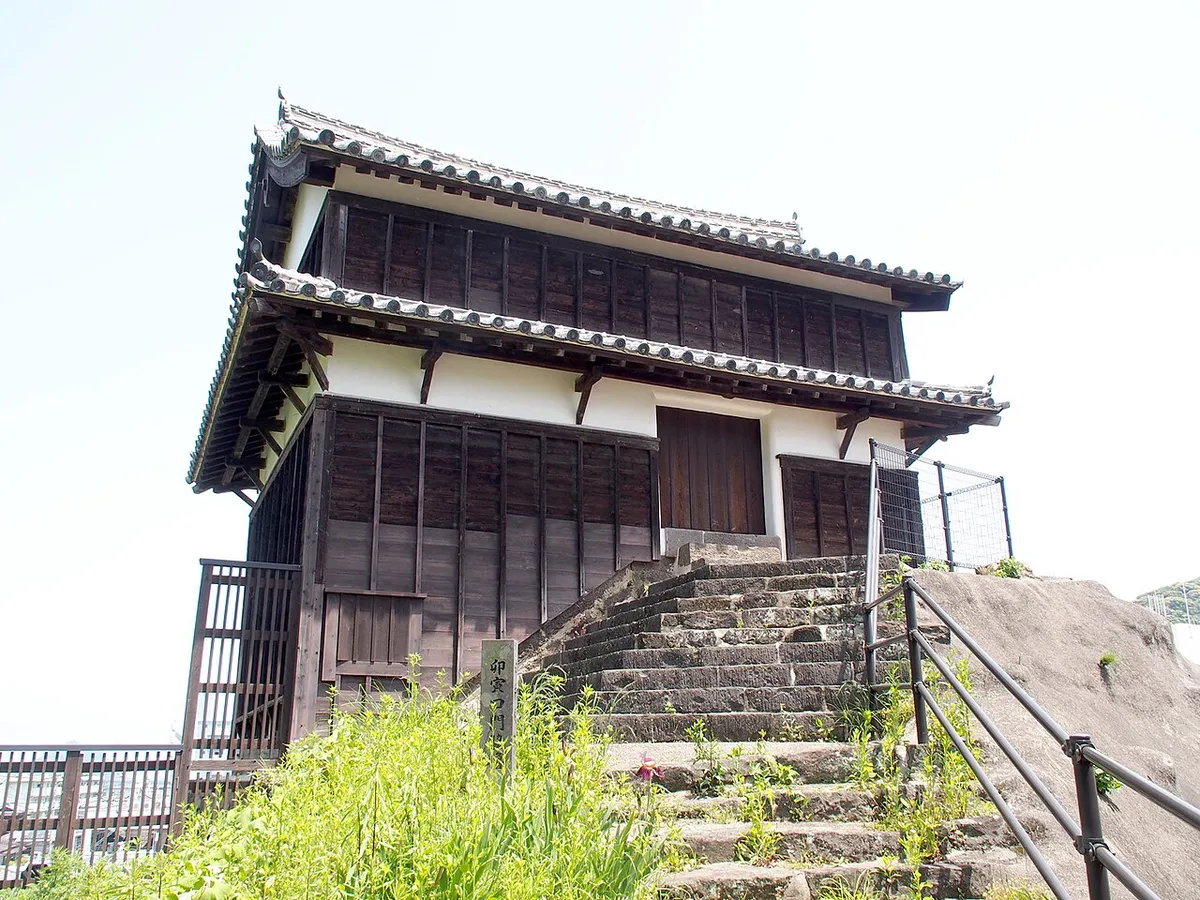
Usuki Castle

臼杵城·Usuki-jo

D Tourism Score 45/100
C Defense Score 69/100

Otomo Sorin's island castle in Usuki Bay — overshadowed by its own neighborhood, where ancient stone Buddhas of National Treasure status wait in a forest ravine.

#193 — Continued 100 Castles Ruins
Usuki Castle (臼杵城)
Photo:大分帰省中/Wikimedia Commons/CC BY-SA 4.0

Quick Facts

Quick Facts

Admission
Free Free
Hours
00:00 – 23:59
Nearest Station
Usuki Station (JR Nippo Main Line)
Walk from Station
20 min walk

Bus also available

Time Needed
2 to 3 hours (Stone Buddhas + castle ruins + historic town district)

Free to enter. Open castle ruins and public park with no admission fee.

Defense Overview

Defense Overview

Why Usuki Castle was hard to attack

This castle is hard to attack because it combines a raised core with defended outer space with enough defensive depth to slow attackers before the center.

An attacker would not get a simple direct approach to the center. They would have to cross water barriers or moat lines and push through successive outer areas before the core.

Overall score

69/100

Estimated range

63–75

Confidence

B

Usable estimate with some inference

This is a site-original comparison score for learning and comparison, not a reconstruction of one historical battle.

Radar view

Terrain 14/20 Entrance 14/20 Internal 16/20 Siege 13/20 Oversight 12/20
How this estimate was built+

This estimate combines broad terrain, approach, layout, and route-control signals. It is meant to explain the castle's defensive logic in plain English, not reconstruct a single historical attack.

Terrain Advantage

How much the terrain itself seems to help: height, slope, ridges, cliffs, water edges, and limited approach directions.

14/20

Entrance Defense

How awkward and dangerous the first entry looks: gates, bridge or moat crossings, chokepoints, and forced turns.

14/20

Internal Complexity

How hard it seems to keep pushing after entry: layered baileys, depth, compartmentalization, and repeated defensive lines.

16/20

Siege Endurance

A rough sense of long-hold potential: moats, water access, space, storage plausibility, and defensive staying power.

13/20

Strategic Oversight

How much the castle appears to command nearby roads, plains, rivers, basins, harbors, or town approaches.

12/20

Why Visit

Usuki is worth visiting primarily for the Stone Buddhas — one of the most remarkable and least-visited National Treasure sites in Japan. The castle ruins are a pleasant addition to the day, with good stone walls and an interesting island-fortress topography. Otomo Sorin's Christian conversion story adds an unusual historical dimension rarely found at Japanese castle sites. And the fugu dinner afterward is exceptional.

Highlights

1

Stone Buddhas of National Treasure Status

Usuki is not primarily visited for the castle but for the Usuki Stone Buddhas (Usuki Sekibutsu) — 59 stone-carved Buddhist figures, some dating to the Heian period (794–1185), carved directly into natural rock faces in a forested ravine outside the city. In 1995 they became the only stone Buddhist images in Japan designated as National Treasures. The spiritual atmosphere of the forested ravine, with faces emerging from ancient rock, is unlike anything else in Kyushu.
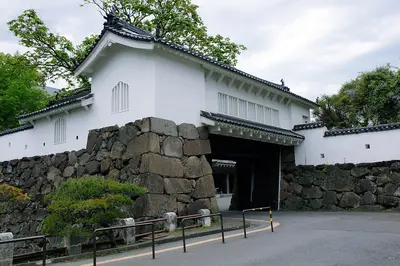
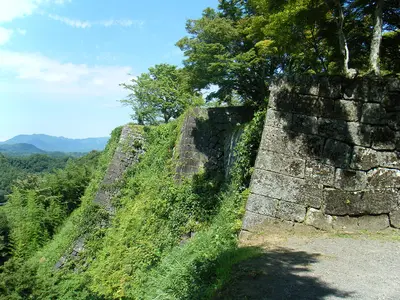
2

The Island Castle in the Sea

Usuki Castle was originally built on a small island (Shiroshima — 'White Island') in Usuki Bay. The sea surrounded it on all sides, making it a genuine island fortress. Land reclamation over the centuries has joined the former island to the mainland, but the castle ruins still sit on the distinctive rocky promontory that was once completely surrounded by water.

3

Otomo Sorin's Christian Castle

Usuki Castle was the domain of Otomo Sorin — one of the most powerful daimyo in Kyushu and one of Japan's most prominent Christian converts. Sorin's conversion (baptized as 'Francisco' in 1578) made Usuki domain a center of Christian activity in Japan, including a Jesuit presence and the famous exchange of letters between Sorin and the King of Portugal. His Christian sympathy created diplomatic channels to European powers that shaped Kyushu's engagement with the wider world.

Structure Details

Visitor tip

Visit Usuki on a combined itinerary with the Stone Buddhas — they are the primary visitor draw and genuinely extraordinary. The castle ruins (Shiroshima Park) are a 20-minute walk from the Stone Buddhas site. The park is pleasant with good stone wall sections, and the former island topography is still evident. Usuki town also has a well-preserved historic district worth exploring.

Castle type

Hill castle

Hill-top island castle — originally built on a rocky island in Usuki Bay, now connected to the mainland by land reclamation; retains the character of a coastal island fortress

Layout type

Linked compound layout

Compound style — multiple compounds on the rocky island plateau

Main tower

Ruins — only stone walls and foundation stones survive on the former island; no standing structures remain

Stone walls

Natural stone stacking

The surviving stone walls of Usuki Castle are well-preserved in sections, particularly on the seaward faces of the former island. The Otomo-period construction reflects the stone wall techniques developing in Kyushu during the late 16th century.

Key defensive features

Original Island Position in Usuki Bay

The castle's island position meant any assault required a naval approach under fire from the stone walls — an extremely costly operation for any attacker without overwhelming naval superiority.

Rocky Coastal Cliffs

The island's natural rocky shores presented rough, inhospitable landing conditions on all sides, channeling any naval assault toward the controlled landing approach.

Stone Walls on Seaward Faces

The surviving stone walls were built specifically to counter naval assault — high enough to provide cover from shipborne archery and early firearms, and positioned to maximize fields of fire over the bay approaches.

The Story of Usuki Castle

Originally built 1562 / Otomo Sorin
Current form 1562 / Otomo Sorin
    1562

    Otomo Sorin builds Usuki Castle on the island of Shiroshima in Usuki Bay, creating a new administrative center and stronghold for his vast Kyushu domain. Sorin controls much of northern and central Kyushu at the height of Otomo power.

    1578

    Otomo Sorin is baptized as a Christian, taking the name 'Francisco.' He becomes one of the most high-profile Christian converts among Japan's daimyo, inviting Jesuit missionaries and supporting Christian activities in his domain. Usuki Castle becomes a center of early Japanese Christianity.

    1578

    The Battle of Mimikawa — Otomo Sorin's catastrophic defeat against the Shimazu clan of Satsuma — destroys Otomo military power. The clan never recovers its former strength, and Usuki Castle becomes a refuge for Sorin as Shimazu forces eventually overrun much of his former territory.

    1587

    Toyotomi Hideyoshi's Kyushu Campaign defeats the Shimazu clan and reorganizes Kyushu. The Otomo clan is severely reduced but retains a small domain. Usuki Castle passes to Fukuhara Naotaka after the Otomo family loses the domain following the Battle of Sekigahara.

    1600

    The Inaba clan takes control of Usuki domain after Sekigahara, holding it through the Edo period. The castle serves as the administrative center of a modest domain.

    1871

    Meiji abolition of domains. Castle structures are dismantled over subsequent years. The former island becomes Shiroshima Park, with the surviving stone walls as the primary historical feature.

In Pop Culture

other

Japanese Christian mission historical accounts

Usuki Castle and Otomo Sorin are prominent in accounts of the early Jesuit mission in Japan — including the famous 'Tensho Embassy' of 1582, when Sorin helped send Japanese Christian boys to meet the Pope in Rome.

Did You Know?

  • Otomo Sorin helped organize the Tensho Embassy of 1582 — a diplomatic mission that sent four Japanese Christian boys to Europe to meet Pope Gregory XIII and Philip II of Spain. The boys were received as celebrities across Europe, met the Pope, and returned to Japan to find the Christian mission under increasing persecution. Their journey remains one of the most remarkable stories of Japan's encounter with the wider world.
  • The Usuki Stone Buddhas were carved over several centuries beginning in the Heian period — scholars debate exactly when and by whom. They remained relatively unknown nationally until their National Treasure designation in 1995, which transformed Usuki from an obscure Oita town into a significant cultural tourism destination.
  • Usuki is also famous for fugu (puffer fish) cuisine — the town has a long tradition of fugu processing and serves it at lower prices than major cities like Osaka or Tokyo. A castle visit combined with a fugu dinner is the local recommendation for a complete Usuki day.

Score Breakdown

Tourism Score

D 45/100
  • Accessibility 8 /20
  • Foreign-Friendly 5 /20
  • Historical Value 13 /20
  • Visual Impact 11 /20
  • Facilities 8 /20

Defense Score

C 69/100
  • Terrain Advantage 14 /20
  • Entrance Defense 14 /20
  • Internal Complexity 16 /20
  • Siege Endurance 13 /20
  • Strategic Oversight 12 /20

Planning Your Visit

Best Time to Visit

Year-round, but spring and autumn are most pleasant for the outdoor stone Buddha site. The forested ravine is cool and atmospheric even in summer heat.

Time Needed

2 to 3 hours (Stone Buddhas + castle ruins + historic town district)

Insider Tip

The Stone Buddhas are 3 km outside central Usuki — plan transport carefully. The historic merchant district between the station and castle is worth a slow walk: old merchant houses, preserved streetscapes, and local sake breweries. Usuki is accessible by limited express from Oita in 30 minutes.

Map

Getting There

Nearest station: Usuki Station (JR Nippo Main Line)
Walk from station: 20 min walk
Bus: Usuki City bus serves both the castle area and the Stone Buddhas site. Taxi available from Usuki Station.
Parking: Parking at both the castle ruins and Stone Buddhas sites. Free at castle, small fee at Stone Buddhas.
Accessible with a JR Pass

Admission

Free

Free to enter. Open castle ruins and public park with no admission fee.

Opening Hours

Open00:00 – 23:59

Freely accessible at all times. Castle ruins are an open park.

Facilities

  • – English guides
  • – Audio guide
  • – Wheelchair access
  • ✓ Restrooms
  • ✓ Gift shop
  • ✓ Food nearby

Nearby Castles

Featured in collections

FAQ

Frequently Asked Questions

How do I get to Usuki Castle?

The nearest station is Usuki Station (JR Nippo Main Line). From there it is about 20 minutes on foot. Usuki City bus serves both the castle area and the Stone Buddhas site. Taxi available from Usuki Station.

How much does Usuki Castle cost to enter?

Usuki Castle is free to enter.

Is Usuki Castle worth visiting?

Usuki is worth visiting primarily for the Stone Buddhas — one of the most remarkable and least-visited National Treasure sites in Japan. The castle ruins are a pleasant addition to the day, with good stone walls and an interesting island-fortress topography. Otomo Sorin's Christian conversion story adds an unusual historical dimension rarely found at Japanese castle sites. And the fugu dinner afterward is exceptional.

What are the opening hours of Usuki Castle?

00:00 to 23:59.

How long should I spend at Usuki Castle?

Plan for about 2 to 3 hours (Stone Buddhas + castle ruins + historic town district), depending on how closely you want to explore the grounds.