Setagaya Castle

世田谷城·Setagaya-jo

F Tourism Score 30/100
C Defense Score 61/100

A 14th-century medieval castle ruin hidden in a central Tokyo residential neighborhood — five minutes from a tram stop, a world away from modern urban reality.

#122 — Continued 100 Castles Ruins
Setagaya Castle (世田谷城)
Photo:Monado/Wikimedia Commons/CC BY-SA 2.5

Quick Facts

Quick Facts

Admission
Free Free
Hours
00:00 – 23:59
Nearest Station
Miyanosaka Station (Tokyu Setagaya Line — one stop from Shimo-Takaido Station)
Walk from Station
5 min walk

Bus also available

Time Needed
30 minutes (ruins) + 30 minutes (Gotokuji Temple)

The castle ruins are a small public park (Setagaya Castle Ruins Park) — free and open at all times.

Defense Overview

Defense Overview

Why Setagaya Castle was hard to attack

This castle is hard to attack because attackers have to work across water barriers before pressing inward instead of getting a direct run at the core.

An attacker would not simply arrive at the center on open flat ground. They would have to cross water barriers or moat lines and push through successive outer areas before the core.

Overall score

61/100

Estimated range

55–67

Confidence

B

Usable estimate with some inference

This is a site-original comparison score for learning and comparison, not a reconstruction of one historical battle.

Radar view

Terrain 10/20 Entrance 11/20 Internal 16/20 Siege 13/20 Oversight 11/20
How this estimate was built+

This estimate combines broad terrain, approach, layout, and route-control signals. It is meant to explain the castle's defensive logic in plain English, not reconstruct a single historical attack.

Terrain Advantage

How much the terrain itself seems to help: height, slope, ridges, cliffs, water edges, and limited approach directions.

10/20

Entrance Defense

How awkward and dangerous the first entry looks: gates, bridge or moat crossings, chokepoints, and forced turns.

11/20

Internal Complexity

How hard it seems to keep pushing after entry: layered baileys, depth, compartmentalization, and repeated defensive lines.

16/20

Siege Endurance

A rough sense of long-hold potential: moats, water access, space, storage plausibility, and defensive staying power.

13/20

Strategic Oversight

How much the castle appears to command nearby roads, plains, rivers, basins, harbors, or town approaches.

11/20
Why Visit

Setagaya Castle is for the curious Tokyo visitor who wants something genuinely unusual — a real medieval earthwork ruin in the middle of one of the world's largest cities. Combine with Gotokuji Temple (the beckoning cat temple, five minutes' walk) for an odd but memorable Tokyo afternoon.

Highlights

1

A Castle Inside Tokyo — A Medieval Ruin in a Residential Neighborhood

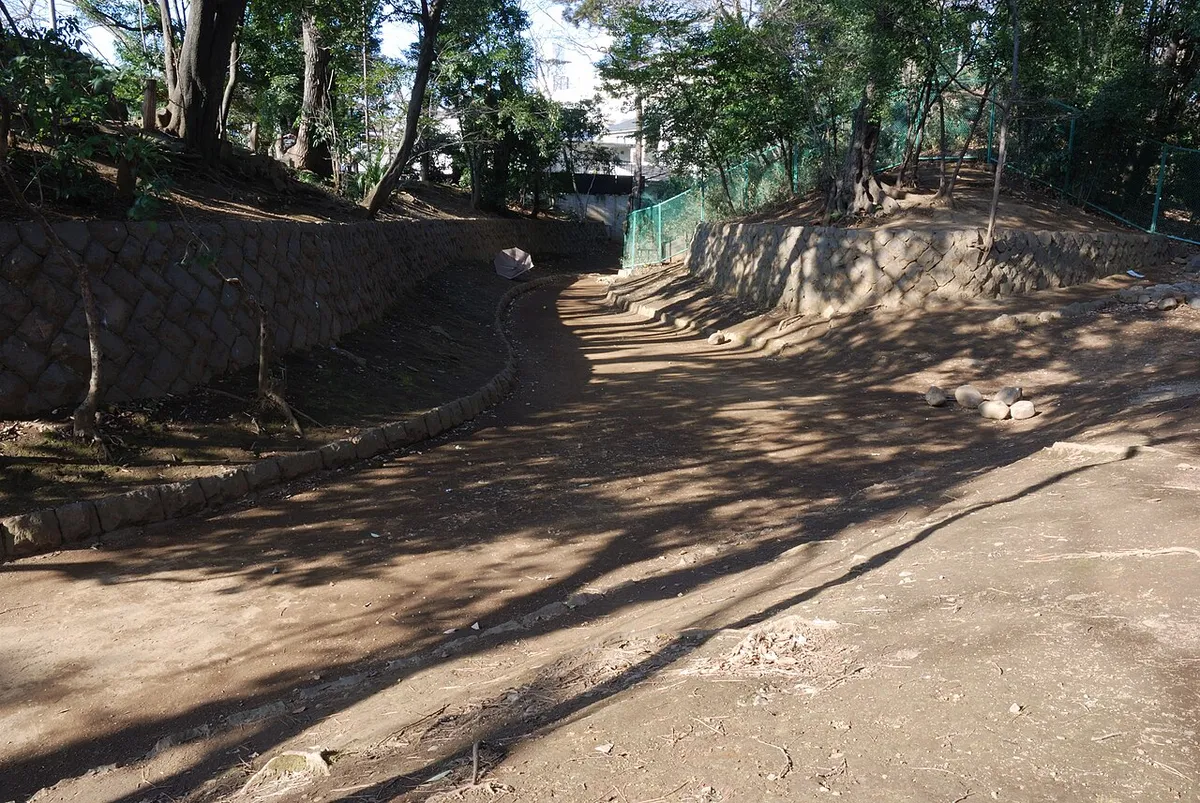
Setagaya Castle is one of the most surreal castle experiences in Japan: a genuine medieval fortress ruin hidden in a quiet residential neighborhood of central Tokyo, surrounded by houses and shops. The earthwork remains — low embankments and dry moat traces — survive in a small park a five-minute walk from a tram stop.

2

The Kira Clan — Feudal Lords of the Musashi Highlands

Setagaya Castle was the seat of the Kira clan — a branch of the Ashikaga shogunal family who controlled the Setagaya area from the Muromachi through the early Edo period.

3

Adjacent to Gotokuji Temple — The Lucky Cat's Home

Setagaya Castle ruins are immediately adjacent to Gotokuji Temple — the famous Buddhist temple said to be the origin of the maneki-neko (beckoning cat) good luck figure ubiquitous in Japanese shops worldwide. Visiting both makes for an unusual combination: medieval earthworks and the birthplace of the world's most recognizable Japanese good luck symbol.

Structure Details

Visitor tip

The ruins are minimal — this is primarily a historical pilgrimage site. Visit for the neighborhood atmosphere and the adjacent Gotokuji Temple (beckoning cat). The small park has interpretive boards explaining the castle layout and history.

Castle type

Flatland castle

Flatland castle (built on the edge of a low plateau above the Kitazawa River valley in Musashi Province)

Layout type

Linked compound layout

Compound style — multiple compounds with dry moats on the plateau edge

Main tower

No tenshu and no stone walls survive — purely earthwork construction. Only earthen embankment traces remain.

Stone walls

Earthen walls

No stone walls remain — Setagaya Castle was built entirely of earthen embankments (dorui) and dry moats (karabori). Low earthen banks visible in the park are the only surviving traces.

Moats

Dry moats (karabori) formed the primary defense. The Kitazawa River valley on the western side provided a natural moat.

Key defensive features

Plateau Edge Position

The castle used the low edge of the Musashi highland plateau above the Kitazawa River — a modest elevation advantage.

Dry Moat Perimeter

Karabori dry moats defined the castle perimeter on the plateau approach.

The Story of Setagaya Castle

Originally built 1366 / Kira Sadauji
Current form 1530 / Kira Takaakira
    1366

    Kira Sadauji, a branch of the Ashikaga shogunal family, constructs a fortification at Setagaya — then a rural district of Musashi Province.

    1530

    The castle reaches its mature form under Kira Takaakira, with expanded earthworks and dry moats.

    1590

    Toyotomi Hideyoshi's Odawara campaign ends Kira clan power. Setagaya Castle is abandoned.

    1977

    The remaining earthwork traces are designated a Tokyo Metropolitan Historical Site and protected as Setagaya Castle Ruins Park.

Did You Know?

  • Setagaya Castle is one of the few medieval castle ruins within the 23 special wards of Tokyo — that any earthworks survive at all in central Tokyo is remarkable.
  • Gotokuji Temple immediately adjacent to the ruins is internationally famous as the claimed birthplace of the maneki-neko (beckoning cat) — found in virtually every Japanese shop worldwide.
  • The Kira clan of Setagaya claimed Ashikaga shogunal lineage — one of the most prestigious pedigrees in medieval Japan.
  • Setagaya Ward today is one of Tokyo's most densely populated residential areas — it is genuinely surreal to find 14th-century earthwork castle ruins in a park surrounded by houses and tram lines.

Score Breakdown

Tourism Score

F 30/100
  • Accessibility 13 /20
  • Foreign-Friendly 5 /20
  • Historical Value 8 /20
  • Visual Impact 2 /20
  • Facilities 2 /20

Defense Score

C 61/100
  • Terrain Advantage 10 /20
  • Entrance Defense 11 /20
  • Internal Complexity 16 /20
  • Siege Endurance 13 /20
  • Strategic Oversight 11 /20

Planning Your Visit

Best Time to Visit

Year-round. Pleasant on a quiet weekday morning.

Time Needed

30 minutes (ruins) + 30 minutes (Gotokuji Temple)

Insider Tip

Take the Tokyu Setagaya Line (a charming old street tram) from Shimo-Takaido to Miyanosaka Station — the tram ride itself is a worthwhile Tokyo experience. The castle ruins are easy to walk past without noticing — look for the small park entrance and the low earthen embankments inside.

Map

Getting There

Nearest station: Miyanosaka Station (Tokyu Setagaya Line — one stop from Shimo-Takaido Station)
Walk from station: 5 min walk
Bus: Very accessible by Tokyu Setagaya Line from central Tokyo. The Setagaya Line is a charming old street tram line.

Admission

Free

The castle ruins are a small public park (Setagaya Castle Ruins Park) — free and open at all times.

Opening Hours

Open00:00 – 23:59

Open at all times. The ruins are in a residential neighborhood — be considerate of nearby residents.

Facilities

  • – English guides
  • – Audio guide
  • ✓ Wheelchair access
  • – Restrooms
  • – Gift shop
  • ✓ Food nearby

Nearby Castles

Featured in collections

FAQ

Frequently Asked Questions

How do I get to Setagaya Castle?

The nearest station is Miyanosaka Station (Tokyu Setagaya Line — one stop from Shimo-Takaido Station). From there it is about 5 minutes on foot. Very accessible by Tokyu Setagaya Line from central Tokyo. The Setagaya Line is a charming old street tram line.

How much does Setagaya Castle cost to enter?

Setagaya Castle is free to enter.

Is Setagaya Castle worth visiting?

Setagaya Castle is for the curious Tokyo visitor who wants something genuinely unusual — a real medieval earthwork ruin in the middle of one of the world's largest cities. Combine with Gotokuji Temple (the beckoning cat temple, five minutes' walk) for an odd but memorable Tokyo afternoon.

What are the opening hours of Setagaya Castle?

00:00 to 23:59.

How long should I spend at Setagaya Castle?

Plan for about 30 minutes (ruins) + 30 minutes (Gotokuji Temple), depending on how closely you want to explore the grounds.