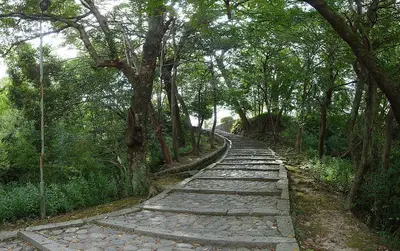
Uda-Matsuyama Castle

宇陀松山城·Uda-Matsuyama-jo

F Tourism Score 35/100
B Defense Score 78/100

The finest preserved castle town in the Kinki region — Uda-Matsuyama's Edo period merchant district below the mountain ruins is a time capsule of Japanese urban history.

#169 — Continued 100 Castles Ruins
Uda-Matsuyama Castle (宇陀松山城)
Photo:Saigen Jiro/Wikimedia Commons/CC0

Quick Facts

Quick Facts

Admission
Free Free
Hours
00:00 – 23:59
Nearest Station
Haibara Station (Kintetsu Osaka Line)
Walk from Station
20 min walk
Time Needed
2 hours (town and ruins combined)

Free admission to the castle ruins. The castle town preservation area below is also free to walk.

Defense Overview

Defense Overview

Why Uda-Matsuyama Castle was hard to attack

This castle is hard to attack because it uses high ground and difficult natural access to deny attackers an easy approach.

An attacker would first have to fight the site itself before reaching the main defenses. They would have to cross water barriers or moat lines and push through successive outer areas before the core.

Overall score

78/100

Estimated range

72–84

Confidence

B

Usable estimate with some inference

This is a site-original comparison score for learning and comparison, not a reconstruction of one historical battle.

Radar view

Terrain 19/20 Entrance 17/20 Internal 11/20 Siege 14/20 Oversight 17/20
How this estimate was built+

This estimate combines broad terrain, approach, layout, and route-control signals. It is meant to explain the castle's defensive logic in plain English, not reconstruct a single historical attack.

Terrain Advantage

How much the terrain itself seems to help: height, slope, ridges, cliffs, water edges, and limited approach directions.

19/20

Entrance Defense

How awkward and dangerous the first entry looks: gates, bridge or moat crossings, chokepoints, and forced turns.

17/20

Internal Complexity

How hard it seems to keep pushing after entry: layered baileys, depth, compartmentalization, and repeated defensive lines.

11/20

Siege Endurance

A rough sense of long-hold potential: moats, water access, space, storage plausibility, and defensive staying power.

14/20

Strategic Oversight

How much the castle appears to command nearby roads, plains, rivers, basins, harbors, or town approaches.

17/20

Why Visit

Uda-Matsuyama Castle is primarily for travelers who appreciate the complete picture of how Japanese castle towns functioned. The preserved merchant district below the castle is genuinely exceptional and nationally recognized. Few castle sites in Japan show both the military installation and its supporting town so completely.

Highlights

1

Exceptionally Preserved Castle Town

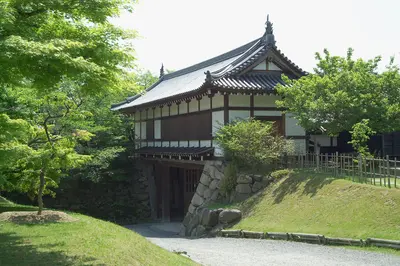
Uda-Matsuyama's greatest treasure is not the castle ruins on the hill but the remarkably intact castle town (jokamachi) below. The historic merchant district retains its Edo period street layout with traditional wooden machiya townhouses, latticed facades, and the original spatial organization of a functioning castle town. It is one of the best-preserved castle towns in the Kinki region and nationally designated as a preservation district.
2

Tsuijibei Earthen Walls — A Castle Town Rarity

The castle town features sections of original tsuijibei earthen walls — the distinctive compound walls made of clay and tile typical of high-status Edo period urban architecture. These earthen walls, with their white plaster and dark tile coping, are a rare surviving element of castle town architecture.

3

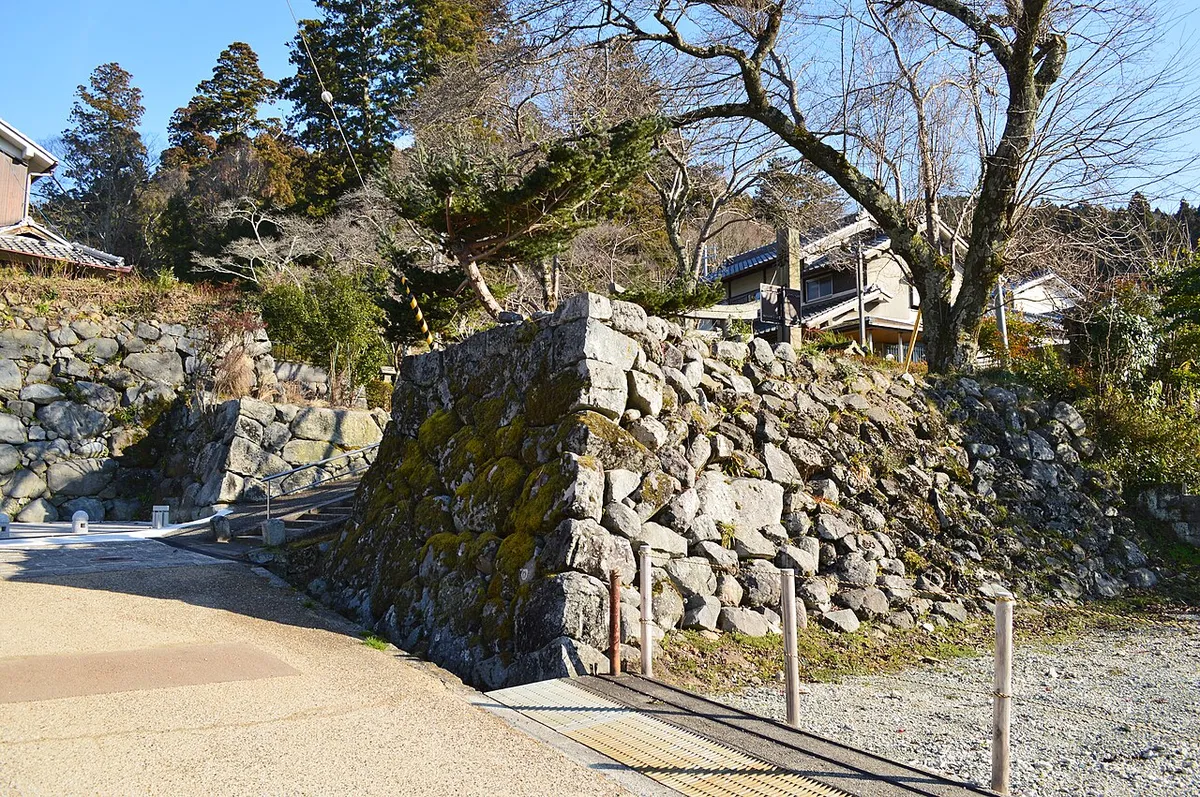
Stone Walls on a Mountain Ridge

The castle ruins on the hill above the town feature well-preserved stone walls on the ridgeline compounds. The combination of mountain castle ruins above and intact castle town below creates an unusually complete picture of how a castle complex actually functioned as an integrated urban system.

Structure Details

Visitor tip

Spend more time in the castle town than on the mountain. Walk through the preserved Edo period merchant district below before climbing to the ruins — the tsuijibei earthen walls and machiya townhouses are the best-preserved elements of the site. Allow 2 hours total to do both the town and the ruins justice.

Castle type

Mountain castle

Mountain castle — ridgeline fortress above the preserved castle town of Matsuyama, in the Uda basin of Nara Prefecture

Layout type

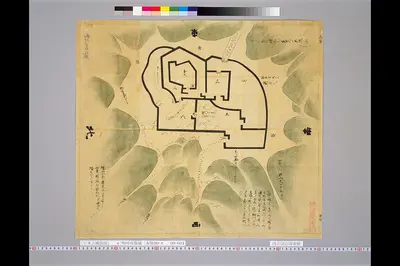
Rope-linked layout

Rope-style — compounds arranged linearly along the mountain ridge above the town

Main tower

Ruins — stone walls survive on the ridgeline; all wooden structures are gone; the castle town below is the best-preserved element

Stone walls

Natural stone stacking

Stone walls on the ridgeline compounds survive in good condition, particularly around the Honmaru and Ninomaru areas. The walls demonstrate the transition from purely earthwork mountain castles to hybrid earthwork-and-stone construction of the late Sengoku period.

Key defensive features

Mountain Ridge Position

The castle occupies the summit ridge above the town, with steep slopes on multiple sides. The combination of natural terrain and stone walls made direct assault costly and difficult.

Integrated Castle Town Defense

The castle town below the hill was itself a defensive element — approaching forces had to move through the town before reaching the mountain approach.

The Story of Uda-Matsuyama Castle

Originally built 1585 / Toyotomi Hidenaga
Current form 1615 / Fukushima Takatoshi
    1585

    Toyotomi Hidenaga (Hideyoshi's younger brother) takes control of the Uda region and develops the castle as part of Toyotomi pacification of Yamato Province. The castle and its associated castle town are established as the administrative center of the Uda district.

    1600

    After Sekigahara, the Uda domain is assigned to Fukushima Takatoshi under Tokugawa authority. The castle is further developed into its current form with improved stone walls.

    1695

    With the reorganization of the Uda domain, Uda-Matsuyama Castle is officially abandoned. The castle town continues as a merchant and agricultural center, preserving its Edo period character through the following centuries.

In Pop Culture

TV

NHK Nara regional history programming

Uda-Matsuyama is featured in regional NHK documentaries about castle towns in Yamato Province and the preservation of Edo period urban heritage in Nara Prefecture.

Did You Know?

  • The Matsuyama castle town is nationally designated as an Important Preservation District for Groups of Historic Buildings — one of fewer than 130 such designations in all of Japan.
  • Uda-Matsuyama is a good example of how the most historically rich castle sites in Japan are sometimes not the most visited. The preserved castle town is arguably more historically significant as a surviving piece of Edo period urban life than many more famous castle sites whose buildings were rebuilt in the 20th century.
  • The tsuijibei earthen walls visible in the castle town were expensive to build and maintain — their survival indicates that the Matsuyama area has retained a relatively stable population and economy through the centuries.

Score Breakdown

Tourism Score

F 35/100
  • Accessibility 6 /20
  • Foreign-Friendly 3 /20
  • Historical Value 12 /20
  • Visual Impact 8 /20
  • Facilities 6 /20

Defense Score

B 78/100
  • Terrain Advantage 19 /20
  • Entrance Defense 17 /20
  • Internal Complexity 11 /20
  • Siege Endurance 14 /20
  • Strategic Oversight 17 /20

Planning Your Visit

Best Time to Visit

Spring and autumn. The castle town is pleasant to walk year-round.

Time Needed

2 hours (town and ruins combined)

Insider Tip

Walk the castle town before climbing to the ruins — let the preserved machiya townhouses and tsuijibei walls establish the context for what the castle was governing. The town is the real treasure here.

Map

Getting There

Nearest station: Haibara Station (Kintetsu Osaka Line)
Walk from station: 20 min walk
Parking: Parking available at the castle park base.

Admission

Free

Free admission to the castle ruins. The castle town preservation area below is also free to walk.

Opening Hours

Open00:00 – 23:59

Open at all times. Cherry blossoms on the castle hill in spring are popular with local visitors.

Facilities

  • – English guides
  • – Audio guide
  • – Wheelchair access
  • ✓ Restrooms
  • – Gift shop
  • ✓ Food nearby

Nearby Castles

Featured in collections

FAQ

Frequently Asked Questions

How do I get to Uda-Matsuyama Castle?

The nearest station is Haibara Station (Kintetsu Osaka Line). From there it is about 20 minutes on foot.

How much does Uda-Matsuyama Castle cost to enter?

Uda-Matsuyama Castle is free to enter.

Is Uda-Matsuyama Castle worth visiting?

Uda-Matsuyama Castle is primarily for travelers who appreciate the complete picture of how Japanese castle towns functioned. The preserved merchant district below the castle is genuinely exceptional and nationally recognized. Few castle sites in Japan show both the military installation and its supporting town so completely.

What are the opening hours of Uda-Matsuyama Castle?

00:00 to 23:59.

How long should I spend at Uda-Matsuyama Castle?

Plan for about 2 hours (town and ruins combined), depending on how closely you want to explore the grounds.