Wakayama Castle

和歌山城·Wakayama-jo

B Tourism Score 70/100
B Defense Score 74/100

The Tokugawa branch castle that produced Japan's most capable shogun — a pleasant city castle with an unusual three-tower silhouette and an elegant garden.

#62 — 100 Famous Castles Reconstructed
Wakayama Castle (和歌山城)
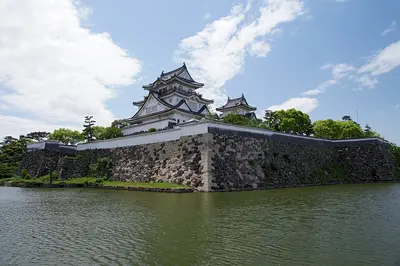
Photo:663highland/Wikimedia Commons/CC BY 2.5

Quick Facts

Quick Facts

Admission
¥410

¥200

Hours
09:00 – 17:30

Last entry 17:00

Nearest Station
Wakayama Station (JR Kisei Main Line / JR Hanwa Line) or Kishi Station (Nankai Koya Line)
Walk from Station
20 min walk

Bus also available

Time Needed
1.5-2 hours

Children (elementary school age and under) free. The fee covers entry to the main tower museum. Castle grounds (Wakayama Castle Park) are free to enter.

Defense Overview

Defense Overview

Why Wakayama Castle was hard to attack

This castle is hard to attack because it combines a raised core with defended outer space with a controlled route inward.

An attacker would not get a simple direct approach to the center. They would have to cross water barriers or moat lines and face more defensive depth after the first line.

Overall score

74/100

Estimated range

68–80

Confidence

A

Strong multi-source support

This is a site-original comparison score for learning and comparison, not a reconstruction of one historical battle.

Radar view

Terrain 15/20 Entrance 14/20 Internal 17/20 Siege 15/20 Oversight 13/20
How this estimate was built+

This estimate combines broad terrain, approach, layout, and route-control signals. It is meant to explain the castle's defensive logic in plain English, not reconstruct a single historical attack.

Terrain Advantage

How much the terrain itself seems to help: height, slope, ridges, cliffs, water edges, and limited approach directions.

15/20

Entrance Defense

How awkward and dangerous the first entry looks: gates, bridge or moat crossings, chokepoints, and forced turns.

14/20

Internal Complexity

How hard it seems to keep pushing after entry: layered baileys, depth, compartmentalization, and repeated defensive lines.

17/20

Siege Endurance

A rough sense of long-hold potential: moats, water access, space, storage plausibility, and defensive staying power.

15/20

Strategic Oversight

How much the castle appears to command nearby roads, plains, rivers, basins, harbors, or town approaches.

13/20

Why Visit

Wakayama Castle is a solid, well-rounded castle visit with reasonable access, a pleasant park setting, and historical significance as the seat of the Kii Tokugawa — one of the three families that supplied Edo-period shoguns. The tower is a 1958 concrete reconstruction but reproduces the distinctive three-tower complex faithfully, and the Nishi-no-maru Garden is a genuine Edo-period landscape worth an unhurried look. A good full-afternoon visit en route to the Kii Peninsula or on a day trip from Osaka.

Highlights

1

A Tokugawa Branch Castle

Wakayama Castle was the seat of the Kii Tokugawa family — one of the three great branch families (Gosanke) designated by the Tokugawa shogunate as potential successors to the main line. If the shogun's main line died out, the next shogun would come from Kii, Owari, or Mito. This political importance meant Wakayama was never a minor provincial castle but a critical pillar of Tokugawa power. Two shoguns — including the reformist Yoshimune — came from this line.
2

The Three-Layer Tenshu Complex

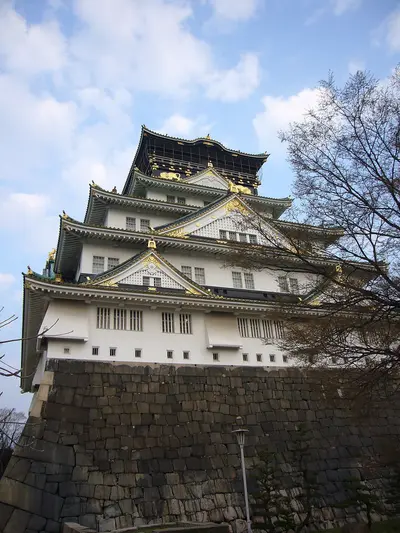
The current tower is a 1958 concrete reconstruction, but it faithfully reproduces the original complex design: a large tower (Otenshu), a medium tower (Kotenshu), and a small tower (Tamon) connected by covered corridors (watariyagura). This multi-tower arrangement — unusual even among Japanese castles — gives the silhouette of Wakayama Castle a distinctive, extended horizontal quality quite different from a single tall tower.

3

Tiger Round Garden (Momijidani-tei)

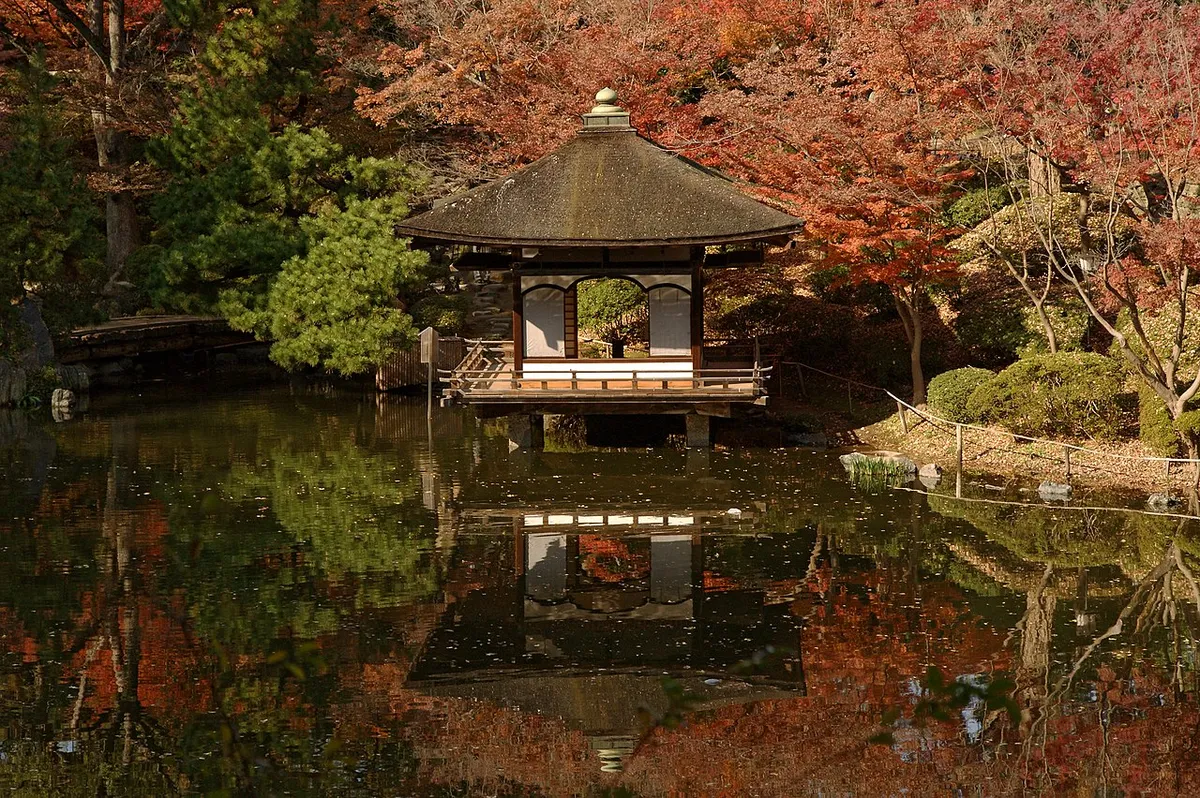
Within the castle park lies the Nishi-no-maru Garden, also known as Tora-fuse-no-niwa (Tiger's Repose Garden). This elegant Edo-period garden surrounds a pond in the former west compound and is known for its autumn maple foliage. The combination of the castle silhouette rising above the garden walls is one of Wakayama's most photographed views.

Structure Details

Visitor tip

The walk from Wakayama Station (about 20 minutes) takes you through a pleasant shopping street and then into the castle park. The tower interior is a standard concrete castle museum — well worth the modest admission for the top-floor views over the city toward the Pacific. Don't miss the Nishi-no-maru Garden (free or included), especially in autumn.

Castle type

Hill castle

Hill-top flatland castle — built on Torafusu Hill (Tiger's Repose Hill), a rocky granite outcrop rising from the flat Wakayama plain near the mouth of the Kino River

Layout type

Linked compound layout

Compound style — main and subsidiary towers connected by covered corridors, with multiple walled compounds on and around the hill

Main tower

Concrete reconstruction (1958) — the original complex of three connected towers (Otenshu, Kotenshu, Tamon-yagura) was destroyed in an Allied bombing raid on July 9, 1945. The current tower reproduces the three-tower layout in reinforced concrete.

28m5 floors, 1 below

Stone walls

Natural stone stacking

The stone walls at Wakayama are built largely from the same granite rock on which the castle stands, giving them a seamless integration with the natural outcrop. Several original stone walls remain in good condition around the main compound and subsidiary areas, providing an authentic foundation for the concrete tower above.

Moats

A moat system encircles the base of Torafusu Hill. The inner moat (now a park pond in the east) and outer moat (partially preserved) are visible features of the castle park. The Kino River historically served as the outer natural water barrier to the south.

Key defensive features

Granite Hill Position

The natural granite outcrop of Torafusu Hill provided a ready-made defensive foundation that was difficult to undermine or collapse. The rocky slopes required no heavy earthworks to make the base of the walls stable, and the natural cliff faces on some sides eliminated the need for constructed walls entirely.

Three-Tower Defense Configuration

The unusual three-tower arrangement — main tower, sub-tower, and connecting tower — meant the Honmaru could direct defensive fire in multiple directions simultaneously, with each tower covering angles that the others could not.

River and Moat Water Barriers

The Kino River to the south and east, combined with the moat system around the hill, created a comprehensive water barrier. Any conventional assault required crossing water before reaching the stone walls.

The Story of Wakayama Castle

Originally built 1585 / Toyotomi Hideyoshi (ordered construction for his younger brother Hidenaga)
Current form 1619 / Tokugawa Yorinobu (first Kii Tokugawa lord)
    1585

    Toyotomi Hideyoshi orders construction of a castle at Wakayama to control the Kii Peninsula and the sea routes to western Japan. He assigns it to his younger brother Hidenaga, who undertakes major construction works.

    1619

    Tokugawa Ieyasu's tenth son, Yorinobu, is assigned Wakayama as the head of the newly created Kii Tokugawa domain. Yorinobu expands the castle significantly, creating the multi-tower complex and refining the stone wall system.

    1716

    Tokugawa Yoshimune, lord of the Kii domain, is selected as the eighth Tokugawa shogun — the first shogun drawn from a branch family. This succession validates the entire Gosanke system and demonstrates the Kii domain's political importance.

    1846

    Lightning strikes the castle, destroying the main tower and several structures. Reconstruction begins the same year and is completed rapidly — testimony to the continued importance of the castle as a symbol of Tokugawa branch authority.

    1945

    Allied bombing on July 9, 1945 destroys the main tower complex. The stone walls and lower structures survive the raid.

    1958

    A concrete reconstruction of the original three-tower complex is completed, reproducing the visual form of the pre-war castle. The tower now serves as a local history museum.

Did You Know?

  • Tokugawa Yoshimune, born at Wakayama Castle, became the eighth Tokugawa shogun in 1716 and is considered one of the most capable shoguns of the entire Edo period. His Kyoho Reforms addressed a government near bankruptcy — his rise from a branch domain at this castle changed Japanese history.
  • The name 'Torafusu' (Tiger's Repose) for the castle hill comes from a rock formation said to resemble a resting tiger. The symbolism of tiger strength was adopted enthusiastically by successive lords.
  • The 1846 lightning-strike reconstruction was unusually fast — rebuilding was completed within the same year, suggesting the domain maintained a significant stockpile of materials and craftsman resources specifically for castle maintenance.
  • The castle's Nishi-no-maru Garden is one of only a handful of surviving castle gardens in Japan that retain their Edo-period landscape design. Its simple pond-and-stone composition is a contrast to the more famous stroll gardens of Kanazawa or Matsue.

Score Breakdown

Tourism Score

B 70/100
  • Accessibility 13 /20
  • Foreign-Friendly 10 /20
  • Historical Value 15 /20
  • Visual Impact 17 /20
  • Facilities 15 /20

Defense Score

B 74/100
  • Terrain Advantage 15 /20
  • Entrance Defense 14 /20
  • Internal Complexity 17 /20
  • Siege Endurance 15 /20
  • Strategic Oversight 13 /20

Planning Your Visit

Best Time to Visit

Autumn (October–November) for the maple foliage in the Nishi-no-maru Garden. Cherry blossom season (late March to early April) is popular in the castle park. The castle can be visited year-round without difficulty.

Time Needed

1.5-2 hours

Insider Tip

After the tower, walk around the base of the stone walls on the east and north sides — several sections of original Edo-period stone walls (not postwar restoration) are particularly well-preserved here and give a better sense of the original castle than the reconstructed tower. The Nishi-no-maru Garden is often half-empty even when the tower has visitors — take the quieter garden path before or after the tower.

Map

Getting There

Nearest station: Wakayama Station (JR Kisei Main Line / JR Hanwa Line) or Kishi Station (Nankai Koya Line)
Walk from station: 20 min walk
Bus: City buses run from Wakayama Station to the castle area. The route 22 or 23 stops at 'Koen-mae' (park front). Alternatively, a pleasant 20-minute walk from the station.
Parking: Paid parking available at the castle park. Also free parking at the Nishi-no-maru Garden area. Weekend mornings are generally manageable.
Accessible with a JR Pass

Admission

Adult¥410
Child¥200

Children (elementary school age and under) free. The fee covers entry to the main tower museum. Castle grounds (Wakayama Castle Park) are free to enter.

Opening Hours

Open09:00 – 17:30
Last entry17:00

Open year-round except December 29–31. The park surrounding the castle is freely accessible at all times.

Facilities

  • – English guides
  • – Audio guide
  • – Wheelchair access
  • ✓ Restrooms
  • ✓ Gift shop
  • ✓ Food nearby

Nearby Castles

Featured in collections

FAQ

Frequently Asked Questions

How do I get to Wakayama Castle?

The nearest station is Wakayama Station (JR Kisei Main Line / JR Hanwa Line) or Kishi Station (Nankai Koya Line). From there it is about 20 minutes on foot. City buses run from Wakayama Station to the castle area. The route 22 or 23 stops at 'Koen-mae' (park front). Alternatively, a pleasant 20-minute walk from the station.

How much does Wakayama Castle cost to enter?

Adult admission is ¥410 and child admission is ¥200.

Is Wakayama Castle worth visiting?

Wakayama Castle is a solid, well-rounded castle visit with reasonable access, a pleasant park setting, and historical significance as the seat of the Kii Tokugawa — one of the three families that supplied Edo-period shoguns. The tower is a 1958 concrete reconstruction but reproduces the distinctive three-tower complex faithfully, and the Nishi-no-maru Garden is a genuine Edo-period landscape worth an unhurried look. A good full-afternoon visit en route to the Kii Peninsula or on a day trip from Osaka.

What are the opening hours of Wakayama Castle?

09:00 to 17:30, last entry 17:00.

How long should I spend at Wakayama Castle?

Plan for about 1.5-2 hours, depending on how closely you want to explore the grounds.