Yatsushiro Castle

八代城·Yatsushiro-jo

F Tourism Score 38/100
C Defense Score 63/100

The Hosokawa clan's southern Kyushu stronghold — with the best water-moat stone wall combination in the region and spectacular cherry blossoms.

#190 — Continued 100 Castles Ruins
Yatsushiro Castle (八代城)
Photo:見学者 / Emeraldgreen at Japanese Wikipedia/Wikimedia Commons/CC BY-SA 3.0

Quick Facts

Quick Facts

Admission
Free Free
Hours
00:00 – 23:59
Nearest Station
Yatsushiro Station (JR Kagoshima Main Line / Kyushu Shinkansen)
Walk from Station
15 min walk
Time Needed
30 to 45 minutes

Entirely free. The castle ruins (Shinabara Park) are a public park. The nearby Yatsushiro Municipal Museum charges a small fee but is not the castle itself.

Defense Overview

Defense Overview

Why Yatsushiro Castle was hard to attack

This castle is hard to attack because it combines managed outer defenses on relatively level ground with enough defensive depth to slow attackers before the center.

An attacker would not simply arrive at the center on open flat ground. They would have to cross water barriers or moat lines and push through successive outer areas before the core.

Overall score

63/100

Estimated range

57–69

Confidence

B

Usable estimate with some inference

This is a site-original comparison score for learning and comparison, not a reconstruction of one historical battle.

Radar view

Terrain 10/20 Entrance 11/20 Internal 15/20 Siege 15/20 Oversight 12/20
How this estimate was built+

This estimate combines broad terrain, approach, layout, and route-control signals. It is meant to explain the castle's defensive logic in plain English, not reconstruct a single historical attack.

Terrain Advantage

How much the terrain itself seems to help: height, slope, ridges, cliffs, water edges, and limited approach directions.

10/20

Entrance Defense

How awkward and dangerous the first entry looks: gates, bridge or moat crossings, chokepoints, and forced turns.

11/20

Internal Complexity

How hard it seems to keep pushing after entry: layered baileys, depth, compartmentalization, and repeated defensive lines.

15/20

Siege Endurance

A rough sense of long-hold potential: moats, water access, space, storage plausibility, and defensive staying power.

15/20

Strategic Oversight

How much the castle appears to command nearby roads, plains, rivers, basins, harbors, or town approaches.

12/20

Why Visit

Yatsushiro Castle is a pleasant but undemanding park castle visit — best in cherry blossom season when the moat reflections are at their most beautiful. The stone walls are well-preserved and the Hosokawa connection gives the site cultural weight. For travelers on the Kyushu Shinkansen, Yatsushiro is an easy stop between Kumamoto and Kagoshima. Combine with Uto Castle (30 minutes north) for a half-day southern Kyushu castle itinerary.

Highlights

1

The Finest Surviving Stone Walls in Southern Kyushu

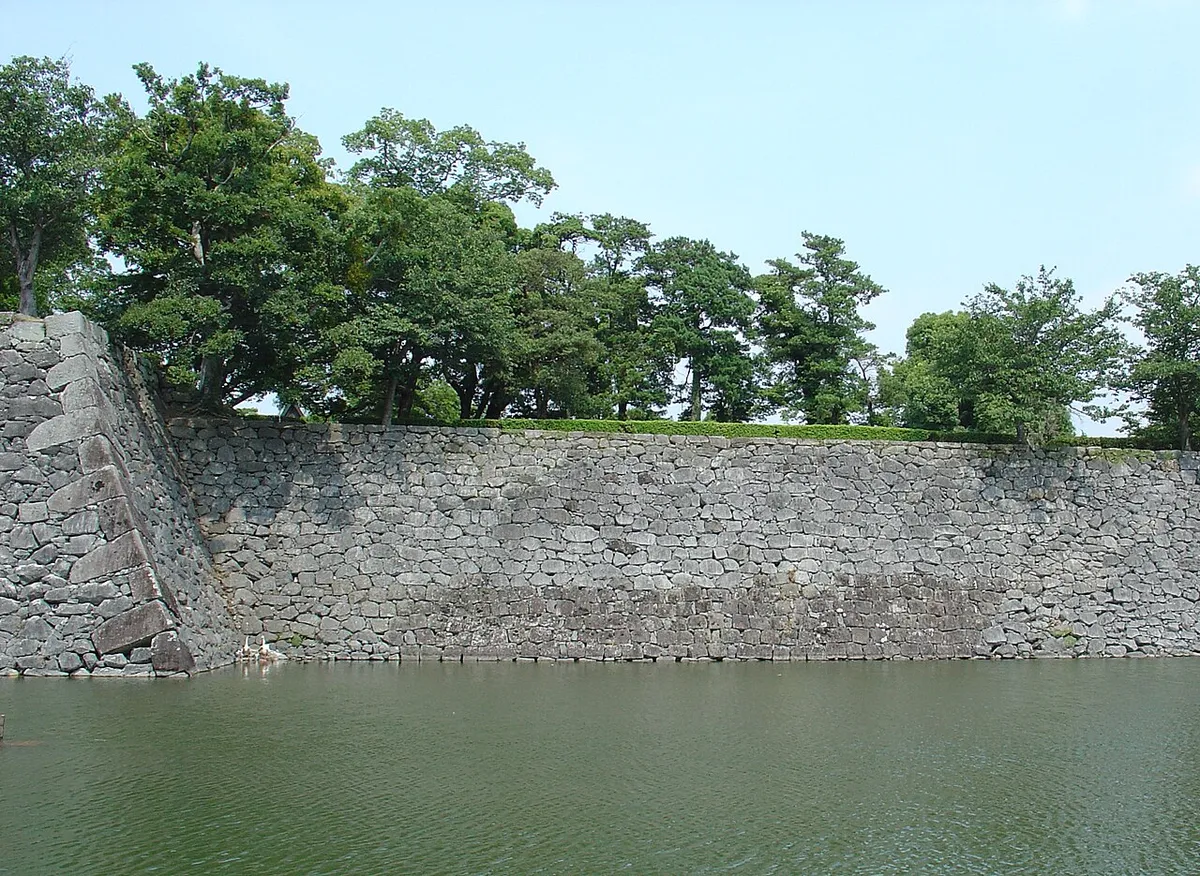
Yatsushiro Castle's most impressive surviving feature is its ishigaki stone walls, built in the 'nozurazumi' style around the moat perimeter. The walls are substantial and well-preserved, rising cleanly above the water-filled moat in a configuration that gives a clear sense of the original Edo-period fortress layout. For a castle whose keep no longer exists, the stone wall and moat combination is unusually evocative.
2

The Hosokawa Connection — Kyushu's Most Important Domain

Yatsushiro Castle was the secondary seat of the Hosokawa clan, who controlled all of Higo Province (Kumamoto Prefecture) as one of the largest outside domains in Tokugawa Japan. The Hosokawa branch at Yatsushiro administered southern Higo while the main branch held Kumamoto. The Hosokawa of Kumamoto are still Japan's most culturally distinguished daimyo family — the current family head is the renowned ceramicist Hosokawa Morihiro, former Prime Minister of Japan.

3

Cherry Blossoms Above the Water Moat

The combination of water-filled moats and cherry trees at Yatsushiro creates one of Kyushu's most admired hanami scenes in late March. The reflection of blossoms in the moat water, framed by the stone walls, is the image most associated with the castle in modern local culture. The park is a genuine community gathering space — the cherry blossom season is when Yatsushiro's residents most actively engage with their castle heritage.

Structure Details

Visitor tip

Yatsushiro Castle is a pleasant public park visit centered on the surviving stone walls and water moat. Walk the moat perimeter to appreciate the wall construction. The site is compact and easily covered in 30–45 minutes. The castle pairs well with Uto Castle to the north for a southern Kyushu castle day.

Castle type

Flatland castle

Flatland castle — built on flat terrain in the coastal plain of southern Kumamoto, relying entirely on moat systems and stone walls for defense

Layout type

Concentric layout

Ring-style layout — concentric stone walls and water moats surrounding the main compound on flat coastal plain terrain

Main tower

Ruins — no keep survives. Original Edo-period stone walls and water moat system are the primary surviving elements. The castle site is a public park (Shinabara Park).

Stone walls

Natural stone stacking

The stone walls are the defining visual feature of Yatsushiro Castle today — substantial nozurazumi-style ishigaki rising cleanly above the water-filled moats. The walls are well-maintained and representative of standard Kyushu coastal plain castle construction of the early Edo period.

Moats

Water-filled moat system is the most intact historical element. The inner moat surrounds the main compound and is fully preserved, creating the castle's most impressive visual — stone walls reflected in still water. The flat coastal terrain made water defenses the primary defensive strategy.

Key defensive features

Water Moat System

The primary defense of the flatland position — a water-filled moat system surrounding the main compound. On coastal plain terrain with no natural elevation advantage, the moat was the critical defensive feature requiring bridging under fire.

Stone Wall Perimeter

Substantial stone walls immediately inside the moat formed the secondary defensive line after the moat crossing. The well-preserved walls give a clear sense of the layered defense of a Edo-period flatland castle.

The Story of Yatsushiro Castle

Originally built 1622 / Kato Tadahiro
Current form 1641 / Hosokawa clan (reconstruction after Kato removal)
    1622

    Kato Tadahiro — son of the famous Kato Kiyomasa — begins construction of Yatsushiro Castle as a secondary stronghold for the Kato domain in southern Higo Province.

    1632

    The Kato clan is removed from Higo Province by the Tokugawa shogunate — the second generation of a major outside domain losing its lands in a demonstration of Tokugawa control. The Hosokawa clan (from Buzen/Kokura) is transferred to Higo as the new domain lords.

    1641

    The Hosokawa clan reconstructs and expands Yatsushiro Castle as the southern administrative center of their large Higo domain. The stone walls and moat system in their current form date primarily to this Hosokawa construction phase.

    1877

    During the Seinan War (Satsuma Rebellion), Yatsushiro sees military activity as imperial and Satsuma forces contest control of southern Kyushu. The castle structures suffer some damage in the conflict.

    1871

    The Meiji government abolishes the domain system. Yatsushiro Castle's structures are subsequently demolished, leaving the stone walls and moat system as the primary surviving elements.

In Pop Culture

other

Yatsushiro regional tourism promotion

The cherry blossom moat reflection image is the primary tourism image for Yatsushiro City and appears in Kumamoto Prefecture regional travel promotion.

Did You Know?

  • Hosokawa Morihiro — former Prime Minister of Japan (1993–1994) and current head of the Hosokawa clan — is a renowned ceramicist whose work is internationally exhibited. The Hosokawa family's 400-year association with Higo Province and their reputation as Japan's most cultured daimyo family (tea ceremony, Noh, ceramics) traces directly back to their castle headquarters at Kumamoto and Yatsushiro.
  • The Seinan War of 1877 — the last significant samurai rebellion against the Meiji government — was fought largely in Kyushu, with its final stages in Kumamoto Prefecture. Yatsushiro's location in the southern Kumamoto plain made it a point of strategic interest during this conflict, the largest domestic military engagement of the Meiji era.
  • Yatsushiro is famous in Japan for the Myoken Festival — a UNESCO Intangible Cultural Heritage event featuring a turtle-snake hybrid mythological creature carried through the city in a massive procession. The festival is one of the most unusual traditional events in Kyushu and completely unrelated to the castle, but gives the city a cultural identity beyond its castle heritage.

Score Breakdown

Tourism Score

F 38/100
  • Accessibility 10 /20
  • Foreign-Friendly 6 /20
  • Historical Value 10 /20
  • Visual Impact 8 /20
  • Facilities 4 /20

Defense Score

C 63/100
  • Terrain Advantage 10 /20
  • Entrance Defense 11 /20
  • Internal Complexity 15 /20
  • Siege Endurance 15 /20
  • Strategic Oversight 12 /20

Planning Your Visit

Best Time to Visit

Late March to early April for cherry blossoms. Any season for the stone walls and moat.

Time Needed

30 to 45 minutes

Insider Tip

The best view of the stone walls reflected in the moat is from the southwest corner of the moat perimeter — this is the angle used in most tourism photography. Visit in the morning when the light is on the walls and the water is still.

Map

Getting There

Nearest station: Yatsushiro Station (JR Kagoshima Main Line / Kyushu Shinkansen)
Walk from station: 15 min walk
Parking: Free parking at the castle park. Multiple lots available.
Accessible with a JR Pass

Admission

Free

Entirely free. The castle ruins (Shinabara Park) are a public park. The nearby Yatsushiro Municipal Museum charges a small fee but is not the castle itself.

Opening Hours

Open00:00 – 23:59

Open at all times. The castle park grounds are freely accessible. Cherry blossoms in late March to early April are the visual highlight of the year.

Facilities

  • – English guides
  • – Audio guide
  • ✓ Wheelchair access
  • ✓ Restrooms
  • – Gift shop
  • ✓ Food nearby

Nearby Castles

Featured in collections

FAQ

Frequently Asked Questions

How do I get to Yatsushiro Castle?

The nearest station is Yatsushiro Station (JR Kagoshima Main Line / Kyushu Shinkansen). From there it is about 15 minutes on foot.

How much does Yatsushiro Castle cost to enter?

Yatsushiro Castle is free to enter.

Is Yatsushiro Castle worth visiting?

Yatsushiro Castle is a pleasant but undemanding park castle visit — best in cherry blossom season when the moat reflections are at their most beautiful. The stone walls are well-preserved and the Hosokawa connection gives the site cultural weight. For travelers on the Kyushu Shinkansen, Yatsushiro is an easy stop between Kumamoto and Kagoshima. Combine with Uto Castle (30 minutes north) for a half-day southern Kyushu castle itinerary.

What are the opening hours of Yatsushiro Castle?

00:00 to 23:59.

How long should I spend at Yatsushiro Castle?

Plan for about 30 to 45 minutes, depending on how closely you want to explore the grounds.