Hara Castle

原城·Hara-jo

D Tourism Score 45/100
B Defense Score 77/100

Where 37,000 rebels made Japan's last Christian stand in 1638 — a UNESCO World Heritage site of faith, fire, and the birth of sakoku isolation.

#188 — Continued 100 Castles Ruins
Hara Castle (原城)
Photo:Unknown/Wikimedia Commons/CC BY-SA 3.0

Quick Facts

Quick Facts

Admission
Free Free
Hours
00:00 – 23:59
Nearest Station
Shimabara-Gaiko Station (Shimabara Railway) — 30 minutes by taxi or car from the ruins
Walk from Station
null min walk

Bus also available

Time Needed
1 to 1.5 hours

Entirely free. The ruins are on a public coastal headland. The nearby Shimabara Rebellion History Museum in Minamishimabara City provides essential context.

Defense Overview

Defense Overview

Why Hara Castle was hard to attack

This castle is hard to attack because it combines a raised core with defended outer space with a controlled route inward.

An attacker would not get a simple direct approach to the center. They would have to cross water barriers or moat lines, pass tighter turns and chokepoints, and push through successive outer areas before the core.

Overall score

77/100

Estimated range

71–83

Confidence

B

Usable estimate with some inference

This is a site-original comparison score for learning and comparison, not a reconstruction of one historical battle.

Radar view

Terrain 16/20 Entrance 18/20 Internal 16/20 Siege 14/20 Oversight 13/20
How this estimate was built+

This estimate combines broad terrain, approach, layout, and route-control signals. It is meant to explain the castle's defensive logic in plain English, not reconstruct a single historical attack.

Terrain Advantage

How much the terrain itself seems to help: height, slope, ridges, cliffs, water edges, and limited approach directions.

16/20

Entrance Defense

How awkward and dangerous the first entry looks: gates, bridge or moat crossings, chokepoints, and forced turns.

18/20

Internal Complexity

How hard it seems to keep pushing after entry: layered baileys, depth, compartmentalization, and repeated defensive lines.

16/20

Siege Endurance

A rough sense of long-hold potential: moats, water access, space, storage plausibility, and defensive staying power.

14/20

Strategic Oversight

How much the castle appears to command nearby roads, plains, rivers, basins, harbors, or town approaches.

13/20

Why Visit

Hara Castle is not a place you visit for architectural splendor. You visit to stand where one of the most significant events in Japanese history took place — where the Tokugawa shogunate's attempt to exterminate Christianity produced instead its greatest martyr moment, and where the defeat of the rebels set Japan on the path to 200 years of isolation. The coastal headland setting is atmospheric, the UNESCO designation has brought new informational resources, and the scale of what happened here — 37,000 people, 88 days, a teenage messianic leader, a Dutch warship — is simply staggering. Read the history before you go.

Highlights

1

The Last Stand of 37,000 — The Shimabara Rebellion

Hara Castle is the site of one of the most significant events in Japanese history. In 1637–38, approximately 37,000 rebels — impoverished Kyushu peasants, many of them Japanese Christians facing violent persecution, led by the teenage Amakusa Shiro — seized the ruined Hara Castle and made their last stand against the Tokugawa government. For three months they held off an army of 125,000 shogunate troops. When the castle finally fell in April 1638, virtually all 37,000 were killed. The defeat of the rebellion directly triggered Japan's 200-year policy of national isolation (sakoku) and the near-complete eradication of Japanese Christianity.
2

UNESCO World Heritage — Hidden Christian Sites

Hara Castle is a component site of the UNESCO 'Hidden Christian Sites in the Nagasaki Region' (2018), recognized as part of the extraordinary story of Japanese Christians who secretly maintained their faith for 250 years under the Tokugawa ban. The castle ruins represent the pivotal moment when the public expression of Christianity was permanently suppressed — and the secret tradition that followed is what the broader UNESCO designation celebrates. The UNESCO status has significantly increased international awareness of a site that was previously little-known outside Japan.

3

Amakusa Shiro — Japan's Most Famous Child Martyr

The Shimabara Rebellion was nominally led by Amakusa Shiro, a teenage boy of approximately 16 years old who the rebels believed was a messianic figure with miraculous powers. His image — a young man holding a Christian banner leading tens of thousands against an overwhelming force — is one of the most enduring in Japanese popular culture. His fate at Hara Castle (killed in the final assault, his head displayed publicly as a warning) has made him a figure of tragedy, faith, and resistance commemorated in novels, anime, games, and dramas for centuries.

Structure Details

Visitor tip

Hara Castle is primarily a historical pilgrimage site rather than a conventional castle visit. The physical ruins are modest — earthwork platforms and stone wall fragments on a coastal headland. The power of the site is entirely historical: standing on the headland, looking at the Ariake Sea, and understanding that 37,000 people died here for their faith and their freedom in 1638. Read about the Shimabara Rebellion before visiting. The Shimabara Rebellion History Museum in the nearest town is essential context.

Castle type

Hill castle

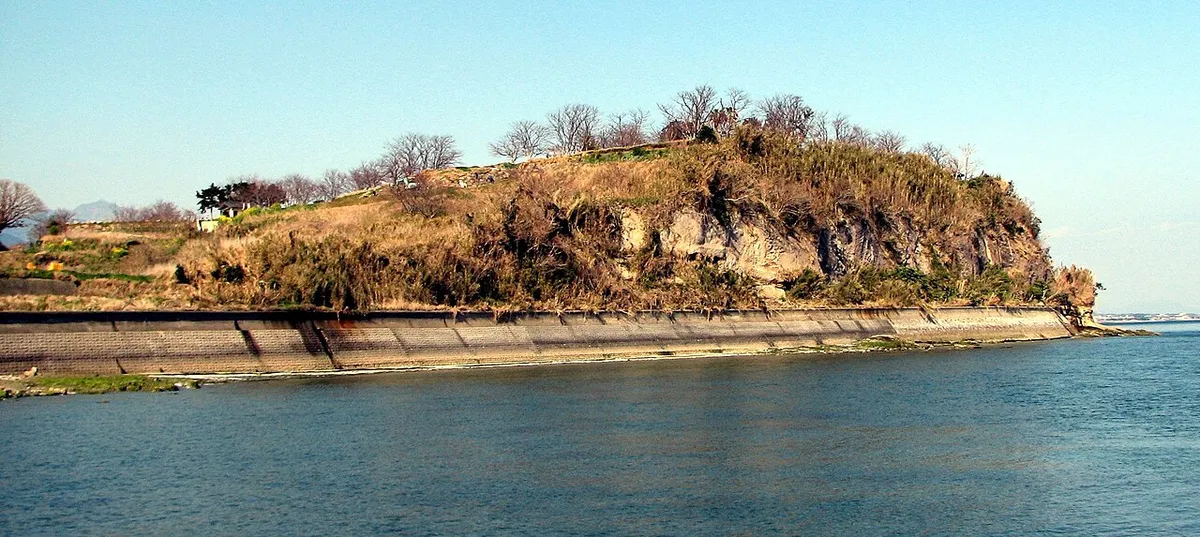
Coastal headland castle — built on a low promontory projecting into the Ariake Sea on the Shimabara Peninsula, with sea on three sides and a narrow land connection to the north

Layout type

Linked compound layout

Compound style — multiple compounds on the coastal headland, with the main compound at the seaward tip

Main tower

Ruins — no keep survives. Stone wall remnants, earthwork platforms, and compound traces remain on the headland. Archaeological excavation has recovered significant artifacts from the 1638 battle.

Stone walls

Natural stone stacking

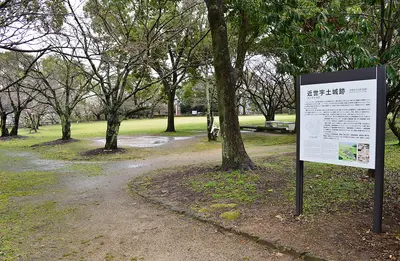
The surviving stone wall remains are fragmentary — the castle was already significantly ruined when the rebels occupied it in 1637 and was further damaged in the 3-month siege. Earthwork platforms and shoreline stone sections give the clearest sense of the headland layout. Archaeological excavations have uncovered human remains, weapons, and Christian artifacts from the final battle.

Key defensive features

Coastal Headland Sea Defense

The three-sided sea exposure of the Hara headland restricted shogunate attack options to a narrow northern front while giving the rebels escape options by sea — options that were ultimately blocked when the shogunate requested Dutch warship support to bombard the landward rebels from the seaward side.

Narrow Northern Neck

The only land approach to the castle was a narrow strip of land connecting the headland to the mainland — a natural chokepoint where a small defending force could hold a much larger attacker. The rebels held this approach for three months against an army of 125,000.

Christian Morale and Desperation Defense

The rebels had no retreat option — surrender meant torture, execution, and the destruction of their faith. This absolute commitment to resistance gave them a defensive ferocity that repeatedly stalled the shogunate assault despite catastrophic numerical disadvantage. The defenders were finally overcome only after food and ammunition were exhausted.

The Story of Hara Castle

Originally built 1604 / Arima Harunobu
Current form 1638 / Rebels of the Shimabara Rebellion (final occupation and destruction)
UNESCO World Heritage 2018
    1604

    Arima Harunobu, a Christian daimyo of the Shimabara Peninsula, completes Hara Castle as his coastal stronghold. The Arima clan's Christian faith — their domain had the highest concentration of Christians in Japan — gives the castle its future significance.

    1616

    The Arima clan is transferred away from Shimabara after a political scandal. The new lord of the domain, hostile to Christianity, begins systematic persecution of Christian converts, destroying churches and forcing recantation or death. Hara Castle is abandoned and begins to fall into ruin.

    1637

    October: The Shimabara Rebellion begins. Impoverished, persecuted peasants — many of them former Christian converts — rise up in the Shimabara Peninsula and on the Amakusa Islands simultaneously. The teenage Amakusa Shiro is proclaimed the rebels' messianic leader. The rebels seize the ruined Hara Castle and begin fortifying it with earthworks.

    1638

    January to April: The shogunate assembles an army of 125,000 and lays siege to Hara Castle, defended by approximately 37,000 rebels including women and children. Three months of siege warfare follows. In April, after food and ammunition are exhausted, the shogunate launches the final assault. Virtually all 37,000 defenders are killed. Amakusa Shiro's head is displayed publicly. The rebellion's defeat triggers Japan's sakoku isolation policy and the comprehensive ban on Christianity.

    2018

    UNESCO designates the 'Hidden Christian Sites in the Nagasaki Region' as a World Heritage Site. Hara Castle ruins are a component site, recognized as the location of the event that drove Japanese Christianity underground for 250 years and gave rise to the remarkable hidden Christian tradition.

In Pop Culture

book

Shiro (novel by Yoshimura Akira)

One of multiple novels dramatizing Amakusa Shiro and the Shimabara Rebellion. The rebellion has been a recurring subject of Japanese historical fiction for centuries due to its extraordinary drama and its themes of faith versus power.

other

Various anime and games

Amakusa Shiro appears as a character in numerous Japanese anime, manga, and video games, including the Fate series, Samurai Shodown/Spirits, and multiple historical simulation games. The character is typically portrayed as a supernatural figure, reflecting the messianic legend that surrounded him in 1637.

Did You Know?

  • The Dutch East India Company (VOC) warship 'De Ryp' bombarded Hara Castle from the sea in February 1638 at the shogunate's request — the only instance of Western military forces assisting the Tokugawa government in combat. The Dutch, eager to maintain their trade privileges at Nagasaki, were willing to fire on fellow Christians to distinguish themselves from the Spanish and Portuguese who had been expelled. This pragmatic decision secured the Dutch their unique position as the only Western trading partner permitted in Japan for the next 200 years.
  • Archaeological excavations at Hara Castle have recovered thousands of artifacts from the 1638 siege, including Christian crosses, rosary beads, European-style buttons, and human remains bearing evidence of violent death. The Christian artifacts are particularly moving — objects of private devotion hidden in a ruined castle by people who knew they would die for what those objects represented.
  • The population of the Shimabara Peninsula was so thoroughly reduced by the rebellion and its suppression — estimated at 80–90% population loss — that the shogunate was forced to resettle the area with farmers from other regions. The descendants of these resettled families are the ancestors of much of the current Shimabara population.

Score Breakdown

Tourism Score

D 45/100
  • Accessibility 5 /20
  • Foreign-Friendly 9 /20
  • Historical Value 16 /20
  • Visual Impact 11 /20
  • Facilities 4 /20

Defense Score

B 77/100
  • Terrain Advantage 16 /20
  • Entrance Defense 18 /20
  • Internal Complexity 16 /20
  • Siege Endurance 14 /20
  • Strategic Oversight 13 /20

Planning Your Visit

Best Time to Visit

Year-round. Overcast days are atmospherically appropriate for a site of this historical weight. Avoid summer heat on the exposed headland.

Time Needed

1 to 1.5 hours

Insider Tip

The Shimabara Rebellion History Museum in Minamishimabara City is the essential preparation for this visit — spend 30–45 minutes there before driving to the ruins. The museum has good English exhibits and places the rebellion in the broader context of Japanese Christian history and the sakoku policy that followed. Without that context, the ruins are just earthworks by the sea.

Map

Getting There

Nearest station: Shimabara-Gaiko Station (Shimabara Railway) — 30 minutes by taxi or car from the ruins
Walk from station: null min walk
Bus: Buses connect Shimabara and Minamishimabara to the castle area. Service is infrequent. A rental car is strongly recommended for visiting the Shimabara Peninsula including Hara Castle, Shimabara Castle, and the surrounding volcanic landscape.
Parking: Free parking at the castle ruins. A small visitor information point is at the car park.

Admission

Free

Entirely free. The ruins are on a public coastal headland. The nearby Shimabara Rebellion History Museum in Minamishimabara City provides essential context.

Opening Hours

Open00:00 – 23:59

Open at all times. The coastal headland site is fully exposed to weather — the ruins can be atmospheric in any season but are most dramatic under grey skies. The site has no facilities on site; bring water.

Facilities

  • – English guides
  • – Audio guide
  • – Wheelchair access
  • ✓ Restrooms
  • – Gift shop
  • – Food nearby

Nearby Castles

Featured in collections

FAQ

Frequently Asked Questions

How do I get to Hara Castle?

The nearest station is Shimabara-Gaiko Station (Shimabara Railway) — 30 minutes by taxi or car from the ruins. From there it is about null minutes on foot. Buses connect Shimabara and Minamishimabara to the castle area. Service is infrequent. A rental car is strongly recommended for visiting the Shimabara Peninsula including Hara Castle, Shimabara Castle, and the surrounding volcanic landscape.

How much does Hara Castle cost to enter?

Hara Castle is free to enter.

Is Hara Castle worth visiting?

Hara Castle is not a place you visit for architectural splendor. You visit to stand where one of the most significant events in Japanese history took place — where the Tokugawa shogunate's attempt to exterminate Christianity produced instead its greatest martyr moment, and where the defeat of the rebels set Japan on the path to 200 years of isolation. The coastal headland setting is atmospheric, the UNESCO designation has brought new informational resources, and the scale of what happened here — 37,000 people, 88 days, a teenage messianic leader, a Dutch warship — is simply staggering. Read the history before you go.

What are the opening hours of Hara Castle?

00:00 to 23:59.

How long should I spend at Hara Castle?

Plan for about 1 to 1.5 hours, depending on how closely you want to explore the grounds.