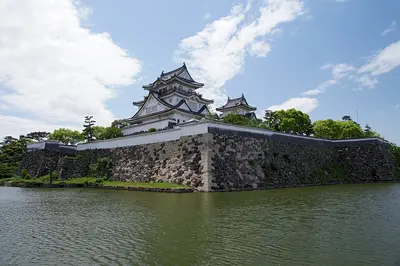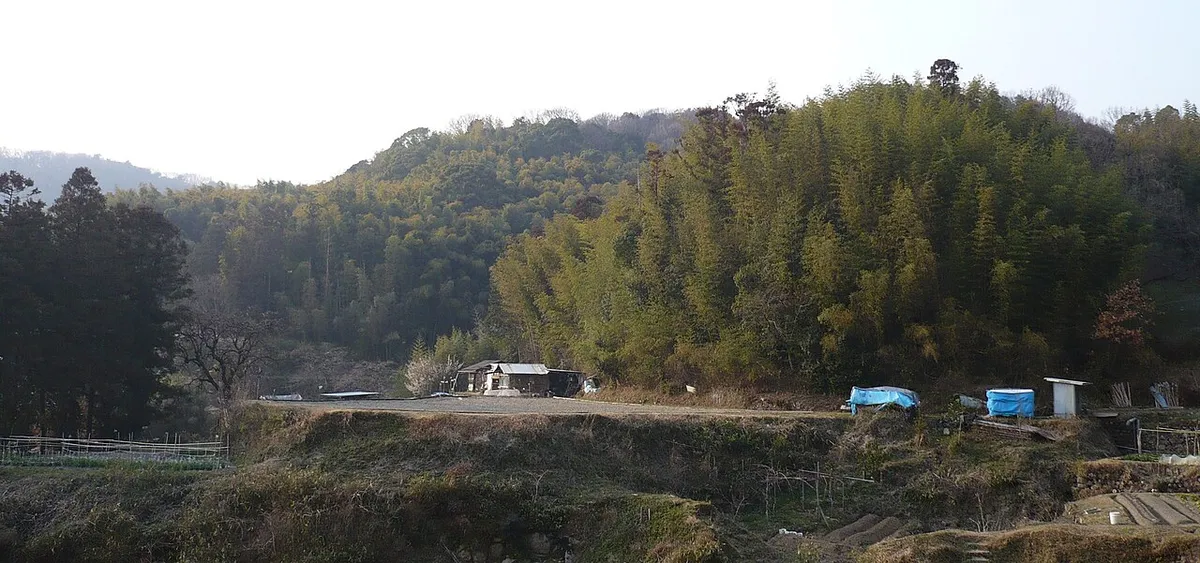
Akutagawasan Castle

芥川山城·Akutagawasan-jo

F Tourism Score 30/100
A Defense Score 87/100

The mountain that controlled the Osaka-Kyoto corridor — Miyoshi Nagayoshi's northern stronghold and Oda Nobunaga's first base in the Kinai.

#159 — Continued 100 Castles Ruins
Akutagawasan Castle (芥川山城)
Photo:ブレイズマン/Wikimedia Commons/Public domain

Quick Facts

Quick Facts

Admission
Free Free
Hours
00:00 – 23:59
Nearest Station
Shibahara-Takatsukishi Station (Hankyu Kyoto Line)
Walk from Station
50 min walk
Time Needed
2-3 hours (including hike)

The castle mountain and ruins are free to access at all times. No visitor facilities.

Defense Overview

Defense Overview

Why Akutagawasan Castle was hard to attack

This castle is hard to attack because it combines high ground and difficult natural access with a controlled route inward.

An attacker would first have to fight the site itself before reaching the main defenses. They would have to cross water barriers or moat lines and face more defensive depth after the first line.

Overall score

87/100

Estimated range

81–93

Confidence

B

Usable estimate with some inference

This is a site-original comparison score for learning and comparison, not a reconstruction of one historical battle.

Radar view

Terrain 19/20 Entrance 17/20 Internal 17/20 Siege 16/20 Oversight 18/20
How this estimate was built+

This estimate combines broad terrain, approach, layout, and route-control signals. It is meant to explain the castle's defensive logic in plain English, not reconstruct a single historical attack.

Terrain Advantage

How much the terrain itself seems to help: height, slope, ridges, cliffs, water edges, and limited approach directions.

19/20

Entrance Defense

How awkward and dangerous the first entry looks: gates, bridge or moat crossings, chokepoints, and forced turns.

17/20

Internal Complexity

How hard it seems to keep pushing after entry: layered baileys, depth, compartmentalization, and repeated defensive lines.

17/20

Siege Endurance

A rough sense of long-hold potential: moats, water access, space, storage plausibility, and defensive staying power.

16/20

Strategic Oversight

How much the castle appears to command nearby roads, plains, rivers, basins, harbors, or town approaches.

18/20

Why Visit

Akutagawasan is for committed history hikers. The ruins are modest but the story is extraordinary — this mountain was the key to controlling Japan's political heartland, and both the first man to dominate the Sengoku Kinai (Miyoshi Nagayoshi) and the man who replaced him (Oda Nobunaga) used it as their operational base. The views over the Osaka-Kyoto corridor from the summit are excellent.

Highlights

1

The Miyoshi Clan's Northern Gateway Castle

Akutagawasan Castle controlled the critical passage between the Settsu lowlands north of Osaka and the Kinai heartland. Whoever held this mountain controlled the main road between Osaka and Kyoto — making it one of the most strategically vital positions in 16th-century Japan. The Miyoshi clan used it as the northern anchor of their Kinai power, guarding the approach to their Iimori Castle base.
2

Oda Nobunaga's First Castle — Before He Had Osaka

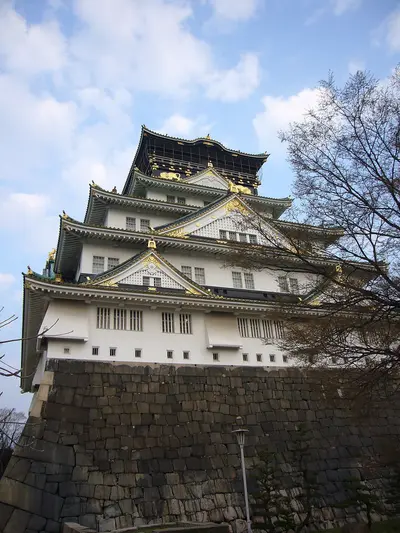
In 1568, when Oda Nobunaga marched into the Kinai and overthrew Miyoshi power, Akutagawasan was his first foothold in the region. Nobunaga used the castle briefly as his base before moving on to establish himself more permanently. This mountain saw Nobunaga at the very beginning of his domination of Japan's political heartland.

3

Stone Walls Commanding the Osaka-Kyoto Corridor

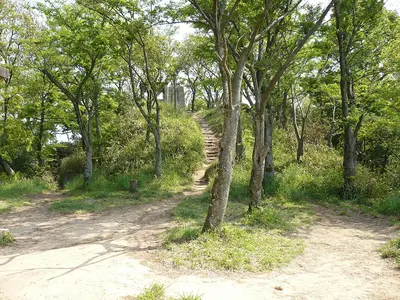
The castle ruins on Akutagawasan's summit include surviving stone walls and compound platforms with sweeping views over the Settsu plain — the corridor between Osaka and Kyoto. The views alone justify the hike; the stone walls and compound earthworks make it a rewarding ruins experience for those who make the effort.

Structure Details

Visitor tip

Akutagawasan Castle is a mountain ruins site requiring a moderately demanding hike. The stone walls and compound platforms are the attractions. The historical story — Miyoshi Nagayoshi's northern fortress, then Nobunaga's first foothold in the Kinai — is more compelling than the physical ruins in isolation. Best combined with a visit to Iimori Castle for the full Miyoshi clan story. Carry water; no facilities on the mountain.

Castle type

Mountain castle

Mountain castle — built on the summit of Akutagawasan (high ground north of modern Takatsuki city) commanding the critical road corridor between the Settsu plain, Osaka, and Kyoto

Layout type

Linked compound layout

Compound style — compounds arranged along the mountain ridgeline and summit with stone walls reinforcing key defensive positions on the upper slopes

Main tower

Complete ruins — stone wall remnants (ishigaki) and compound earthwork platforms survive on the mountain. No structures above ground. The ruins retain considerable archaeological integrity.

Stone walls

Natural stone stacking

Stone wall remnants survive on the upper slope compounds of Akutagawasan, representing the Miyoshi clan's construction during their period of dominance in the Kinai. The walls follow the mountain's natural terrain, reinforcing critical slope positions and compound entrances.

Key defensive features

Command Over the Osaka-Kyoto Road

The mountain's position directly overlooks the main road between Osaka and Kyoto — the most important route in Sengoku Japan. Any force moving between the two cities had to pass within observation and striking range of this castle, making it a chokepoint of enormous strategic value.

Mountain Summit Elevation

The summit elevation provides complete dominance over the surrounding Settsu plain and river crossings. Defenders could observe enemy movements hours in advance and direct defensive forces to critical points along the mountain's multiple approach routes.

Layered Stone Wall Compounds

The surviving stone walls create a layered defensive system on the upper slopes — an attacker who breached one wall immediately faced another on higher ground, with defenders above firing down at every stage of the ascent.

The Story of Akutagawasan Castle

Originally built 1516 / Miyoshi clan
Current form 1553 / Miyoshi Nagayoshi
    1516

    The Miyoshi clan establishes a fortified position on Akutagawasan as part of their expansion into Settsu Province, using the mountain to control the Osaka-Kyoto road corridor. The castle grows in importance as Miyoshi power expands through the Kinai.

    1553

    Miyoshi Nagayoshi, now the dominant power in the Kinai, expands and strengthens Akutagawasan Castle as the northern anchor of his two-castle system, paired with Iimori Castle to the south. The twin mountain fortresses give him unmatched control over the Kinai's critical road network.

    1560

    At the height of Miyoshi power, Akutagawasan Castle stands as one of the strongest mountain fortifications in western Japan. Nagayoshi effectively rules Japan's political center from this mountain and Iimori Castle — without the title of shogun, but with all the power.

    1564

    Miyoshi Nagayoshi dies, leaving Akutagawasan Castle to his successors. Without Nagayoshi's singular leadership, Miyoshi power begins to fragment. The castle loses its prestige as the clan's political cohesion deteriorates.

    1568

    Oda Nobunaga enters the Kinai, overcoming Miyoshi resistance. Akutagawasan Castle becomes Nobunaga's first base in the region — a brief but historically significant occupation that marks the transfer of power from the Miyoshi era to the Nobunaga era.

    1574

    Nobunaga abandons Akutagawasan in favor of constructing Takatsuki Castle in the lowlands below — part of the Sengoku trend away from mountain castles toward flatland positions more suited to firearms warfare and administrative control. The mountain is effectively abandoned as a military site.

    2017

    Akutagawasan Castle is designated #159 on the 続日本100名城 list, recognizing its pivotal role in the Miyoshi era and as the first Kinai foothold of Oda Nobunaga.

Did You Know?

  • Akutagawasan and Iimori Castle together formed the Miyoshi clan's twin-mountain control system over the Kinai — if you held both mountains, you controlled the roads between Osaka, Kyoto, and Nara simultaneously.
  • The name 'Akutagawasan' comes from the Akutagawa River that flows through the plain below — the same river that gives the famous Akutagawa Literary Prize its name (named after author Ryunosuke Akutagawa, who was born in Tokyo but whose family originated from this area).
  • When Oda Nobunaga occupied the castle in 1568, it was during the same campaign in which he installed the new Ashikaga shogun Yoshiaki in Kyoto — the first step in his eventual domination of all Japan.

Score Breakdown

Tourism Score

F 30/100
  • Accessibility 3 /20
  • Foreign-Friendly 3 /20
  • Historical Value 14 /20
  • Visual Impact 7 /20
  • Facilities 3 /20

Defense Score

A 87/100
  • Terrain Advantage 19 /20
  • Entrance Defense 17 /20
  • Internal Complexity 17 /20
  • Siege Endurance 16 /20
  • Strategic Oversight 18 /20

Planning Your Visit

Best Time to Visit

Spring (April) and autumn (October-November) for best hiking conditions and summit views.

Time Needed

2-3 hours (including hike)

Insider Tip

Do both Akutagawasan and Iimori Castle on the same day for the full Miyoshi clan story. They are about 10 km apart in the eastern Osaka hills — a memorable double-mountain day for serious castle enthusiasts.

Map

Getting There

Nearest station: Shibahara-Takatsukishi Station (Hankyu Kyoto Line)
Walk from station: 50 min walk
Parking: Limited parking at the mountain trailhead. Free.

Admission

Free

The castle mountain and ruins are free to access at all times. No visitor facilities.

Opening Hours

Open00:00 – 23:59

Open year-round. Mountain trails can be slippery after rain. Best visited in dry weather. Spring and autumn offer the most pleasant conditions.

Facilities

  • – English guides
  • – Audio guide
  • – Wheelchair access
  • – Restrooms
  • – Gift shop
  • – Food nearby

Nearby Castles

Featured in collections

FAQ

Frequently Asked Questions

How do I get to Akutagawasan Castle?

The nearest station is Shibahara-Takatsukishi Station (Hankyu Kyoto Line). From there it is about 50 minutes on foot.

How much does Akutagawasan Castle cost to enter?

Akutagawasan Castle is free to enter.

Is Akutagawasan Castle worth visiting?

Akutagawasan is for committed history hikers. The ruins are modest but the story is extraordinary — this mountain was the key to controlling Japan's political heartland, and both the first man to dominate the Sengoku Kinai (Miyoshi Nagayoshi) and the man who replaced him (Oda Nobunaga) used it as their operational base. The views over the Osaka-Kyoto corridor from the summit are excellent.

What are the opening hours of Akutagawasan Castle?

00:00 to 23:59.

How long should I spend at Akutagawasan Castle?

Plan for about 2-3 hours (including hike), depending on how closely you want to explore the grounds.