Iimori Castle

飯盛城·Iimori-jo

F Tourism Score 35/100
A Defense Score 86/100

The forgotten mountain fortress from which Miyoshi Nagayoshi ruled Japan's political heartland a decade before Oda Nobunaga.

#160 — Continued 100 Castles Ruins
Iimori Castle (飯盛城)
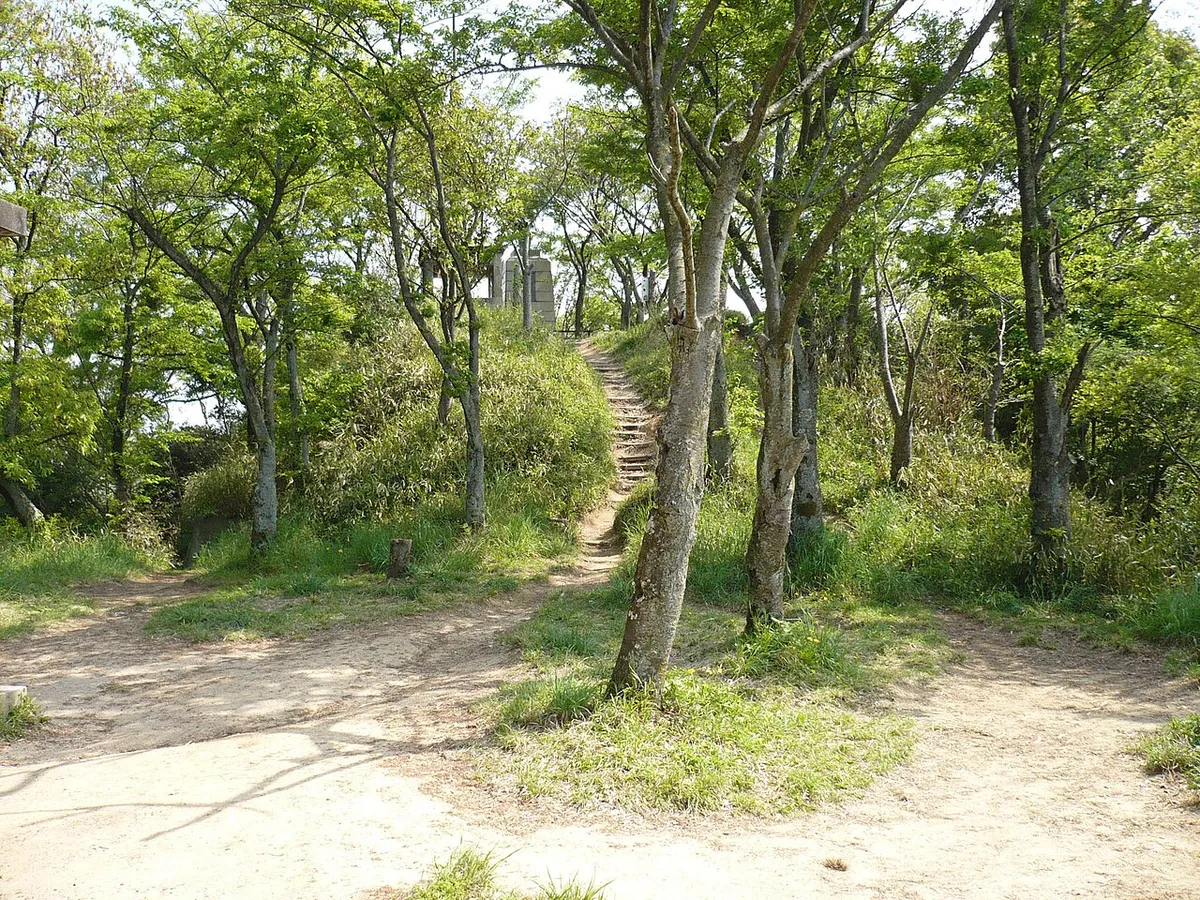
Photo:投稿者が撮影/Wikimedia Commons/Public domain

Quick Facts

Quick Facts

Admission
Free Free
Hours
00:00 – 23:59
Nearest Station
Shijonawate Station (Kintetsu Keihanna Line) or Nobeha Station (JR Gakkentoshi Line)
Walk from Station
40 min walk
Time Needed
2-3 hours (including hike)

Free to enter the castle mountain and ruins at all times. No facilities charge admission.

Defense Overview

Defense Overview

Why Iimori Castle was hard to attack

This castle is hard to attack because it combines high ground and difficult natural access with a controlled route inward.

An attacker would first have to fight the site itself before reaching the main defenses. They would have to cross water barriers or moat lines and face more defensive depth after the first line.

Overall score

86/100

Estimated range

80–92

Confidence

B

Usable estimate with some inference

This is a site-original comparison score for learning and comparison, not a reconstruction of one historical battle.

Radar view

Terrain 19/20 Entrance 17/20 Internal 17/20 Siege 15/20 Oversight 18/20
How this estimate was built+

This estimate combines broad terrain, approach, layout, and route-control signals. It is meant to explain the castle's defensive logic in plain English, not reconstruct a single historical attack.

Terrain Advantage

How much the terrain itself seems to help: height, slope, ridges, cliffs, water edges, and limited approach directions.

19/20

Entrance Defense

How awkward and dangerous the first entry looks: gates, bridge or moat crossings, chokepoints, and forced turns.

17/20

Internal Complexity

How hard it seems to keep pushing after entry: layered baileys, depth, compartmentalization, and repeated defensive lines.

17/20

Siege Endurance

A rough sense of long-hold potential: moats, water access, space, storage plausibility, and defensive staying power.

15/20

Strategic Oversight

How much the castle appears to command nearby roads, plains, rivers, basins, harbors, or town approaches.

18/20

Why Visit

Iimori Castle is a hidden gem for serious history enthusiasts. The physical ruins — stone walls, compound terraces, summit views over the Osaka plain — are genuinely impressive for a mountain castle, and the historical story of Miyoshi Nagayoshi's domination of Japan's political center is one of the most underappreciated episodes of the Sengoku period. The hike is moderately demanding but completely worth it.

Highlights

1

Miyoshi Nagayoshi's Mountain Fortress Above the Kinai

Iimori Castle was the primary stronghold of Miyoshi Nagayoshi (1522-1564), the first warlord to truly dominate the Kinai region (the political heartland around Kyoto and Osaka) in the Sengoku period — predating Oda Nobunaga's rise. From this mountain castle east of Osaka, Nagayoshi effectively controlled the shogunate itself, making this one of the most historically important but little-known fortifications in Japan.
2

A Mountain with 360-Degree Command of the Kinai

Iimori-yama (Mount Iimori) rises 314 meters above the Osaka plain, offering sweeping views in every direction. From the summit ruins, you can see the entire Osaka plain to the west, Kyoto's mountains to the north, and the mountain ranges of Nara to the east. The Miyoshi chose this mountain specifically because it commanded every major road through the Kinai heartland.

3

Stone Walls Hidden in the Forest

Unlike many mountain castle ruins in Japan, Iimori Castle retains well-preserved stone walls (ishigaki) on its mountain slopes — remarkable considering the castle was abandoned in the 1560s. The forest-covered stone walls, compound terraces, and earthwork platforms create an evocative, slightly mysterious ruins experience that rewards the moderately demanding hike to the top.

Structure Details

Visitor tip

Iimori Castle requires a 40-50 minute mountain hike from the trailhead — wear appropriate footwear and carry water. The ruins include well-preserved stone walls, compound platforms, and earthwork terraces. The views from the summit over the Osaka plain are genuinely excellent. The historical significance (Miyoshi Nagayoshi, first ruler of the Kinai in the Sengoku period) is enormous but poorly known outside Japan. Recommended for history enthusiasts willing to do the hike.

Castle type

Mountain castle

Mountain castle — built on the summit and slopes of Iimori-yama (314 m) east of Osaka, commanding the entire Kinai plain and all major approach roads between Yamato, Kawachi, and the Kinai heartland

Layout type

Linked compound layout

Compound style — multiple compounds arranged along the mountain's ridgeline and summit, with the honmaru at the highest point and subsidiary compounds on the upper slopes

Main tower

Complete ruins — no structures survive above ground. Well-preserved stone walls (ishigaki), earthwork compound terraces, and compound platforms remain on the mountain slopes and summit, making Iimori one of the better-preserved mountain castle ruins in the Kinai region.

Stone walls

Natural stone stacking

Stone wall remnants (ishigaki) survive on multiple sections of the Iimori mountain slopes, particularly on the middle and upper compounds. These are genuine Sengoku-era stone walls — not restored — making them rare physical evidence of Miyoshi Nagayoshi's castle construction. The walls follow the natural contours of the mountain, reinforcing key approaches and compound edges.

Key defensive features

314-Meter Mountain Elevation

The castle's 314-meter mountain summit gives defenders a nearly unassailable elevation advantage over any attacking force on the Osaka plain. The mountain's steep and forested slopes slow all approaches and exhaust attackers before they reach the first stone walls.

Stone Walls Reinforcing Natural Slopes

The surviving ishigaki walls follow the mountain's natural contour lines, reinforcing existing cliff faces and slope breaks with carefully fitted stonework. An attacker who got past the slope would immediately face a stone wall, and if they got past that, another slope, and another wall.

Compound Depth and Layered Defense

The castle's multiple compounds are arranged so that the fall of any outer compound only pushes defenders up to a stronger, higher position. The honmaru at the summit was the ultimate refuge, accessible only after defeating every lower compound layer in sequence.

The Story of Iimori Castle

Originally built 1550 / Miyoshi Nagayoshi
Current form 1560 / Miyoshi Nagayoshi
    1550

    Miyoshi Nagayoshi establishes Iimori Castle on the summit of Iimori-yama as his primary stronghold, replacing earlier fortifications on the mountain. From this base, Nagayoshi effectively controls access between Yamato, Kawachi, and the Kinai heartland.

    1553

    Miyoshi Nagayoshi expels the Ashikaga shogun Yoshiteru from Kyoto — a stunning act of power that makes him the de facto ruler of the Kinai. Iimori Castle becomes the military headquarters from which Nagayoshi dominates the political center of Japan.

    1558

    Oda Nobunaga is still a minor daimyo in Owari (Aichi Prefecture) while Miyoshi Nagayoshi rules the Kinai from Iimori. At this moment, Nagayoshi is arguably the most powerful man in Japan — a fact largely forgotten in the shadow of Nobunaga's later fame.

    1564

    Miyoshi Nagayoshi dies at age 42, reportedly from grief after a series of deaths among his closest allies and family members. His death removes the dominant force in Kinai politics, creating a power vacuum that Oda Nobunaga will eventually fill. Iimori Castle's era of greatness ends with its master.

    1568

    Oda Nobunaga marches into the Kinai, ending Miyoshi power and beginning the Nobunaga era. Iimori Castle loses its strategic importance as the center of power shifts. The castle is effectively abandoned as a primary fortress.

    2017

    Iimori Castle is selected as #160 on the 続日本100名城 list, recognizing the extraordinary historical significance of Miyoshi Nagayoshi's mountain fortress as the power center of the Kinai in the crucial decade before Nobunaga's rise.

Did You Know?

  • Miyoshi Nagayoshi was effectively the first person to politically dominate the Kinai region in the Sengoku period — but because he was overshadowed by Oda Nobunaga who came after him, he is almost completely unknown outside Japan.
  • The mountain's name, Iimori-yama (飯盛山), means 'rice-heap mountain' — a reference to the mountain's profile when seen from the plain, which resembles a bowl of mounded rice.
  • The stone walls visible on the Iimori mountain slopes today are over 450 years old and have never been restored — they are genuinely Sengoku-era construction, making them among the oldest surviving castle stone walls in the Kinai region.

Score Breakdown

Tourism Score

F 35/100
  • Accessibility 4 /20
  • Foreign-Friendly 3 /20
  • Historical Value 15 /20
  • Visual Impact 8 /20
  • Facilities 5 /20

Defense Score

A 86/100
  • Terrain Advantage 19 /20
  • Entrance Defense 17 /20
  • Internal Complexity 17 /20
  • Siege Endurance 15 /20
  • Strategic Oversight 18 /20

Planning Your Visit

Best Time to Visit

Spring (April) and autumn (October-November) for the most pleasant hiking conditions and best visibility from the summit. Summer is hot and humid; winter is cold but passable on clear days.

Time Needed

2-3 hours (including hike)

Insider Tip

The mountain offers a trifecta view: Osaka's skyscrapers to the west, Kyoto's mountains to the north, and Nara's peaks to the east — the entire ancient heartland of Japan in one panorama. Combine with nearby Akutagawasan Castle (続100名城 #159) for a Miyoshi clan double-header.

Map

Getting There

Nearest station: Shijonawate Station (Kintetsu Keihanna Line) or Nobeha Station (JR Gakkentoshi Line)
Walk from station: 40 min walk
Parking: Parking area available at the mountain trailhead. Free.
Accessible with a JR Pass

Admission

Free

Free to enter the castle mountain and ruins at all times. No facilities charge admission.

Opening Hours

Open00:00 – 23:59

The castle mountain is open year-round. Trail conditions may be muddy after heavy rain. Spring cherry blossoms make the approach pleasant. Avoid hiking in extreme summer heat or after significant rain.

Facilities

  • – English guides
  • – Audio guide
  • – Wheelchair access
  • – Restrooms
  • – Gift shop
  • – Food nearby

Nearby Castles

Featured in collections

FAQ

Frequently Asked Questions

How do I get to Iimori Castle?

The nearest station is Shijonawate Station (Kintetsu Keihanna Line) or Nobeha Station (JR Gakkentoshi Line). From there it is about 40 minutes on foot.

How much does Iimori Castle cost to enter?

Iimori Castle is free to enter.

Is Iimori Castle worth visiting?

Iimori Castle is a hidden gem for serious history enthusiasts. The physical ruins — stone walls, compound terraces, summit views over the Osaka plain — are genuinely impressive for a mountain castle, and the historical story of Miyoshi Nagayoshi's domination of Japan's political center is one of the most underappreciated episodes of the Sengoku period. The hike is moderately demanding but completely worth it.

What are the opening hours of Iimori Castle?

00:00 to 23:59.

How long should I spend at Iimori Castle?

Plan for about 2-3 hours (including hike), depending on how closely you want to explore the grounds.