Arikoyama Castle

有子山城·Arikoyama-jo

F Tourism Score 35/100
A Defense Score 84/100

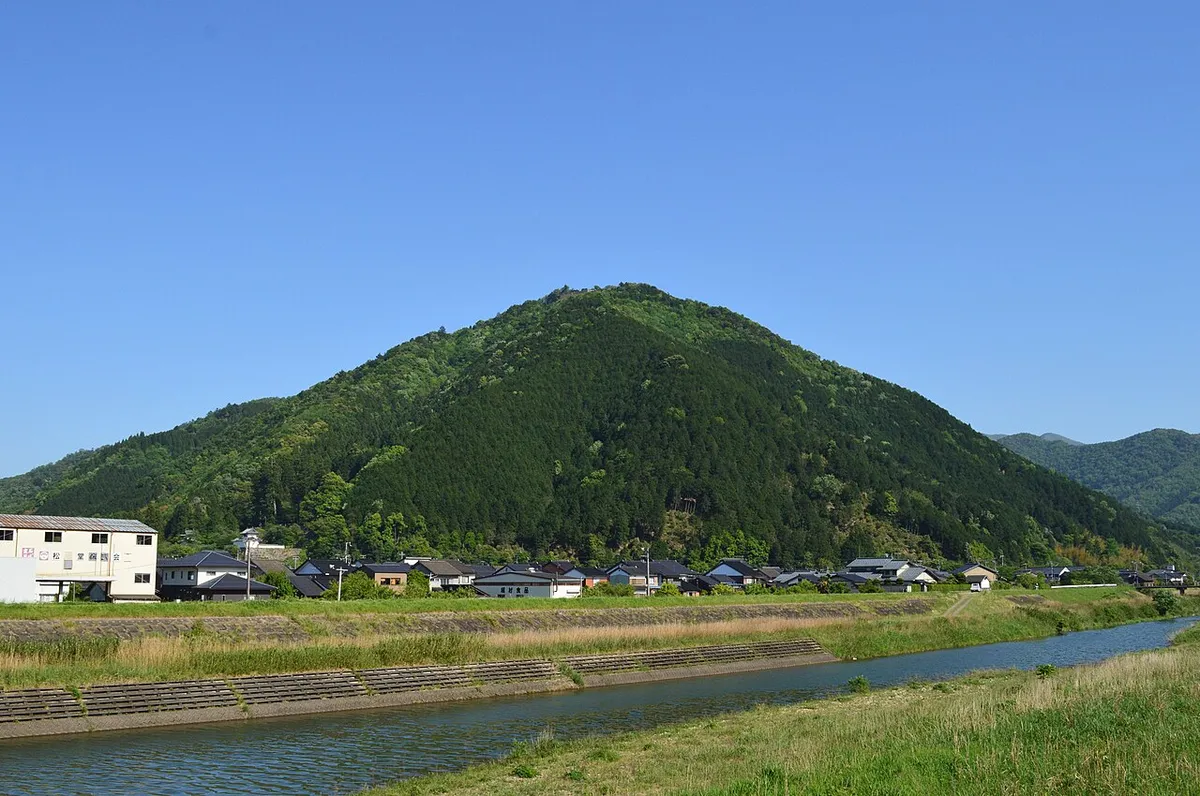
High-altitude stone walls above 'Tajima's Little Kyoto' — the mountain fortress looming over one of Japan's most perfectly preserved castle towns.

#162 — Continued 100 Castles Ruins
Arikoyama Castle (有子山城)
Photo:Saigen Jiro/Wikimedia Commons/CC0

Quick Facts

Quick Facts

Admission
Free Free
Hours
00:00 – 23:59
Nearest Station
Toyooka Station (JR San'in Main Line)
Walk from Station
60 min walk

Bus also available

Time Needed
3 hours (town + mountain castle)

Free admission. The castle ruins are accessed by a mountain trail above Izushi town. Trail condition varies; check locally before attempting in bad weather.

Defense Overview

Defense Overview

Why Arikoyama Castle was hard to attack

This castle is hard to attack because natural ground and added defensive depth work together to make every push inward more difficult.

An attacker would first have to fight the site itself before reaching the main defenses. They would have to cross water barriers or moat lines and face more defensive depth after the first line.

Overall score

84/100

Estimated range

78–90

Confidence

B

Usable estimate with some inference

This is a site-original comparison score for learning and comparison, not a reconstruction of one historical battle.

Radar view

Terrain 19/20 Entrance 17/20 Internal 17/20 Siege 14/20 Oversight 17/20
How this estimate was built+

This estimate combines broad terrain, approach, layout, and route-control signals. It is meant to explain the castle's defensive logic in plain English, not reconstruct a single historical attack.

Terrain Advantage

How much the terrain itself seems to help: height, slope, ridges, cliffs, water edges, and limited approach directions.

19/20

Entrance Defense

How awkward and dangerous the first entry looks: gates, bridge or moat crossings, chokepoints, and forced turns.

17/20

Internal Complexity

How hard it seems to keep pushing after entry: layered baileys, depth, compartmentalization, and repeated defensive lines.

17/20

Siege Endurance

A rough sense of long-hold potential: moats, water access, space, storage plausibility, and defensive staying power.

14/20

Strategic Oversight

How much the castle appears to command nearby roads, plains, rivers, basins, harbors, or town approaches.

17/20

Why Visit

Arikoyama Castle is the best reason to make the effort to reach Izushi — a genuinely off-the-beaten-path destination that rewards the journey. The preserved castle town below is exquisite, and the mountain castle above adds the military dimension that most preserved towns lack. If you're fit enough to make the 1-hour climb, the stone walls at altitude and the panoramic views are exceptional.

Highlights

1

Towering Above the Beautifully Preserved Izushi Town

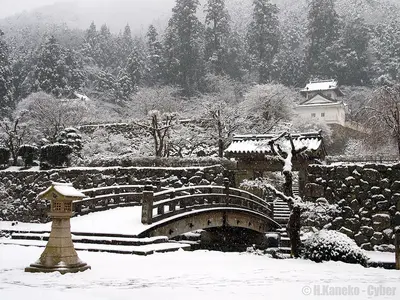
Arikoyama Castle sits dramatically above Izushi — one of the most completely preserved castle towns in Japan, famous as 'Tajima's Little Kyoto.' The castle and town together create one of the most coherent historical landscapes in the Kinki region. From the castle summit, the Izushi townscape of whitewashed walls, traditional architecture, and the elegant Izushi Castle below spreads out against a backdrop of mountains.
2

Stone Walls at Extreme Altitude

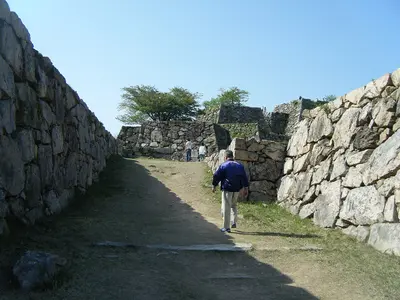
Arikoyama Castle's stone walls are built at remarkable altitude — the main compounds are at over 300 meters, making this one of the highest stone wall mountain castles in the San'in region. The construction of ishigaki at this elevation required enormous effort.

3

The Mountain Behind the Charming Town

Most visitors to Izushi spend their time in the elegant preserved town below, admiring the clock tower, the kabuki theater, and the excellent soba restaurants. Arikoyama Castle looms above all of this — the military reality that made the delightful town possible.

Structure Details

Visitor tip

The climb to Arikoyama Castle is a genuine mountain hike — approximately 1 hour up a steep trail from Izushi town. Wear appropriate shoes and carry water. Most Izushi visitors don't make the climb — those who do have the castle entirely to themselves. The views from the summit over Izushi and the surrounding Tajima mountains are exceptional.

Castle type

Mountain castle

Mountain castle — high-altitude ridgeline fortress (300+ meters) above Izushi town, using dramatic terrain for defense

Layout type

Linked compound layout

Compound style — multiple compounds on the ridgeline with stone walls at high altitude

Main tower

Ruins — stone walls survive at high altitude; all wooden structures gone; challenging mountain trail required to access

Stone walls

Natural stone stacking

The stone walls of Arikoyama Castle were constructed at extraordinary altitude for a Japanese castle. The nozurazumi natural stone walls visible on the approach to the summit compounds represent a significant engineering achievement.

Key defensive features

Extreme Altitude Position

The castle summit at over 300 meters makes direct assault an exhausting ordeal even before reaching any constructed fortification. Attackers climbing the mountain trail would be completely exposed and physically depleted before encountering the first stone walls.

Stone Walls at Mountain Altitude

The ishigaki stone walls at high altitude create formidable barriers on the approach to the summit compounds.

Panoramic Vision from Summit

The castle commands panoramic views over the Izushi basin and surrounding mountains — an unobstructed observation position that allowed defenders to see attacking forces long before they began the mountain approach.

The Story of Arikoyama Castle

Originally built 1574 / Yamana Suketoyo
Current form 1580 / Yamana clan / subsequent lords
    1574

    The Yamana clan — once one of the most powerful families in Japan, controlling multiple provinces at their peak — builds Arikoyama Castle as their primary stronghold in Tajima Province.

    1580

    Toyotomi Hideyoshi's Chugoku campaign extends into the Tajima region. Arikoyama Castle falls under Toyotomi authority, marking the end of Yamana clan independence.

    1600

    After Sekigahara, the Tajima domain is assigned to Kyogoku Takatsugu, who develops the Izushi castle town below Arikoyama as the primary residential and administrative center.

    1696

    With the stabilization of the Edo period and the completion of the Izushi castle town facilities below, Arikoyama Castle on the mountain is officially abandoned.

In Pop Culture

other

Izushi town tourism promotions

Arikoyama Castle is featured in Izushi town tourism materials, typically shown as the dramatic backdrop looming above the charming preserved town below.

Did You Know?

  • Izushi town below Arikoyama Castle is famous for two things: its remarkably complete Edo period townscape (earning the nickname 'Tajima's Little Kyoto') and its exceptional soba noodles, which are considered among the finest in Japan.
  • The Yamana clan who built Arikoyama Castle were once so powerful that they were called 'Muromachi no Shogun Roppou' — controlling six provinces simultaneously at their peak. By the Sengoku period they had declined significantly.
  • The combination of high-altitude castle ruins and a perfectly preserved castle town below makes Arikoyama/Izushi one of the most complete historical landscapes in Japan.

Score Breakdown

Tourism Score

F 35/100
  • Accessibility 3 /20
  • Foreign-Friendly 3 /20
  • Historical Value 12 /20
  • Visual Impact 10 /20
  • Facilities 7 /20

Defense Score

A 84/100
  • Terrain Advantage 19 /20
  • Entrance Defense 17 /20
  • Internal Complexity 17 /20
  • Siege Endurance 14 /20
  • Strategic Oversight 17 /20

Planning Your Visit

Best Time to Visit

Spring and autumn for the mountain hike. Izushi's soba lunch is equally excellent year-round.

Time Needed

3 hours (town + mountain castle)

Insider Tip

Izushi's soba is genuinely exceptional — eat at one of the old townhouse soba restaurants before or after the castle.

Map

Getting There

Nearest station: Toyooka Station (JR San'in Main Line)
Walk from station: 60 min walk
Bus: Bus from Toyooka Station to Izushi town (approx. 20 min). Mountain trail to castle ruins from Izushi takes approximately 1 hour on foot.
Parking: Parking in Izushi town center. Walk to trail head approximately 10 minutes.
Accessible with a JR Pass

Admission

Free

Free admission. The castle ruins are accessed by a mountain trail above Izushi town. Trail condition varies; check locally before attempting in bad weather.

Opening Hours

Open00:00 – 23:59

Open at all times, but the mountain trail is not recommended in snow or immediately after heavy rain. Spring and autumn are the best seasons for the climb.

Facilities

  • – English guides
  • – Audio guide
  • – Wheelchair access
  • ✓ Restrooms
  • – Gift shop
  • ✓ Food nearby

Nearby Castles

Featured in collections

FAQ

Frequently Asked Questions

How do I get to Arikoyama Castle?

The nearest station is Toyooka Station (JR San'in Main Line). From there it is about 60 minutes on foot. Bus from Toyooka Station to Izushi town (approx. 20 min). Mountain trail to castle ruins from Izushi takes approximately 1 hour on foot.

How much does Arikoyama Castle cost to enter?

Arikoyama Castle is free to enter.

Is Arikoyama Castle worth visiting?

Arikoyama Castle is the best reason to make the effort to reach Izushi — a genuinely off-the-beaten-path destination that rewards the journey. The preserved castle town below is exquisite, and the mountain castle above adds the military dimension that most preserved towns lack. If you're fit enough to make the 1-hour climb, the stone walls at altitude and the panoramic views are exceptional.

What are the opening hours of Arikoyama Castle?

00:00 to 23:59.

How long should I spend at Arikoyama Castle?

Plan for about 3 hours (town + mountain castle), depending on how closely you want to explore the grounds.