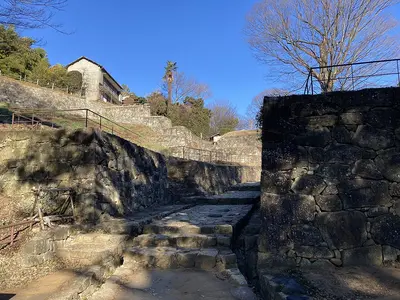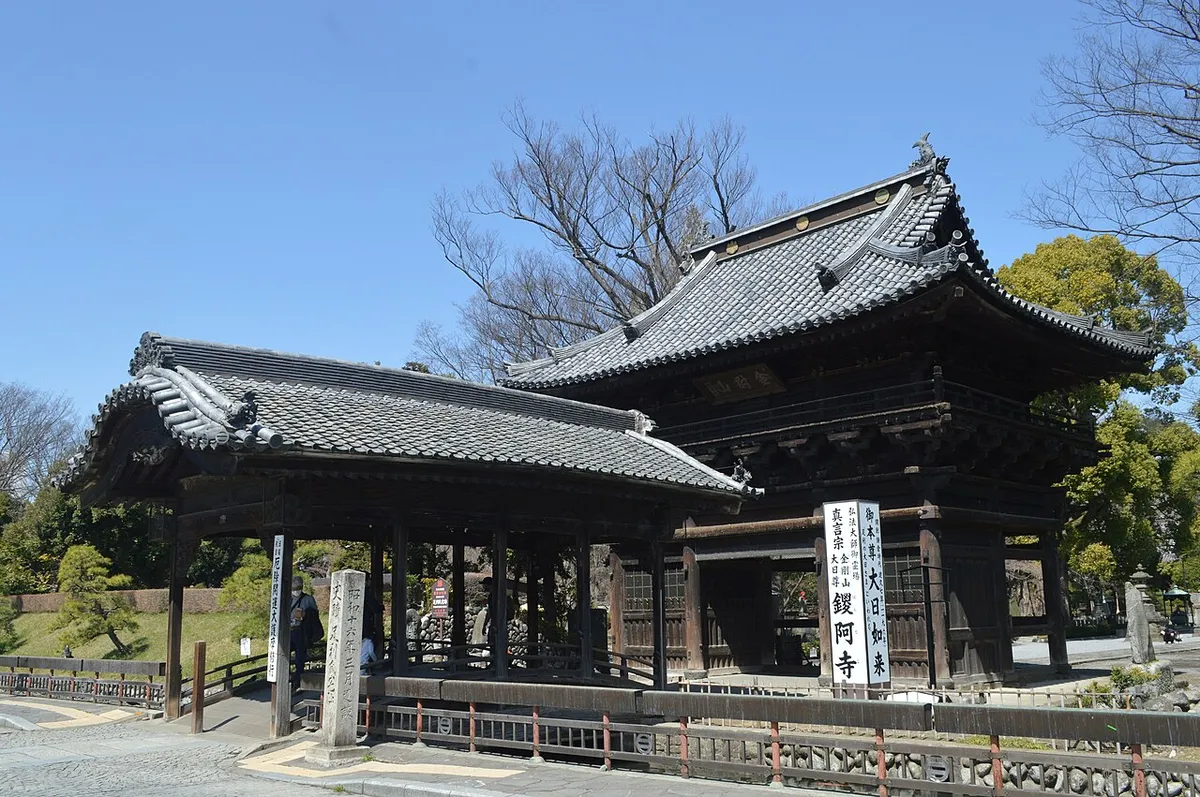
Bannaji (Ashikaga Clan Manor)

足利氏館(鑁阿寺)·Bannaji (Ashikaga-shi Yakata)

D Tourism Score 40/100
C Defense Score 60/100

The birthplace of the Ashikaga Shogunate — a living temple inside a perfectly preserved 12th-century warrior manor moat, where Japan's second shogunate had its origin.

#15 — 100 Famous Castles Ruins
Bannaji (Ashikaga Clan Manor) (足利氏館(鑁阿寺))
Photo:Asturio Cantabrio/Wikimedia Commons/CC BY-SA 4.0

Quick Facts

Quick Facts

Admission
Free Free
Hours
09:00 – 17:00
Nearest Station
Ashikaga Station (JR Ryomo Line)
Walk from Station
10 min walk
Time Needed
45 minutes–1 hour (moat circuit + temple grounds)

Free entry to the temple grounds (Banna-ji Temple). The temple buildings are active and include a national treasure main hall. Small donation appropriate.

Defense Overview

Defense Overview

Why Bannaji (Ashikaga Clan Manor) was hard to attack

This castle is hard to attack because it combines managed outer defenses on relatively level ground with enough defensive depth to slow attackers before the center.

An attacker would not simply arrive at the center on open flat ground. They would have to cross water barriers or moat lines, approach through at least some constrained entry space, and push through successive outer areas before the core.

Overall score

60/100

Estimated range

54–66

Confidence

B

Usable estimate with some inference

This is a site-original comparison score for learning and comparison, not a reconstruction of one historical battle.

Radar view

Terrain 10/20 Entrance 12/20 Internal 12/20 Siege 14/20 Oversight 12/20
How this estimate was built+

This estimate combines broad terrain, approach, layout, and route-control signals. It is meant to explain the castle's defensive logic in plain English, not reconstruct a single historical attack.

Terrain Advantage

How much the terrain itself seems to help: height, slope, ridges, cliffs, water edges, and limited approach directions.

10/20

Entrance Defense

How awkward and dangerous the first entry looks: gates, bridge or moat crossings, chokepoints, and forced turns.

12/20

Internal Complexity

How hard it seems to keep pushing after entry: layered baileys, depth, compartmentalization, and repeated defensive lines.

12/20

Siege Endurance

A rough sense of long-hold potential: moats, water access, space, storage plausibility, and defensive staying power.

14/20

Strategic Oversight

How much the castle appears to command nearby roads, plains, rivers, basins, harbors, or town approaches.

12/20

Why Visit

Bannaji is a quiet, atmospheric site that rewards visitors interested in the origins of Japanese warrior culture and the Kamakura period. The combination of intact medieval moat archaeology and a living Buddhist temple with a national treasure main hall is genuinely unique. The connection to the Ashikaga Shogunate — which ruled Japan from 1338 to 1573 — gives the site enormous historical significance that its modest appearance belies. Combine with the Ashikaga Gakko (5 minutes' walk) for a full morning of deep medieval history in a city most tourists pass through.

Highlights

1

Where the Ashikaga Shogunate Was Born

This moated compound — now occupied by Banna-ji Buddhist Temple — is the original home manor of the Ashikaga clan, the family that would establish Japan's second shogunate (1338–1573) and rule Japan for over two centuries. Walking the moat circuit is walking on the ground where the Ashikaga clan accumulated the power that eventually reshaped medieval Japan. The earthworks are the direct physical inheritance of the clan's 12th-century origins.
2

A Living Temple Inside a Castle Moat

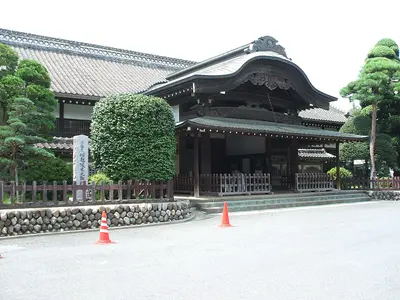
Unusually for a castle site, the interior of the compound is fully occupied by an active Buddhist temple — Banna-ji — with a national treasure main hall (13th century), pagoda, bell tower, and mature trees filling the space where the Ashikaga manor once stood. The combination of castle moat archaeology and living temple creates a layered historical atmosphere found nowhere else. The original Ashikaga clan built Banna-ji Temple themselves, so temple and castle have been intertwined from the beginning.

3

The Most Intact Medieval Moat in Kanto

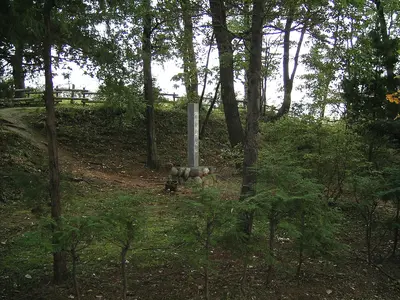
The square earthwork moat that encircles Banna-ji is remarkably intact — a nearly complete rectangular circuit of water moat and earthen embankment that preserves the exact footprint of the 12th-century Ashikaga clan manor. This is one of the best-preserved medieval manor moat systems in eastern Japan, offering a direct visual understanding of how warrior clan residences were fortified in the Kamakura period.

Structure Details

Visitor tip

This is primarily a temple visit with castle archaeology as the context. Walk the outer moat circuit first (outside the temple gate) to appreciate the intact rectangular earthwork system, then enter the temple to see the national treasure main hall. The combination of living Buddhism and warrior clan origin history is the unique quality of this site.

Castle type

Flatland castle

Flatland fortified manor — 12th-century warrior clan residence surrounded by square earthwork moat; not a full castle in the Sengoku or Edo sense

Layout type

Radial layout

Square enclosure — rectangular moated manor compound based on Kamakura-period warrior residence layout

Main tower

Ruins (converted to temple) — no tower ever existed. The compound now contains Banna-ji Temple buildings including a 13th-century national treasure main hall. Earthwork moat is the primary surviving defensive feature.

Stone walls

Earthen walls

The earthwork banks that back the water moat are the original 12th-century defensive earthworks, remarkably well-preserved. The moat perimeter is nearly square, approximately 200 meters on each side, enclosing an area sufficient for the entire Ashikaga manor compound.

Moats

The defining feature of the site — a nearly complete rectangular water moat circuit enclosing the entire Banna-ji Temple compound. Water is maintained year-round. The moat is wide (10–15 meters in places) and creates an island effect for the temple grounds.

Key defensive features

Rectangular Water Moat

The complete square moat circuit makes the compound an island accessible only via bridged gates. In 12th-century terms, this provided substantial defensive protection for a warrior clan manor against raiding and rival clans.

Earthwork Embankment

The raised earthen bank inside the moat added height to the water barrier, creating a wall-and-moat combination typical of Kamakura-period warrior residence fortification.

The Story of Bannaji (Ashikaga Clan Manor)

Originally built 1187 / Ashikaga Yoshikane
Current form 1299 / Ashikaga Sadauji (temple main hall)
    1187

    Ashikaga Yoshikane constructs the fortified family manor at Ashikaga, establishing the physical base of the Ashikaga warrior clan in the Kanto region. The compound is enclosed by the rectangular earthwork moat that survives today.

    1196

    Ashikaga Yoshikane establishes Banna-ji Temple within the manor compound as the family Buddhist temple — a common practice among warrior clans of the period. Temple and manor become intertwined.

    1299

    The current main hall of Banna-ji Temple is constructed — a major wooden building in the Zen-influenced architectural style of the Kamakura period. This building is now a National Treasure.

    1338

    Ashikaga Takauji, descendant of the Ashikaga clan of this manor, establishes the Ashikaga Shogunate in Kyoto — beginning Japan's second period of shogunal rule that will last until 1573. The Ashikaga origin is this moated manor.

    1872

    In the Meiji period's separation of Buddhism and Shinto, Banna-ji Temple is reorganized but continues as an active temple. The moat and earthworks are maintained as the temple's water garden rather than military infrastructure.

Did You Know?

  • The Ashikaga clan takes its name from the city of Ashikaga in Tochigi — the family were originally warriors from this region who rose through Kamakura period military service to eventually establish Japan's second shogunate. The moated manor that is now Banna-ji Temple is literally where it all began.
  • The main hall of Banna-ji Temple (built 1299) is designated a National Treasure — one of the finest surviving examples of Kamakura-period Zen-influenced Buddhist architecture in eastern Japan. The building has the characteristic powerful simplicity of Kamakura-era religious architecture, quite different from the more ornate Heian period style.
  • Ashikaga is also famous for the Ashikaga Gakko — the oldest educational institution in Japan, founded in the 9th century. The school and the warrior clan manor are both within walking distance of Ashikaga Station, making the city an unusually rich historical destination that remains relatively under-touristed.

Score Breakdown

Tourism Score

D 40/100
  • Accessibility 10 /20
  • Foreign-Friendly 7 /20
  • Historical Value 13 /20
  • Visual Impact 6 /20
  • Facilities 4 /20

Defense Score

C 60/100
  • Terrain Advantage 10 /20
  • Entrance Defense 12 /20
  • Internal Complexity 12 /20
  • Siege Endurance 14 /20
  • Strategic Oversight 12 /20

Planning Your Visit

Best Time to Visit

Year-round; the moat is attractive in all seasons. Autumn foliage of the temple trees reflected in the moat is particularly beautiful.

Time Needed

45 minutes–1 hour (moat circuit + temple grounds)

Insider Tip

Walk the outer moat circuit before entering the temple — understand the complete square earthwork system that makes this a castle site rather than just a temple. Inside, find the national treasure main hall and study the Kamakura-era architectural details: the bracketing system under the eaves is characteristic of the period. The combination ticket with the Ashikaga Gakko next door is good value and the school's history (founded 832 AD) provides essential context for medieval Japanese intellectual culture.

Map

Getting There

Nearest station: Ashikaga Station (JR Ryomo Line)
Walk from station: 10 min walk
Parking: Free parking available adjacent to the temple.
Accessible with a JR Pass

Admission

Free

Free entry to the temple grounds (Banna-ji Temple). The temple buildings are active and include a national treasure main hall. Small donation appropriate.

Opening Hours

Open09:00 – 17:00

The outer grounds (moat and earthwork circuit) are accessible at any time. Temple building interiors have standard opening hours. The moat is beautiful in all seasons.

Facilities

  • – English guides
  • – Audio guide
  • ✓ Wheelchair access
  • ✓ Restrooms
  • ✓ Gift shop
  • ✓ Food nearby

Nearby Castles

Featured in collections

FAQ

Frequently Asked Questions

How do I get to Bannaji (Ashikaga Clan Manor)?

The nearest station is Ashikaga Station (JR Ryomo Line). From there it is about 10 minutes on foot.

How much does Bannaji (Ashikaga Clan Manor) cost to enter?

Bannaji (Ashikaga Clan Manor) is free to enter.

Is Bannaji (Ashikaga Clan Manor) worth visiting?

Bannaji is a quiet, atmospheric site that rewards visitors interested in the origins of Japanese warrior culture and the Kamakura period. The combination of intact medieval moat archaeology and a living Buddhist temple with a national treasure main hall is genuinely unique. The connection to the Ashikaga Shogunate — which ruled Japan from 1338 to 1573 — gives the site enormous historical significance that its modest appearance belies. Combine with the Ashikaga Gakko (5 minutes' walk) for a full morning of deep medieval history in a city most tourists pass through.

What are the opening hours of Bannaji (Ashikaga Clan Manor)?

09:00 to 17:00.

How long should I spend at Bannaji (Ashikaga Clan Manor)?

Plan for about 45 minutes–1 hour (moat circuit + temple grounds), depending on how closely you want to explore the grounds.