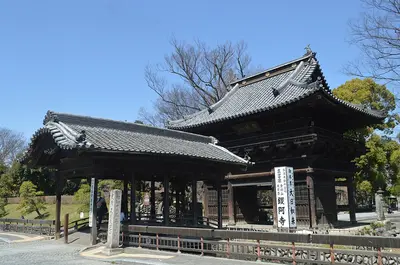
Kanayama Castle

金山城·Kanayama-jo

D Tourism Score 42/100
A Defense Score 86/100

The Kanto mountain castle that shouldn't have stone walls but does — an unexpected masonry fortress with water cisterns at the summit of a Gunma mountain.

#17 — 100 Famous Castles Ruins
Kanayama Castle (金山城)
Photo:AkaneM/Wikimedia Commons/CC BY 4.0

Quick Facts

Quick Facts

Admission
Free Free
Hours
00:00 – 23:59
Nearest Station
Tomioka Station (Tobu Isesaki Line)
Walk from Station
45 min walk
Time Needed
2–2.5 hours (hike + ruins exploration)

Free admission at all times. The ruins park (Kanayama Prefectural Nature Park) is open year-round. The nearby Ota City Museum of History and Folk Culture has separate admission.

Defense Overview

Defense Overview

Why Kanayama Castle was hard to attack

This castle is hard to attack because it combines high ground and difficult natural access with a controlled route inward.

An attacker would first have to fight the site itself before reaching the main defenses. They would have to cross water barriers or moat lines and face more defensive depth after the first line.

Overall score

86/100

Estimated range

80–92

Confidence

B

Usable estimate with some inference

This is a site-original comparison score for learning and comparison, not a reconstruction of one historical battle.

Radar view

Terrain 19/20 Entrance 17/20 Internal 17/20 Siege 15/20 Oversight 18/20
How this estimate was built+

This estimate combines broad terrain, approach, layout, and route-control signals. It is meant to explain the castle's defensive logic in plain English, not reconstruct a single historical attack.

Terrain Advantage

How much the terrain itself seems to help: height, slope, ridges, cliffs, water edges, and limited approach directions.

19/20

Entrance Defense

How awkward and dangerous the first entry looks: gates, bridge or moat crossings, chokepoints, and forced turns.

17/20

Internal Complexity

How hard it seems to keep pushing after entry: layered baileys, depth, compartmentalization, and repeated defensive lines.

17/20

Siege Endurance

A rough sense of long-hold potential: moats, water access, space, storage plausibility, and defensive staying power.

15/20

Strategic Oversight

How much the castle appears to command nearby roads, plains, rivers, basins, harbors, or town approaches.

18/20

Why Visit

Kanayama Castle rewards visitors with a combined hiking and historical experience. The 30-minute summit hike is manageable for most visitors, and the stone walls at the top genuinely surprise — the visual impact of proper masonry construction on a wooded mountain summit is the site's key moment. The water cisterns are fascinating engineering artifacts. The summit views over the flat Kanto plain are excellent and dramatize why this mountain was strategically valuable. A good half-day combining the hike, ruins exploration, and the Ota City Museum.

Highlights

1

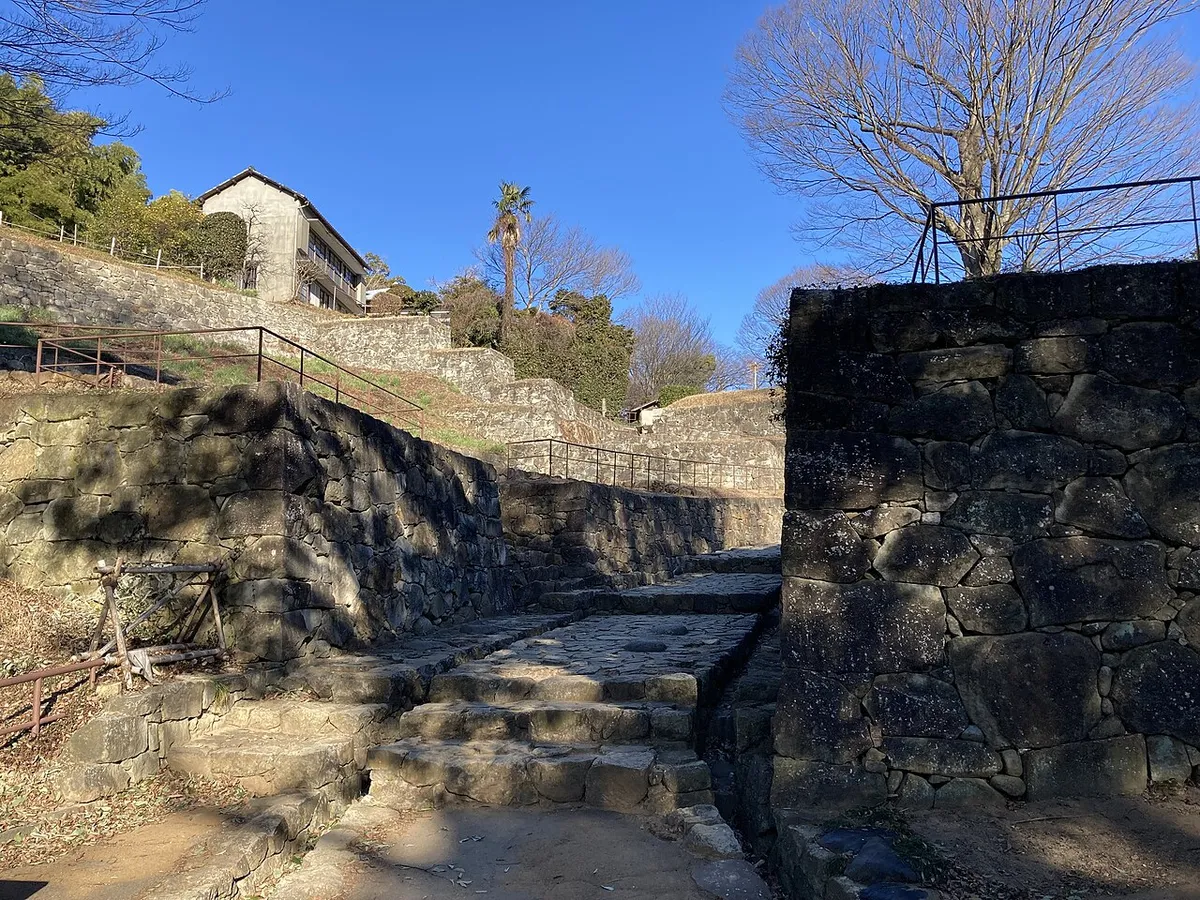
Stone Walls You Don't Expect in Kanto

Kanayama Castle is remarkable for its stone wall construction — unusual for a mountain castle in the Kanto region, where earthworks were the norm. The stone walls surviving on the summit and subsidiary compounds represent sophisticated masonry work for 15th-century eastern Japan, suggesting construction techniques imported from western Japan or developed independently by the Yura/Yokose clan. The visual impact of stone walls on a wooded mountain summit is striking and unexpected.
2

A Mountain Fortress with Water Features

Remarkably for a mountain summit castle, Kanayama incorporates constructed water cisterns and channels — stone-lined reservoirs that collected rainwater for the garrison's use during siege. These water management features on a 240-meter mountain are an engineering achievement and demonstrate how seriously the castle's builders prepared for extended siege conditions.

3

Gateway to the Kanto Plain

Kanayama Castle commanded one of the key passes between the Kanto plain and the Kiso-Kaido highway — placing it at a strategic nexus that attracted the attention of Hojo, Takeda, and Uesugi forces throughout the Sengoku period. The summit views over the flat Kanto plain below dramatize the castle's geographic importance.

Structure Details

Visitor tip

The hike to the summit takes about 30 minutes from the trailhead parking and is moderately demanding. The stone walls and water cisterns are clearly visible and well-interpreted (Japanese signage only). The summit views over the Kanto plain are excellent. Combine with a stop at the Ota City Museum to understand the regional Sengoku context.

Castle type

Mountain castle

Mountain castle — built on the summit of Mt. Kanayama (240m), overlooking the Kanto plain to the southeast

Layout type

Linked compound layout

Compound style — main compound at summit with multiple subsidiary compounds descending the ridgeline

Main tower

Stone wall ruins — all wooden structures are lost. Unusually well-preserved stone walls and cisterns survive, exceptional for a Kanto mountain castle.

Stone walls

Natural stone stacking

The stone walls of Kanayama Castle are the site's defining feature and a source of scholarly interest — their presence on a Kanto mountain castle suggests either western Japanese influence on construction or locally developed masonry skills. Surviving wall sections reach 3–5 meters high on the main and subsidiary compound areas. The stone-lined water cisterns are particularly well-preserved.

Key defensive features

240-Meter Summit Position

The mountain summit position provided commanding views over the surrounding Kanto plain and made direct assault exhausting. The elevation and forested slopes gave defenders significant positional advantage.

Stone Walls on Steep Approaches

The stone walls reinforcing the mountain approaches and compound terracing made assault on the steeper faces both physically dangerous and effectively impossible without siege equipment.

Summit Water Cisterns

The stone-lined water cisterns on the summit allowed the garrison to withstand extended siege without supply — a critical defensive feature for a mountain castle that could otherwise be neutralized by simple blockade.

The Story of Kanayama Castle

Originally built 1469 / Yokose Narishige
Current form 1550 / Yura Narishige
    1469

    Yokose Narishige constructs the initial fortification on Mt. Kanayama as a base for controlling the Kanto-Joshu (Gunma) region. The mountain's strategic position between the Kanto plain and the interior draws immediate military attention.

    1525

    The Yura clan takes control of Kanayama Castle and undertakes major construction, expanding the stone walls and compound system. Under Yura Narishige, the castle reaches its greatest extent.

    1560

    Hojo Ujiyasu besieges Kanayama Castle during the Hojo expansion into northern Kanto — the castle resists, demonstrating the effectiveness of its mountain position and stone defenses.

    1574

    After the Yura clan submits to Takeda Shingen, Kanayama becomes part of the Takeda domain network in eastern Japan.

    1582

    Following Oda Nobunaga's destruction of the Takeda clan, Kanayama Castle's domain reorganizes under Tokugawa influence. The castle is eventually abandoned as military necessity diminishes in the early Edo period.

Did You Know?

  • Kanayama Castle's stone wall construction is remarkable for Kanto region mountain castles — most comparable sites in eastern Japan used earthworks rather than stone. The presence of stone construction has been variously attributed to influence from western Japan (possibly via contact with the Imagawa or Takeda), locally discovered construction skills, or the specific geology of Mt. Kanayama which provided suitable stone nearby.
  • The water cisterns on the summit of Kanayama are among the best-preserved examples of mountain castle water management in Japan. They demonstrate sophisticated engineering for the 15th century — the cisterns are stone-lined to prevent seepage and positioned to collect maximum rainfall. One cistern is large enough to hold several months' water supply for a substantial garrison.
  • Ota City, at the base of Mt. Kanayama, is the birthplace of Nitta Yoshisada — the 14th-century warrior who famously prayed at the sea and threw his sword into the waves at Inasegahama before launching a successful attack on Kamakura in 1333, beginning the collapse of the Kamakura Shogunate. The regional warrior tradition of the Ota area is thus extraordinarily deep.

Score Breakdown

Tourism Score

D 42/100
  • Accessibility 6 /20
  • Foreign-Friendly 5 /20
  • Historical Value 12 /20
  • Visual Impact 12 /20
  • Facilities 7 /20

Defense Score

A 86/100
  • Terrain Advantage 19 /20
  • Entrance Defense 17 /20
  • Internal Complexity 17 /20
  • Siege Endurance 15 /20
  • Strategic Oversight 18 /20

Planning Your Visit

Best Time to Visit

October–November for autumn foliage and cool hiking conditions. Spring (April–May) for pleasant temperatures. Avoid summer heat and winter ice.

Time Needed

2–2.5 hours (hike + ruins exploration)

Insider Tip

The stone-lined water cisterns near the summit are the site's most unusual feature — find them and consider what it meant to construct stone-lined reservoirs on a mountain summit in the 15th century. From the summit main compound, face south toward the flat Kanto plain: on clear days you can see the Tokyo metropolitan area in the distance, and the strategic geometry of the castle's position becomes immediately clear. Bring water and good shoes for the mountain trail.

Map

Getting There

Nearest station: Tomioka Station (Tobu Isesaki Line)
Walk from station: 45 min walk
Parking: Multiple free parking areas at the mountain trailhead and the Sanno-jinja shrine approach.

Admission

Free

Free admission at all times. The ruins park (Kanayama Prefectural Nature Park) is open year-round. The nearby Ota City Museum of History and Folk Culture has separate admission.

Opening Hours

Open00:00 – 23:59

Open year-round. Summit access may be slippery in winter ice conditions. Summer (June–September) can be hot on exposed mountain paths. Autumn is the most pleasant visiting season.

Facilities

  • – English guides
  • – Audio guide
  • – Wheelchair access
  • ✓ Restrooms
  • – Gift shop
  • – Food nearby

Nearby Castles

Featured in collections

FAQ

Frequently Asked Questions

How do I get to Kanayama Castle?

The nearest station is Tomioka Station (Tobu Isesaki Line). From there it is about 45 minutes on foot.

How much does Kanayama Castle cost to enter?

Kanayama Castle is free to enter.

Is Kanayama Castle worth visiting?

Kanayama Castle rewards visitors with a combined hiking and historical experience. The 30-minute summit hike is manageable for most visitors, and the stone walls at the top genuinely surprise — the visual impact of proper masonry construction on a wooded mountain summit is the site's key moment. The water cisterns are fascinating engineering artifacts. The summit views over the flat Kanto plain are excellent and dramatize why this mountain was strategically valuable. A good half-day combining the hike, ruins exploration, and the Ota City Museum.

What are the opening hours of Kanayama Castle?

00:00 to 23:59.

How long should I spend at Kanayama Castle?

Plan for about 2–2.5 hours (hike + ruins exploration), depending on how closely you want to explore the grounds.