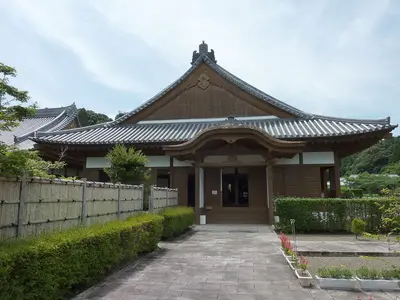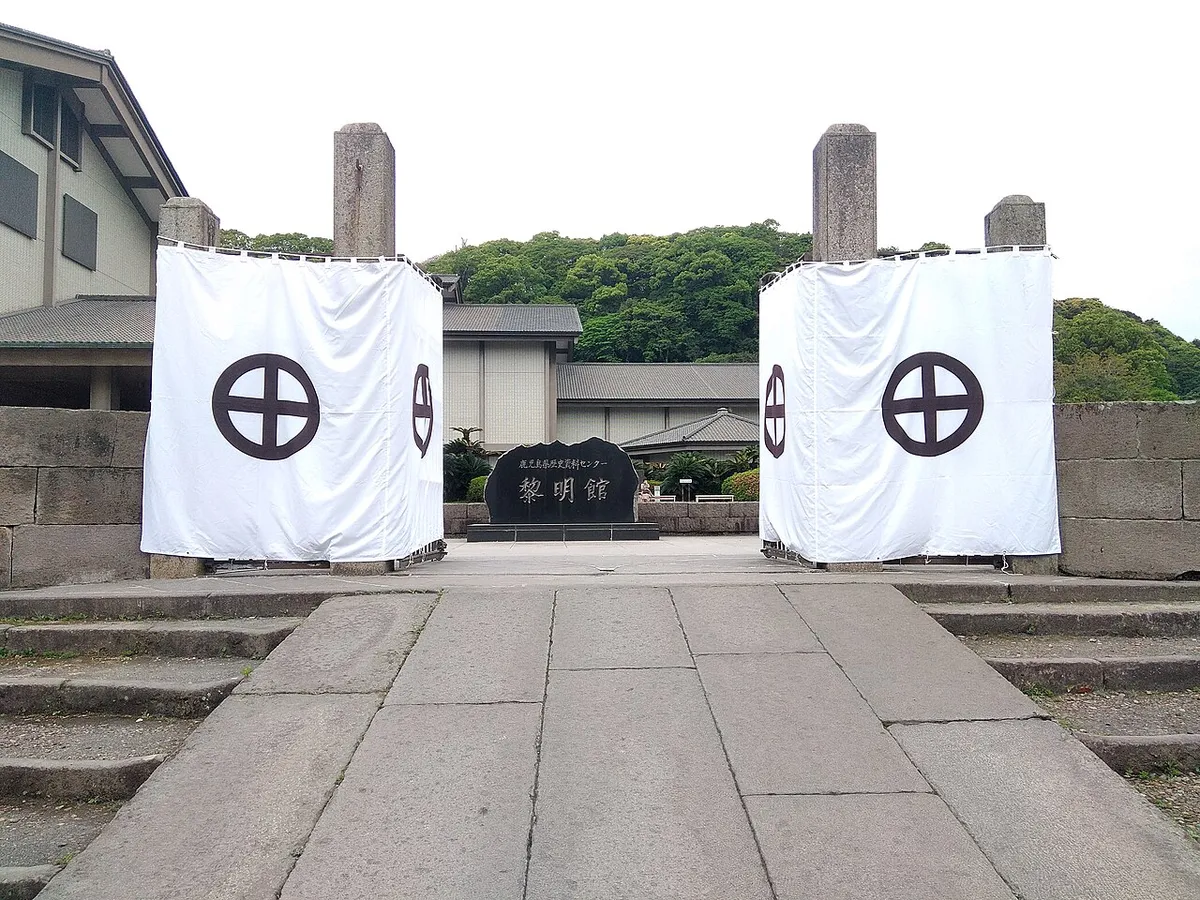
Kagoshima Castle

鹿児島城·Kagoshima-jo

D Tourism Score 55/100
D Defense Score 58/100

The deliberately tower-less fortress of Japan's greatest samurai clan — 700 years of Shimazu rule, two Meiji Restoration leaders, and Saigo Takamori's last stand on the hill behind.

#97 — 100 Famous Castles Ruins
Kagoshima Castle (鹿児島城)
Photo:NMaia/Wikimedia Commons/CC BY-SA 4.0

Quick Facts

Quick Facts

Admission
Free Free
Hours
null – null
Nearest Station
Kagoshima-Chuo Station (JR Kyushu Shinkansen / various JR lines)
Walk from Station
20 min walk

Bus also available

Time Needed
1–2 hours (castle + Museum + Shiroyama walk)

Castle grounds are freely accessible. The Kagoshima Prefectural Museum of the Meiji Restoration (Ishō Hakubutsukan), located within the castle grounds, charges an admission fee (¥300 adult). The reconstructed Goromon gate (2020) is free to view.

Defense Overview

Defense Overview

Why Kagoshima Castle was hard to attack

This castle is hard to attack because attackers have to work across water barriers before pressing inward instead of getting a direct run at the core.

An attacker would not simply arrive at the center on open flat ground. They would have to cross water barriers or moat lines, approach through at least some constrained entry space, and push through successive outer areas before the core.

Overall score

58/100

Estimated range

52–64

Confidence

B

Usable estimate with some inference

This is a site-original comparison score for learning and comparison, not a reconstruction of one historical battle.

Radar view

Terrain 10/20 Entrance 12/20 Internal 14/20 Siege 12/20 Oversight 10/20
How this estimate was built+

This estimate combines broad terrain, approach, layout, and route-control signals. It is meant to explain the castle's defensive logic in plain English, not reconstruct a single historical attack.

Terrain Advantage

How much the terrain itself seems to help: height, slope, ridges, cliffs, water edges, and limited approach directions.

10/20

Entrance Defense

How awkward and dangerous the first entry looks: gates, bridge or moat crossings, chokepoints, and forced turns.

12/20

Internal Complexity

How hard it seems to keep pushing after entry: layered baileys, depth, compartmentalization, and repeated defensive lines.

14/20

Siege Endurance

A rough sense of long-hold potential: moats, water access, space, storage plausibility, and defensive staying power.

12/20

Strategic Oversight

How much the castle appears to command nearby roads, plains, rivers, basins, harbors, or town approaches.

10/20

Why Visit

Kagoshima Castle's physical remains are modest — reconstructed gate, partial walls, a modern museum building — but Kagoshima itself is extraordinary: active volcano Sakurajima across the bay, the Meiji Restoration Museum telling one of Japan's most dynamic historical stories, Shiroyama hill where the last samurai died, and Sengan-en garden (the Shimazu family villa, a UNESCO World Heritage site) across town. The castle is one node in a city-wide historical experience that rewards a full day. The food — Kagoshima ramen, kurobuta pork, satsuma-age fried fish cake — is among the best in Kyushu.

Highlights

1

The Castle Without a Tower — The Shimazu Philosophy

Kagoshima Castle (Tsurumaru Castle) is remarkable for what it lacks: a main tower. The Shimazu clan deliberately chose not to build a tenshu, believing their warriors — not stone walls — were their true fortress. This philosophy, similar to Takeda Shingen's famous saying, reflected the Shimazu's confidence in their military culture. The result is a castle that looks more like an administrative compound than a fortress — but the clan it housed dominated southern Kyushu for 700 years.
2

Shimazu Clan — 700 Years of Unbroken Rule

The Shimazu clan ruled Satsuma domain (modern Kagoshima) for an extraordinary 700 years — from the Kamakura period through the Meiji Restoration. They survived the Sengoku wars, survived Toyotomi Hideyoshi (as one of only a handful of clans to negotiate an honorable surrender to him), survived the Battle of Sekigahara (fighting on the losing Toyotomi side and famously cutting through the Tokugawa lines to escape), and ultimately played a central role in overthrowing the Tokugawa shogunate in 1868.

3

The Satsuma Rebellion — Saigo Takamori's Last Stand

In 1877, Saigo Takamori — the most revered samurai figure of the Meiji era — led the Satsuma Rebellion against the Meiji government he had helped create. The final battle took place at Shiroyama hill, immediately adjacent to Kagoshima Castle. Saigo died here — by his own hand or cut down, accounts differ — bringing the era of samurai rebellion to a definitive end. The castle site is inseparable from his story.

Structure Details

Visitor tip

Enter through the reconstructed Goromon gate (2020) and walk the castle grounds with Shiroyama hill visible behind. Visit the Meiji Restoration Museum for excellent coverage of Saigo Takamori, the Shimazu clan, and Kagoshima's role in Japan's modernization. Then climb Shiroyama for the famous view of Sakurajima across the bay — one of Japan's great active volcano views.

Castle type

Flatland castle

Flatland castle — built at the base of Shiroyama hill, incorporating the mountain as a rear defense but with the main compound on flat ground without a tower

Layout type

Concentric layout

Enclosure style — simple compound layout with moats and stone walls, deliberately minimal in military architecture

Main tower

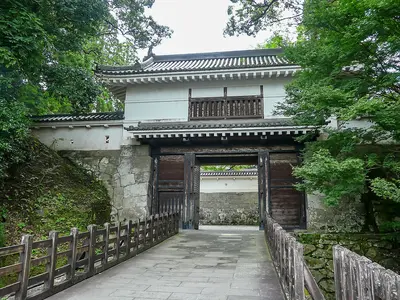
Ruins — no main tower was ever built. The main gate (Goromon) was reconstructed in wood in 2020. Stone walls and moats partially survive. The site is dominated by the Meiji Restoration Museum (Ishō Hakubutsukan, built 2020).

Stone walls

Natural stone stacking

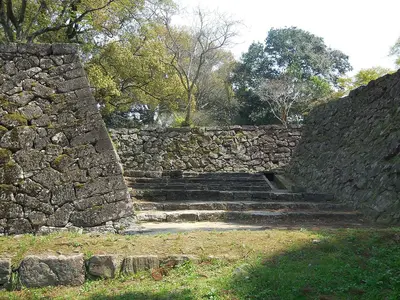
The surviving stone walls at Kagoshima Castle are lower and less elaborate than many comparable domain headquarters, reflecting the Shimazu philosophy of minimal fortification. The walls are most impressive near the reconstructed Goromon gate.

Moats

A moat system survives in partial form around the main compound. Shiroyama hill behind the castle provided the primary rear defensive position — in extremis, the Shimazu retreated there rather than defending the flatland compound.

Key defensive features

Shiroyama Hill — The Rear Mountain Defense

Shiroyama hill directly behind the castle compound served as the true defensive redoubt. In the final days of the Satsuma Rebellion (1877), Saigo Takamori and the last samurai defenders held Shiroyama against government forces — fighting from the mountain the Shimazu had always relied on rather than their deliberately modest stone walls below.

Warrior Culture as Defense

The Shimazu philosophy — that their samurai culture and martial discipline were the real fortress — was vindicated by their extraordinary record. They were never successfully invaded and conquered, despite their deliberately minimal physical fortifications. The castle's weakness by conventional measures was deliberately chosen.

The Story of Kagoshima Castle

Originally built 1601 / Shimazu Yoshihiro
Current form 1604 / Shimazu Iehisa
    1601

    Following the Battle of Sekigahara, the Shimazu clan begins constructing Tsurumaru Castle (Kagoshima Castle) as their new domain headquarters. The Shimazu famously fought on the Toyotomi (losing) side at Sekigahara and cut through Tokugawa lines to escape — Ieyasu, impressed by their audacity, allowed them to keep most of their domain.

    1863

    The Bombardment of Kagoshima — British Royal Navy warships shell the castle town and city in retaliation for the killing of the British merchant Charles Richardson. The Shimazu, unlike many domains, respond by actively acquiring Western military technology, beginning a rapid modernization that will contribute to the Meiji Restoration.

    1868

    Satsuma domain, led by Okubo Toshimichi and Saigo Takamori, is a central force in the Boshin War that overthrows the Tokugawa shogunate. The Meiji Restoration begins. Satsuma men dominate the early Meiji government.

    1877

    The Satsuma Rebellion — the last samurai revolt against the Meiji government — ends on Shiroyama hill behind the castle. Saigo Takamori, Japan's most revered samurai, dies here. The era of samurai resistance to modernization ends.

    2020

    The Goromon (main gate) is reconstructed in wood on the original stone foundations, adding visual impact to the castle grounds. The Meiji Restoration Museum (Ishō Hakubutsukan) opens on the same site.

In Pop Culture

TV

Segodon (NHK Taiga Drama, 2018)

This NHK Taiga Drama dramatized the life of Saigo Takamori ('Segodon' being a Kagoshima nickname for Saigo), covering the Shimazu domain, the Meiji Restoration, and the Satsuma Rebellion. The Kagoshima castle environs featured prominently.

Film

The Last Samurai (2003)

While not filmed in Kagoshima, the Tom Cruise film's premise — a Western military advisor witnessing the last stand of a samurai rebellion against the Meiji modernization army — is directly inspired by the Satsuma Rebellion and Saigo Takamori's story.

Did You Know?

  • The Shimazu clan ruled Satsuma for approximately 700 years — from 1185 to 1871. This is one of the longest continuous rule by a single clan over the same territory in Japanese history. The clan survived the Mongol invasions, the Sengoku wars, Toyotomi Hideyoshi's Kyushu campaign, the Battle of Sekigahara, and the Boshin War before finally surrendering their domain to the Meiji government.
  • At the Battle of Sekigahara (1600), the Shimazu fought on the losing Toyotomi side but refused to retreat. Instead, Shimazu Yoshihiro famously charged directly through the Tokugawa main army (the 'Shimazu Retreat') to escape — a frontal charge through the victorious side's lines that was considered almost suicidal. The audacity reportedly impressed Tokugawa Ieyasu enough that he negotiated with rather than destroyed the Shimazu domain.
  • Sakurajima — the active volcano visible across the bay from Shiroyama — was an island until 1914, when a massive eruption deposited enough lava to connect it to the Osumi Peninsula. The Shimazu lords watched it erupt from their castle for centuries. Today it still erupts hundreds of times per year, and Kagoshima city receives regular ashfall.

Score Breakdown

Tourism Score

D 55/100
  • Accessibility 13 /20
  • Foreign-Friendly 12 /20
  • Historical Value 18 /20
  • Visual Impact 7 /20
  • Facilities 5 /20

Defense Score

D 58/100
  • Terrain Advantage 10 /20
  • Entrance Defense 12 /20
  • Internal Complexity 14 /20
  • Siege Endurance 12 /20
  • Strategic Oversight 10 /20

Planning Your Visit

Best Time to Visit

Year-round — Kagoshima's mild climate makes it pleasant in any season. Spring for cherry blossoms on Shiroyama. Clear days give the best Sakurajima views.

Time Needed

1–2 hours (castle + Museum + Shiroyama walk)

Insider Tip

After the castle, climb Shiroyama for the Sakurajima view — it takes about 20 minutes on foot from the castle grounds. The observation deck gives one of Japan's most dramatic vistas: an active volcano across a bay, with a major city in the foreground. If the timing works, Sengan-en (the Shimazu clan villa garden, UNESCO) is one of the most beautiful Japanese gardens in Kyushu and tells the Shimazu industrial modernization story through its cannon foundry ruins.

Map

Getting There

Nearest station: Kagoshima-Chuo Station (JR Kyushu Shinkansen / various JR lines)
Walk from station: 20 min walk
Bus: Kagoshima City Tram (streetcar) stops at Shiyakusho-mae, about 5 minutes' walk from the castle. City loop bus also stops nearby.
Parking: Paid parking available near the castle grounds.
Accessible with a JR Pass

Admission

Free

Castle grounds are freely accessible. The Kagoshima Prefectural Museum of the Meiji Restoration (Ishō Hakubutsukan), located within the castle grounds, charges an admission fee (¥300 adult). The reconstructed Goromon gate (2020) is free to view.

Opening Hours

Open

Castle grounds open at all times. Meiji Restoration Museum: 9:00–17:00, closed Mondays.

Facilities

  • – English guides
  • – Audio guide
  • ✓ Wheelchair access
  • ✓ Restrooms
  • ✓ Gift shop
  • ✓ Food nearby

Nearby Castles

Featured in collections

FAQ

Frequently Asked Questions

How do I get to Kagoshima Castle?

The nearest station is Kagoshima-Chuo Station (JR Kyushu Shinkansen / various JR lines). From there it is about 20 minutes on foot. Kagoshima City Tram (streetcar) stops at Shiyakusho-mae, about 5 minutes' walk from the castle. City loop bus also stops nearby.

How much does Kagoshima Castle cost to enter?

Kagoshima Castle is free to enter.

Is Kagoshima Castle worth visiting?

Kagoshima Castle's physical remains are modest — reconstructed gate, partial walls, a modern museum building — but Kagoshima itself is extraordinary: active volcano Sakurajima across the bay, the Meiji Restoration Museum telling one of Japan's most dynamic historical stories, Shiroyama hill where the last samurai died, and Sengan-en garden (the Shimazu family villa, a UNESCO World Heritage site) across town. The castle is one node in a city-wide historical experience that rewards a full day. The food — Kagoshima ramen, kurobuta pork, satsuma-age fried fish cake — is among the best in Kyushu.

What are the opening hours of Kagoshima Castle?

null to null.

How long should I spend at Kagoshima Castle?

Plan for about 1–2 hours (castle + Museum + Shiroyama walk), depending on how closely you want to explore the grounds.