Kaminoyama Castle

上山城·Kaminoyama-jo

D Tourism Score 42/100
B Defense Score 74/100

A reconstructed hilltop tower embedded in a living hot spring resort town — the rare castle where you can follow the museum visit with a foot bath.

#110 — Continued 100 Castles Reconstructed
Kaminoyama Castle (上山城)
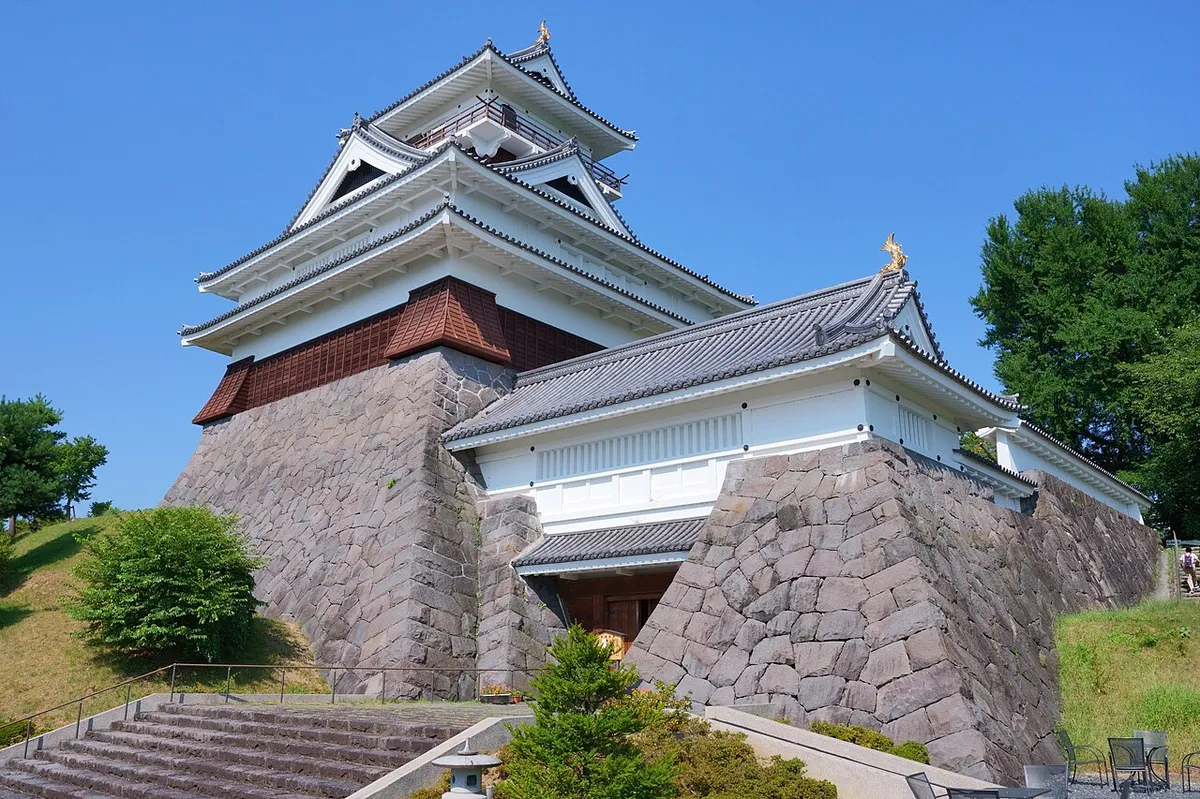
Photo:掬茶/Wikimedia Commons/CC BY-SA 4.0

Quick Facts

Quick Facts

Admission
¥600

¥200

Hours
09:00 – 17:15

Last entry 16:45

Nearest Station
Kaminoyama-Onsen Station (JR Ou Main Line)
Walk from Station
15 min walk
Time Needed
1.5–2 hours for castle tower and hot spring district walk.

Admission revised May 2025. Adult ¥600, Middle school ¥500, Elementary ¥200.

Defense Overview

Defense Overview

Why Kaminoyama Castle was hard to attack

This castle is hard to attack because its strength comes from its command of nearby routes and the surrounding town while still forcing attackers to break through defended space.

An attacker would not get a simple direct approach to the center. They would have to cross water barriers or moat lines, push through successive outer areas before the core, and do so under a position that also watches the surrounding routes.

Overall score

74/100

Estimated range

68–80

Confidence

A

Strong multi-source support

This is a site-original comparison score for learning and comparison, not a reconstruction of one historical battle.

Radar view

Terrain 15/20 Entrance 14/20 Internal 12/20 Siege 16/20 Oversight 17/20
How this estimate was built+

This estimate combines broad terrain, approach, layout, and route-control signals. It is meant to explain the castle's defensive logic in plain English, not reconstruct a single historical attack.

Terrain Advantage

How much the terrain itself seems to help: height, slope, ridges, cliffs, water edges, and limited approach directions.

15/20

Entrance Defense

How awkward and dangerous the first entry looks: gates, bridge or moat crossings, chokepoints, and forced turns.

14/20

Internal Complexity

How hard it seems to keep pushing after entry: layered baileys, depth, compartmentalization, and repeated defensive lines.

12/20

Siege Endurance

A rough sense of long-hold potential: moats, water access, space, storage plausibility, and defensive staying power.

16/20

Strategic Oversight

How much the castle appears to command nearby roads, plains, rivers, basins, harbors, or town approaches.

17/20
Why Visit

Kaminoyama works best as a combined castle-and-onsen experience. The castle tower itself is a modest concrete reconstruction with a decent local history museum and good views of Zao's peaks. The real value is the surrounding hot spring district: the walk from the station through the onsen town, the free foot baths on the streets, and the option to stay overnight in a traditional ryokan for the full hot-spring-castle-town experience. For visitors doing the Yamagata Basin castle circuit (Yamagata Castle, Yonezawa, Kaminoyama), it's a natural and pleasant stop.

Highlights

1

A Castle Tower Above a Hot Spring Town

Kaminoyama Castle is inseparable from the hot spring resort that surrounds it. The walk from Kaminoyama-Onsen Station passes through a traditional onsen district of ryokan inns and foot-bath streets before arriving at the castle hill. The combination of a reconstructed castle tower and a thriving hot spring town makes Kaminoyama a more complete visit than most castle-only sites in Tohoku.

2

Kept in Check by the Date and Uesugi Giants

Kaminoyama Castle spent the Sengoku period caught between two of Tohoku's most formidable powers: Date Masamune to the east and Uesugi Kagekatsu to the west. The castle lords navigated this difficult position with varying success, sometimes submitting to one power to resist the other, in a game of survival common to smaller Tohoku daimyo of the era.

3

Reconstructed Tower With Basin Views

The 1982 reconstructed castle tower (built in concrete but in traditional style) provides excellent views over the Yamagata Basin to the north and the Zao mountain range to the south and east. On clear days, the snowy peaks of Zao form a spectacular backdrop — one of the better mountain-and-castle panoramas in Tohoku.

Structure Details

Visitor tip

A pleasant hilltop visit combining a reconstructed castle tower (small museum inside) with excellent mountain views. Combine with a walk through the adjacent Kaminoyama Onsen hot spring district — the foot baths (ashiyu) are free and enjoyable. If you have time, add an overnight stay at one of the town's ryokan for the full hot spring castle town experience.

Castle type

Hill castle

Hill castle — built on a low hill above the Kaminoyama hot spring district, with the Zao mountain range visible to the south and the Yamagata Basin stretching to the north

Layout type

Radial layout

Square compound style — compact honmaru layout typical of smaller Tohoku hill castles

Main tower

Reconstructed concrete castle tower, built in 1982. The interior functions as a local history museum covering Kaminoyama Domain, the hot spring town's history, and the Sengoku-period conflicts of the Yamagata Basin.

3 floors

Stone walls

Natural stone stacking

Some original stone wall remnants survive at the site, providing physical evidence of the Sengoku-period castle. The 1982 concrete reconstruction was built to complement these surviving stoneworks and provide an observation tower for the site.

Moats

Partial moat remnants survive around the castle hill. The original moat system was part of the castle's perimeter defense, though much of it has been filled or altered over time.

Key defensive features

Hill Position Above Hot Spring District

The castle hill rises above the hot spring and castle town (jokamachi), giving defenders a commanding view over the settlement and the approaches through the valley. The town itself provided a buffer zone of habitation around the base of the castle hill.

Yamagata Basin Approach Control

Kaminoyama controlled the southern approach to the Yamagata Basin — the agricultural heartland of what is now Yamagata Prefecture. The castle commanded the route between the Zao mountain passes and the basin plain, a strategic chokepoint for access to Yamagata from the south.

The Story of Kaminoyama Castle

Originally built 1535 / Kazama clan
Current form 1982 / Kaminoyama City (reconstructed tower)
    1535

    The Kazama clan, local lords of the Kaminoyama area, establish a castle on the hill above the hot spring district. The castle controls the southern approach to the Yamagata Basin, a strategically important agricultural plain.

    1570

    The Mogami clan — the powerful daimyo who controlled most of Yamagata — extend their influence over Kaminoyama. The castle is drawn into the web of Mogami domain politics and its conflicts with the Date and Uesugi.

    1600

    At the Battle of Sekigahara, Mogami Yoshiaki sides with the Tokugawa eastern forces, successfully resisting an invasion by the Uesugi clan. Kaminoyama is part of the contested Yamagata frontier during this conflict.

    1622

    The Mogami clan is removed from power due to internal clan disputes. Kaminoyama Domain is subsequently assigned to a series of Tokugawa-appointed daimyo over the following decades.

    1692

    Matsudaira Nobuyoshi is assigned Kaminoyama Domain, beginning a period of stable Matsudaira rule. The domain develops its castle town and hot spring district through the Edo period.

    1868

    During the Boshin War, Kaminoyama Domain initially sides with the Tokugawa-aligned Ou and Uetsu domains but quickly switches to the imperial side as the military situation becomes clear. The castle is subsequently dismantled in the Meiji demilitarization.

    1982

    Kaminoyama City constructs a concrete castle tower on the original site to serve as a local history museum and observation tower. The reconstruction contributes to tourism in the hot spring resort town.

In Pop Culture

other

Yamagata regional tourism campaigns

Kaminoyama Castle appears regularly in Yamagata Prefecture tourism materials as part of combined castle-and-onsen travel recommendations, often featured alongside Yamagata Castle (Kajo Park) and Yonezawa Castle.

Did You Know?

  • The Kaminoyama Onsen hot spring has been active since at least the early Muromachi period — according to local legend, a white heron (shirasagi) was seen washing a leg wound in the spring waters, leading to the discovery of the spring's healing properties. The 'white heron' is a repeated motif in Japanese hot spring discovery legends (Himeji Castle also uses the heron image), suggesting the story is partly folkloric tradition.
  • Kaminoyama is one of a small number of Japanese castle towns where the onsen (hot spring) and the castle remain the dual attractions of the same town rather than being separated into different tourist zones. The integration of castle, hot spring district, and ryokan culture is the defining character of Kaminoyama as a destination.
  • The Zao mountain range visible from the castle tower is home to one of Japan's most famous winter phenomena: the 'snow monsters' (juhyo) of Zao, where strong winds coat the trees in ice and snow into dramatic white sculptures. From the castle tower on a clear winter day, you can see the white peaks that produce these formations.

Score Breakdown

Tourism Score

D 42/100
  • Accessibility 8 /20
  • Foreign-Friendly 6 /20
  • Historical Value 9 /20
  • Visual Impact 11 /20
  • Facilities 8 /20

Defense Score

B 74/100
  • Terrain Advantage 15 /20
  • Entrance Defense 14 /20
  • Internal Complexity 12 /20
  • Siege Endurance 16 /20
  • Strategic Oversight 17 /20

Planning Your Visit

Best Time to Visit

Year-round. Winter for Zao's snow monster season and hot spring atmosphere (December–February). Cherry blossom season (late April) for the castle hill trees. Autumn (October) for foliage with mountain views.

Time Needed

1.5–2 hours for castle tower and hot spring district walk.

Insider Tip

After visiting the castle, walk down into the onsen district and find one of the free public ashiyu (foot baths) on the streets — sit, dip your feet, and enjoy the view toward the mountains. It costs nothing and is one of the most genuinely pleasant 15 minutes you can have at any castle town in Japan.

Map

Getting There

Nearest station: Kaminoyama-Onsen Station (JR Ou Main Line)
Walk from station: 15 min walk
Parking: Free parking available at the castle site.
Accessible with a JR Pass

Admission

Adult¥600
Child¥200

Admission revised May 2025. Adult ¥600, Middle school ¥500, Elementary ¥200.

Opening Hours

Open09:00 – 17:15
Last entry16:45

Open year-round. Closed December 29–January 3.

Facilities

  • – English guides
  • – Audio guide
  • – Wheelchair access
  • ✓ Restrooms
  • ✓ Gift shop
  • ✓ Food nearby

Nearby Castles

Featured in collections

FAQ

Frequently Asked Questions

How do I get to Kaminoyama Castle?

The nearest station is Kaminoyama-Onsen Station (JR Ou Main Line). From there it is about 15 minutes on foot.

How much does Kaminoyama Castle cost to enter?

Adult admission is ¥600 and child admission is ¥200.

Is Kaminoyama Castle worth visiting?

Kaminoyama works best as a combined castle-and-onsen experience. The castle tower itself is a modest concrete reconstruction with a decent local history museum and good views of Zao's peaks. The real value is the surrounding hot spring district: the walk from the station through the onsen town, the free foot baths on the streets, and the option to stay overnight in a traditional ryokan for the full hot-spring-castle-town experience. For visitors doing the Yamagata Basin castle circuit (Yamagata Castle, Yonezawa, Kaminoyama), it's a natural and pleasant stop.

What are the opening hours of Kaminoyama Castle?

09:00 to 17:15, last entry 16:45.

How long should I spend at Kaminoyama Castle?

Plan for about 1.5–2 hours for castle tower and hot spring district walk., depending on how closely you want to explore the grounds.