Kitsuki Castle

杵築城·Kitsuki-jo

D Tourism Score 48/100
B Defense Score 78/100

Japan's 'sandwich castle' — perched on a narrow plateau between two valleys, with one of Kyushu's finest preserved samurai townscapes below.

#194 — Continued 100 Castles Reconstructed
Kitsuki Castle (杵築城)
Photo:Heartoftheworld/Wikimedia Commons/CC BY-SA 3.0

Quick Facts

Quick Facts

Admission
¥400

¥200

Hours
09:00 – 17:00

Last entry 16:30

Nearest Station
Kitsuki Station (JR Nippo Main Line)
Walk from Station
20 min walk

Bus also available

Time Needed
2-3 hours

Adult 400 yen, child 200 yen. Combined tickets with nearby samurai district museums available.

Defense Overview

Defense Overview

Why Kitsuki Castle was hard to attack

This castle is hard to attack because it combines a raised core with defended outer space with a controlled route inward.

An attacker would not get a simple direct approach to the center. They would have to cross water barriers or moat lines, pass tighter turns and chokepoints, push through successive outer areas before the core, and do so under a position that also watches the surrounding routes.

Overall score

78/100

Estimated range

72–84

Confidence

A

Strong multi-source support

This is a site-original comparison score for learning and comparison, not a reconstruction of one historical battle.

Radar view

Terrain 16/20 Entrance 18/20 Internal 12/20 Siege 16/20 Oversight 16/20
How this estimate was built+

This estimate combines broad terrain, approach, layout, and route-control signals. It is meant to explain the castle's defensive logic in plain English, not reconstruct a single historical attack.

Terrain Advantage

How much the terrain itself seems to help: height, slope, ridges, cliffs, water edges, and limited approach directions.

16/20

Entrance Defense

How awkward and dangerous the first entry looks: gates, bridge or moat crossings, chokepoints, and forced turns.

18/20

Internal Complexity

How hard it seems to keep pushing after entry: layered baileys, depth, compartmentalization, and repeated defensive lines.

12/20

Siege Endurance

A rough sense of long-hold potential: moats, water access, space, storage plausibility, and defensive staying power.

16/20

Strategic Oversight

How much the castle appears to command nearby roads, plains, rivers, basins, harbors, or town approaches.

16/20

Why Visit

Kitsuki offers the rare combination of distinctive castle topography and a genuinely well-preserved castle town. The 'sandwich' plateau is visually and conceptually fascinating. The samurai district below is one of the most authentic and crowd-free historical townscapes in Kyushu. This is an ideal addition to a Beppu-Oita itinerary.

Highlights

1

Japan's Unique 'Sandwich Castle'

Kitsuki Castle sits on a narrow plateau between two valleys — a geographical configuration so distinctive it is called a 'sandwich castle'. The plateau is barely wide enough in places for a single road, with steep drops on both sides. The castle town clusters on two hilltops flanking the narrow plateau corridor, creating a townscape unlike any other in Japan.
2

One of Japan's Best-Preserved Castle Towns

Below the castle, Kitsuki preserves one of Japan's finest intact castle town streetscapes, with samurai district residences, merchants' quarters, and stone-paved lanes all maintained in excellent condition. Walking the Kitsuki castle town feels genuinely historical — it is a more complete and less touristy experience than many famous castle towns in Japan.

3

Small Castle, Big Atmosphere

The Kitsuki Castle tower is a small 1970s concrete reconstruction, but the setting on the narrow plateau surrounded by sea views makes it visually memorable. The combination of the castle, the plateau topography, the samurai streetscapes below, and the coastal views of Beppu Bay creates an atmosphere disproportionate to the castle's modest size.

Structure Details

Visitor tip

Kitsuki is one of the most atmospheric castle town experiences in Kyushu, even though the castle tower itself is a small concrete reconstruction. Spend your time in the samurai district below the castle — the preserved streetscapes, restored samurai residences, and stone-paved lanes are the real draw. The castle tower adds a visual capstone to the plateau. Allow at least 2 hours for the full castle town experience. Combine with Beppu hot springs nearby.

Castle type

Hill castle

Hill-top flatland castle — built on a narrow elevated plateau between two valleys above the Beppu Bay coast, with the unique 'sandwich' topography that places the castle between two cliff-edged drops with the castle town clinging to the plateau slopes on either side

Layout type

Enclosure layout

Square compound style — compact castle layout on the narrow plateau summit

Main tower

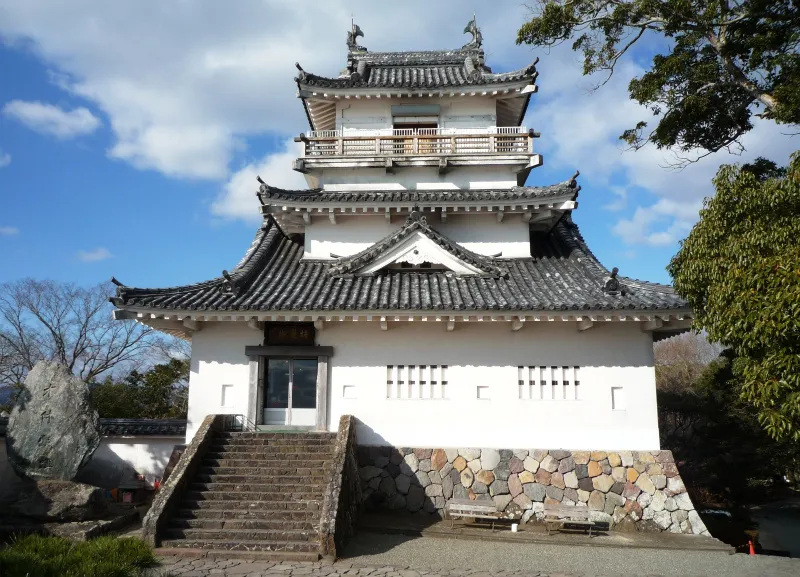
Concrete reconstruction (1970) — the current three-story tower is a modern reconstruction with no surviving original structure. The reconstruction is small by castle standards but fits the compact plateau setting. The castle town below is far more historically authentic than the tower.

16m3 floors, 1 below

Stone walls

Natural stone stacking

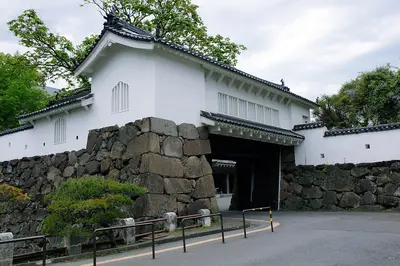
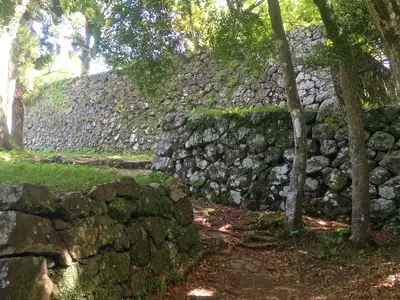
Stone walls (ishigaki) enclose the castle compound on the plateau summit, with restored sections making the honmaru visually coherent. The plateau's natural cliff edges served as the primary defensive barrier — the narrow plateau meant stone walls were only needed on the most accessible approaches.

Key defensive features

'Sandwich' Plateau Topography

The narrow plateau between two valleys is Kitsuki Castle's defining defensive feature — and its most unusual. Any attacking force had to approach along the narrow plateau corridor with steep drops on both sides, making it impossible to mass troops for a broad front assault. The bottleneck approach meant even a small garrison could hold the approaches against a much larger force.

Cliff Edges as Natural Walls

The plateau's sides drop steeply into the flanking valleys, serving as natural walls that required no additional fortification. The castle needed to defend only the plateau approaches — a minimal defensive perimeter for the garrison size, making it highly efficient.

Coastal Observation Position

The plateau elevation provides commanding views over Beppu Bay and the coastal approaches to the Oita coast. Any naval or coastal force approaching from the sea was visible from the castle well in advance, giving the garrison strategic early warning.

The Story of Kitsuki Castle

Originally built 1394 / Kinoshita clan
Current form 1761 / Matsudaira clan
    1394

    The Kinoshita clan builds the first fortification on the Kitsuki plateau, taking advantage of the unique 'sandwich' topography between two valleys above the Beppu Bay coast. The site's natural defensibility makes it an obvious choice for a local stronghold.

    1599

    The castle comes under the control of the Matsudaira clan following the post-Sekigahara reorganization of Kyushu daimyo domains. The Matsudaira will hold Kitsuki for much of the Edo period, gradually developing the castle town below into one of the most refined in Kyushu.

    1761

    The castle is rebuilt and expanded to its Edo-period form under the Matsudaira clan. The castle town — samurai districts, merchants' quarters, stone lanes — is fully developed in its present form during this period, creating the remarkably intact historical townscape that survives today.

    1874

    The castle tower is demolished following the Meiji government's castle-destruction policies. The plateau and castle town survive as public space and residential district, maintaining the historical streetscape that would later become the town's primary attraction.

    1970

    A three-story concrete castle tower is constructed on the plateau summit as a museum and local landmark. While not historically authentic, it gives Kitsuki a visual castle centerpiece on the distinctive plateau.

    2017

    Kitsuki Castle is designated #194 on the 続日本100名城 list, recognizing both the castle's unusual geological setting and the exceptional historical integrity of the castle town below — one of Japan's finest preserved castle town streetscapes.

Did You Know?

  • Kitsuki is sometimes called 'little Kyoto of Oita Prefecture' for its preserved historical streetscapes, but the castle town's 'sandwich' plateau geography makes it more unique than any Kyoto comparison suggests.
  • The two samurai districts (Kitakoji and Minamikoji) sit on opposing hillsides above the narrow plateau valley — in the old days, north-side samurai looking out their front doors could see south-side samurai looking back at them across the valley.
  • Beppu, Japan's most famous hot spring resort, is only about 20 km from Kitsuki — making this an easy day trip or extension for visitors to the Beppu onsen area.

Score Breakdown

Tourism Score

D 48/100
  • Accessibility 8 /20
  • Foreign-Friendly 7 /20
  • Historical Value 13 /20
  • Visual Impact 12 /20
  • Facilities 8 /20

Defense Score

B 78/100
  • Terrain Advantage 16 /20
  • Entrance Defense 18 /20
  • Internal Complexity 12 /20
  • Siege Endurance 16 /20
  • Strategic Oversight 16 /20

Planning Your Visit

Best Time to Visit

Year-round. Spring (cherry blossoms on the plateau) and autumn (foliage) are the prettiest. Summer is fine but humid; winter is mild by Japanese standards.

Time Needed

2-3 hours

Insider Tip

Don't rush through — the castle tower is a quick visit, but the samurai district streetscapes reward slow walking. Hire a bicycle to explore the castle town lanes at leisure. The Kitsuki Onsen area nearby has budget accommodation with excellent coastal views.

Map

Getting There

Nearest station: Kitsuki Station (JR Nippo Main Line)
Walk from station: 20 min walk
Bus: Bus service from Beppu and Oita city to Kitsuki town. From the town center the castle is a short walk.
Parking: Paid parking available near the castle and castle town. Reasonable rates.
Accessible with a JR Pass

Admission

Adult¥400
Child¥200

Adult 400 yen, child 200 yen. Combined tickets with nearby samurai district museums available.

Opening Hours

Open09:00 – 17:00
Last entry16:30

Closed on certain Monday holidays. Open year-round otherwise. The castle town below is always accessible.

Facilities

  • – English guides
  • – Audio guide
  • – Wheelchair access
  • ✓ Restrooms
  • ✓ Gift shop
  • ✓ Food nearby

Nearby Castles

Featured in collections

FAQ

Frequently Asked Questions

How do I get to Kitsuki Castle?

The nearest station is Kitsuki Station (JR Nippo Main Line). From there it is about 20 minutes on foot. Bus service from Beppu and Oita city to Kitsuki town. From the town center the castle is a short walk.

How much does Kitsuki Castle cost to enter?

Adult admission is ¥400 and child admission is ¥200.

Is Kitsuki Castle worth visiting?

Kitsuki offers the rare combination of distinctive castle topography and a genuinely well-preserved castle town. The 'sandwich' plateau is visually and conceptually fascinating. The samurai district below is one of the most authentic and crowd-free historical townscapes in Kyushu. This is an ideal addition to a Beppu-Oita itinerary.

What are the opening hours of Kitsuki Castle?

09:00 to 17:00, last entry 16:30.

How long should I spend at Kitsuki Castle?

Plan for about 2-3 hours, depending on how closely you want to explore the grounds.