Saiki Castle

佐伯城·Saiki-jo

F Tourism Score 32/100
A Defense Score 81/100

A well-preserved mountain castle above the Saiki Bay rias coast, with excellent stone walls and panoramic views over one of southern Oita's most scenic inlets.

#192 — Continued 100 Castles Ruins
Saiki Castle (佐伯城)
Photo:Mukai/Wikimedia Commons/CC BY-SA 4.0

Quick Facts

Quick Facts

Admission
Free Free
Hours
00:00 – 23:59
Nearest Station
Saiki Station (JR Nippo Main Line)
Walk from Station
35 min walk
Time Needed
1.5-2 hours

Free to enter the castle ruins and mountain park at all times. The Saiki City Historical Museum at the mountain base charges a small admission fee.

Defense Overview

Defense Overview

Why Saiki Castle was hard to attack

This castle is hard to attack because it combines high ground and difficult natural access with enough defensive depth to slow attackers before the center.

An attacker would first have to fight the site itself before reaching the main defenses. They would have to cross water barriers or moat lines, approach through at least some constrained entry space, and push through successive outer areas before the core.

Overall score

81/100

Estimated range

75–87

Confidence

B

Usable estimate with some inference

This is a site-original comparison score for learning and comparison, not a reconstruction of one historical battle.

Radar view

Terrain 18/20 Entrance 18/20 Internal 16/20 Siege 13/20 Oversight 16/20
How this estimate was built+

This estimate combines broad terrain, approach, layout, and route-control signals. It is meant to explain the castle's defensive logic in plain English, not reconstruct a single historical attack.

Terrain Advantage

How much the terrain itself seems to help: height, slope, ridges, cliffs, water edges, and limited approach directions.

18/20

Entrance Defense

How awkward and dangerous the first entry looks: gates, bridge or moat crossings, chokepoints, and forced turns.

18/20

Internal Complexity

How hard it seems to keep pushing after entry: layered baileys, depth, compartmentalization, and repeated defensive lines.

16/20

Siege Endurance

A rough sense of long-hold potential: moats, water access, space, storage plausibility, and defensive staying power.

13/20

Strategic Oversight

How much the castle appears to command nearby roads, plains, rivers, basins, harbors, or town approaches.

16/20
Why Visit

Saiki Castle is a compact but rewarding mountain ruins experience. The stone walls are above-average for a continued 100 Famous Castle, the bay views are excellent, and the combination with the historic castle town below and the Saiki Bay seafood scene makes it a more complete destination than the ruins alone. Recommended as part of a southern Oita circuit with Kitsuki and Usuki.

Highlights

1

Excellent Preserved Stone Walls on a Castle Mountain

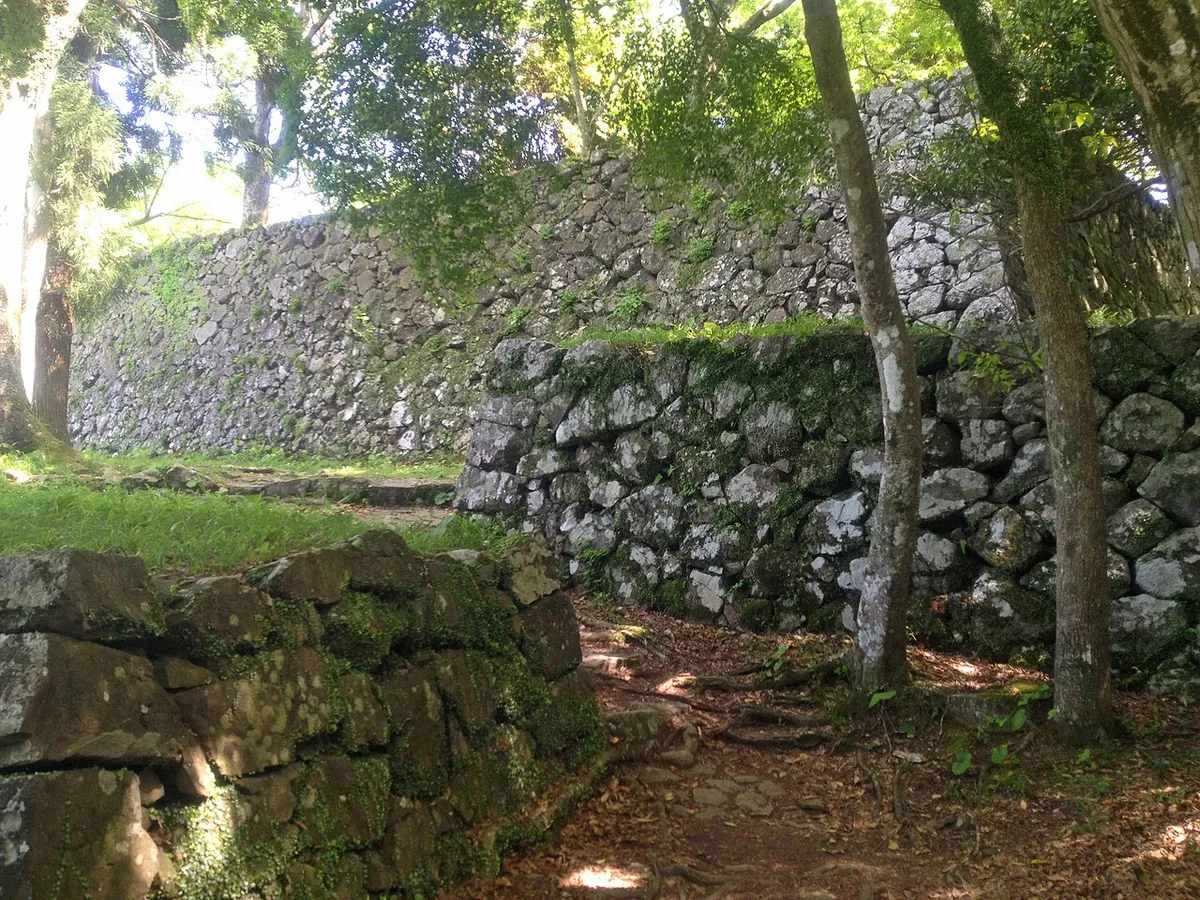
Saiki Castle's mountain ruins feature some of the best-preserved stone walls (ishigaki) in Oita Prefecture — extensive sections of neatly fitted stonework still standing on the mountain slopes and compound edges. For those willing to make the climb, the quality of the surviving stone wall craftsmanship is genuinely impressive.

2

Rias Coast Views over the Saiki Bay

From the Saiki Castle summit, the views extend over the intricate rias coastline of southern Oita Prefecture and the Saiki Bay inlet — a dramatically indented coastline of forested peninsulas and ocean inlets that was the economic lifeline of the Mori clan's domain. The combination of mountain ruins and coastal panorama is one of southern Kyushu's most scenic castle views.

3

Castle Town That Outlasted the Castle

Below the mountain, the Saiki castle town (jokamachi) preserves remnants of the Edo-period urban layout, with the Mori clan's samurai district and merchant quarters partially surviving as historical streetscape. The castle town's connection to the bay and the old merchant quarter makes Saiki a more complete historical environment than just the mountain ruins alone.

Structure Details

Visitor tip

Saiki Castle is a compact mountain hike (15-20 minutes from the trailhead) that rewards the effort with excellent stone walls and bay views. The stone walls are the main attraction. Combine the castle with a walk through the Saiki castle town below, where the historical merchant district still has period character. Time permitting, the Saiki Bay rias coastline is scenic by car or bicycle.

Castle type

Mountain castle

Mountain castle — built on a 144-meter mountain above the Saiki castle town and Saiki Bay on the rias coast of southern Oita Prefecture (Bungo Province), commanding the bay and its approach routes

Layout type

Linked compound layout

Compound style — compounds arranged along the mountain's ridgeline and slopes, with the honmaru at the summit and secondary compounds on the upper mountain

Main tower

Complete ruins — no structures survive above ground. Extensive stone walls (ishigaki) survive in good condition on the upper mountain compounds, making Saiki one of the better-preserved mountain castle ruins in Oita Prefecture.

Stone walls

Natural stone stacking

The stone walls at Saiki Castle are well-preserved and extensive, covering several sections of the upper mountain compounds. The craftsmanship reflects careful Mori clan construction — the Mori built their castle to project permanence and status over their bay-focused domain.

Key defensive features

Mountain Elevation Over Saiki Bay

The castle mountain's summit provides commanding views over the entire Saiki Bay inlet and the rias coastline, allowing defenders to observe any naval approach long before ships could threaten the castle town. The mountain's coastal position combined observation advantages with elevation defense.

Stone Wall Compound Lines

The extensive ishigaki walls on the upper mountain create a layered defensive system — any attacker who climbed the mountain slopes still had to breach multiple stone-wall compound lines before reaching the summit honmaru.

Rias Coast Geographic Complexity

The intricate rias coastline of the Saiki Bay area makes coordinated land-sea attack very difficult — the forested peninsulas and narrow inlets fragment any attacking force and make large-scale coordinated maneuvers nearly impossible. The castle's position at the head of this complex geography was strategically strong.

The Story of Saiki Castle

Originally built 1602 / Mori Takamasa
Current form 1667 / Mori clan
    1602

    Mori Takamasa, assigned to Saiki domain following the post-Sekigahara reorganization of Kyushu domains, begins construction of Saiki Castle on the mountain above the bay. The castle is designed to combine defensive strength with command of the Saiki Bay shipping routes.

    1636

    The castle is expanded under the second-generation Mori lord, completing the stone wall system and compound layout that survives as ruins today. The castle town below is developed into a prosperous commercial center serving the bay-facing domain.

    1667

    The castle reaches its final form with further stone wall construction and compound development. The Saiki domain under the Mori clan becomes known for its economic activity centered on the bay fisheries and coastal trade routes.

    1871

    The Meiji government's abolition of domains ends the Mori clan's tenure at Saiki. The castle is eventually demolished and the mountain reverts to public park use, but the stone wall foundations and compound earthworks survive in good condition.

    2017

    Saiki Castle is selected as #192 on the 続日本100名城 list, recognizing the quality of its mountain stone walls and the historic significance of the Saiki Bay domain's role in southern Oita Prefecture.

Did You Know?

  • Saiki is known in Japan for its excellent fresh seafood — the Saiki Bay rias coastline produces high-quality fish and shellfish, and the city's historic connection to maritime commerce makes fresh seafood at local restaurants a major draw alongside the castle ruins.
  • The Mori clan of Saiki domain is a different family from the famous Mori clan of Choshu (modern Yamaguchi Prefecture) — the name is a coincidence (different kanji) rather than a family connection.
  • The view from Saiki Castle summit on clear days extends to Kyushu's southernmost Rias Coast mountains — one of the most dramatically indented coastlines in Japan, visible as a series of forested peninsulas and sea inlets stretching toward the horizon.

Score Breakdown

Tourism Score

F 32/100
  • Accessibility 5 /20
  • Foreign-Friendly 4 /20
  • Historical Value 11 /20
  • Visual Impact 8 /20
  • Facilities 4 /20

Defense Score

A 81/100
  • Terrain Advantage 18 /20
  • Entrance Defense 18 /20
  • Internal Complexity 16 /20
  • Siege Endurance 13 /20
  • Strategic Oversight 16 /20

Planning Your Visit

Best Time to Visit

Spring (cherry blossoms on the mountain approach) and autumn (foliage). Avoid peak summer heat for the mountain hike.

Time Needed

1.5-2 hours

Insider Tip

After the castle hike, eat at one of the seafood restaurants near Saiki Station — the bay-fresh fish is excellent and inexpensive by Japanese standards. The combination of mountain ruins and coastal fresh seafood makes Saiki a satisfying full-day destination.

Map

Getting There

Nearest station: Saiki Station (JR Nippo Main Line)
Walk from station: 35 min walk
Parking: Free parking at the mountain trailhead near Mitsugajinja Shrine.
Accessible with a JR Pass

Admission

Free

Free to enter the castle ruins and mountain park at all times. The Saiki City Historical Museum at the mountain base charges a small admission fee.

Opening Hours

Open00:00 – 23:59

The castle mountain is open year-round. Spring cherry blossoms on the mountain approach and in the castle ruins are excellent. Summer heat can make the hike strenuous; early morning visits recommended. The castle town below is accessible year-round.

Facilities

  • – English guides
  • – Audio guide
  • – Wheelchair access
  • ✓ Restrooms
  • – Gift shop
  • ✓ Food nearby

Nearby Castles

Featured in collections

FAQ

Frequently Asked Questions

How do I get to Saiki Castle?

The nearest station is Saiki Station (JR Nippo Main Line). From there it is about 35 minutes on foot.

How much does Saiki Castle cost to enter?

Saiki Castle is free to enter.

Is Saiki Castle worth visiting?

Saiki Castle is a compact but rewarding mountain ruins experience. The stone walls are above-average for a continued 100 Famous Castle, the bay views are excellent, and the combination with the historic castle town below and the Saiki Bay seafood scene makes it a more complete destination than the ruins alone. Recommended as part of a southern Oita circuit with Kitsuki and Usuki.

What are the opening hours of Saiki Castle?

00:00 to 23:59.

How long should I spend at Saiki Castle?

Plan for about 1.5-2 hours, depending on how closely you want to explore the grounds.