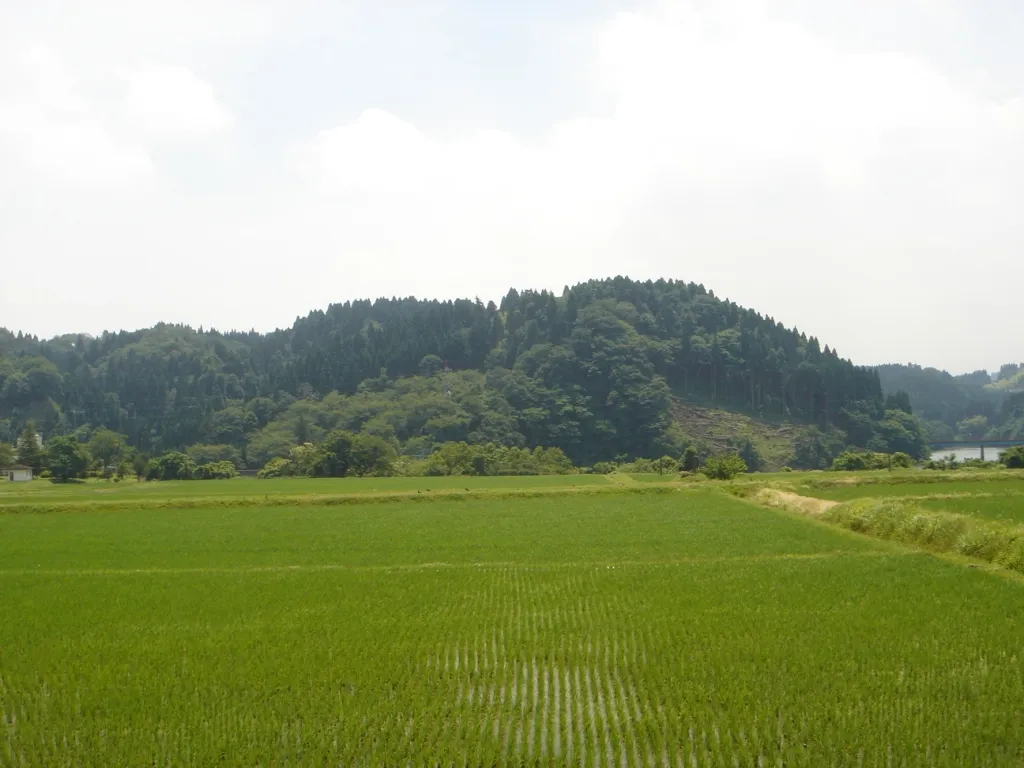
Masuyama Castle

増山城·Masuyama-jo

F Tourism Score 30/100
A Defense Score 89/100

One of Ecchu's three great mountain castles — the Jinbo clan's ridge fortress that resisted Uesugi Kenshin until it could resist no longer.

#135 — Continued 100 Castles Ruins
Masuyama Castle (増山城)
Photo:Nhrdsk at Japanese Wikipedia/Wikimedia Commons/Public domain

Quick Facts

Quick Facts

Admission
Free Free
Hours
00:00 – 23:59
Nearest Station
Tonami Station (Ainokaze Toyama Railway)
Walk from Station
50 min walk
Time Needed
1.5–2 hours

Ruins freely accessible. The Masuyama Castle Site History Museum at the base has a small admission fee and provides essential context.

Defense Overview

Defense Overview

Why Masuyama Castle was hard to attack

This castle is hard to attack because it combines high ground and difficult natural access with a controlled route inward.

An attacker would first have to fight the site itself before reaching the main defenses. They would have to cross water barriers or moat lines, approach through at least some constrained entry space, and face more defensive depth after the first line.

Overall score

89/100

Estimated range

83–95

Confidence

B

Usable estimate with some inference

This is a site-original comparison score for learning and comparison, not a reconstruction of one historical battle.

Radar view

Terrain 19/20 Entrance 18/20 Internal 17/20 Siege 16/20 Oversight 19/20
How this estimate was built+

This estimate combines broad terrain, approach, layout, and route-control signals. It is meant to explain the castle's defensive logic in plain English, not reconstruct a single historical attack.

Terrain Advantage

How much the terrain itself seems to help: height, slope, ridges, cliffs, water edges, and limited approach directions.

19/20

Entrance Defense

How awkward and dangerous the first entry looks: gates, bridge or moat crossings, chokepoints, and forced turns.

18/20

Internal Complexity

How hard it seems to keep pushing after entry: layered baileys, depth, compartmentalization, and repeated defensive lines.

17/20

Siege Endurance

A rough sense of long-hold potential: moats, water access, space, storage plausibility, and defensive staying power.

16/20

Strategic Oversight

How much the castle appears to command nearby roads, plains, rivers, basins, harbors, or town approaches.

19/20

Why Visit

Masuyama Castle is for the enthusiast rather than the casual visitor — there is no tower, the site is off the main routes, and the ruins require forest hiking to appreciate. But the earthwork preservation is excellent, the mountain setting is dramatic, and the site is genuinely uncrowded. For visitors doing a Hokuriku castle circuit, Masuyama is a rewarding addition that most tourists skip entirely.

Highlights

1

One of Ecchu's Three Great Mountain Castles

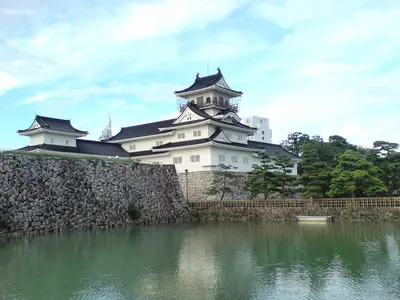
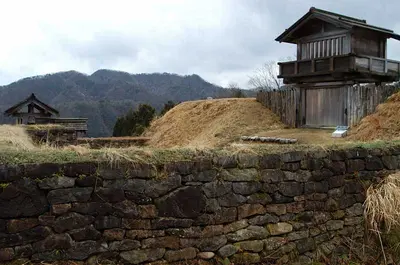
Masuyama Castle is celebrated as one of the 'Ecchu Three Great Mountain Castles' (Ecchu Sanmei-jo) — alongside Toyama Castle and Matsukura Castle — that dominated the strategic mountain routes through Ecchu Province (modern Toyama Prefecture). Of the three, Masuyama is considered the most purely military in character, built and held specifically as a mountain fortress controlling routes through the Tonami Plain rather than as an administrative center.
2

The Jinbo Clan's Impregnable Ridge

For much of the Sengoku period, Masuyama Castle was the stronghold of the Jinbo clan — one of Ecchu Province's most tenacious warrior families. The Jinbo held the castle against multiple campaigns by the powerful Uesugi clan of Echigo (modern Niigata) and maintained their independent position in Ecchu through a combination of the castle's natural strength and persistent resistance. The mountain's steep ridges and deep valley ravines made Masuyama genuinely difficult to assault.

3

Extensive Earthworks on a Hidden Mountain

Masuyama Castle's ruins extend across an entire mountain ridge with earthwork compounds, dry moat cuts, and raised platform areas preserved in excellent condition under forest cover. Because the site is off the main tourist routes, the ruins feel genuinely undiscovered — castle enthusiasts can walk the full compound system with almost no other visitors, experiencing the scale of a significant Sengoku mountain fortress in peaceful solitude.

Structure Details

Visitor tip

Masuyama is a forest hike to earthwork ruins — no tower, limited stone walls, but excellent compound preservation. The history museum at the base is essential preparation; it explains the Jinbo clan's resistance against the Uesugi and the strategic context for the castle's position. The hike is manageable but requires appropriate footwear. Allow 1.5–2 hours for the full compound walk.

Castle type

Mountain castle

Mountain castle — built on a mountain ridge above the Tonami Plain in Ecchu Province (modern Toyama), controlling routes between Hokuriku and the interior

Layout type

Linked compound layout

Compound style — main compound at ridge summit with multiple compounds descending in both directions along the ridge, separated by karabori dry moat cuts

Main tower

No tower survives. Earthwork platforms, compound layouts, and dry moat cuts across the ridge are the primary surviving features, preserved under forest cover.

Stone walls

Earthen walls

Masuyama's defenses are primarily earthwork in character. The raised compound platforms are clearly defined under forest cover, and the karabori dry moat cuts across the ridge — some quite deep — are the most visually impressive surviving features. This earthwork-dominant style is characteristic of Hokuriku mountain castles of the early to mid-Sengoku period.

Key defensive features

Mountain Ridge Position Above Tonami Plain

The castle ridge commands panoramic views across the Tonami Plain — the primary agricultural and transit zone of central Ecchu Province. Any movement on the plain was visible from the summit, and the castle controlled access to the mountain passes connecting Hokuriku to the interior.

Deep Karabori Dry Moat Cuts

The dry moat cuts across the ridge at Masuyama are among the deeper examples of this technique surviving in Chubu region. An attacker moving along the ridge would repeatedly have to descend into and climb out of these cuts under fire from the compound above — a punishing series of obstacles on a mountain terrain.

Multi-Directional Ridge Extension

The castle compounds extend in both directions along the ridge from the summit, meaning there was no simple flanking move available to an attacker. Turning the castle's flank would require descending the mountain entirely and ascending from a different direction — a significant undertaking that the defenders would observe from hours away.

The Story of Masuyama Castle

Originally built 1335 / Jinbo clan
Current form 1560 / Jinbo Nagamoto (expanded form)
    1335

    The Jinbo clan, one of the principal warrior families of Ecchu Province, establishes a fortification on the Masuyama ridge during the Nanbokucho Wars — the civil conflict between the Northern and Southern Imperial courts that destabilized Japan after the fall of the Kamakura shogunate.

    1500

    As Sengoku-era conflicts escalate, the Jinbo clan develops Masuyama into a full mountain castle, expanding the compound system along the ridge and deepening the karabori defenses. The castle becomes their primary military stronghold in Ecchu Province.

    1560

    Jinbo Nagamoto expands and strengthens the castle during a period of intense pressure from the Uesugi clan of Echigo Province. Masuyama serves as the Jinbo clan's last refuge against repeated Uesugi campaigns to dominate Ecchu.

    1572

    Uesugi Kenshin — the legendary 'Dragon of Echigo' — conducts a major campaign into Ecchu. The Jinbo clan is ultimately defeated and the castle changes hands. Masuyama Castle becomes part of the expanding Uesugi domain in Hokuriku.

    1582

    Following the death of Oda Nobunaga and the subsequent redistribution of Hokuriku territory, Masuyama Castle briefly sees renewed activity before Toyotomi Hideyoshi's consolidation of the region. The castle is gradually superseded by lowland administrative centers.

    1615

    The Tokugawa shogunate's one-castle-per-domain law effectively ends Masuyama's use as a functioning fortification. The castle is abandoned and the earthworks gradually become overgrown, preserving them under forest cover in largely original condition.

In Pop Culture

TV

NHK regional documentaries on Uesugi Kenshin's Hokuriku campaigns

Masuyama Castle appears in coverage of Uesugi Kenshin's campaigns into Ecchu Province and the resistance of the Jinbo clan.

Did You Know?

  • The 'Ecchu Three Great Mountain Castles' designation (Masuyama, Toyama, and Matsukura) is a regional tradition rather than an official government classification, but it reflects genuine historical significance — all three were major strategic fortifications in one of Japan's most contested transit provinces. Whoever controlled these mountain castles controlled the Hokuriku route through Ecchu.
  • Uesugi Kenshin's campaigns into Ecchu are among the most studied examples of Sengoku mountain warfare. Kenshin was famous for his rapid marching through difficult mountain terrain — his soldiers were accustomed to Echigo's snow country routes and moved with a speed that repeatedly surprised his opponents. Masuyama's eventual fall to Kenshin is consistent with this pattern.
  • The Tonami Plain, visible from Masuyama's summit, is famous today for its scattered farmhouse style (sanchi-zukuri) — individual farmhouses distributed across the plain rather than clustered in villages. This distinctive settlement pattern is a UNESCO Intangible Cultural Heritage. Looking out from Masuyama's summit, you are seeing one of the most distinctive agricultural landscapes in Japan.

Score Breakdown

Tourism Score

F 30/100
  • Accessibility 5 /20
  • Foreign-Friendly 3 /20
  • Historical Value 12 /20
  • Visual Impact 6 /20
  • Facilities 4 /20

Defense Score

A 89/100
  • Terrain Advantage 19 /20
  • Entrance Defense 18 /20
  • Internal Complexity 17 /20
  • Siege Endurance 16 /20
  • Strategic Oversight 19 /20

Planning Your Visit

Best Time to Visit

May through October. Spring and autumn for the clearest mountain views. Heavy Hokuriku winter snow makes access impractical November through March.

Time Needed

1.5–2 hours

Insider Tip

Combine Masuyama with a visit to the Tonami Tulip Fair if visiting in late April to early May — the Tonami Plain below the castle is Japan's primary tulip-growing region. Seeing the tulip fields from the Masuyama summit with the snow-capped Tateyama mountains behind them is one of Toyama Prefecture's most spectacular visual combinations.

Map

Getting There

Nearest station: Tonami Station (Ainokaze Toyama Railway)
Walk from station: 50 min walk
Parking: Free parking at the Masuyama Castle Site History Museum at the base of the castle hill. The hike to the summit takes approximately 30–45 minutes.

Admission

Free

Ruins freely accessible. The Masuyama Castle Site History Museum at the base has a small admission fee and provides essential context.

Opening Hours

Open00:00 – 23:59

Open year-round. Heavy snow possible November–March in this Hokuriku region mountain location — winter access can be difficult. Best visited April–November.

Facilities

  • – English guides
  • – Audio guide
  • – Wheelchair access
  • ✓ Restrooms
  • – Gift shop
  • – Food nearby

Nearby Castles

Featured in collections

FAQ

Frequently Asked Questions

How do I get to Masuyama Castle?

The nearest station is Tonami Station (Ainokaze Toyama Railway). From there it is about 50 minutes on foot.

How much does Masuyama Castle cost to enter?

Masuyama Castle is free to enter.

Is Masuyama Castle worth visiting?

Masuyama Castle is for the enthusiast rather than the casual visitor — there is no tower, the site is off the main routes, and the ruins require forest hiking to appreciate. But the earthwork preservation is excellent, the mountain setting is dramatic, and the site is genuinely uncrowded. For visitors doing a Hokuriku castle circuit, Masuyama is a rewarding addition that most tourists skip entirely.

What are the opening hours of Masuyama Castle?

00:00 to 23:59.

How long should I spend at Masuyama Castle?

Plan for about 1.5–2 hours, depending on how closely you want to explore the grounds.