Toyama Castle

富山城·Toyama-jo

D Tourism Score 45/100
C Defense Score 63/100

Sassa Narimasa's Hokuriku stronghold — a parkland castle whose spring moat reflections rival its historical drama.

#134 — Continued 100 Castles Reconstructed
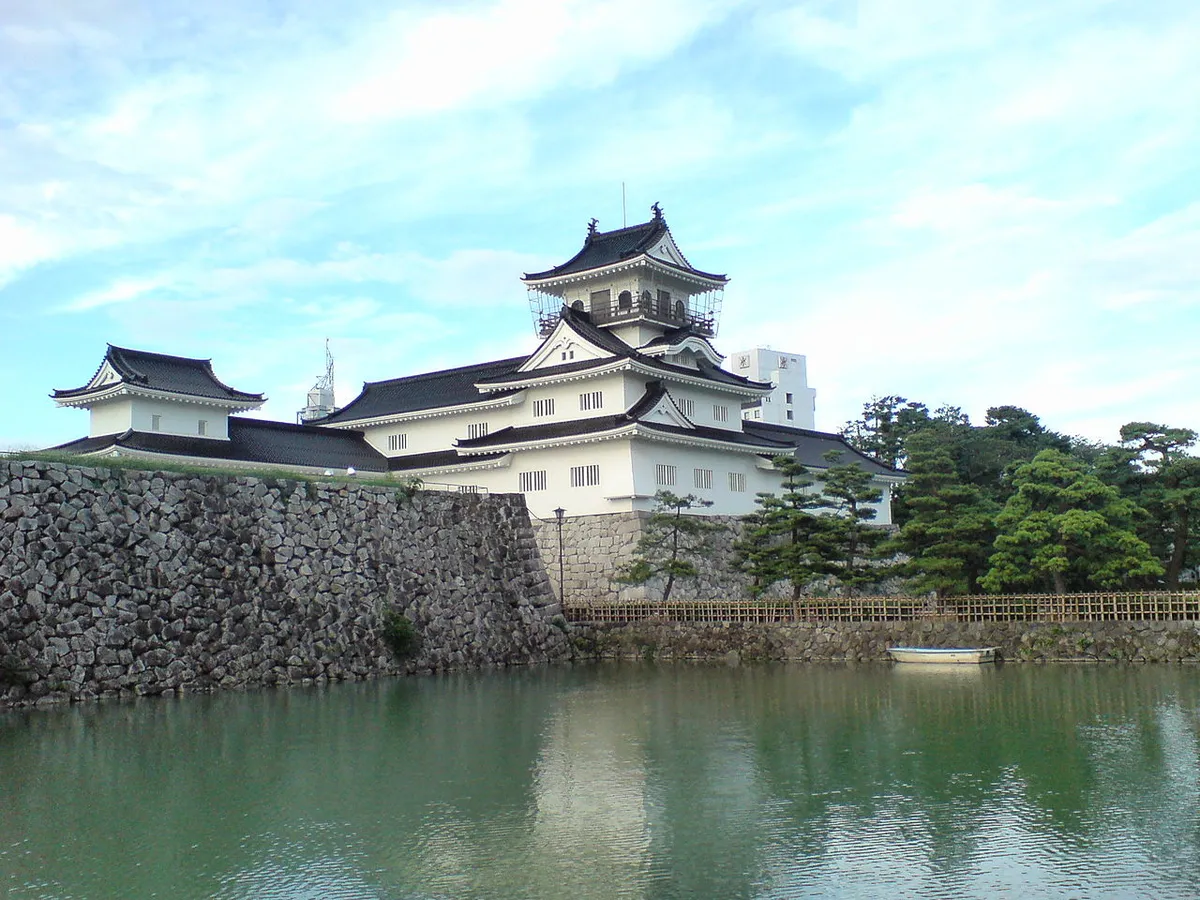
Toyama Castle (富山城)
Photo:利用者:越中掾/Wikimedia Commons/Public domain

Quick Facts

Quick Facts

Admission
¥210

¥0

Hours
09:00 – 17:00

Last entry 16:30

Nearest Station
Toyama Station (JR Hokuriku Shinkansen / JR Hokuriku Main Line / Ainokaze Toyama Railway)
Walk from Station
15 min walk

Bus also available

Time Needed
45 minutes to 1 hour

High school students and under free.

Defense Overview

Defense Overview

Why Toyama Castle was hard to attack

This castle is hard to attack because it combines managed outer defenses on relatively level ground with enough defensive depth to slow attackers before the center.

An attacker would not simply arrive at the center on open flat ground. They would have to cross water barriers or moat lines and push through successive outer areas before the core.

Overall score

63/100

Estimated range

57–69

Confidence

A

Strong multi-source support

This is a site-original comparison score for learning and comparison, not a reconstruction of one historical battle.

Radar view

Terrain 10/20 Entrance 11/20 Internal 15/20 Siege 15/20 Oversight 12/20
How this estimate was built+

This estimate combines broad terrain, approach, layout, and route-control signals. It is meant to explain the castle's defensive logic in plain English, not reconstruct a single historical attack.

Terrain Advantage

How much the terrain itself seems to help: height, slope, ridges, cliffs, water edges, and limited approach directions.

10/20

Entrance Defense

How awkward and dangerous the first entry looks: gates, bridge or moat crossings, chokepoints, and forced turns.

11/20

Internal Complexity

How hard it seems to keep pushing after entry: layered baileys, depth, compartmentalization, and repeated defensive lines.

15/20

Siege Endurance

A rough sense of long-hold potential: moats, water access, space, storage plausibility, and defensive staying power.

15/20

Strategic Oversight

How much the castle appears to command nearby roads, plains, rivers, basins, harbors, or town approaches.

12/20

Why Visit

Toyama Castle is primarily a transit castle — most worthwhile as a 45-minute stop when passing through Toyama on the Hokuriku Shinkansen en route between Kanazawa and Tokyo. The castle park is genuinely pleasant, the moat surviving in good condition, and the admission fee is among the lowest of any Japanese castle with a keep. In spring cherry blossom season it becomes briefly spectacular. For castle enthusiasts, the Sassa Narimasa connection and the Toyama Maeda branch history are the most interesting angles.

Highlights

1

Sassa Narimasa and the Castle That Changed the Hokuriku

Toyama Castle's most famous resident was Sassa Narimasa, one of Nobunaga's elite generals and a fierce rival of Toyotomi Hideyoshi. After Nobunaga's death, Narimasa refused to submit to Hideyoshi and fought on alone, using Toyama as his base. When Hideyoshi finally invaded Hokuriku with a massive force in 1585, Narimasa surrendered without battle — an act of pragmatic survival that became emblematic of the impossible choices facing samurai caught between two titans.
2

The Moat Cherry Blossoms

Toyama Castle's surviving moat system, filled with water and lined with cherry trees, creates one of Toyama Prefecture's most celebrated spring scenes. The white concrete keep reflected in the moat water, surrounded by pink blossoms, draws local crowds during early April. The castle park is a genuine community gathering space, not just a tourist site — the cherry blossom season gives the most vivid sense of how Japanese urban castle parks function as civic heart.

3

Gateway to the Tateyama Kurobe Alpine Route

Toyama Castle sits at the eastern end of the remarkable Tateyama Kurobe Alpine Route — a mountain crossing through the Northern Japan Alps with 3,000-metre peaks and massive snow corridors that remain open even in late spring. Many visitors combine a Toyama Castle stop with the alpine route, making Toyama station and castle a logical starting point for one of Chubu's most dramatic natural experiences.

Structure Details

Visitor tip

Toyama Castle is best experienced as a city park castle — take a walk around the moat perimeter before entering the keep museum. The museum focuses on Toyama domain history with reasonable English signage. The castle is compact and easy to cover in 45 minutes to an hour. It makes a practical sightseeing stop when transiting through Toyama on the Hokuriku Shinkansen.

Castle type

Flatland castle

Flatland castle — built on flat terrain on the Toyama Plain, relying on moat systems for defense rather than natural topographic elevation

Layout type

Concentric layout

Ring-style layout — concentric moat and wall system surrounding the main compound on flat ground

Main tower

Concrete reconstruction (1954) — built as a postwar reconstruction approximating the Edo-period keep design. The original wooden castle was destroyed in the Maeda clan's reorganization of the domain.

3 floors

Stone walls

Natural stone stacking

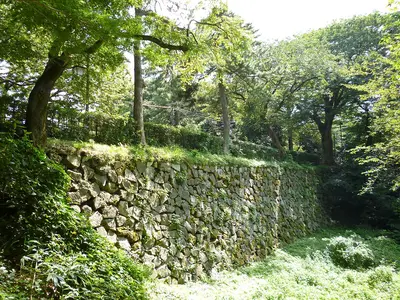
The original stone walls (ishigaki) of Toyama Castle survive in good condition around the inner compound and moat perimeter. The moat itself — a wide water-filled channel on the south and east sides — is a major surviving historical element. The 1954 concrete keep sits on the original stone wall foundations.

Moats

The original moat system partially survives and is filled with water. The south and east moat sections are the most intact and create the famous cherry blossom reflection scene in spring.

Key defensive features

Moat System on Flat Terrain

On a flat plain with no topographic advantages, the moat system was the primary defensive feature. The water-filled moats created barriers requiring bridging under fire and are the most historically intact element of the surviving castle.

Jinzu River Natural Barrier

The Jinzu River on the north side of the castle provided a natural water barrier supplementing the constructed moat system. Control of this river crossing was essential to the castle's strategic position.

The Story of Toyama Castle

Originally built 1543 / Jinbo Nagamoto (attributed)
Current form 1954 / Toyama City (concrete reconstruction)
    1543

    A fortification at the Toyama site is attributed to Jinbo Nagamoto in the mid-Sengoku period. The Jinbo clan controls the Toyama Plain area before being displaced in the power struggles of the late 16th century.

    1580

    Sassa Narimasa is appointed by Oda Nobunaga to control Etchu Province (modern Toyama Prefecture) and establishes Toyama Castle as his primary base. Narimasa expands and fortifies the castle significantly.

    1585

    Toyotomi Hideyoshi invades Hokuriku with an army vastly outnumbering Narimasa's forces. Narimasa surrenders Toyama Castle without battle, choosing pragmatic submission over certain defeat.

    1639

    The Maeda clan — the largest outside domain in Tokugawa Japan — establishes a branch domain at Toyama. Toyama Castle becomes the seat of the Toyama Maeda branch, with successive lords expanding the castle structures through the Edo period.

    1954

    Toyama City constructs a concrete keep as a postwar reconstruction, as part of the wave of Japanese castle rebuilding in the 1950s. The castle becomes a civic museum and park at the center of rebuilt postwar Toyama.

In Pop Culture

other

Toyama City tourism and regional broadcasts

Toyama Castle is the emblematic image of Toyama City in regional tourism promotion, particularly the cherry blossom season moat reflection image.

Did You Know?

  • Toyama Prefecture is famous as the source of approximately 70% of Japan's domestic pharmaceutical production — a tradition dating to the Edo period when Toyama Domain medicine merchants (Toyama no kusuri-uri) traveled the entire country selling medicines. The castle town's prosperity was partly built on this medicinal trade.
  • The Toyama Maeda branch domain was one of the wealthiest secondary domains in Edo-period Japan, despite lacking the primary Maeda domain of Kanazawa. The branch maintained cultural traditions matching Kanazawa's renowned artisan culture.
  • During the 1945 air raid that destroyed much of Toyama City, the castle site sustained significant damage but the stone walls and moat system survived the bombing. The 1954 concrete reconstruction was part of Toyama's postwar city rebuilding, which was among the most extensive in Japan due to the near-total destruction of the city.

Score Breakdown

Tourism Score

D 45/100
  • Accessibility 12 /20
  • Foreign-Friendly 8 /20
  • Historical Value 11 /20
  • Visual Impact 9 /20
  • Facilities 5 /20

Defense Score

C 63/100
  • Terrain Advantage 10 /20
  • Entrance Defense 11 /20
  • Internal Complexity 15 /20
  • Siege Endurance 15 /20
  • Strategic Oversight 12 /20

Planning Your Visit

Best Time to Visit

Early April for cherry blossoms. Any time of year for a transit stop. Avoid the concrete keep when the park alone is more rewarding.

Time Needed

45 minutes to 1 hour

Insider Tip

The Tateyama Kurobe Alpine Route starts from Toyama Station — if you are visiting in late April or May, the 'Snow Corridor' (Yuki no Otani) sections of the route are one of Japan's most extraordinary natural spectacles, with snow walls up to 20 metres high. Combine the castle with the alpine route for a full Toyama day.

Map

Getting There

Nearest station: Toyama Station (JR Hokuriku Shinkansen / JR Hokuriku Main Line / Ainokaze Toyama Railway)
Walk from station: 15 min walk
Bus: Toyama City tram (Portram) stops at Otemaebashi, a 5-minute walk from the castle. The tram runs from Toyama Station.
Parking: Paid parking available near the castle park. Multiple lots in the immediate vicinity.
Accessible with a JR Pass

Admission

Adult¥210
ChildFree

High school students and under free.

Opening Hours

Open09:00 – 17:00
Last entry16:30

Open year-round except December 29 through January 3. The castle park grounds are freely accessible outside museum hours. Famous for cherry blossoms in early April — the moat area is one of Toyama's top hanami spots.

Facilities

  • – English guides
  • – Audio guide
  • ✓ Wheelchair access
  • ✓ Restrooms
  • ✓ Gift shop
  • ✓ Food nearby

Nearby Castles

Featured in collections

FAQ

Frequently Asked Questions

How do I get to Toyama Castle?

The nearest station is Toyama Station (JR Hokuriku Shinkansen / JR Hokuriku Main Line / Ainokaze Toyama Railway). From there it is about 15 minutes on foot. Toyama City tram (Portram) stops at Otemaebashi, a 5-minute walk from the castle. The tram runs from Toyama Station.

How much does Toyama Castle cost to enter?

Adult admission is ¥210 and child admission is ¥0.

Is Toyama Castle worth visiting?

Toyama Castle is primarily a transit castle — most worthwhile as a 45-minute stop when passing through Toyama on the Hokuriku Shinkansen en route between Kanazawa and Tokyo. The castle park is genuinely pleasant, the moat surviving in good condition, and the admission fee is among the lowest of any Japanese castle with a keep. In spring cherry blossom season it becomes briefly spectacular. For castle enthusiasts, the Sassa Narimasa connection and the Toyama Maeda branch history are the most interesting angles.

What are the opening hours of Toyama Castle?

09:00 to 17:00, last entry 16:30.

How long should I spend at Toyama Castle?

Plan for about 45 minutes to 1 hour, depending on how closely you want to explore the grounds.