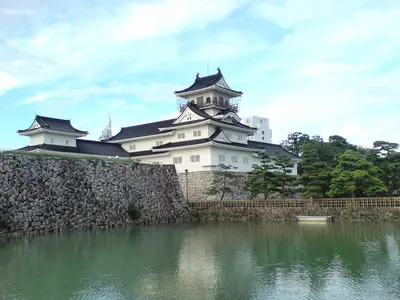
Takaoka Castle

高岡城·Takaoka-jo

D Tourism Score 42/100
C Defense Score 62/100

A castle that existed for only 6 years before demolition — but its spectacular water moats survived and are now one of Japan's most beautiful castle parks.

#33 — 100 Famous Castles Ruins
Takaoka Castle (高岡城)
Photo:RESPITE/Wikimedia Commons/CC0

Quick Facts

Quick Facts

Admission
Free Free
Hours
00:00 – 23:59
Nearest Station
Takaoka Station (Ainokaze Toyama Railway / Himi Line / JR Johana Line)
Walk from Station
10 min walk
Time Needed
1–1.5 hours (park + moat circuit); add 1 hour for Zuiryuji Temple

Free entry to the castle park (Kojo Park). One of Japan's most accessible ruins parks — the moats and paths are open at all times.

Defense Overview

Defense Overview

Why Takaoka Castle was hard to attack

This castle is hard to attack because attackers have to work across water barriers before pressing inward instead of getting a direct run at the core.

An attacker would not simply arrive at the center on open flat ground. They would have to cross water barriers or moat lines, approach through at least some constrained entry space, and push through successive outer areas before the core.

Overall score

62/100

Estimated range

56–68

Confidence

B

Usable estimate with some inference

This is a site-original comparison score for learning and comparison, not a reconstruction of one historical battle.

Radar view

Terrain 10/20 Entrance 12/20 Internal 15/20 Siege 14/20 Oversight 11/20
How this estimate was built+

This estimate combines broad terrain, approach, layout, and route-control signals. It is meant to explain the castle's defensive logic in plain English, not reconstruct a single historical attack.

Terrain Advantage

How much the terrain itself seems to help: height, slope, ridges, cliffs, water edges, and limited approach directions.

10/20

Entrance Defense

How awkward and dangerous the first entry looks: gates, bridge or moat crossings, chokepoints, and forced turns.

12/20

Internal Complexity

How hard it seems to keep pushing after entry: layered baileys, depth, compartmentalization, and repeated defensive lines.

15/20

Siege Endurance

A rough sense of long-hold potential: moats, water access, space, storage plausibility, and defensive staying power.

14/20

Strategic Oversight

How much the castle appears to command nearby roads, plains, rivers, basins, harbors, or town approaches.

11/20

Why Visit

Takaoka Kojo Park is worth visiting for the water moats alone — the elaborate multi-ring system is genuine Japanese castle engineering and more visually impressive than many sites with standing towers. The cherry blossom season (mid-April) is spectacular. The nearby Zuiryuji Temple is a genuine hidden gem of Japanese religious architecture. And the Doraemon cultural trail in the shopping streets adds a cheerful contemporary layer. Takaoka is easily accessible from Kanazawa (30 minutes by train) and makes an excellent half-day addition to a Hokuriku itinerary.

Highlights

1

Japan's Most Beautiful Water Moat Park

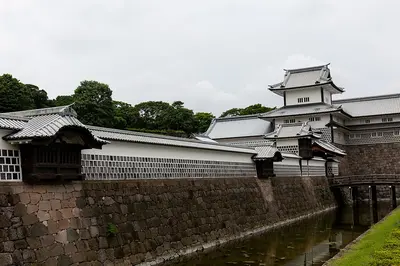
Takaoka Castle is gone, but its moats remain — and they are among the most beautiful in Japan. A complex system of wide water moats encircles the castle hill, with the water and earthwork islands connected by arched bridges. The moats host lotus flowers in summer, reflect cherry blossoms in spring, and present atmospheric bare branches in winter. Takaoka Kojo Park is a genuine urban oasis with the water at the center of everything.
2

Built by Maeda Toshinaga — and Demolished in 10 Years

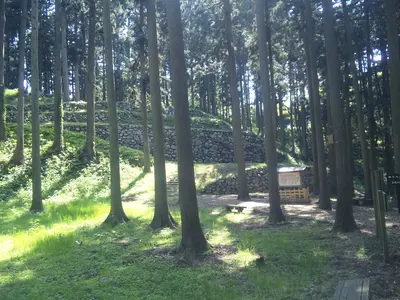
Takaoka Castle was built in 1609 by Maeda Toshinaga, the son of the great Maeda Toshiie (lord of Kanazawa). It was a major construction project reflecting the Maeda clan's ambition for a second urban center in their vast Kaga domain. Yet the Tokugawa shogunate's One Domain One Castle law of 1615 forced its demolition — the castle existed for only 6 years. What survived is the moat system, preserved as a park since the Meiji period.

3

Doraemon's Hometown

Takaoka is the birthplace of Fujiko F. Fujio, the creator of Doraemon — Japan's most beloved manga character. The city has embraced this connection with a Doraemon tram and bronze statues of Doraemon characters in the shopping streets. Combining the castle ruins with the Doraemon cultural trail makes Takaoka a surprisingly layered day out — medieval Japanese history meets Japan's most iconic cartoon character.

Structure Details

Visitor tip

This is primarily a park visit — come for the moat scenery and peaceful atmosphere rather than castle archaeology. The castle mound at the center gives pleasant city views. In cherry blossom season, arrive early morning to beat the crowds. The nearby Takaoka old town and Zuiryuji Temple (one of Japan's finest Zen temple gardens, 10 minutes' walk) make excellent additions to a half-day visit.

Castle type

Flatland castle

Flatland castle — built on low terrain with elaborate water moat system as the primary defensive feature

Layout type

Concentric layout

Concentric water moat style — multiple water moat rings encircling the castle compounds, creating water-island layering

Main tower

Ruins — castle demolished 1615 under Tokugawa One Domain One Castle policy after only 6 years. Water moat system survives and is maintained as a public park.

Stone walls

Natural stone stacking

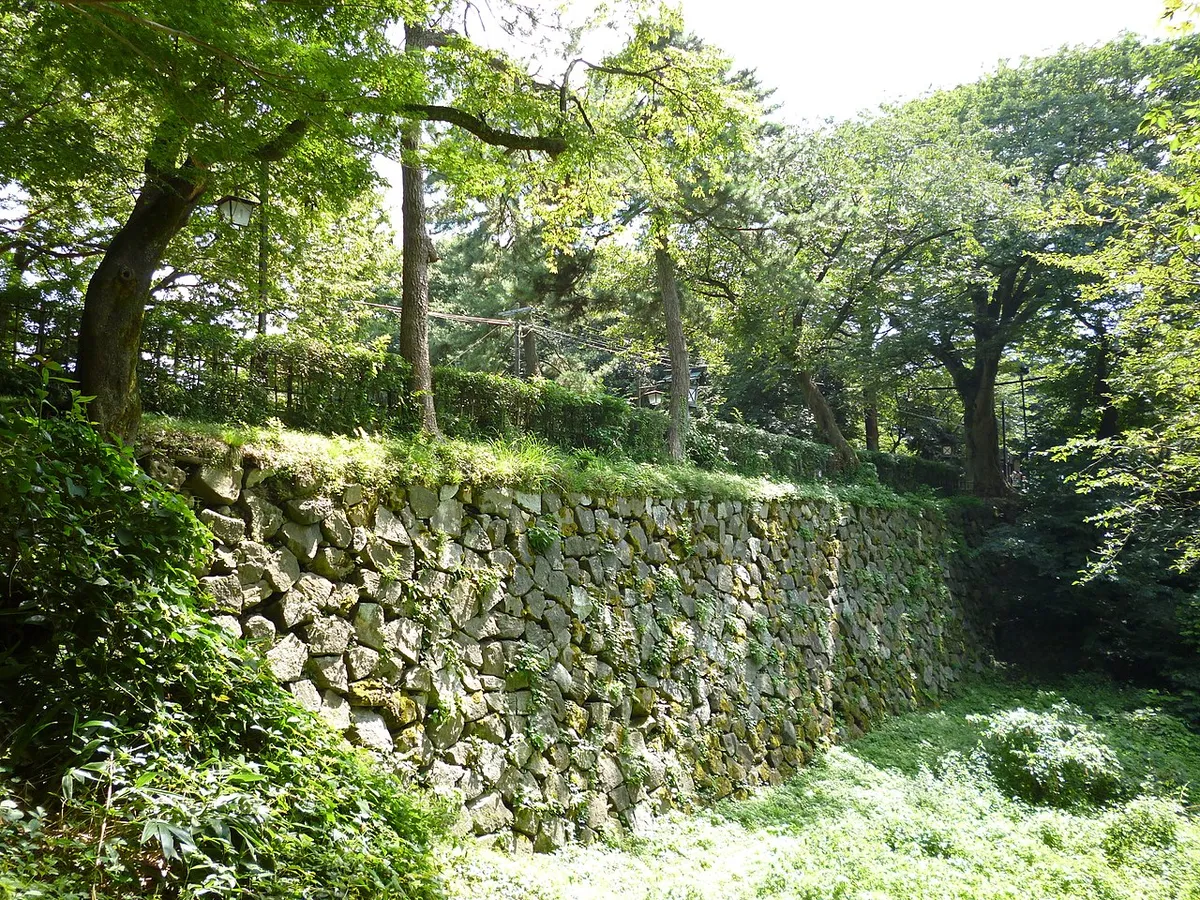
The stone walls that reinforced the moat island edges are partially surviving, mostly embedded in the park landscaping. The earthwork embankments that backed the moats are well-preserved and give the park its distinctive raised-island character.

Moats

The castle's defining surviving feature — an elaborate system of wide water moats encircling multiple earthwork islands. The moats are wide (20–30 meters in places), deep, and maintained with clean water. The lotus flowers in summer and cherry blossom reflections in spring make the moat system one of Japan's most photographed.

Key defensive features

Multi-Ring Water Moat System

The multiple water moat rings created concentric water barriers that completely isolated the main compound. Any attack required crossing open water under fire — a significant tactical challenge on a flat plain site.

Moat Island Configuration

Each compound was an island surrounded by water, accessible only via bridges that could be removed or defended. The geometry forced attackers through bottleneck bridge crossings one at a time.

The Story of Takaoka Castle

Originally built 1609 / Maeda Toshinaga
Current form 1615 / Demolished (Tokugawa One Castle policy)
    1609

    Maeda Toshinaga, lord of the vast Kaga domain and son of the great Maeda Toshiie, begins construction of Takaoka Castle as a second urban center for his domain. The castle is designed with an elaborate water moat system and substantial investment.

    1614

    Takaoka Castle is largely completed — one of the most significant castle construction projects in the Hokuriku region. The Maeda clan had ambitions for Takaoka as a major city to complement Kanazawa.

    1615

    The Tokugawa shogunate issues the Ikkoku Ichijo rei (One Domain One Castle) law in the aftermath of the Osaka Castle sieges, requiring all domains to demolish secondary castles. Takaoka Castle is demolished — only 6 years after construction began.

    1871

    The moat system is preserved when the castle site is converted to a public park (Kojo Park) in the Meiji period. The water moats become the park's defining feature.

    1909

    Takaoka Kojo Park is formally designated as a historic site. The moat system and earthworks are maintained. The park becomes the city's central green space and cultural landmark.

Did You Know?

  • Takaoka Castle existed for only 6 years before mandatory demolition under the Tokugawa One Domain One Castle law — making it one of the shortest-lived significant castle constructions in Japanese history. The irony is that the moat system, which survived, is now more famous and visited than many castles that stood for centuries.
  • Takaoka is the hometown of Fujiko F. Fujio (born Hiroshi Fujimoto, 1933–1996), the creator of Doraemon — Japan's most beloved manga and anime character. Doraemon-themed art, statues, and a tram operate in the city. The castle ruins park and the Doraemon bronze statues in the shopping street are the two main tourist draws.
  • Zuiryuji Temple, a 10-minute walk from the castle ruins, is one of the finest Zen temple complexes in Japan — built by the Maeda clan in 1659 and designated a National Treasure. The main hall and surrounding garden represent the highest quality of Japanese religious architecture outside Kyoto and Nara. It is seriously undervisited by international tourists.

Score Breakdown

Tourism Score

D 42/100
  • Accessibility 12 /20
  • Foreign-Friendly 7 /20
  • Historical Value 10 /20
  • Visual Impact 8 /20
  • Facilities 5 /20

Defense Score

C 62/100
  • Terrain Advantage 10 /20
  • Entrance Defense 12 /20
  • Internal Complexity 15 /20
  • Siege Endurance 14 /20
  • Strategic Oversight 11 /20

Planning Your Visit

Best Time to Visit

Mid-April for cherry blossoms over the moats. Summer for lotus flowers. Autumn for atmospheric foliage. The moats are photogenic in all seasons.

Time Needed

1–1.5 hours (park + moat circuit); add 1 hour for Zuiryuji Temple

Insider Tip

After the castle park, walk 10 minutes to Zuiryuji Temple — it is consistently cited by Japanese architectural historians as one of the finest Zen temple complexes in Japan and yet has almost no international tourist presence. The main hall (National Treasure) and the straight stone-paved approach through moss-covered grounds create an atmosphere of complete stillness. The combination of castle moats and Zen temple makes Takaoka a genuinely rewarding half-day that most tourists miss.

Map

Getting There

Nearest station: Takaoka Station (Ainokaze Toyama Railway / Himi Line / JR Johana Line)
Walk from station: 10 min walk
Parking: Paid parking adjacent to the park. Free parking also available at outer lots.

Admission

Free

Free entry to the castle park (Kojo Park). One of Japan's most accessible ruins parks — the moats and paths are open at all times.

Opening Hours

Open00:00 – 23:59

Open year-round. The park is particularly beautiful in cherry blossom season (mid-April) — one of Japan's top 100 cherry blossom sites. The moats have lotus flowers in summer.

Facilities

  • – English guides
  • – Audio guide
  • ✓ Wheelchair access
  • ✓ Restrooms
  • – Gift shop
  • ✓ Food nearby

Nearby Castles

Featured in collections

FAQ

Frequently Asked Questions

How do I get to Takaoka Castle?

The nearest station is Takaoka Station (Ainokaze Toyama Railway / Himi Line / JR Johana Line). From there it is about 10 minutes on foot.

How much does Takaoka Castle cost to enter?

Takaoka Castle is free to enter.

Is Takaoka Castle worth visiting?

Takaoka Kojo Park is worth visiting for the water moats alone — the elaborate multi-ring system is genuine Japanese castle engineering and more visually impressive than many sites with standing towers. The cherry blossom season (mid-April) is spectacular. The nearby Zuiryuji Temple is a genuine hidden gem of Japanese religious architecture. And the Doraemon cultural trail in the shopping streets adds a cheerful contemporary layer. Takaoka is easily accessible from Kanazawa (30 minutes by train) and makes an excellent half-day addition to a Hokuriku itinerary.

What are the opening hours of Takaoka Castle?

00:00 to 23:59.

How long should I spend at Takaoka Castle?

Plan for about 1–1.5 hours (park + moat circuit); add 1 hour for Zuiryuji Temple, depending on how closely you want to explore the grounds.