Nanao Castle

七尾城·Nanao-jo

F Tourism Score 38/100
A Defense Score 86/100

Uesugi Kenshin's two-year siege objective — a mountain castle that resisted Japan's greatest commander and fell only to disease and treachery, not military assault.

#34 — 100 Famous Castles Ruins
Nanao Castle (七尾城)
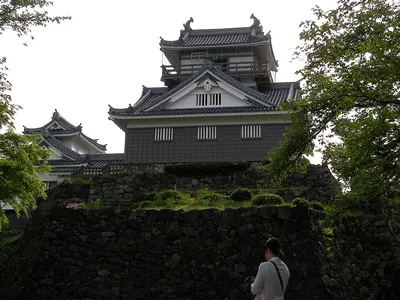
Photo:tom-spring/Wikimedia Commons/Public domain

Quick Facts

Quick Facts

Admission
Free Free
Hours
00:00 – 23:59
Nearest Station
Nanao Station (JR Nanao Line)
Walk from Station
50 min walk
Time Needed
2–2.5 hours (museum + hike + ruins exploration)

Free admission to the mountain ruins. The Nanao Castle History Museum at the base has separate admission (adults ¥200).

Defense Overview

Defense Overview

Why Nanao Castle was hard to attack

This castle is hard to attack because it holds stronger ground above the surrounding approaches instead of letting attackers close on the core from easy footing.

An attacker would first have to fight the site itself before reaching the main defenses. They would have to cross water barriers or moat lines, approach through at least some constrained entry space, and face more defensive depth after the first line.

Overall score

86/100

Estimated range

80–92

Confidence

B

Usable estimate with some inference

This is a site-original comparison score for learning and comparison, not a reconstruction of one historical battle.

Radar view

Terrain 19/20 Entrance 18/20 Internal 17/20 Siege 15/20 Oversight 17/20
How this estimate was built+

This estimate combines broad terrain, approach, layout, and route-control signals. It is meant to explain the castle's defensive logic in plain English, not reconstruct a single historical attack.

Terrain Advantage

How much the terrain itself seems to help: height, slope, ridges, cliffs, water edges, and limited approach directions.

19/20

Entrance Defense

How awkward and dangerous the first entry looks: gates, bridge or moat crossings, chokepoints, and forced turns.

18/20

Internal Complexity

How hard it seems to keep pushing after entry: layered baileys, depth, compartmentalization, and repeated defensive lines.

17/20

Siege Endurance

A rough sense of long-hold potential: moats, water access, space, storage plausibility, and defensive staying power.

15/20

Strategic Oversight

How much the castle appears to command nearby roads, plains, rivers, basins, harbors, or town approaches.

17/20

Why Visit

Nanao Castle is a specialist destination for serious Sengoku history enthusiasts and mountain castle lovers. The stone walls are impressive, the summit views over Nanao Bay are excellent, and the Uesugi Kenshin siege story is one of the most compelling in Japanese castle history. Check access conditions before visiting (the 2024 Noto earthquake caused damage and ongoing recovery work). The Nanao Castle History Museum at the base provides essential context and is worth an hour. Combine with the beautiful Noto Peninsula coastal scenery for a full day.

Highlights

1

Uesugi Kenshin's Most Celebrated Siege

Nanao Castle is inseparable from the greatest siege in Uesugi Kenshin's military career — the two-year siege of 1576–1577 that finally brought down the Noto Hatakeyama clan. Kenshin famously celebrated his eventual victory with a poem ('When the soldier crosses the Kaga territory at night...') that became one of the most famous Sengoku poems. The castle's resistance for two years against Japan's greatest commander demonstrates its extraordinary defensive strength.
2

The Mountain That Overlooks the Sea of Japan

Nanao Castle sits on a 300-meter mountain ridge that provides sweeping views over Nanao Bay and the Noto Peninsula — the Sea of Japan visible in multiple directions. The position combines mountain elevation with proximity to the sea in a way that made it simultaneously a defensive stronghold and a command post for the Hatakeyama clan's maritime control of the Noto Peninsula. On clear days, the view from the summit ruins is one of the best in the Hokuriku region.

3

One of Hokuriku's Most Powerful Stone Walls

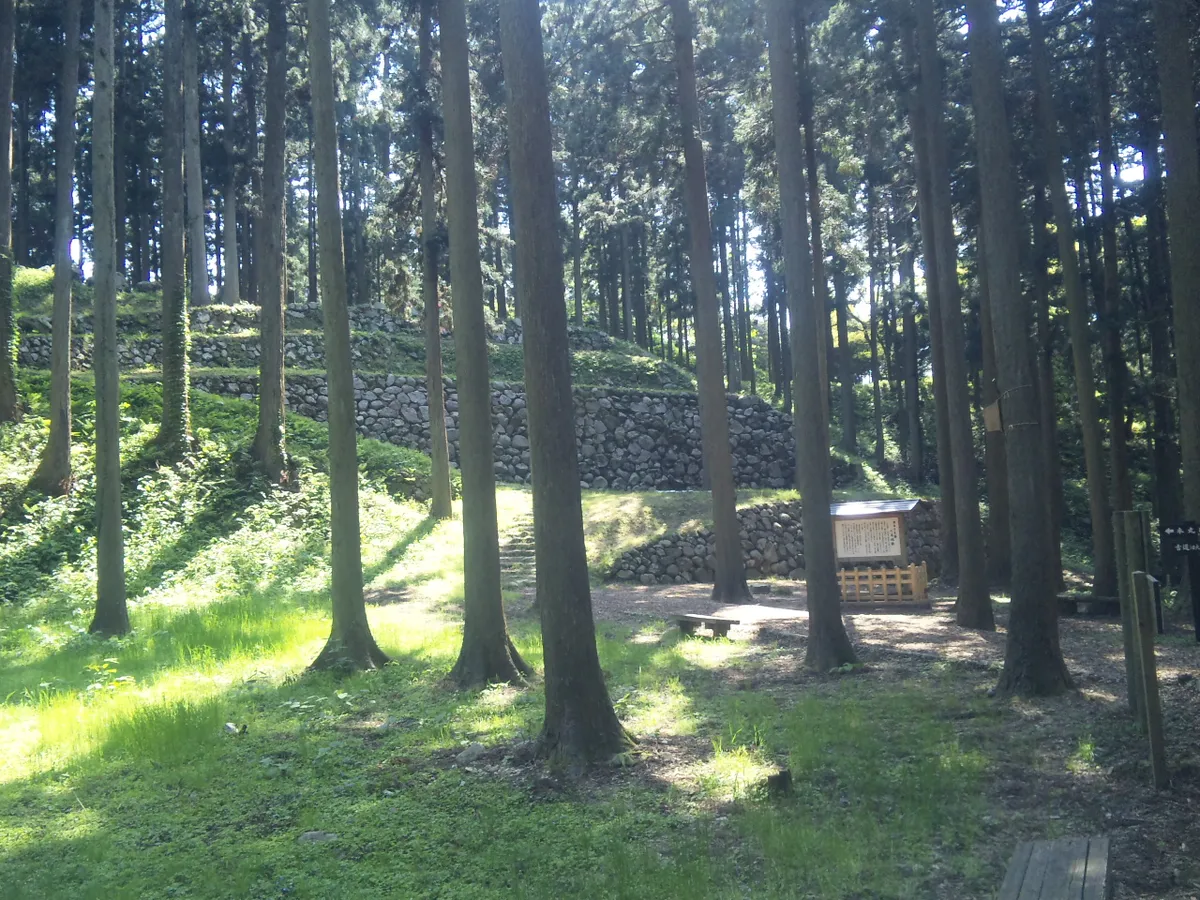
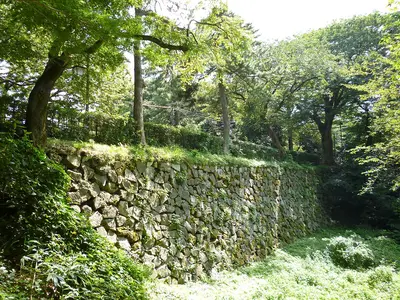
Despite being an early Sengoku mountain castle, Nanao's stone walls are substantial and well-preserved — large sections survive on the main compound and subsidiary areas, demonstrating the Hatakeyama clan's investment in permanent fortification. For a mountain castle of this period in this region, the stone construction is unusually sophisticated.

Structure Details

Visitor tip

The hike to the summit takes 20–30 minutes from the trailhead parking area and is moderately demanding. The stone walls are clearly visible and impressive. Carry water as there are no facilities on the mountain. The Nanao Castle History Museum at the base provides important context on the Hatakeyama clan and the Uesugi sieges — visit the museum before the mountain hike.

Castle type

Mountain castle

Mountain castle — built on a 300-meter mountain ridge on the Noto Peninsula, commanding views of Nanao Bay and the Sea of Japan

Layout type

Linked compound layout

Linear ridgeline compound style — main compound at the highest point with multiple subsidiary compounds along the descending ridgeline

Main tower

Stone wall ruins — all wooden structures are lost. Substantial stone walls survive on the main and subsidiary compound areas.

Stone walls

Natural stone stacking

The stone walls at Nanao are among the most impressive of any mountain castle ruins in the Hokuriku region — long sections of coursed stone survive on the main compound and approach areas, rising 3–6 meters in places. The scale of the stone construction explains the castle's two-year resistance against Uesugi Kenshin.

Key defensive features

300-Meter Ridge Position

The castle's mountain ridge position provides natural cliff faces on multiple sides and makes the approaches exhausting for any attacking force. The ridge narrowing toward the summit creates natural bottlenecks.

Stone Wall Defense Lines

The substantial stone walls on the main and subsidiary compounds created real defensive barriers that an attacker could not simply rush — even with the mountain already climbed, the stone walls presented a serious obstacle.

Sea View Command Position

The summit commanded views of Nanao Bay approaches, giving early warning of naval threats and allowing the garrison to observe any siege force movements on the surrounding terrain.

The Story of Nanao Castle

Originally built 1428 / Hatakeyama Mitsunori
Current form 1500 / Hatakeyama clan (various)
    1428

    Hatakeyama Mitsunori establishes the fortification on the Nanao mountain ridge as the Hatakeyama clan consolidates control over the Noto Peninsula. The clan serves as the effective rulers of Noto for the next century and a half.

    1500

    Under the Hatakeyama clan's peak power, Nanao Castle is expanded and reinforced with the substantial stone walls that partially survive today. The castle commands the entire Noto Peninsula and the maritime trade routes of the Sea of Japan.

    1576

    Uesugi Kenshin begins the siege of Nanao Castle — the beginning of a two-year operation that becomes the defining campaign of his career. Despite deploying his full military strength, Kenshin cannot take the castle by direct assault.

    1577

    Nanao Castle finally falls to Uesugi Kenshin — not through assault but through a disease outbreak that devastates the garrison and internal treachery among the defenders. Kenshin celebrates with his famous victory poem. The Hatakeyama clan's independent power ends.

    1582

    After Uesugi Kenshin's death, Oda Nobunaga's forces under Shibata Katsuie invade the Noto Peninsula. The castle comes under Oda control and is eventually abandoned as a military center.

Did You Know?

  • Uesugi Kenshin's victory poem after taking Nanao Castle in 1577 is one of the most famous Japanese waka poems from the Sengoku period: '霜満軍営秋気清 数行過雁月三更 越山併得能州景 遮莫家郷憶遠征' (roughly: 'Frost fills the army camp, the autumn air is crisp / Columns of geese pass under the midnight moon / From Mt. Echigo I have added Noto's scenery to my domain / Forgive me, home, for I must endure this distant campaign'). The poem is notable for its melancholy — a rare emotional register from a warlord.
  • The Hatakeyama clan's two-year resistance against Uesugi Kenshin — the greatest military commander of the era — before falling to disease rather than assault places Nanao among the most stubbornly defended castles in Japanese history. The garrison's eventual fate (disease and treachery) rather than direct defeat is characteristic of how most impregnable castles ultimately fell.
  • The Noto Peninsula, on which Nanao Castle sits, was severely damaged in the January 2024 Noto earthquake — the strongest to hit the peninsula in recorded history. Nanao city sustained significant damage and the castle ruins were affected by landslides. Recovery and access restoration to the castle site has been ongoing through 2025–2026.

Score Breakdown

Tourism Score

F 38/100
  • Accessibility 5 /20
  • Foreign-Friendly 4 /20
  • Historical Value 13 /20
  • Visual Impact 10 /20
  • Facilities 6 /20

Defense Score

A 86/100
  • Terrain Advantage 19 /20
  • Entrance Defense 18 /20
  • Internal Complexity 17 /20
  • Siege Endurance 15 /20
  • Strategic Oversight 17 /20

Planning Your Visit

Best Time to Visit

October–November for autumn foliage and clear sea views. Spring (April–May) for pleasant hiking conditions. Avoid winter (ice on paths) and check 2024 earthquake recovery status before visiting.

Time Needed

2–2.5 hours (museum + hike + ruins exploration)

Insider Tip

Read Uesugi Kenshin's victory poem before visiting — it transforms the summit from anonymous mountain ruins into the specific place where one of Japan's greatest warlords finally achieved his hardest military objective, and felt sad about it. The melancholy in that poem captures something true about the Sengoku period: the endless wars that consumed brilliant lives in the pursuit of power. The summit view over Nanao Bay on a clear day, with the Sea of Japan visible, is genuinely worth the hike.

Map

Getting There

Nearest station: Nanao Station (JR Nanao Line)
Walk from station: 50 min walk
Parking: Free parking at the trailhead near Jorenji Temple on the mountain approach.
Accessible with a JR Pass

Admission

Free

Free admission to the mountain ruins. The Nanao Castle History Museum at the base has separate admission (adults ¥200).

Opening Hours

Open00:00 – 23:59

Open year-round. The mountain path can be icy and dangerous in winter — access not recommended December through February. The autumn foliage season (mid-October to mid-November) is the best visiting time.

Facilities

  • – English guides
  • – Audio guide
  • – Wheelchair access
  • – Restrooms
  • – Gift shop
  • – Food nearby

Nearby Castles

Featured in collections

FAQ

Frequently Asked Questions

How do I get to Nanao Castle?

The nearest station is Nanao Station (JR Nanao Line). From there it is about 50 minutes on foot.

How much does Nanao Castle cost to enter?

Nanao Castle is free to enter.

Is Nanao Castle worth visiting?

Nanao Castle is a specialist destination for serious Sengoku history enthusiasts and mountain castle lovers. The stone walls are impressive, the summit views over Nanao Bay are excellent, and the Uesugi Kenshin siege story is one of the most compelling in Japanese castle history. Check access conditions before visiting (the 2024 Noto earthquake caused damage and ongoing recovery work). The Nanao Castle History Museum at the base provides essential context and is worth an hour. Combine with the beautiful Noto Peninsula coastal scenery for a full day.

What are the opening hours of Nanao Castle?

00:00 to 23:59.

How long should I spend at Nanao Castle?

Plan for about 2–2.5 hours (museum + hike + ruins exploration), depending on how closely you want to explore the grounds.