Echizen Ono Castle

越前大野城·Echizen Ono-jo

D Tourism Score 52/100
B Defense Score 78/100

The Hokuriku 'Castle in the Sky' — an autumn cloud sea phenomenon lifts this modest concrete reconstruction into one of Japan's most photographed castle scenes.

#37 — 100 Famous Castles Reconstructed
Echizen Ono Castle (越前大野城)
Photo:User:Ajax/Wikimedia Commons/CC BY-SA 3.0

Quick Facts

Quick Facts

Admission
¥400

¥0

Hours
09:00 – 17:00

Last entry 16:30

Nearest Station
Etsumi-Hoku Line Ono Station (Echizen Railway) / JR Etsumi-Hoku Line Kuzuryuko Station
Walk from Station
20 min walk
Time Needed
2–3 hours (castle + castle town walk + morning market)

Admission increased to ¥400. Children (junior high and under) free.

Defense Overview

Defense Overview

Why Echizen Ono Castle was hard to attack

This castle is hard to attack because its strength comes from its command of nearby routes and the surrounding town while still forcing attackers to break through defended space.

An attacker would not get a simple direct approach to the center. They would have to cross water barriers or moat lines, push through successive outer areas before the core, and do so under a position that also watches the surrounding routes.

Overall score

78/100

Estimated range

72–84

Confidence

A

Strong multi-source support

This is a site-original comparison score for learning and comparison, not a reconstruction of one historical battle.

Radar view

Terrain 15/20 Entrance 14/20 Internal 16/20 Siege 16/20 Oversight 17/20
How this estimate was built+

This estimate combines broad terrain, approach, layout, and route-control signals. It is meant to explain the castle's defensive logic in plain English, not reconstruct a single historical attack.

Terrain Advantage

How much the terrain itself seems to help: height, slope, ridges, cliffs, water edges, and limited approach directions.

15/20

Entrance Defense

How awkward and dangerous the first entry looks: gates, bridge or moat crossings, chokepoints, and forced turns.

14/20

Internal Complexity

How hard it seems to keep pushing after entry: layered baileys, depth, compartmentalization, and repeated defensive lines.

16/20

Siege Endurance

A rough sense of long-hold potential: moats, water access, space, storage plausibility, and defensive staying power.

16/20

Strategic Oversight

How much the castle appears to command nearby roads, plains, rivers, basins, harbors, or town approaches.

17/20

Why Visit

Echizen Ono Castle offers two completely different experiences depending on timing. Visit in autumn before dawn for the cloud sea phenomenon — the image of the tower floating above white mist is genuinely breathtaking and worth the early wake-up. Visit during the day for the castle town experience — Ono has one of the most intact Edo-period castle town street grids in Japan, a working morning market with 400 years of history, and the mountain basin landscape. The ¥300 admission is honest value. The concrete tower is forgiven when the cloud sea is doing its work.

Highlights

1

The Hokuriku 'Castle in the Sky'

On autumn mornings after cold, clear nights, the Ono basin fills with a thick sea of cloud while Echizen Ono Castle rises above it on its 249-meter hill — the tower floating in white mist, completely detached from the valley below. This 'unkai' (cloud sea) phenomenon, visible from the nearby Inagadake viewpoint in October and November, has made Ono Castle one of the most photographed scenes in Hokuriku and earned it the nickname 'Castle in the Sky of Hokuriku.'
2

A Castle Town Frozen in Time

Ono city is one of the best-preserved castle towns in Japan — the grid street pattern, traditional merchant townhouses, and the castle hill at the center create a spatial experience of the Edo period castle town that has barely changed. The morning market (Asaichi) has operated continuously since the Edo period, selling local mountain vegetables. The combination of the castle ruins, intact townscape, and living market tradition makes Ono one of Japan's most complete castle town experiences.

3

A Concrete Reconstruction with Real Charm

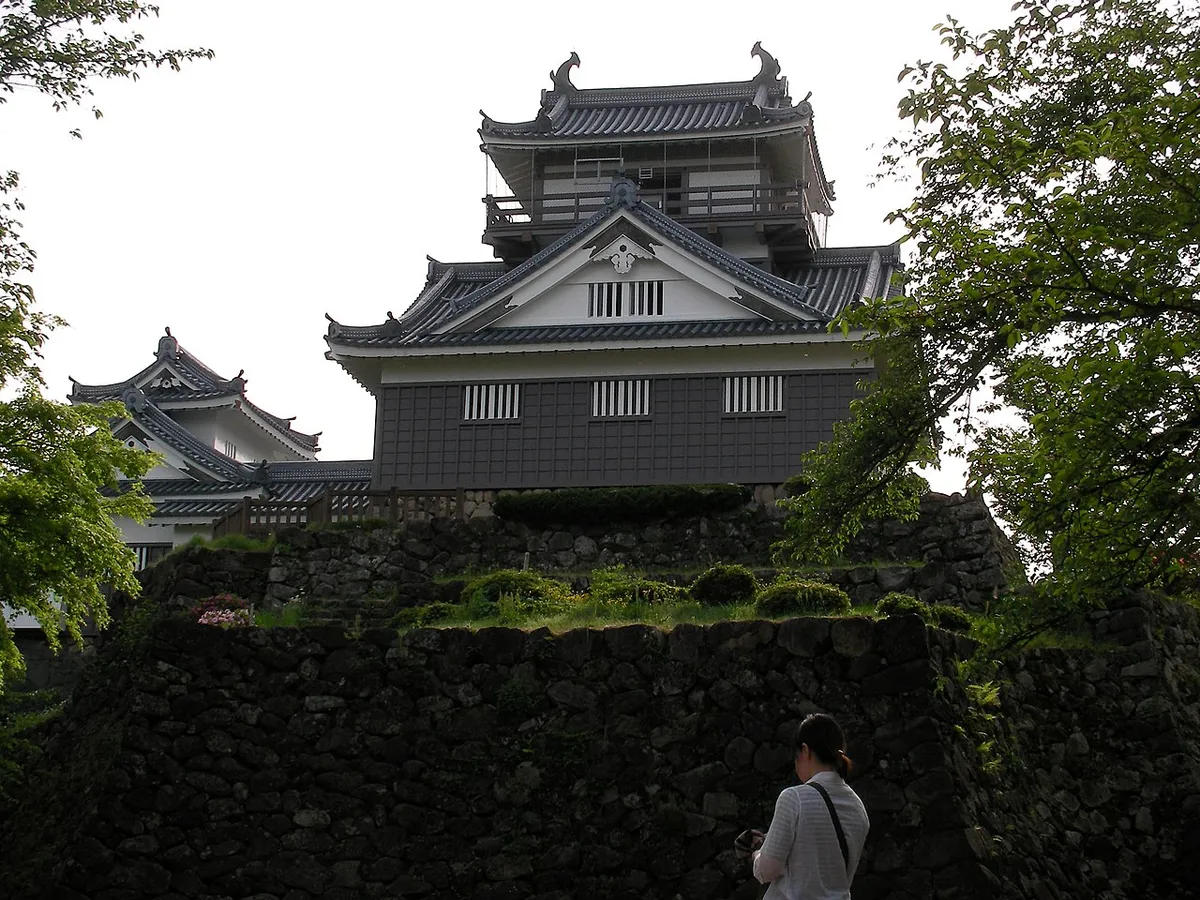
Echizen Ono's tower is a 1968 concrete reconstruction — not a faithful historical document, but a castle tower that has been inhabited by the mountain landscape for nearly 60 years. The tower's scale is small and well-proportioned for the hill, and the interior displays quality local history material. The reconstruction is sometimes dismissed by purists, but in the context of the cloud sea views and the intact castle town, it earns its place.

Structure Details

Visitor tip

For the famous cloud sea view, you need to be at the Inagadake viewpoint (a 10-minute drive from the city) before dawn on an autumn morning (October–November) after a clear, cold night. The castle itself can be visited afterward when it opens at 9am. The cloud sea and the standing castle tower together create one of the most memorable images in Japanese castle photography — but it requires timing and weather conditions.

Castle type

Hill castle

Hill-top flatland castle — built on a 249-meter isolated hill (Kameyama) rising abruptly from the flat Ono basin floor

Layout type

Linked compound layout

Compound style — main compound at the summit with secondary compounds on the descending hillside

Main tower

Concrete reconstruction (1968) — three-story exterior, two-story interior. Historical research basis limited; architectural approximation rather than faithful reconstruction. Interior used as a history museum.

12m3 floors, 1 below

Stone walls

Natural stone stacking

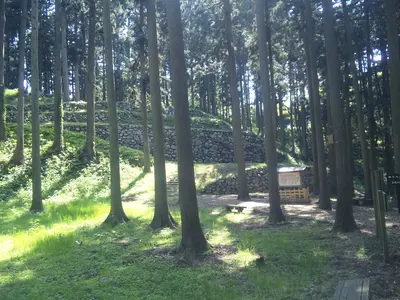
Original stone walls survive on the ascending approach paths and around the summit compound, forming an attractive circuit. The walls are in good condition, constructed from local stone in the nozurazumi (natural fitting) style typical of Hokuriku castles. The combination of stone walls and the reconstructed tower creates a coherent visual composition on the hill.

Key defensive features

Isolated Hill Position

Kameyama rises sharply from the flat Ono basin floor — an isolated hill with steep slopes on all sides. This natural moat-equivalent made the castle site naturally defensible without requiring constructed moats.

Stone Wall Circuit

The stone walls encircling the summit compound and reinforcing the approach paths prevented direct assault on the castle hill's upper sections.

Basin Command Position

The isolated hill commands the entire Ono basin floor, allowing defenders to observe any approaching force from considerable distance. The basin is surrounded by mountains on all sides — the only approaches are through the mountain valleys, visible from the summit.

The Story of Echizen Ono Castle

Originally built 1576 / Kanamori Nagachika
Current form 1638 / Matsudaira Naomasa
    1576

    Kanamori Nagachika, under orders from Oda Nobunaga, begins construction of Echizen Ono Castle on the isolated hill of Kameyama. The three-year construction project creates the stone walls and compound system.

    1580

    Construction of the castle complex is largely complete. Kanamori Nagachika begins building the castle town at the foot of Kameyama, laying out the grid street pattern that survives largely intact today.

    1601

    The Ono domain passes to the Toda clan under Tokugawa reorganization of domains after the Battle of Sekigahara. The Toda clan rules the domain until 1624.

    1624

    The Matsudaira clan (a Tokugawa branch family) takes control of the Ono domain. Matsudaira Naomasa undertakes further construction and repairs, establishing the castle in its final Edo period form.

    1871

    Domain abolition in the Meiji period ends the castle's operational function. The buildings gradually deteriorate and are demolished over subsequent decades.

    1968

    The city of Ono constructs a concrete replica of the castle tower on the original site as a civic symbol and tourist attraction. While not a faithful historical reconstruction, it restores a visual landmark to the hill.

Did You Know?

  • The 'cloud sea' (unkai) phenomenon that makes Echizen Ono Castle famous occurs when cold air settles in the Ono basin overnight and creates dense low cloud that fills the valley while the hilltop remains clear. The optimal conditions are clear autumn nights (October–November) when temperature inversions are strongest. Local forecasting services provide cloud sea predictions — the 'Ono Castle Cloud Sea Forecast' is broadcast locally.
  • Ono city's morning market (Asaichi) has operated for over 400 years — since the Edo period when the castle town was first established. The market runs every morning except Tuesday and New Year, selling local mountain vegetables, pickles, and produce from the surrounding Fukui mountains. It remains a working market used by local residents, not a tourist attraction, which gives it genuine atmosphere.
  • Kanamori Nagachika, who built Echizen Ono Castle, is one of the more interesting minor figures of the Oda period — he served Nobunaga faithfully, built Ono Castle and town with care, and later received a domain in Hida (Gifu) where he built Takayama Castle and town. The well-preserved Takayama old town (a major tourist destination today) is partially his legacy — he laid out the street grid that survives there.

Score Breakdown

Tourism Score

D 52/100
  • Accessibility 8 /20
  • Foreign-Friendly 7 /20
  • Historical Value 11 /20
  • Visual Impact 16 /20
  • Facilities 10 /20

Defense Score

B 78/100
  • Terrain Advantage 15 /20
  • Entrance Defense 14 /20
  • Internal Complexity 16 /20
  • Siege Endurance 16 /20
  • Strategic Oversight 17 /20

Planning Your Visit

Best Time to Visit

October–November for cloud sea (dawn visits essential). Spring cherry blossoms are also beautiful. Closed December–March (winter).

Time Needed

2–3 hours (castle + castle town walk + morning market)

Insider Tip

For the cloud sea, check the Ono Castle Cloud Sea Forecast (available in Japanese online) the evening before — conditions require clear skies and temperature inversion forecasts. Set an alarm for 5:30am, drive to the Inagadake viewpoint, and wait. When the basin fills with cloud and the castle tower appears above it, the sight justifies everything. Then go back to town for the morning market (starts around 7am) and buy mountain vegetables from local farmers who have been selling there for generations.

Map

Getting There

Nearest station: Etsumi-Hoku Line Ono Station (Echizen Railway) / JR Etsumi-Hoku Line Kuzuryuko Station
Walk from station: 20 min walk
Parking: Free parking at the castle base approach.

Admission

Adult¥400
ChildFree

Admission increased to ¥400. Children (junior high and under) free.

Opening Hours

Open09:00 – 17:00
Last entry16:30

Apr–Sep: 9:00–17:00. Oct–Nov: 9:00–16:00. Closed December through March (winter closure).

Facilities

  • – English guides
  • – Audio guide
  • – Wheelchair access
  • ✓ Restrooms
  • ✓ Gift shop
  • ✓ Food nearby

Nearby Castles

Featured in collections

FAQ

Frequently Asked Questions

How do I get to Echizen Ono Castle?

The nearest station is Etsumi-Hoku Line Ono Station (Echizen Railway) / JR Etsumi-Hoku Line Kuzuryuko Station. From there it is about 20 minutes on foot.

How much does Echizen Ono Castle cost to enter?

Adult admission is ¥400 and child admission is ¥0.

Is Echizen Ono Castle worth visiting?

Echizen Ono Castle offers two completely different experiences depending on timing. Visit in autumn before dawn for the cloud sea phenomenon — the image of the tower floating above white mist is genuinely breathtaking and worth the early wake-up. Visit during the day for the castle town experience — Ono has one of the most intact Edo-period castle town street grids in Japan, a working morning market with 400 years of history, and the mountain basin landscape. The ¥300 admission is honest value. The concrete tower is forgiven when the cloud sea is doing its work.

What are the opening hours of Echizen Ono Castle?

09:00 to 17:00, last entry 16:30.

How long should I spend at Echizen Ono Castle?

Plan for about 2–3 hours (castle + castle town walk + morning market), depending on how closely you want to explore the grounds.