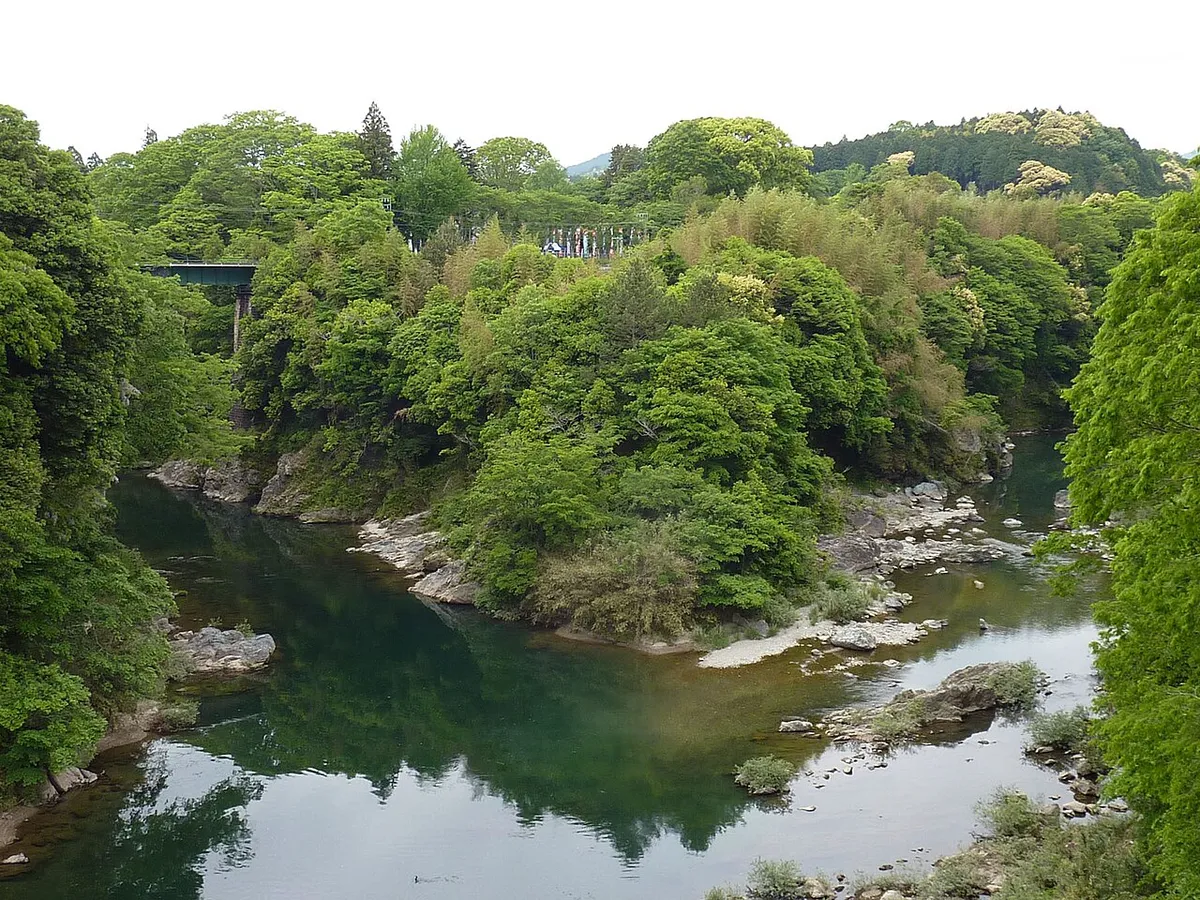
Nagashino Castle

長篠城·Nagashino-jo

D Tourism Score 40/100
D Defense Score 59/100

Modest earthwork ruins at the site of the most historically significant battle of the Sengoku period — the castle where 500 men held out against 15,000 and changed Japanese warfare.

#46 — 100 Famous Castles Ruins
Nagashino Castle (長篠城)
Photo:First version: Aboshi at Japanese Wikipedia Second version: Mocchy at Japanese Wikipedia/Wikimedia Commons/CC BY-SA 3.0

Quick Facts

Quick Facts

Admission
Free Free
Hours
00:00 – 23:59
Nearest Station
Nagashino-jo Station (JR Iida Line)
Walk from Station
5 min walk
Time Needed
1 hour (ruins + museum) + 1 hour (Shitaragahara battlefield) = half day

The ruins site (Nagashino-jo Ato) is freely accessible. The adjacent Nagashino Castle Museum charges ¥220 for adults, ¥110 for children — highly recommended for understanding the battle context.

Defense Overview

Defense Overview

Why Nagashino Castle was hard to attack

This castle is hard to attack because attackers have to work across water barriers before pressing inward instead of getting a direct run at the core.

An attacker would not simply arrive at the center on open flat ground. They would have to cross water barriers or moat lines and push through successive outer areas before the core.

Overall score

59/100

Estimated range

53–65

Confidence

B

Usable estimate with some inference

This is a site-original comparison score for learning and comparison, not a reconstruction of one historical battle.

Radar view

Terrain 10/20 Entrance 10/20 Internal 16/20 Siege 13/20 Oversight 10/20
How this estimate was built+

This estimate combines broad terrain, approach, layout, and route-control signals. It is meant to explain the castle's defensive logic in plain English, not reconstruct a single historical attack.

Terrain Advantage

How much the terrain itself seems to help: height, slope, ridges, cliffs, water edges, and limited approach directions.

10/20

Entrance Defense

How awkward and dangerous the first entry looks: gates, bridge or moat crossings, chokepoints, and forced turns.

10/20

Internal Complexity

How hard it seems to keep pushing after entry: layered baileys, depth, compartmentalization, and repeated defensive lines.

16/20

Siege Endurance

A rough sense of long-hold potential: moats, water access, space, storage plausibility, and defensive staying power.

13/20

Strategic Oversight

How much the castle appears to command nearby roads, plains, rivers, basins, harbors, or town approaches.

10/20

Why Visit

Nagashino Castle ruins are not visually impressive — the earthworks are modest and there are no stone walls or buildings. What makes the site powerful is its history: the confluence of rivers that enabled a tiny garrison's extraordinary resistance, the story of Torii Suneemon's self-sacrifice, and the knowledge that 3km away, the Takeda cavalry that had dominated Japan for decades was destroyed by firearms. For Sengoku history enthusiasts, this combination is deeply compelling. Combine the castle ruins with the battlefield site at Shitaragahara for the complete experience.

Highlights

1

The Battle That Changed Japanese Warfare Forever

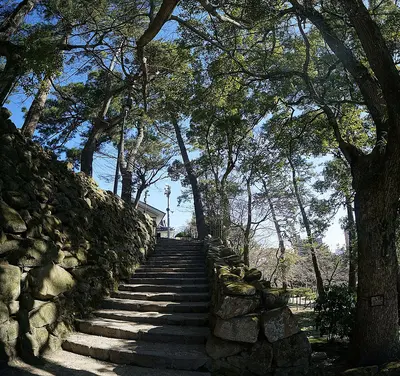
The Battle of Nagashino (1575) is one of the most significant military engagements in Japanese history. Oda Nobunaga deployed 3,000 arquebusiers in rotating volley fire behind wooden palisades, systematically destroying the charging cavalry of the Takeda clan — widely regarded as the finest cavalry force in Japan. The battle demonstrated that disciplined firearms tactics could defeat the samurai cavalry tradition, effectively marking the beginning of the end of the cavalry era in Japanese warfare.
2

The Garrison That Held for Two Weeks

Before the main battle, the tiny Nagashino Castle garrison of just 500 men, under Okudaira Sadamasa, held out against an overwhelming Takeda besieging force for over two weeks. A brave messenger named Torii Suneemon attempted to slip through enemy lines to summon Nobunaga's relief force — he was captured by the Takeda, crucified in sight of the castle, but managed to shout the message that help was coming to the defenders before he died. His self-sacrifice is one of Sengoku history's most celebrated acts of loyalty.

3

River Confluence Fortress Ruins

Nagashino Castle stands at the confluence of the Ure and Takigawa rivers — a naturally strong defensive position that allowed a small garrison to hold against a much larger force. The earthwork ruins of the castle survive in clear condition, and walking the site beside the river confluence gives a powerful sense of why 500 men could resist 15,000 Takeda warriors long enough for relief to arrive.

Structure Details

Visitor tip

Nagashino Castle ruins are a modest earthwork site — the experience is primarily about historical imagination and the dramatic river confluence setting, not visible stone walls. The adjacent museum is essential for understanding the battle context. Combine with a drive to the main battle site at Shitaragahara (3km away) where the main 1575 engagement took place — the battlefield memorial and museum there complete the picture.

Castle type

Flatland castle

Flatland castle — built on a peninsular spit of land at the confluence of the Ure and Takigawa rivers, with water on three sides creating a naturally fortified position

Layout type

Linked compound layout

Compound style — main compound on the river peninsula with subsidiary compounds on the landward side

Main tower

Earthwork ruins only — the castle was demolished following the Sengoku period. The earthwork outlines of the compounds and the stone foundation of the main tower survive, set on the dramatic river confluence peninsula.

Stone walls

Earthen walls

The castle's primary defenses relied on the natural river barriers and earthen banks rather than elaborate stone walls. The earthwork outlines of the compounds remain visible, with the stone foundation of the main tower surviving at the river confluence tip.

Moats

The Ure and Takigawa rivers formed the primary defensive moats on three sides of the castle peninsula. Artificial earthwork defenses completed the encirclement on the landward side.

Key defensive features

Three-Sided River Defense

The castle's position on a river confluence peninsula meant attackers could approach from only one direction — the landward side. Three sides were protected by fast-flowing rivers, making the small garrison's extraordinary resistance against vastly superior Takeda forces not merely brave but tactically rational.

Earthwork Palisade System

The landward defenses consisted of earthen banks topped with wooden palisades — simple but effective for buying time against a larger force. The Takeda army's difficulty in breaching even these modest defenses in two weeks of siege demonstrates the power of the river position.

The Story of Nagashino Castle

Originally built 1508 / Suganumamorimasa
Current form 1508 / Suganuma clan
    1508

    The Suganuma clan constructs Nagashino Castle at the river confluence, establishing a fortified base in the Ure River valley. The position's natural defensive strength is immediately apparent.

    1564

    Okudaira Sadamasa becomes lord of Nagashino Castle. He navigates the dangerous political landscape between the Takeda and Tokugawa clans — eventually committing to Tokugawa loyalty despite pressure from both sides.

    1575

    The Takeda army under Katsuyori besieges Nagashino Castle with 15,000 men. Okudaira's 500 defenders hold out for over two weeks. Messenger Torii Suneemon is captured and crucified but successfully signals the garrison before dying. Nobunaga's relief army arrives and destroys the Takeda cavalry at the Battle of Nagashino — a turning point in Japanese military history.

    1600

    After the Battle of Sekigahara, the castle is reorganized under Tokugawa domain administration. It continues as a minor administrative post but never regains the historical prominence of 1575.

    1700

    Nagashino Castle is abandoned and demolished as domain reorganization makes it redundant. The earthwork outlines survive.

In Pop Culture

Film

Kagemusha

Akira Kurosawa's 1980 masterpiece depicts the fall of the Takeda clan, culminating in scenes depicting the Battle of Nagashino — one of cinema's most famous battle sequences, showing the Takeda cavalry being destroyed by Nobunaga's gun lines.

TV

Doujidai (NHK Taiga, 2023)

The 2023 NHK Taiga Drama featuring Tokugawa Ieyasu included the Battle of Nagashino as a pivotal episode.

Did You Know?

  • Torii Suneemon, the messenger who was captured and crucified by the Takeda army but shouted encouragement to the besieged garrison before dying, is celebrated as one of Sengoku Japan's great heroic figures. A statue of him stands near the castle ruins.
  • The Battle of Nagashino is often described as Japan's first major demonstration of disciplined volley fire — Nobunaga reportedly organized his arquebusiers in three rotating ranks, each firing while the others reloaded, maintaining continuous fire against the charging cavalry. Whether this tactical innovation was actually used as described remains debated by historians.
  • The Takeda cavalry, which charged at Nagashino, had been considered the finest military force in Japan for decades — Takeda Shingen (Katsuyori's father) had built his reputation on their effectiveness. The destruction of this force at Nagashino effectively ended the Takeda clan as a major power within three years.

Score Breakdown

Tourism Score

D 40/100
  • Accessibility 8 /20
  • Foreign-Friendly 6 /20
  • Historical Value 17 /20
  • Visual Impact 5 /20
  • Facilities 4 /20

Defense Score

D 59/100
  • Terrain Advantage 10 /20
  • Entrance Defense 10 /20
  • Internal Complexity 16 /20
  • Siege Endurance 13 /20
  • Strategic Oversight 10 /20

Planning Your Visit

Best Time to Visit

Year-round (outdoors, no facilities to close). Spring and autumn for comfortable weather. May for the annual Nagashino Shitaragahara Battle Festival with mounted cavalry reenactments.

Time Needed

1 hour (ruins + museum) + 1 hour (Shitaragahara battlefield) = half day

Insider Tip

The castle ruins are secondary to the experience of the full Nagashino battlefield complex. Drive from the castle to Shitaragahara (10 minutes by car) — the battlefield memorial, the site of Nobunaga's gun line palisade, and the battle museum together complete a compelling picture of the 1575 events. The annual battle festival (late May) features cavalry reenactments on the actual battlefield.

Map

Getting There

Nearest station: Nagashino-jo Station (JR Iida Line)
Walk from station: 5 min walk
Parking: Free parking at the ruins site.
Accessible with a JR Pass

Admission

Free

The ruins site (Nagashino-jo Ato) is freely accessible. The adjacent Nagashino Castle Museum charges ¥220 for adults, ¥110 for children — highly recommended for understanding the battle context.

Opening Hours

Open00:00 – 23:59

The ruins are freely accessible at all times. The Nagashino Castle Museum is open 9:00–17:00, closed Mondays and December 28–January 4.

Facilities

  • – English guides
  • – Audio guide
  • ✓ Wheelchair access
  • ✓ Restrooms
  • – Gift shop
  • – Food nearby

Nearby Castles

Featured in collections

FAQ

Frequently Asked Questions

How do I get to Nagashino Castle?

The nearest station is Nagashino-jo Station (JR Iida Line). From there it is about 5 minutes on foot.

How much does Nagashino Castle cost to enter?

Nagashino Castle is free to enter.

Is Nagashino Castle worth visiting?

Nagashino Castle ruins are not visually impressive — the earthworks are modest and there are no stone walls or buildings. What makes the site powerful is its history: the confluence of rivers that enabled a tiny garrison's extraordinary resistance, the story of Torii Suneemon's self-sacrifice, and the knowledge that 3km away, the Takeda cavalry that had dominated Japan for decades was destroyed by firearms. For Sengoku history enthusiasts, this combination is deeply compelling. Combine the castle ruins with the battlefield site at Shitaragahara for the complete experience.

What are the opening hours of Nagashino Castle?

00:00 to 23:59.

How long should I spend at Nagashino Castle?

Plan for about 1 hour (ruins + museum) + 1 hour (Shitaragahara battlefield) = half day, depending on how closely you want to explore the grounds.