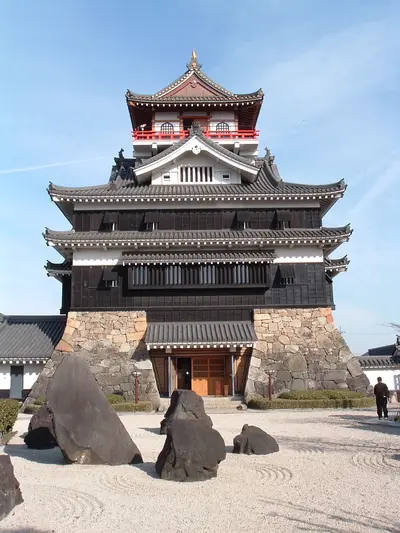
Okazaki Castle

岡崎城·Okazaki-jo

C Tourism Score 62/100
C Defense Score 60/100

The birthplace of Tokugawa Ieyasu — Japan's great unifier — makes this modest concrete reconstruction a pilgrimage site for anyone who loves Sengoku history.

#45 — 100 Famous Castles Reconstructed
Okazaki Castle (岡崎城)
Photo:z tanuki/Wikimedia Commons/CC BY 3.0

Quick Facts

Quick Facts

Admission
¥200

¥100

Hours
09:00 – 17:00

Last entry 16:30

Nearest Station
Okazaki-koen-mae Station (Meitetsu Nagoya Main Line) or Higashi-Okazaki Station (Meitetsu)
Walk from Station
5 min walk

Bus also available

Time Needed
1.5–2 hours (castle + park + Toshogu). Add 1 hour for Hatcho Miso factory tour.

Children (elementary school and under) ¥100. Okazaki Park (surrounding grounds) is free. The ¥200 fee is for the reconstructed tower museum.

Defense Overview

Defense Overview

Why Okazaki Castle was hard to attack

This castle is hard to attack because attackers have to work across water barriers before pressing inward instead of getting a direct run at the core.

An attacker would not simply arrive at the center on open flat ground. They would have to cross water barriers or moat lines and push through successive outer areas before the core.

Overall score

60/100

Estimated range

54–66

Confidence

A

Strong multi-source support

This is a site-original comparison score for learning and comparison, not a reconstruction of one historical battle.

Radar view

Terrain 10/20 Entrance 11/20 Internal 16/20 Siege 13/20 Oversight 10/20
How this estimate was built+

This estimate combines broad terrain, approach, layout, and route-control signals. It is meant to explain the castle's defensive logic in plain English, not reconstruct a single historical attack.

Terrain Advantage

How much the terrain itself seems to help: height, slope, ridges, cliffs, water edges, and limited approach directions.

10/20

Entrance Defense

How awkward and dangerous the first entry looks: gates, bridge or moat crossings, chokepoints, and forced turns.

11/20

Internal Complexity

How hard it seems to keep pushing after entry: layered baileys, depth, compartmentalization, and repeated defensive lines.

16/20

Siege Endurance

A rough sense of long-hold potential: moats, water access, space, storage plausibility, and defensive staying power.

13/20

Strategic Oversight

How much the castle appears to command nearby roads, plains, rivers, basins, harbors, or town approaches.

10/20

Why Visit

Okazaki Castle's concrete tower is uninspiring architecturally, but the historical significance of Tokugawa Ieyasu's birthplace elevates the entire experience. The museum inside covers Ieyasu's remarkable life story clearly and engagingly. Add the Toshogu shrine in the park grounds, the proximity to the Hatcho Miso factory, and the attractive castle park, and Okazaki makes for a genuinely rewarding half-day. History lovers treating this as a pilgrimage to where Japan's most consequential leader was born will find the visit deeply satisfying.

Highlights

1

Tokugawa Ieyasu's Birthplace

Okazaki Castle is where Tokugawa Ieyasu was born on January 31, 1543 — the man who would unify Japan under the Tokugawa shogunate and whose descendants would rule for 265 years. For Japanese visitors, this makes Okazaki a place of profound historical pilgrimage, on par with birthplaces of world-historical figures elsewhere. Standing in the castle park, you are in the exact place where the founder of the longest-lasting Japanese dynasty drew his first breath.
2

The Birthplace of Japanese Democracy — Miso and Fireworks

Okazaki is also famous throughout Japan as the origin of Hatcho Miso — a deeply fermented, intensely flavored soybean paste produced here since the 14th century and closely associated with the warrior culture of the region. The city also claims Japan's first major fireworks display, attributed to Tokugawa Ieyasu himself celebrating the birth of his first son. Hatcho Miso factory tours and the national fireworks competition (held annually on the first Saturday of August) draw visitors who have no interest in the castle at all.

3

The Ieyasu Grand Procession

Every year in April, Okazaki hosts the 'Ieyasu-ko Goudou-Gyouretsu' — a massive historical parade recreating Tokugawa Ieyasu's life with hundreds of participants in full period armor and costume. The event fills the city center and castle park with elaborately dressed participants, making Okazaki one of the best places in Japan to experience large-scale Sengoku-period costume pageantry.

Structure Details

Visitor tip

Okazaki Castle is a pleasant and easy stop — the park is attractive, the tower is compact, and the Tokugawa Ieyasu connection gives every exhibit historical weight. The museum inside covers Ieyasu's early life at Okazaki in engaging detail. Allow extra time if you want to walk the full park and explore the Toshogu shrine (dedicated to Ieyasu) within the castle grounds.

Castle type

Flatland castle

Flatland castle — built on a low natural rise at the confluence of the Oto and Otogawa rivers, with river water forming part of the natural defense

Layout type

Linked compound layout

Compound style — main tower compound with surrounding secondary compounds, rivers and moats completing the defensive perimeter

Main tower

Concrete reconstruction (1959) — the original castle and main tower were demolished by the Meiji government in 1873. The current three-story concrete tower was reconstructed in 1959 and contains a castle history museum with particular focus on Tokugawa Ieyasu.

25m3 floors, 1 below

Stone walls

Natural stone stacking

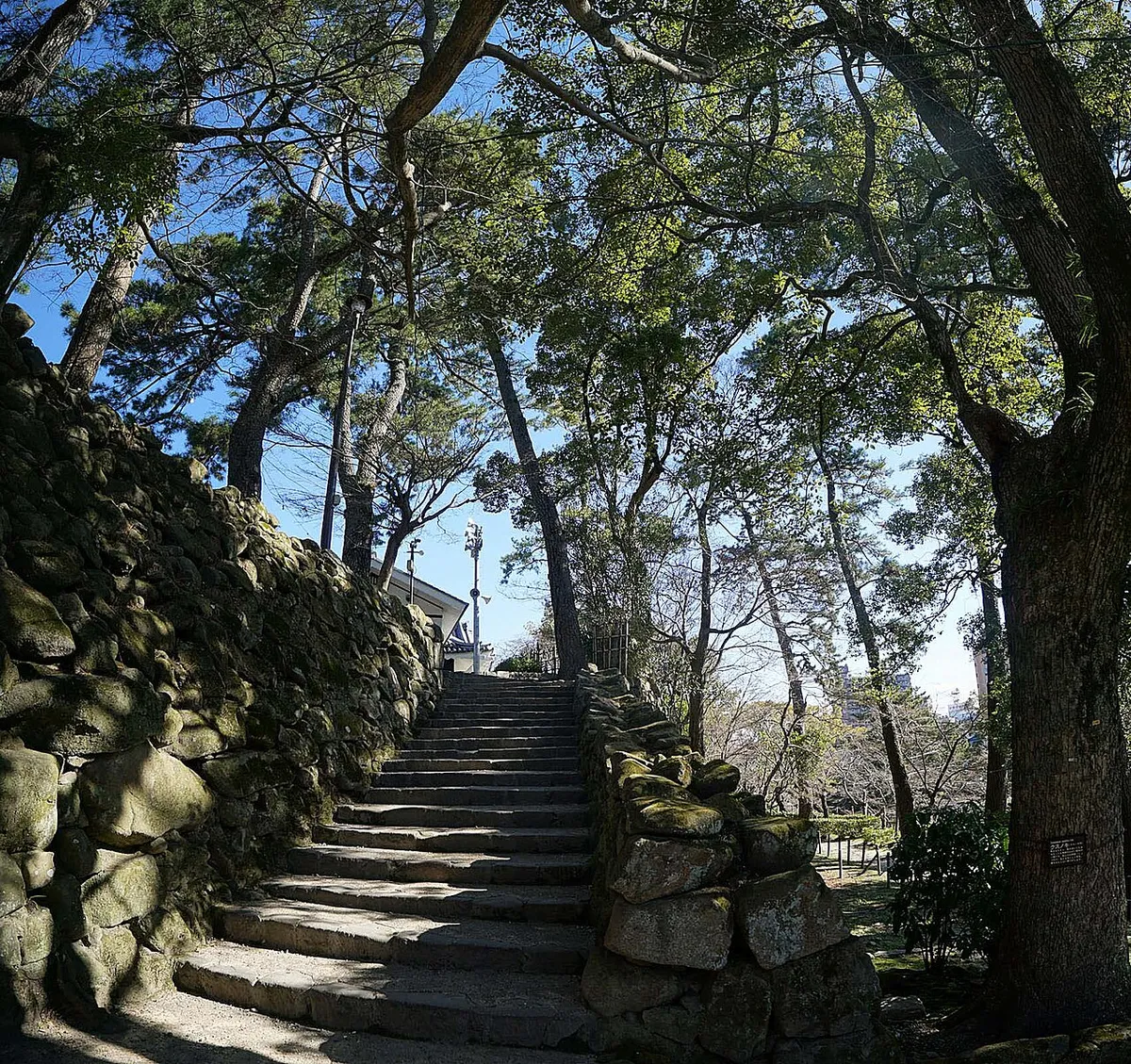
Stone walls survive around the main compound area, providing an authentic setting for the reconstructed tower. The stone walls and the moat system give Okazaki Park its historical atmosphere, even though the tower itself is a 1959 concrete reconstruction.

Moats

The castle's moat system was augmented by the natural course of the Oto and Otogawa rivers. The inner moat survives and the river confluence remains visible, giving the site its historic defensive character.

Key defensive features

River Confluence Position

The castle's position at the confluence of two rivers provided natural defensive water barriers on multiple sides — attackers approaching from the river side faced a water crossing before reaching the walls.

Surviving Stone Walls and Moat

The stone walls around the main compound and the inner moat survive from the original construction, providing genuine historical fabric around the concrete tower reconstruction.

The Story of Okazaki Castle

Originally built 1455 / Saigo Tsuratatsu
Current form 1542 / Matsudaira Hirotada (Ieyasu's father)
    1455

    Saigo Tsuratatsu builds the first fortification on the site. The Matsudaira clan — ancestors of the Tokugawa — later acquires and expands the castle as their clan headquarters.

    1543

    Tokugawa Ieyasu is born at Okazaki Castle on January 31, the son of Matsudaira Hirotada. The infant Ieyasu is subsequently sent as a hostage first to the Oda clan, then to the Imagawa — a common practice for small-domain lords seeking protection from larger neighbors.

    1560

    After the Battle of Okehazama — where Oda Nobunaga destroys the Imagawa clan in a surprise attack — Ieyasu (then 17) seizes the opportunity to return to Okazaki Castle and assert independence. This is the effective beginning of his rise to power.

    1570

    Ieyasu moves his base from Okazaki to Hamamatsu, but Okazaki remains a key secondary castle under his son Nobuyasu. Nobuyasu is later ordered to commit suicide by his father on suspicion of disloyalty — one of the most painful episodes of Ieyasu's life.

    1873

    The Meiji government demolishes Okazaki Castle as part of national military modernization. The entire castle complex including the main tower is removed.

    1959

    Okazaki City constructs a concrete reconstruction of the main tower as a civic landmark. The museum inside focuses on Tokugawa Ieyasu's life and legacy.

In Pop Culture

TV

Dobutsu no Okazaki Castle (Various NHK Tokugawa dramas)

Okazaki Castle appears in virtually every NHK historical drama covering Tokugawa Ieyasu's early life — the scenes of his birth and return from hostage captivity are among the most revisited episodes in Japanese historical drama.

TV

Doujidai (NHK Taiga Drama, 2023 — Dobutsu no Omazaki)

The 2023 NHK Taiga Drama 'Doujidai' featuring Tokugawa Ieyasu prominently featured Okazaki Castle during episodes covering his early life and return from Imagawa captivity.

Did You Know?

  • The young Tokugawa Ieyasu spent most of his childhood as a hostage — first with the Oda clan, then with the Imagawa. He did not live at Okazaki Castle himself until his late teens, meaning the castle is more significant as a birthplace than a childhood home.
  • Okazaki is also famous for Hatcho Miso — a deeply fermented soybean paste produced here for over 600 years. The Hatcho Miso factory (Kakukyu) near the castle offers tours showing the enormous cedar barrels (up to 6 tons of miso each) pressed under heavy stone weights. The miso's intense, earthy flavor is distinctly different from lighter varieties.
  • The annual Okazaki fireworks competition (August) is one of Japan's premier fireworks events, drawing over 400,000 spectators. The tradition allegedly dates to Tokugawa Ieyasu himself, who celebrated the birth of his first son Nobuyasu with fireworks launched from the castle grounds.

Score Breakdown

Tourism Score

C 62/100
  • Accessibility 16 /20
  • Foreign-Friendly 11 /20
  • Historical Value 18 /20
  • Visual Impact 10 /20
  • Facilities 7 /20

Defense Score

C 60/100
  • Terrain Advantage 10 /20
  • Entrance Defense 11 /20
  • Internal Complexity 16 /20
  • Siege Endurance 13 /20
  • Strategic Oversight 10 /20

Planning Your Visit

Best Time to Visit

Spring (cherry blossoms in Okazaki Park are spectacular — among Aichi's best). The Ieyasu Gyouretsu parade in April is unmissable for history enthusiasts.

Time Needed

1.5–2 hours (castle + park + Toshogu). Add 1 hour for Hatcho Miso factory tour.

Insider Tip

Don't leave without visiting the Toshogu shrine within the castle park grounds — it is dedicated to Tokugawa Ieyasu and provides a more intimate historical atmosphere than the concrete tower. Then walk or taxi to the Hatcho Miso factory (Kakukyu), 15 minutes from the castle — the free factory tour showing the enormous fermentation barrels under stone weights is one of the most distinctive food experiences in Aichi Prefecture.

Map

Getting There

Nearest station: Okazaki-koen-mae Station (Meitetsu Nagoya Main Line) or Higashi-Okazaki Station (Meitetsu)
Walk from station: 5 min walk
Bus: Bus from JR Okazaki Station to the castle. Meitetsu Okazaki-koen-mae Station is directly adjacent.
Parking: Paid parking in Okazaki Park. The castle is very accessible by both train and car.

Admission

Adult¥200
Child¥100

Children (elementary school and under) ¥100. Okazaki Park (surrounding grounds) is free. The ¥200 fee is for the reconstructed tower museum.

Opening Hours

Open09:00 – 17:00
Last entry16:30

Closed December 29–31. Open all other days year-round.

Facilities

  • – English guides
  • – Audio guide
  • – Wheelchair access
  • ✓ Restrooms
  • ✓ Gift shop
  • ✓ Food nearby

Nearby Castles

Featured in collections

FAQ

Frequently Asked Questions

How do I get to Okazaki Castle?

The nearest station is Okazaki-koen-mae Station (Meitetsu Nagoya Main Line) or Higashi-Okazaki Station (Meitetsu). From there it is about 5 minutes on foot. Bus from JR Okazaki Station to the castle. Meitetsu Okazaki-koen-mae Station is directly adjacent.

How much does Okazaki Castle cost to enter?

Adult admission is ¥200 and child admission is ¥100.

Is Okazaki Castle worth visiting?

Okazaki Castle's concrete tower is uninspiring architecturally, but the historical significance of Tokugawa Ieyasu's birthplace elevates the entire experience. The museum inside covers Ieyasu's remarkable life story clearly and engagingly. Add the Toshogu shrine in the park grounds, the proximity to the Hatcho Miso factory, and the attractive castle park, and Okazaki makes for a genuinely rewarding half-day. History lovers treating this as a pilgrimage to where Japan's most consequential leader was born will find the visit deeply satisfying.

What are the opening hours of Okazaki Castle?

09:00 to 17:00, last entry 16:30.

How long should I spend at Okazaki Castle?

Plan for about 1.5–2 hours (castle + park + Toshogu). Add 1 hour for Hatcho Miso factory tour., depending on how closely you want to explore the grounds.