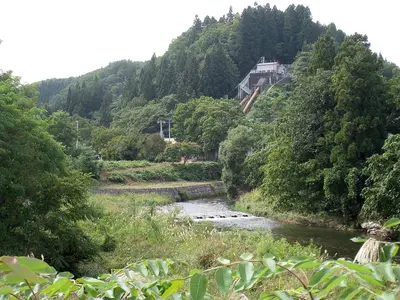
Sakura Castle

佐倉城·Sakura-jo

D Tourism Score 48/100
B Defense Score 75/100

The castle that hosts Japan's largest history museum — walk ancient earthwork moats, then explore 10,000 years of Japanese history without leaving the castle grounds.

#121 — Continued 100 Castles Ruins
Sakura Castle (佐倉城)
Photo:EXECUTOR/Wikimedia Commons/Public domain

Quick Facts

Quick Facts

Admission
Free Free
Hours
00:00 – 23:59
Nearest Station
Sakura Station (JR Sobu-Chuo Line / Narita Line — 35 minutes from Tokyo Station)
Walk from Station
20 min walk

Bus also available

Time Needed
2–3 hours (ruins + Rekihaku museum)

Castle ruins (Samurai-no-Mori park) are free. The National Museum of Japanese History (Rekihaku) on the castle grounds charges ¥600 for adults, ¥250 for university students.

Defense Overview

Defense Overview

Why Sakura Castle was hard to attack

This castle is hard to attack because it combines a raised core with defended outer space with a controlled route inward.

An attacker would not get a simple direct approach to the center. They would have to cross water barriers or moat lines and face more defensive depth after the first line.

Overall score

75/100

Estimated range

69–81

Confidence

B

Usable estimate with some inference

This is a site-original comparison score for learning and comparison, not a reconstruction of one historical battle.

Radar view

Terrain 15/20 Entrance 14/20 Internal 17/20 Siege 15/20 Oversight 14/20
How this estimate was built+

This estimate combines broad terrain, approach, layout, and route-control signals. It is meant to explain the castle's defensive logic in plain English, not reconstruct a single historical attack.

Terrain Advantage

How much the terrain itself seems to help: height, slope, ridges, cliffs, water edges, and limited approach directions.

15/20

Entrance Defense

How awkward and dangerous the first entry looks: gates, bridge or moat crossings, chokepoints, and forced turns.

14/20

Internal Complexity

How hard it seems to keep pushing after entry: layered baileys, depth, compartmentalization, and repeated defensive lines.

17/20

Siege Endurance

A rough sense of long-hold potential: moats, water access, space, storage plausibility, and defensive staying power.

15/20

Strategic Oversight

How much the castle appears to command nearby roads, plains, rivers, basins, harbors, or town approaches.

14/20

Why Visit

Sakura Castle is the most educationally productive castle visit in the Kanto region. The karabori earthworks are impressive; the Rekihaku museum is outstanding. Only 35 minutes from Tokyo by JR.

Highlights

1

The National Museum of Japanese History — Japan's Largest History Museum on Castle Grounds

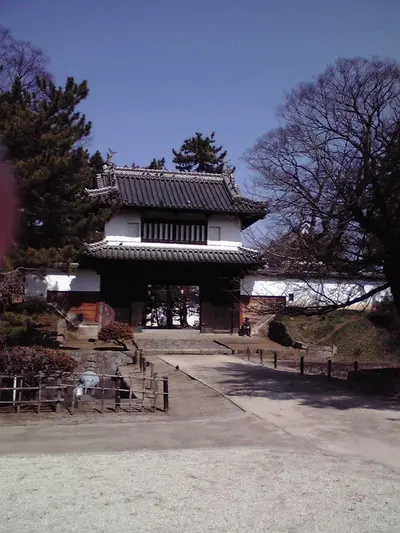
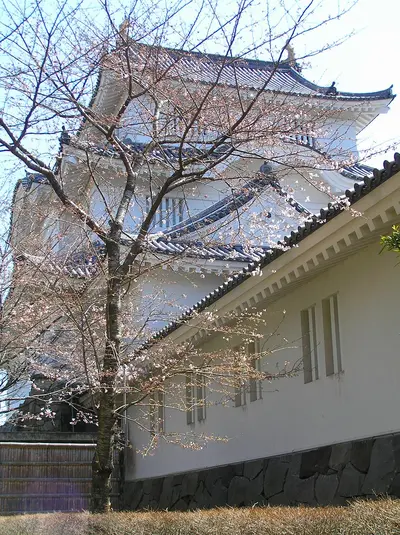
Sakura Castle is home to the National Museum of Japanese History (Kokuritsu Rekishi Minzoku Hakubutsukan, known as 'Rekihaku') — Japan's largest museum dedicated to Japanese history and folklore, with six permanent galleries covering prehistoric Jomon culture through modern times. You can walk the castle earthworks and then explore 10,000 years of Japanese history in the museum.
2

The Hotta Clan's Domain — Edo-Period Administration Center

Sakura Castle was the primary domain seat of the Hotta clan throughout much of the Edo period. The castle town of Sakura served as an administrative center for the Edo shogunate's control of the Kanto region.

3

Earthwork Ruins With Surviving Karabori Moats

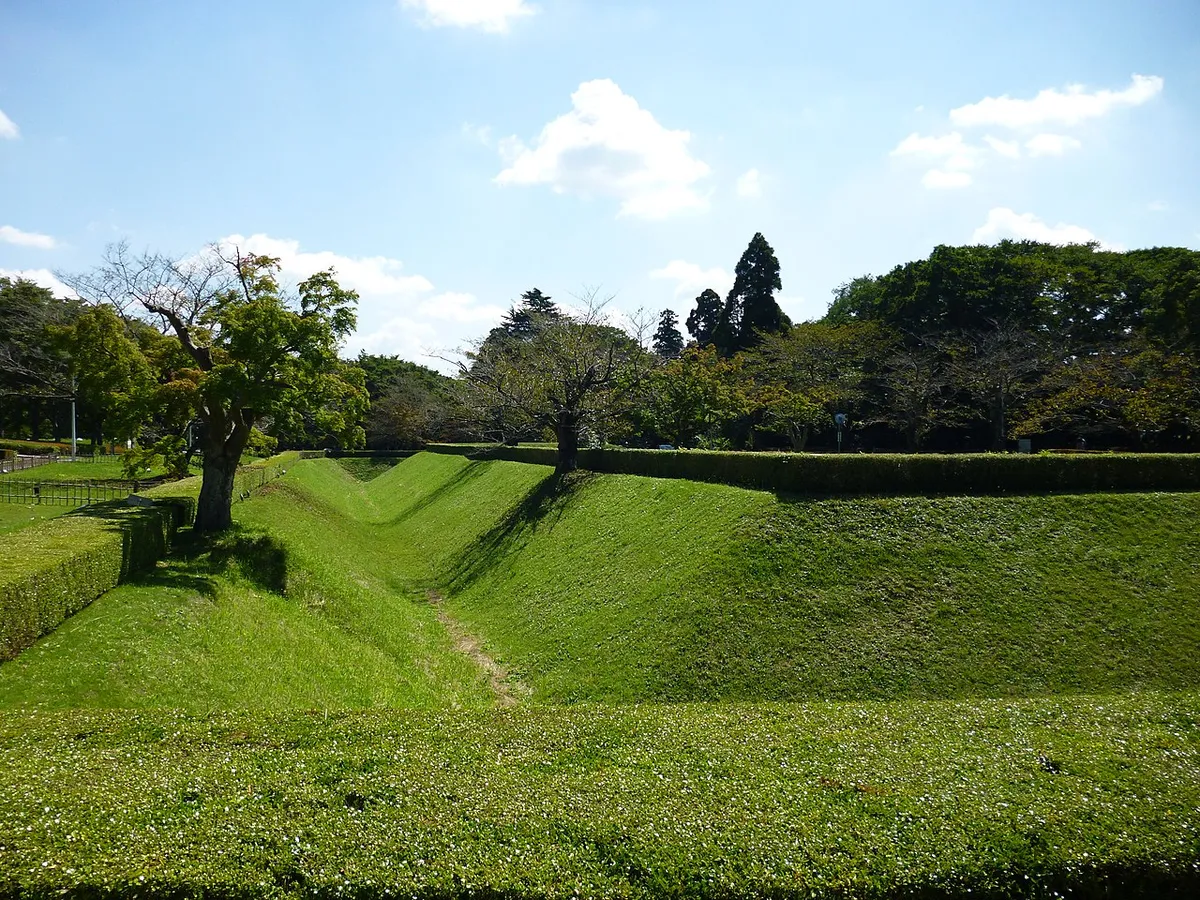
The castle ruins feature exceptionally well-preserved dry moat (karabori) earthworks — deep ditches cut into the Shimosa Plateau that formed the castle's primary defense. The earthwork topography is one of the clearest surviving examples of Kanto-region flatland castle construction.

Structure Details

Visitor tip

Enter the castle from the southern approach to experience the karabori dry moats — these are the most impressive remaining features. The deep forested ravines give a real sense of the defensive obstacle they created. After exploring the ruins, visit Rekihaku for one of Japan's best history museum experiences.

Castle type

Hill castle

Hill-top flatland castle (built on the Shimosa Plateau above the Inba marshlands, using the plateau edge and deep ravines as natural defenses)

Layout type

Linked compound layout

Compound style — multiple compounds arranged across the Shimosa Plateau, defended by deep dry moats on all sides

Main tower

No tenshu survives — Sakura Castle reportedly never had a main keep tower. The castle's strength lay in its earthwork layout.

Stone walls

Earthen walls

Sakura Castle's defenses were earthworks rather than stone walls — deep karabori (dry moats) cut into the plateau, with earthen banks (dorui) rising from the moat bottoms.

Moats

Deep dry moats (karabori) carved into the Shimosa Plateau on all sides of the castle. The moats are 10–15 meters deep in places and survive as forested ravines within the park.

Key defensive features

Shimosa Plateau Position

The castle occupied a plateau above the Inba marshlands — the swampy lowlands to the north were impassable for armies, limiting attack to the southern approach across the plateau.

Deep Karabori Dry Moats

Multiple deep dry moats cut across the plateau, creating formidable obstacles 10–15 meters deep.

Inba Marshland Natural Barrier

The Inba marshlands formed an impassable natural barrier to the north and east of the castle.

The Story of Sakura Castle

Originally built 1469 / Chiba Yoritane
Current form 1617 / Dodo Yukifusa
    1469

    The Chiba clan, powerful lords of Shimosa Province, construct Sakura Castle on the plateau above the Inba marshlands.

    1590

    Toyotomi Hideyoshi's Odawara campaign ends the Chiba clan's power. Tokugawa Ieyasu takes control of the Kanto region.

    1617

    Dodo Yukifusa becomes the first permanent Edo-period lord of Sakura Castle.

    1746

    The Hotta clan receives Sakura domain — the beginning of their long association with the castle through the Edo period.

    1873

    The castle is demolished under Meiji land reform. The army establishes a base on the castle grounds.

    1981

    The National Museum of Japanese History (Rekihaku) opens on the former castle grounds — one of Japan's most significant history museums.

Did You Know?

  • Sakura Castle reportedly never had a main tower (tenshu) — one of the few major Edo-period domain castles without a central keep. The castle's strength was its earthwork layout.
  • The National Museum of Japanese History (Rekihaku) on the castle grounds holds over 220,000 artifacts and is the national research center for Japanese historical studies.
  • The karabori (dry moats) at Sakura Castle are among the best-preserved dry moat systems in the Kanto region.
  • Hotta Masayoshi, who opposed Japan's opening to the West in the 1850s during the 'Ansei no Taigoku' purge, was one of Sakura Castle's most historically prominent lords.

Score Breakdown

Tourism Score

D 48/100
  • Accessibility 13 /20
  • Foreign-Friendly 9 /20
  • Historical Value 12 /20
  • Visual Impact 7 /20
  • Facilities 7 /20

Defense Score

B 75/100
  • Terrain Advantage 15 /20
  • Entrance Defense 14 /20
  • Internal Complexity 17 /20
  • Siege Endurance 15 /20
  • Strategic Oversight 14 /20

Planning Your Visit

Best Time to Visit

Year-round. The castle park has good cherry blossoms in spring. Avoid Mondays when the museum is closed.

Time Needed

2–3 hours (ruins + Rekihaku museum)

Insider Tip

Most visitors to Sakura come for Rekihaku and ignore the castle ruins — do both. Start with the karabori dry moats to understand the earthwork defense, then spend 1.5–2 hours in the museum.

Map

Getting There

Nearest station: Sakura Station (JR Sobu-Chuo Line / Narita Line — 35 minutes from Tokyo Station)
Walk from station: 20 min walk
Bus: Bus from Sakura Station to Kokubunji stop near the museum. Walking is manageable.
Parking: Free parking at the castle park area.
Accessible with a JR Pass

Admission

Free

Castle ruins (Samurai-no-Mori park) are free. The National Museum of Japanese History (Rekihaku) on the castle grounds charges ¥600 for adults, ¥250 for university students.

Opening Hours

Open00:00 – 23:59

Park open at all times. Rekihaku opens 09:30, closes 17:00; closed Mondays.

Facilities

  • – English guides
  • – Audio guide
  • ✓ Wheelchair access
  • ✓ Restrooms
  • ✓ Gift shop
  • ✓ Food nearby

Nearby Castles

Featured in collections

FAQ

Frequently Asked Questions

How do I get to Sakura Castle?

The nearest station is Sakura Station (JR Sobu-Chuo Line / Narita Line — 35 minutes from Tokyo Station). From there it is about 20 minutes on foot. Bus from Sakura Station to Kokubunji stop near the museum. Walking is manageable.

How much does Sakura Castle cost to enter?

Sakura Castle is free to enter.

Is Sakura Castle worth visiting?

Sakura Castle is the most educationally productive castle visit in the Kanto region. The karabori earthworks are impressive; the Rekihaku museum is outstanding. Only 35 minutes from Tokyo by JR.

What are the opening hours of Sakura Castle?

00:00 to 23:59.

How long should I spend at Sakura Castle?

Plan for about 2–3 hours (ruins + Rekihaku museum), depending on how closely you want to explore the grounds.