Takato Castle

高遠城·Takato-jo

D Tourism Score 48/100
B Defense Score 75/100

For 1,500 deep-pink cherry trees in a Sengoku ruin — Takato transforms briefly into Japan's most vivid spring destination and returns to quiet for the rest of the year.

#30 — 100 Famous Castles Ruins
Takato Castle (高遠城)
Photo:No machine-readable author provided. FlyMeToFullmoon assumed (based on copyright claims)./Wikimedia Commons/Public domain

Quick Facts

Quick Facts

Admission
Free Free
Hours
09:00 – 17:00

Last entry 16:30

Nearest Station
Ina-shi Station (JR Iida Line), then bus or taxi
Walk from Station
60 min walk

Bus also available

Time Needed
1.5–2 hours during blossom season; 1 hour otherwise

FREE outside cherry blossom season. During cherry blossom season (mid-April): Adult ¥600 (peak weekends ¥1,000), Child ¥300. Park grounds always freely accessible.

Defense Overview

Defense Overview

Why Takato Castle was hard to attack

This castle is hard to attack because it combines a raised core with defended outer space with enough defensive depth to slow attackers before the center.

An attacker would not get a simple direct approach to the center. They would have to cross water barriers or moat lines, approach through at least some constrained entry space, and push through successive outer areas before the core.

Overall score

75/100

Estimated range

69–81

Confidence

B

Usable estimate with some inference

This is a site-original comparison score for learning and comparison, not a reconstruction of one historical battle.

Radar view

Terrain 15/20 Entrance 15/20 Internal 16/20 Siege 15/20 Oversight 14/20
How this estimate was built+

This estimate combines broad terrain, approach, layout, and route-control signals. It is meant to explain the castle's defensive logic in plain English, not reconstruct a single historical attack.

Terrain Advantage

How much the terrain itself seems to help: height, slope, ridges, cliffs, water edges, and limited approach directions.

15/20

Entrance Defense

How awkward and dangerous the first entry looks: gates, bridge or moat crossings, chokepoints, and forced turns.

15/20

Internal Complexity

How hard it seems to keep pushing after entry: layered baileys, depth, compartmentalization, and repeated defensive lines.

16/20

Siege Endurance

A rough sense of long-hold potential: moats, water access, space, storage plausibility, and defensive staying power.

15/20

Strategic Oversight

How much the castle appears to command nearby roads, plains, rivers, basins, harbors, or town approaches.

14/20

Why Visit

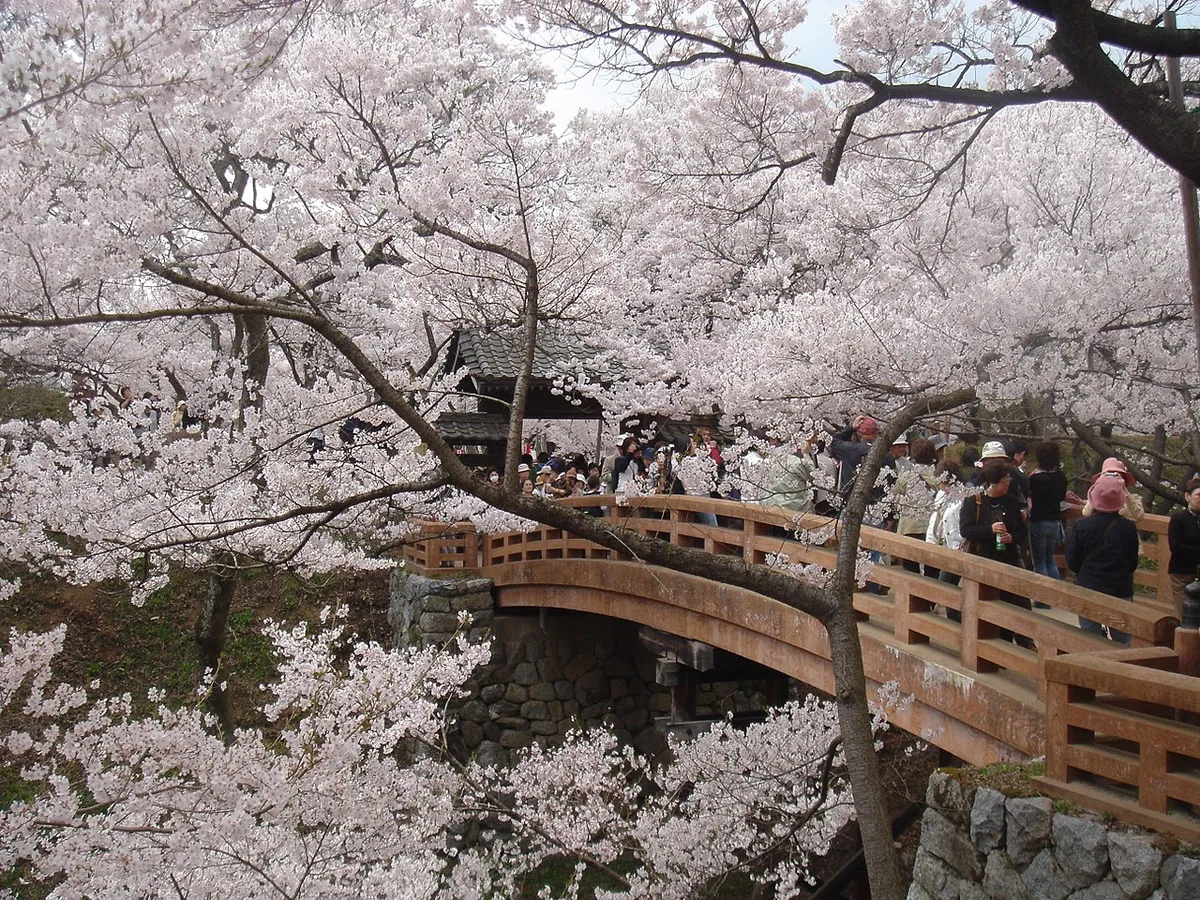
Visit Takato for the cherry blossoms — specifically the Takato-kohigan-zakura, a variety with distinctively deep pink color and strong fragrance found nowhere else in this concentration. The castle ruins themselves are modest, but the blossom experience is exceptional: the combination of intense pink color, mountain backdrop, and ruined castle atmosphere is uniquely powerful. Outside blossom season, Takato is a perfectly pleasant minor ruins park that does not require a special journey.

Highlights

1

Japan's Most Famous Cherry Blossom Castle

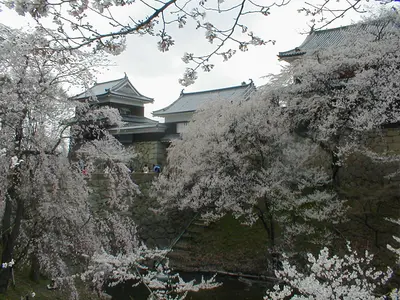
Takato Castle is home to the 'Takato-kohigan-zakura' — a cherry tree variety unique to this site, known for its deep pink color, smaller flowers, and intoxicating fragrance. Over 1,500 trees bloom together each spring, turning the former castle grounds into a sea of vivid pink. The combination of color intensity, fragrance, and the ruined castle atmosphere makes this one of Japan's most celebrated sakura destinations — listed in every reputable catalog of Japan's top cherry blossom spots.
2

Siege of Takato — The Battle That Defined the Takeda's Fall

In 1582, Oda Nobunaga's forces besieged Takato Castle, which was defended by Takeda Shingen's fifth son, Nishina Morinobu. Despite being vastly outnumbered, Morinobu and the garrison fought to the last man rather than surrender — a legendary final stand that is commemorated at the castle today. The fall of Takato was the decisive opening move in Nobunaga's destruction of the Takeda clan.

3

The Hidden Valley Position

Takato Castle occupies a dramatic position above the confluence of the Mibu and Takato rivers, with the Ina Valley stretching in both directions. The castle plateau is naturally defined by river gorges on multiple sides, with the surrounding Southern Alps providing a stunning backdrop for the cherry blossoms. The dramatic topography makes the ruins visually compelling even without standing structures.

Structure Details

Visitor tip

Come for the cherry blossoms — Takato's kohigan-zakura variety is deeper pink than most Japanese cherry trees and unmistakably distinctive. Outside blossom season (late March to mid-April), the castle is a quiet ruins park with modest stone wall remnants and good valley views. If you visit in blossom season, arrive early morning to avoid the crowds and catch the blossoms in low-angle light.

Castle type

Hill castle

Hill-top flatland castle — built on a plateau naturally defended by river gorges on multiple sides

Layout type

Linked compound layout

Compound style — honmaru, ninomaru, and sannomaru arranged on the plateau

Main tower

No structures survive — only earthworks, moat remnants, and the stone walls of the Taiko-yagura (drum tower) base. The park contains reconstructed gate elements.

Stone walls

Natural stone stacking

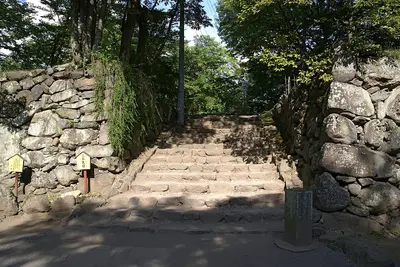
Stone wall remains are visible at certain compound boundaries, though most of the original walls have been lost. The river gorge edges served as natural walls on several sides, reducing the need for extensive artificial construction.

Moats

Dry moats (karabori) were cut across the plateau to separate the compound levels. The rivers on multiple sides functioned as natural moats of considerable depth and strength.

Key defensive features

River Gorge Natural Defense

The Mibu and Takato rivers cut deep gorges around the castle plateau on multiple sides — natural defensive barriers deeper and more impassable than any artificial moat. Only the northern approach had any practicable path for an attacking army.

Southern Alps Backdrop

The surrounding mountain terrain funneled any large attacking force through predictable approach routes, limiting the angles of assault and making coordination of a multi-directional attack nearly impossible.

The Story of Takato Castle

Originally built 1547 / Takeda Shingen (developed from earlier fortification)
Current form 1547 / Takeda Shingen
    1547

    Takeda Shingen captures Takato Castle and substantially develops it as a key position in his expanding Ina Valley domain. The castle commands the upper Ina Valley and routes into the southern mountains.

    1582

    Oda Nobunaga orders the destruction of the Takeda clan. His general Oda Nobutada leads 50,000 troops to Takato Castle, defended by Nishina Morinobu (Shingen's fifth son) with a few hundred men. After fierce resistance, the garrison fights to the last man. This battle breaks the Takeda clan's ability to resist.

    1582

    With Takato fallen, the Takeda clan collapses within weeks. Takeda Katsuyori (Shingen's heir) dies at the Battle of Tenmokuzan shortly after. Oda Nobunaga achieves what decades of warfare could not — the destruction of the Takeda.

    1691

    The Nishina clan and later the Naito clan develop Takato as a Tokugawa-era castle town. The castle reaches its Edo-period form with three formal compounds and supporting structures.

    1871

    Meiji government abolishes domains and the castle buildings are demolished. The grounds are later converted into a public park, and cherry trees are planted — eventually becoming one of Japan's most famous sakura destinations.

In Pop Culture

TV

Takeda Shingen (NHK Taiga Drama, 1988)

The 1988 NHK Taiga Drama on Takeda Shingen featured Takato Castle as a major location, drawing attention to both the historical significance of the 1582 siege and the cherry blossom park.

Did You Know?

  • The Takato-kohigan-zakura cherry variety is unique to this site — its flowers are distinctly smaller and deeper pink than the common Somei Yoshino variety found at most Japanese castle cherry blossom sites, and the fragrance is noticeably stronger. The trees are descendants of specimens planted here in the Meiji era.
  • The 1582 Siege of Takato is one of the most celebrated last stands in Sengoku history. Nishina Morinobu's refusal to surrender despite facing 50,000 troops with only a few hundred defenders embodies the Sengoku warrior ethos of fighting to the end.
  • During peak cherry blossom season, Takato receives over 200,000 visitors despite being a genuinely remote mountain town — a remarkable demonstration of the drawing power of exceptional cherry blossoms.
  • Evening illumination of the cherry trees is installed during blossom season, creating a spectacular nighttime experience with lit pink blossoms against the dark castle earthworks. Night viewing ('yozakura') is considered the premium Takato experience by regular visitors.

Score Breakdown

Tourism Score

D 48/100
  • Accessibility 7 /20
  • Foreign-Friendly 7 /20
  • Historical Value 10 /20
  • Visual Impact 15 /20
  • Facilities 9 /20

Defense Score

B 75/100
  • Terrain Advantage 15 /20
  • Entrance Defense 15 /20
  • Internal Complexity 16 /20
  • Siege Endurance 15 /20
  • Strategic Oversight 14 /20

Planning Your Visit

Best Time to Visit

Late March to mid-April for cherry blossoms (exact timing varies with winter temperatures). Evening illumination during blossom season is particularly atmospheric.

Time Needed

1.5–2 hours during blossom season; 1 hour otherwise

Insider Tip

The kohigan cherry trees are noticeably darker pink than standard Japanese cherry varieties — almost magenta at peak bloom. If you have seen many Japanese cherry blossom sites and found them all similar, Takato will surprise you. Arrive before 8am during peak bloom to experience the park before the crowds; by midday it can be extremely busy.

Map

Getting There

Nearest station: Ina-shi Station (JR Iida Line), then bus or taxi
Walk from station: 60 min walk
Bus: Bus service from Ina-shi Station to Takato (approximately 30 minutes). During cherry blossom season, direct buses run from Okaya Station (JR Chuo Line). Car strongly recommended outside blossom season.
Parking: Parking available near the castle park. During cherry blossom peak, parking fills extremely early — arrive before 7am or use shuttle services.

Admission

Free

FREE outside cherry blossom season. During cherry blossom season (mid-April): Adult ¥600 (peak weekends ¥1,000), Child ¥300. Park grounds always freely accessible.

Opening Hours

Open09:00 – 17:00
Last entry16:30

Park open year-round. Cherry blossom season (mid-April): 6:00–21:00 with illumination. Normal period: freely accessible during daylight.

Facilities

  • – English guides
  • – Audio guide
  • – Wheelchair access
  • ✓ Restrooms
  • ✓ Gift shop
  • ✓ Food nearby

Nearby Castles

Featured in collections

FAQ

Frequently Asked Questions

How do I get to Takato Castle?

The nearest station is Ina-shi Station (JR Iida Line), then bus or taxi. From there it is about 60 minutes on foot. Bus service from Ina-shi Station to Takato (approximately 30 minutes). During cherry blossom season, direct buses run from Okaya Station (JR Chuo Line). Car strongly recommended outside blossom season.

How much does Takato Castle cost to enter?

Takato Castle is free to enter.

Is Takato Castle worth visiting?

Visit Takato for the cherry blossoms — specifically the Takato-kohigan-zakura, a variety with distinctively deep pink color and strong fragrance found nowhere else in this concentration. The castle ruins themselves are modest, but the blossom experience is exceptional: the combination of intense pink color, mountain backdrop, and ruined castle atmosphere is uniquely powerful. Outside blossom season, Takato is a perfectly pleasant minor ruins park that does not require a special journey.

What are the opening hours of Takato Castle?

09:00 to 17:00, last entry 16:30.

How long should I spend at Takato Castle?

Plan for about 1.5–2 hours during blossom season; 1 hour otherwise, depending on how closely you want to explore the grounds.