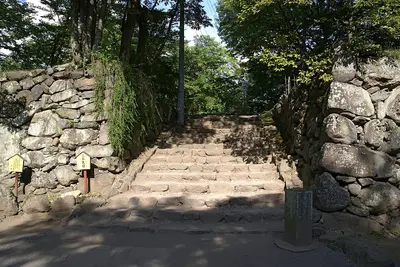
Tsutsujigasaki Residence (Takeda Shingen's Palace)

躑躅ヶ崎館·Tsutsujigasaki-yakata

D Tourism Score 42/100
C Defense Score 64/100

This is where Japan's most strategically brilliant warlord worked — not a castle but a residence, because Shingen trusted people over walls.

#24 — 100 Famous Castles Ruins
Tsutsujigasaki Residence (Takeda Shingen's Palace) (躑躅ヶ崎館)
Photo:前田左衛門佐/Wikimedia Commons/Public domain

Quick Facts

Quick Facts

Admission
Free Free
Hours
05:30 – 17:00
Nearest Station
Kofu Station (JR Chuo Main Line) or Takeda Jinja Station (Minobu Line)
Walk from Station
20 min walk

Bus also available

Time Needed
45 minutes–1 hour (shrine visit and treasure museum)

The Takeda Shrine (Takeda Jinja), built on the site of the former residence, is free to enter. The Takeda Shrine Treasure Museum (adjacent) charges a small admission fee.

Defense Overview

Defense Overview

Why Tsutsujigasaki Residence (Takeda Shingen's Palace) was hard to attack

This castle is hard to attack because its strength comes from its command of nearby routes and the surrounding town while still forcing attackers to break through defended space.

An attacker would not simply arrive at the center on open flat ground. They would have to cross water barriers or moat lines, push through successive outer areas before the core, and do so under a position that also watches the surrounding routes.

Overall score

64/100

Estimated range

58–70

Confidence

B

Usable estimate with some inference

This is a site-original comparison score for learning and comparison, not a reconstruction of one historical battle.

Radar view

Terrain 10/20 Entrance 11/20 Internal 12/20 Siege 16/20 Oversight 15/20
How this estimate was built+

This estimate combines broad terrain, approach, layout, and route-control signals. It is meant to explain the castle's defensive logic in plain English, not reconstruct a single historical attack.

Terrain Advantage

How much the terrain itself seems to help: height, slope, ridges, cliffs, water edges, and limited approach directions.

10/20

Entrance Defense

How awkward and dangerous the first entry looks: gates, bridge or moat crossings, chokepoints, and forced turns.

11/20

Internal Complexity

How hard it seems to keep pushing after entry: layered baileys, depth, compartmentalization, and repeated defensive lines.

12/20

Siege Endurance

A rough sense of long-hold potential: moats, water access, space, storage plausibility, and defensive staying power.

16/20

Strategic Oversight

How much the castle appears to command nearby roads, plains, rivers, basins, harbors, or town approaches.

15/20

Why Visit

Tsutsujigasaki is visited for Takeda Shingen, not for castle remains — the physical site is a pleasant shrine with a moat remnant, not a dramatic ruin or preserved structure. The historical significance is immense (this is where one of Japan's most celebrated strategists governed his domain), and the Takeda Shrine is an active, atmospheric place. Combined with nearby Kofu Castle (Maizuru-jo Park), the Takeda Shrine Treasure Museum, and the broader Shingen legacy in Kofu city, it makes for a worthwhile Yamanashi day. For Sengoku history enthusiasts, it is a genuine pilgrimage.

Highlights

1

Takeda Shingen's Home — Not a Castle, But His World

Tsutsujigasaki was Takeda Shingen's primary residence and administrative headquarters for his entire career as lord of Kai Province. It was emphatically not a fortress — Shingen's philosophy was that 'people are castles, people are stone walls, people are moats' (人は城、人は石垣、人は堀), meaning he trusted loyal retainers rather than fortifications for protection. The residence reflects this worldview: a large administrative compound without the towering stone walls or keeps of a military castle.
2

The Famous Saying That Explains Everything

Takeda Shingen's most quoted maxim — 'A man is a castle; a man is a stone wall; a man is a moat' — explains why Tsutsujigasaki was built as it was. Shingen believed that fortifications were secondary to human loyalty and military skill. He spent enormous resources on his cavalry and army rather than walls and towers. This philosophy produced one of the most effective military forces of the Sengoku period — and a headquarters that looks nothing like a traditional Japanese castle.

3

Takeda Shrine — A Warrior's Sacred Space

After the Takeda clan was destroyed in 1582, the residence site was eventually converted into a Shinto shrine dedicated to Shingen himself. The Takeda Shrine (Takeda Jinja) today preserves the moat and earthwork outline of the original residence compound, while serving as an active shrine attracting military-success prayers from students, athletes, and business professionals drawn by Shingen's legendary strategic reputation.

Structure Details

Visitor tip

Approach Tsutsujigasaki as a shrine visit rather than a castle visit — the Takeda Shrine is the site's primary identity and the castle remains are minimal. The moat around the inner shrine area is the main surviving physical evidence of the original residence layout. The Takeda Shrine Treasure Museum adjacent to the shrine has good exhibits on Shingen and Sengoku Kai Province. Combine with Kofu Castle (Maizuru-jo Park) nearby for a complete Kofu castle day.

Castle type

Flatland castle

Flatland castle — more accurately a fortified manor or administrative residence (yakata) on flat terrain, not a castle in the military fortress sense

Layout type

Radial layout

Enclosure style — multiple nested enclosures (kuruwa) defined by earthen banks and moats rather than stone walls

Main tower

No tenshu ever existed — Tsutsujigasaki was a residence and administrative center, not a military fortress. The earthwork and moat outline survives within and around the Takeda Shrine grounds.

Stone walls

Earthen walls

The compound boundaries were earthen banks (doruiji) rather than the impressive stone walls of military castles. The moats and earthworks survive in the shrine grounds and the surrounding area, though much has been obscured by later development.

Moats

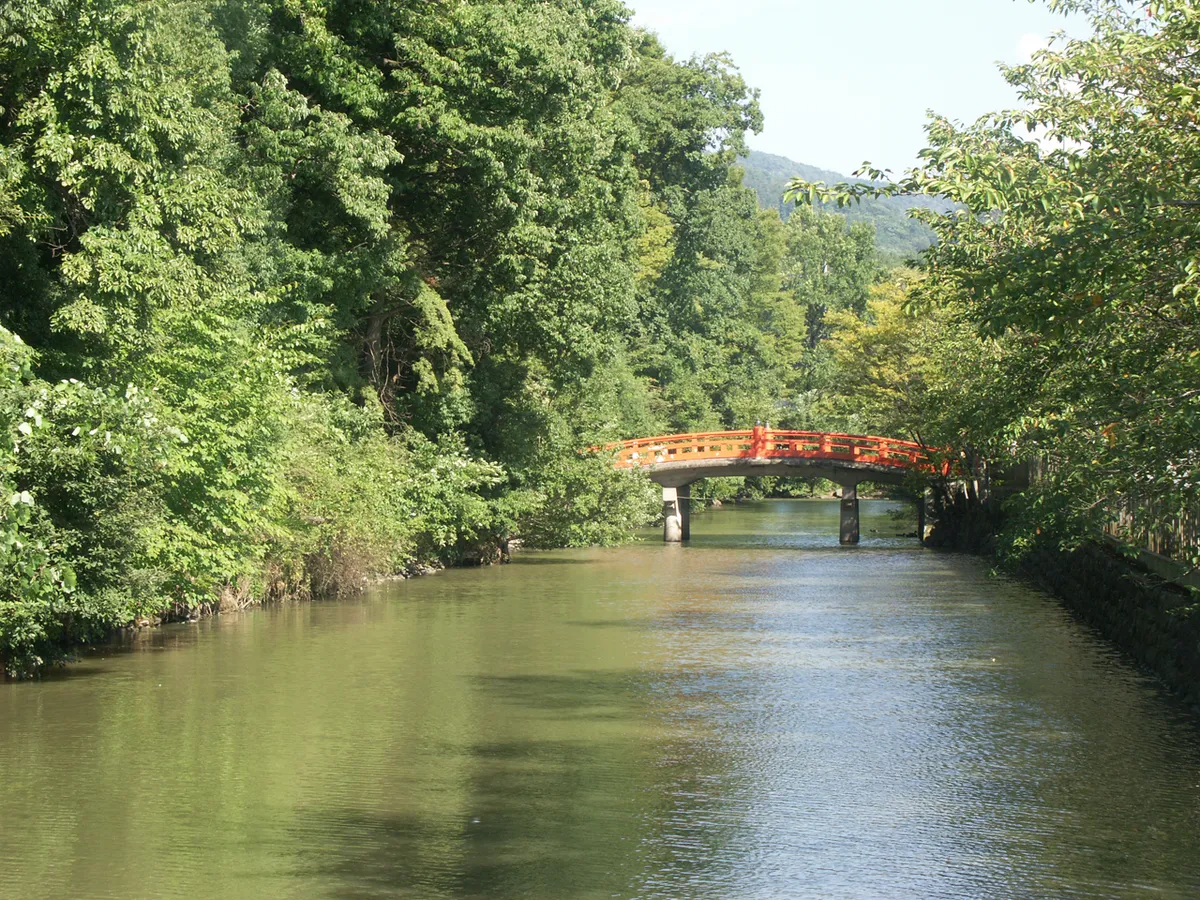
The inner and outer moats of the residence partially survive. The moat visible around the Takeda Shrine main building area is a remnant of the original inner compound moat.

Key defensive features

Deliberate Under-Fortification

Tsutsujigasaki's 'defensive feature' is its philosophical absence of impressive defenses — Shingen's trust in human loyalty over walls meant the residence was designed for administration and comfort rather than siege resistance. This was a conscious strategic choice, not a failure of planning.

Supportive Mountain Castles

Tsutsujigasaki was backed by a network of satellite mountain castles in the surrounding Kofu basin — in event of threat, the residence could be defended from these elevated positions while the population of the basin mobilized. The residence was never intended to be the last line of defense.

The Story of Tsutsujigasaki Residence (Takeda Shingen's Palace)

Originally built 1519 / Takeda Nobutora (Shingen's father)
Current form 1521 / Takeda Shingen (expanded throughout his career)
    1519

    Takeda Nobutora (Shingen's father) establishes the Tsutsujigasaki residence as the headquarters of Takeda clan rule over Kai Province. The location on flat ground near the center of the Kofu basin is chosen for administrative convenience rather than defensive position.

    1541

    Takeda Shingen overthrows his father Nobutora in a political coup and takes over as lord of Kai. Shingen makes Tsutsujigasaki his permanent base and expands the compound throughout his career, but maintains its residential character.

    1553

    The first of the five Battles of Kawanakajima with Uesugi Kenshin. Between campaigns, Shingen administers his domain from Tsutsujigasaki — which serves as the political, economic, and cultural center of the expanding Takeda realm.

    1573

    Takeda Shingen dies at age 52 (of illness, at the height of his power) — possibly of tuberculosis contracted during the Mikatagahara campaign. He dies not at his residence but in the field. His death ends Kai's period of greatest power.

    1582

    Oda Nobunaga destroys the Takeda clan following the fall of Takato Castle. Tsutsujigasaki is occupied without resistance. The last Takeda lord, Katsuyori, dies at the Battle of Tenmokuzan. The residence is abandoned.

    1873

    Takeda Shrine (Takeda Jinja) is established on the site of the former residence, dedicated to the spirit of Takeda Shingen. The shrine preserves the inner moat and some earthwork elements of the original compound.

In Pop Culture

TV

Furin Kazan (NHK Taiga Drama, 1969)

Based on Yasushi Inoue's celebrated novel about Takeda Shingen, this drama established the definitive popular image of Shingen and his Tsutsujigasaki headquarters for modern Japanese audiences.

TV

Takeda Shingen (NHK Taiga Drama, 1988)

The 1988 NHK Taiga Drama dedicated to Shingen prominently featured Tsutsujigasaki, driving significant tourism to the Kofu area and the Takeda Shrine.

Did You Know?

  • Takeda Shingen's famous maxim 'A man is a castle; a man is a stone wall; a man is a moat; compassion is an ally, enmity is an enemy' (人は城、人は石垣、人は堀、情けは味方、仇は敵なり) directly explains the residential rather than fortress character of Tsutsujigasaki — Shingen trusted in people, not walls.
  • Tsutsujigasaki is named after the azalea flowers (tsutsuji) that grew on the promontory (saki) where it was built. The name is essentially 'Azalea Promontory Residence' — a poetic rather than military designation.
  • Takeda Shingen is one of the few Sengoku warlords to have been deified in Shinto — the Takeda Shrine worships him as a protective deity, particularly for military success, athletic competition, and business strategy. The shrine receives enormous numbers of student exam-takers seeking his blessings.
  • The Takeda clan's red-and-black battle standard featuring the four-character phrase 'Furin Kazan' (風林火山, 'Swift as wind, silent as forest, fierce as fire, immovable as mountain' — from Sun Tzu's Art of War) is one of the most iconic battle flags in Japanese history.

Score Breakdown

Tourism Score

D 42/100
  • Accessibility 13 /20
  • Foreign-Friendly 7 /20
  • Historical Value 15 /20
  • Visual Impact 4 /20
  • Facilities 3 /20

Defense Score

C 64/100
  • Terrain Advantage 10 /20
  • Entrance Defense 11 /20
  • Internal Complexity 12 /20
  • Siege Endurance 16 /20
  • Strategic Oversight 15 /20

Planning Your Visit

Best Time to Visit

Year-round as a shrine visit. Spring for azalea blooms (the tsutsuji that give the site its name). April for the Shingen-ko Festival — one of Japan's largest samurai festivals, with 2,000 people in period costume parading through Kofu.

Time Needed

45 minutes–1 hour (shrine visit and treasure museum)

Insider Tip

Visit the Takeda Shrine Treasure Museum adjacent to the shrine — it has the best collection of Takeda clan artifacts in Japan, including period armor, weapons, and documents. The moat visible around the shrine main building is a genuine remnant of Shingen's residence compound. The April Shingen-ko Festival parade through central Kofu is one of the most impressive samurai festivals in Japan and well worth planning a trip around.

Map

Getting There

Nearest station: Kofu Station (JR Chuo Main Line) or Takeda Jinja Station (Minobu Line)
Walk from station: 20 min walk
Bus: Bus from Kofu Station to Takeda Shrine (approximately 15 minutes). Or walk 20 minutes from Kofu Station.
Parking: Free parking available at the shrine.
Accessible with a JR Pass

Admission

Free

The Takeda Shrine (Takeda Jinja), built on the site of the former residence, is free to enter. The Takeda Shrine Treasure Museum (adjacent) charges a small admission fee.

Opening Hours

Open05:30 – 17:00

Shrine grounds accessible during daylight hours year-round. Main hall hours are roughly 05:30–17:00.

Facilities

  • – English guides
  • – Audio guide
  • ✓ Wheelchair access
  • ✓ Restrooms
  • ✓ Gift shop
  • – Food nearby

Nearby Castles

Featured in collections

FAQ

Frequently Asked Questions

How do I get to Tsutsujigasaki Residence (Takeda Shingen's Palace)?

The nearest station is Kofu Station (JR Chuo Main Line) or Takeda Jinja Station (Minobu Line). From there it is about 20 minutes on foot. Bus from Kofu Station to Takeda Shrine (approximately 15 minutes). Or walk 20 minutes from Kofu Station.

How much does Tsutsujigasaki Residence (Takeda Shingen's Palace) cost to enter?

Tsutsujigasaki Residence (Takeda Shingen's Palace) is free to enter.

Is Tsutsujigasaki Residence (Takeda Shingen's Palace) worth visiting?

Tsutsujigasaki is visited for Takeda Shingen, not for castle remains — the physical site is a pleasant shrine with a moat remnant, not a dramatic ruin or preserved structure. The historical significance is immense (this is where one of Japan's most celebrated strategists governed his domain), and the Takeda Shrine is an active, atmospheric place. Combined with nearby Kofu Castle (Maizuru-jo Park), the Takeda Shrine Treasure Museum, and the broader Shingen legacy in Kofu city, it makes for a worthwhile Yamanashi day. For Sengoku history enthusiasts, it is a genuine pilgrimage.

What are the opening hours of Tsutsujigasaki Residence (Takeda Shingen's Palace)?

05:30 to 17:00.

How long should I spend at Tsutsujigasaki Residence (Takeda Shingen's Palace)?

Plan for about 45 minutes–1 hour (shrine visit and treasure museum), depending on how closely you want to explore the grounds.