Tsuruoka Castle (Shonai Castle)

鶴ヶ岡城(庄内城)·Tsurugaoka-jo

F Tourism Score 40/100
C Defense Score 67/100

10,000 cherry trees over Boshin War stone walls — Tohoku's most atmospheric spring castle, seat of the Shonai samurai who earned leniency from the Meiji forces who defeated them.

#129 — Continued 100 Castles Ruins
Tsuruoka Castle (Shonai Castle) (鶴ヶ岡城(庄内城))
Photo:掬茶/Wikimedia Commons/CC BY-SA 4.0

Quick Facts

Quick Facts

Admission
Free Free
Hours
00:00 – 23:59
Nearest Station
Tsuruoka Station (JR Uetsu Main Line — approx. 2.5 hours from Niigata)
Walk from Station
25 min walk

Bus also available

Time Needed
2 hours (park + Chido Museum)

Castle ruins park (Tsuruoka Park) is free. The Chido Museum within the park charges ¥700 for adults.

Defense Overview

Defense Overview

Why Tsuruoka Castle (Shonai Castle) was hard to attack

This castle is hard to attack because it combines managed outer defenses on relatively level ground with enough defensive depth to slow attackers before the center.

An attacker would not simply arrive at the center on open flat ground. They would have to cross water barriers or moat lines and push through successive outer areas before the core.

Overall score

67/100

Estimated range

61–73

Confidence

B

Usable estimate with some inference

This is a site-original comparison score for learning and comparison, not a reconstruction of one historical battle.

Radar view

Terrain 10/20 Entrance 11/20 Internal 16/20 Siege 16/20 Oversight 14/20
How this estimate was built+

This estimate combines broad terrain, approach, layout, and route-control signals. It is meant to explain the castle's defensive logic in plain English, not reconstruct a single historical attack.

Terrain Advantage

How much the terrain itself seems to help: height, slope, ridges, cliffs, water edges, and limited approach directions.

10/20

Entrance Defense

How awkward and dangerous the first entry looks: gates, bridge or moat crossings, chokepoints, and forced turns.

11/20

Internal Complexity

How hard it seems to keep pushing after entry: layered baileys, depth, compartmentalization, and repeated defensive lines.

16/20

Siege Endurance

A rough sense of long-hold potential: moats, water access, space, storage plausibility, and defensive staying power.

16/20

Strategic Oversight

How much the castle appears to command nearby roads, plains, rivers, basins, harbors, or town approaches.

14/20

Why Visit

Tsuruoka Castle is Tohoku's premier spring destination — the moat-reflected cherry blossoms are exceptional. Outside cherry season, the Chido Museum is one of the region's best history museums. Combine with the Dewa Sanzan sacred mountains for a full Tsuruoka cultural itinerary.

Highlights

1

The Shonai Domain — The Last Resistance in the Boshin War

Tsuruoka Castle was the seat of the Shonai domain (Sakai clan) — notable as one of the last domains to surrender in the Boshin War of 1868–69. The Meiji government showed unusual leniency toward the defeated Shonai — influenced by the respect the Meiji forces had for the Shonai samurai's conduct. The Shonai domain story is one of the Boshin War's most compelling episodes.
2

10,000 Cherry Trees — Yamagata's Premier Blossom Site

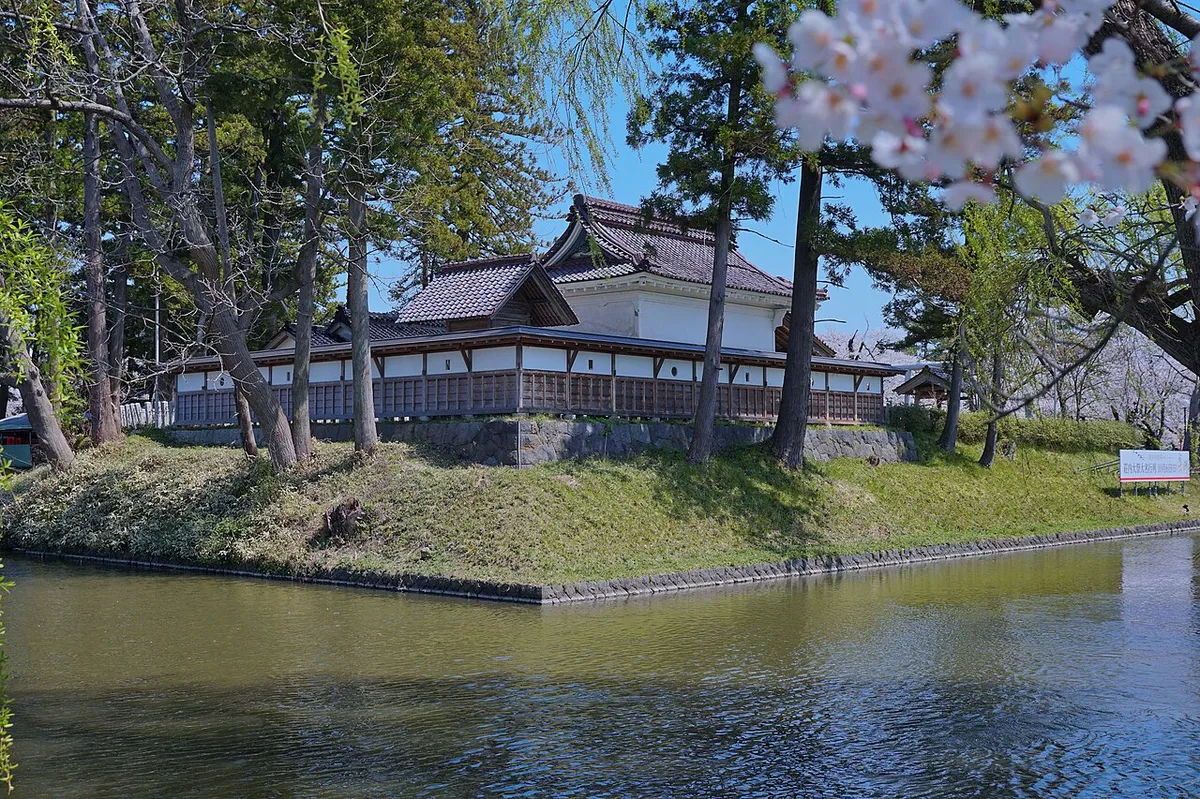
Tsuruoka Park surrounding the castle ruins contains over 10,000 cherry trees — one of the highest concentrations of sakura in the Tohoku region and consistently listed among Japan's top 100 cherry blossom sites. The combination of moat water reflections, ruined stone walls, and a canopy of pink blossoms in late April makes Tsuruoka Castle one of Tohoku's most atmospheric spring destinations.

3

The Chido Museum — Samurai Culture Preserved

The Chido Museum on the castle grounds is an outstanding open-air museum preserving Meiji-era buildings from the Shonai domain and relocated samurai residences. The museum's folk art collection and samurai-era material culture displays are among the best in the Tohoku region.

Structure Details

Visitor tip

The castle is now Tsuruoka Park — beautiful especially in cherry blossom season. Walk the moat perimeter to see the stone walls and moat reflections. Visit the Chido Museum on the castle grounds for samurai-era exhibits.

Castle type

Flatland castle

Flatland castle (built on the Shonai Plain near the Akagawa River — a low-lying agricultural domain on the Sea of Japan coast of Yamagata)

Layout type

Linked compound layout

Compound style — multiple compounds with moats on the flat Shonai Plain

Main tower

No tenshu survives — the castle was demolished in the Meiji era. The stone walls of the inner compound and the moats survive in good condition.

Stone walls

Natural stone stacking

The inner compound stone walls (ishigaki) survive around the honmaru area. The walls have a weathered, moss-covered appearance giving them exceptional atmospheric quality, particularly during cherry blossom season.

Moats

Water moats surrounding the castle compounds survive well in the park layout. The combination of cherry trees, water moats, and stone walls creates one of Tohoku's most atmospheric castle park settings.

Key defensive features

Shonai Plain Water Moat System

The flat Shonai Plain required constructed water moats rather than natural terrain for defense.

Akagawa River System Access

The regional river network gave the castle logistical access to the Sea of Japan coast and the broader Shonai domain.

The Story of Tsuruoka Castle (Shonai Castle)

Originally built 1601 / Akita Jitsugu (first Edo-period lord)
Current form 1622 / Sakai Tadakatsu
    1601

    The newly established Tokugawa shogunate assigns Shonai domain to Akita Jitsugu. Construction of the Edo-period castle begins.

    1622

    The Sakai clan receives Shonai domain — beginning an association that will last until the Meiji Restoration of 1868.

    1868

    The Boshin War — Shonai domain backs the losing Tokugawa side and fights the Meiji forces with unexpected effectiveness.

    1869

    Meiji government shows unusual leniency to the Shonai domain — the respectful surrender terms reflect the Meiji forces' admiration for Shonai fighting quality.

    1873

    Castle demolition under Meiji land reform. The castle grounds become Tsuruoka Park.

    1950

    The Chido Museum is established on the castle grounds, beginning systematic collection of Shonai domain material culture.

Did You Know?

  • The Shonai domain's Boshin War resistance was so well-organized that the Meiji government negotiated lenient surrender terms out of respect — giving Shonai samurai families more continuity than almost any other domain that fought against the Meiji forces.
  • Tsuruoka Park's 10,000+ cherry trees make it one of Japan's official 'Top 100 Cherry Blossom Sites.'
  • The Chido Museum contains a Western-style Meiji-era building (former Nishitagawa County Office) that is a Nationally Designated Important Cultural Property.
  • Tsuruoka City is a UNESCO Creative City of Gastronomy — the Shonai region's exceptional culinary tradition has earned international recognition.

Score Breakdown

Tourism Score

F 40/100
  • Accessibility 10 /20
  • Foreign-Friendly 5 /20
  • Historical Value 10 /20
  • Visual Impact 8 /20
  • Facilities 7 /20

Defense Score

C 67/100
  • Terrain Advantage 10 /20
  • Entrance Defense 11 /20
  • Internal Complexity 16 /20
  • Siege Endurance 16 /20
  • Strategic Oversight 14 /20

Planning Your Visit

Best Time to Visit

Late April for cherry blossoms. Autumn is also beautiful.

Time Needed

2 hours (park + Chido Museum)

Insider Tip

Tsuruoka is also the gateway to Dewa Sanzan — three sacred mountains that form one of Japan's most important Shugendo pilgrimage circuits. Consider adding a Dewa Sanzan day.

Map

Getting There

Nearest station: Tsuruoka Station (JR Uetsu Main Line — approx. 2.5 hours from Niigata)
Walk from station: 25 min walk
Bus: Bus from Tsuruoka Station to the park area. Bicycle rental available at the station.
Parking: Free parking at Tsuruoka Park.
Accessible with a JR Pass

Admission

Free

Castle ruins park (Tsuruoka Park) is free. The Chido Museum within the park charges ¥700 for adults.

Opening Hours

Open00:00 – 23:59

Park open at all times. Chido Museum opens 09:00–17:00, closed Thursdays and New Year period.

Facilities

  • – English guides
  • – Audio guide
  • ✓ Wheelchair access
  • ✓ Restrooms
  • ✓ Gift shop
  • ✓ Food nearby

Nearby Castles

Featured in collections

FAQ

Frequently Asked Questions

How do I get to Tsuruoka Castle (Shonai Castle)?

The nearest station is Tsuruoka Station (JR Uetsu Main Line — approx. 2.5 hours from Niigata). From there it is about 25 minutes on foot. Bus from Tsuruoka Station to the park area. Bicycle rental available at the station.

How much does Tsuruoka Castle (Shonai Castle) cost to enter?

Tsuruoka Castle (Shonai Castle) is free to enter.

Is Tsuruoka Castle (Shonai Castle) worth visiting?

Tsuruoka Castle is Tohoku's premier spring destination — the moat-reflected cherry blossoms are exceptional. Outside cherry season, the Chido Museum is one of the region's best history museums. Combine with the Dewa Sanzan sacred mountains for a full Tsuruoka cultural itinerary.

What are the opening hours of Tsuruoka Castle (Shonai Castle)?

00:00 to 23:59.

How long should I spend at Tsuruoka Castle (Shonai Castle)?

Plan for about 2 hours (park + Chido Museum), depending on how closely you want to explore the grounds.