Gifu Castle

岐阜城·Gifu-jo

C Tourism Score 68/100
A Defense Score 87/100

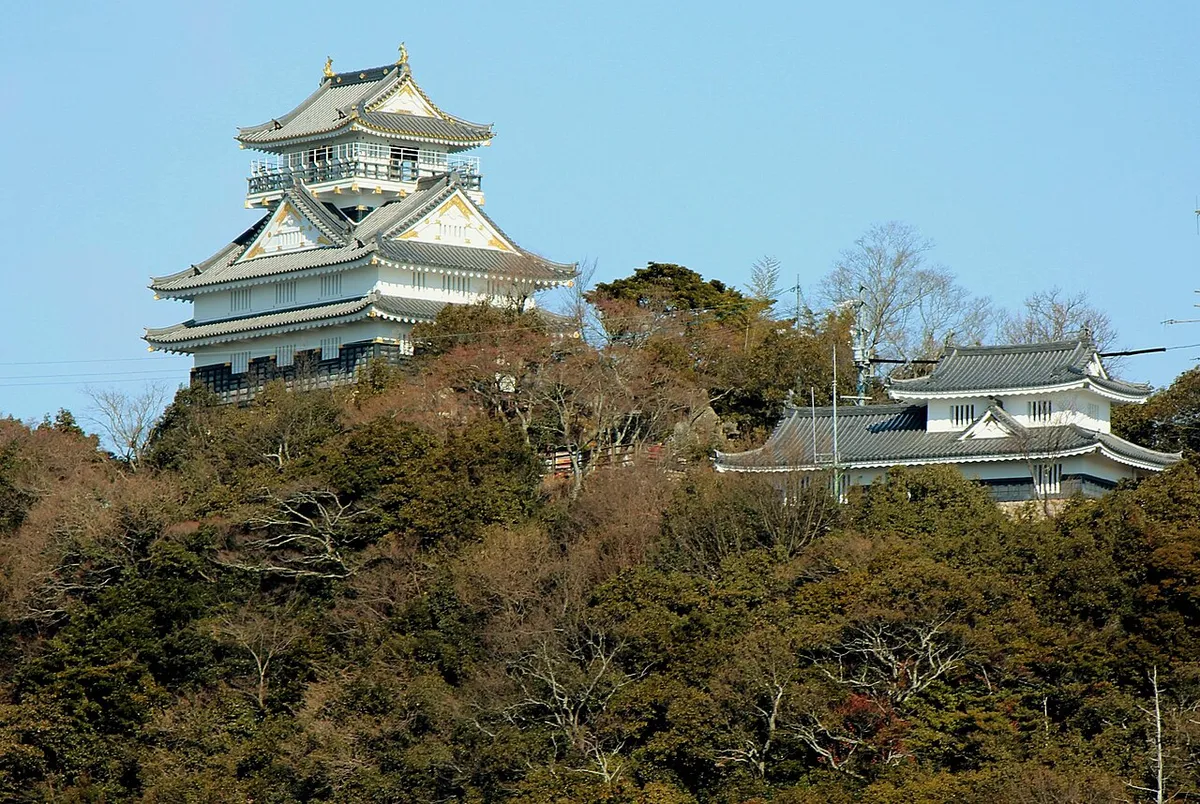
This is the mountain where Nobunaga declared he would rule Japan — and the view from 329 meters makes it easy to believe him.

#39 — 100 Famous Castles Reconstructed
Gifu Castle (岐阜城)
Photo:Alpsdake/Wikimedia Commons/CC BY-SA 3.0

Quick Facts

Quick Facts

Admission
¥200

¥100

Hours
09:30 – 17:30

Last entry 17:00

Nearest Station
Gifu Station (JR Tokaido Main Line / Takayama Main Line)
Walk from Station
60 min walk

Bus also available

Time Needed
2–2.5 hours (ropeway, summit walk, tower)

Children (elementary school age and under) ¥100. Ropeway fare is separate: approximately ¥1,100 round trip for adults. Combined ticket with ropeway available.

Defense Overview

Defense Overview

Why Gifu Castle was hard to attack

This castle is hard to attack because it combines high ground and difficult natural access with enough defensive depth to slow attackers before the center.

An attacker would first have to fight the site itself before reaching the main defenses. They would have to cross water barriers or moat lines, approach through at least some constrained entry space, and push through successive outer areas before the core.

Overall score

87/100

Estimated range

81–93

Confidence

A

Strong multi-source support

This is a site-original comparison score for learning and comparison, not a reconstruction of one historical battle.

Radar view

Terrain 19/20 Entrance 18/20 Internal 16/20 Siege 16/20 Oversight 18/20
How this estimate was built+

This estimate combines broad terrain, approach, layout, and route-control signals. It is meant to explain the castle's defensive logic in plain English, not reconstruct a single historical attack.

Terrain Advantage

How much the terrain itself seems to help: height, slope, ridges, cliffs, water edges, and limited approach directions.

19/20

Entrance Defense

How awkward and dangerous the first entry looks: gates, bridge or moat crossings, chokepoints, and forced turns.

18/20

Internal Complexity

How hard it seems to keep pushing after entry: layered baileys, depth, compartmentalization, and repeated defensive lines.

16/20

Siege Endurance

A rough sense of long-hold potential: moats, water access, space, storage plausibility, and defensive staying power.

16/20

Strategic Oversight

How much the castle appears to command nearby roads, plains, rivers, basins, harbors, or town approaches.

18/20

Why Visit

Gifu Castle is essential for anyone interested in Oda Nobunaga and the Sengoku period. The castle itself is a modest concrete reconstruction, but the setting is extraordinary — 329 meters above the city on a rocky summit, with cliffs falling away on multiple sides and panoramic views across the Nobi Plain and the Nagara River. This is where Nobunaga coined his famous motto and launched his unification campaign. The ropeway ride adds to the drama and the views from the tower are outstanding on a clear day. Allow time to walk the summit paths and stone walls beyond the tower.

Highlights

1

Nobunaga's Mountain Throne

Oda Nobunaga seized this castle in 1567, renamed both the castle and the surrounding town 'Gifu,' and declared it his base for the unification of Japan. Standing on the 329-meter summit of Mt. Kinka, Nobunaga could survey his domain in every direction — a deliberate statement of dominance over the landscape and anyone in it. This is where his dream of a unified Japan began.
2

329 Meters Above the City

The summit of Mt. Kinka is not a gentle hill but a genuine mountain. The castle sits at 329 meters, with sheer cliff faces on multiple sides making direct assault nearly impossible. The ropeway ride to the top is itself a dramatic experience — the city of Gifu spreads below you as you ascend, with the Nagara River winding through the plain.

3

The View That Inspired a Dream

Nobunaga is said to have looked out from this summit and seen 'the realm under heaven' — the phrase 'Tenka Fubu' (天下布武, 'Rule the realm by force') became his personal seal after taking Gifu. The panoramic view from the castle tower today gives you precisely what Nobunaga saw: mountains, rivers, plains — the geography of a country waiting to be unified.

Structure Details

Visitor tip

Take the Kinkazan Ropeway from the base station — the 4-minute ride gives you dramatic views over Gifu city and is much easier than the mountain trail. From the ropeway upper station, it's a short walk through pleasant forested paths to the castle tower on the summit. The views from the top floor of the tower are outstanding.

Castle type

Mountain castle

Mountain castle — built on the summit of Mt. Kinka (329 meters), with sheer cliffs providing natural defense on most sides

Layout type

Linked compound layout

Compound style — main tower on summit with subsidiary structures and defensive walls stepping down the mountain slopes

Main tower

Concrete reconstruction (1956) — the original castle structures were dismantled or burned over time; the current four-story reinforced concrete tower was built for the city's postwar reconstruction era. A small but visually striking tower on a dramatic summit.

18m4 floors, 1 below

Stone walls

Natural stone stacking

Stone walls step down the mountain slopes on multiple levels. The summit approach involves stone-lined paths and walls clinging to the cliff faces. Much of the original stonework survives on the mountain despite the tower's reconstruction.

Key defensive features

Mt. Kinka Summit Position (329m)

The castle occupies an almost impossibly defensible natural position — a rocky summit with cliffs on multiple sides. Any attacking force had to approach via a single narrow mountain trail, entirely visible to defenders above. The mountain itself was the castle's primary weapon.

Cliff Faces and Rocky Slopes

The natural cliff faces of Mt. Kinka drop sharply away from the summit on several sides, making flanking attacks effectively impossible. Attackers were funneled into a single approach corridor that defenders could hold with a small force.

Nagara River Barrier

The Nagara River wraps around the base of Mt. Kinka on one side, providing an additional natural barrier and giving the castle control over an important river crossing in the Nobi Plain.

The Story of Gifu Castle

Originally built 1201 / Nikki Yorimasa (initial fortification)
Current form 1567 / Oda Nobunaga
    1201

    Initial fortification of Mt. Kinka, then known as Inabayama, by the Nikki clan. The mountain's defensive potential had long been recognized, but it was not yet developed into a major castle.

    1545

    The Saito clan under Saito Dosan controls the castle, which is known as Inabayama Castle. Dosan develops it significantly and rules the Mino region from this summit base.

    1567

    Oda Nobunaga defeats Saito Tatsuoki and takes Inabayama Castle. He immediately renames both castle and town: Inabayama becomes 'Gifu' (a name invoking the ancient Chinese Zhou dynasty founding site), and the castle becomes Gifu Castle. He adopts his famous seal 'Tenka Fubu' — 'Rule the realm by force' — signaling his ambition to unify Japan from this mountain base.

    1576

    Nobunaga moves his main residence to Azuchi Castle on Lake Biwa, a new castle of unprecedented scale and luxury. Gifu is handed to his son Nobutada but remains strategically important as a Nobunaga power base.

    1600

    The castle is attacked and burned during the Battle of Sekigahara's preliminary maneuvering. The Oda lords defending it are defeated by the eastern (Tokugawa-allied) forces. The castle suffers severe damage.

    1601

    Tokugawa Ieyasu orders Gifu Castle demolished — part of his policy of eliminating fortresses that could serve as rallying points for opposition. The site is abandoned for over 350 years.

    1956

    A reinforced concrete reconstruction of the main tower is built on the summit as part of postwar reconstruction enthusiasm. Though not historically accurate, it gave the mountain landmark its current silhouette and houses a historical museum.

In Pop Culture

TV

Kirin ga Kuru (NHK Taiga Drama, 2020)

The NHK Taiga Drama set in the Sengoku period, featuring Oda Nobunaga's rise, prominently depicted Gifu Castle and the Mino region. Drove significant tourism to Gifu city.

Did You Know?

  • Nobunaga chose the name 'Gifu' deliberately: the first character (岐) comes from Mount Qishan in China, where the Zhou dynasty's founder launched his campaign to unify China; the second (阜) comes from Qufu, Confucius's birthplace. The name was a statement of civilizational ambition, not just military conquest.
  • The ropeway that now whisks tourists to the summit in 4 minutes replaced a trail that attacking armies would have had to climb under fire — the same trail hikers take today, gaining 300 meters of elevation through forest and rocky switchbacks.
  • Nobunaga entertained the Portuguese Jesuit missionary Luis Frois at Gifu Castle in 1569 — one of the first documented interactions between a Japanese warlord and a European intellectual. Frois wrote detailed accounts of the castle and its extraordinary mountaintop views.
  • The current concrete tower (1956) was built in a slightly different location from the original tenshu. Archaeological surveys have identified the original tower foundation stones nearby on the summit.

Score Breakdown

Tourism Score

C 68/100
  • Accessibility 12 /20
  • Foreign-Friendly 11 /20
  • Historical Value 16 /20
  • Visual Impact 17 /20
  • Facilities 12 /20

Defense Score

A 87/100
  • Terrain Advantage 19 /20
  • Entrance Defense 18 /20
  • Internal Complexity 16 /20
  • Siege Endurance 16 /20
  • Strategic Oversight 18 /20

Planning Your Visit

Best Time to Visit

Autumn (October–November) for clear views and foliage on the mountain slopes. Spring for cherry blossoms at the ropeway base. Avoid summer midday heat — the summit has little shade. Morning or evening visits have the best light and thinner crowds.

Time Needed

2–2.5 hours (ropeway, summit walk, tower)

Insider Tip

Walk beyond the main tower along the summit ridge — there are surviving stone walls and foundations from the original castle that most visitors ignore while photographing the reconstructed tower. The view from the cliff edge on the northern side is more dramatic than from the tower itself. On a clear day you can see Mt. Ontake and the Japan Alps to the north and east.

Map

Getting There

Nearest station: Gifu Station (JR Tokaido Main Line / Takayama Main Line)
Walk from station: 60 min walk
Bus: Bus from Gifu Station to the Kinkazan Ropeway base station (approx. 15 min). Ropeway ride to the summit takes about 4 minutes. Walking the trail to the summit takes 40–60 minutes.
Parking: Parking available at the ropeway base (Kinkazan Ropeway Sanroku Station). Fee applies.
Accessible with a JR Pass

Admission

Adult¥200
Child¥100

Children (elementary school age and under) ¥100. Ropeway fare is separate: approximately ¥1,100 round trip for adults. Combined ticket with ropeway available.

Opening Hours

Open09:30 – 17:30
Last entry17:00

Standard hours (Mar 16–Oct 16): 9:30–17:30. Winter (Oct 17–Mar 15): 9:30–16:30. NOTICE: Castle closing for seismic renovation from May 19, 2026 to late October 2027.

Facilities

  • – English guides
  • – Audio guide
  • – Wheelchair access
  • ✓ Restrooms
  • ✓ Gift shop
  • ✓ Food nearby

Nearby Castles

Featured in collections

FAQ

Frequently Asked Questions

How do I get to Gifu Castle?

The nearest station is Gifu Station (JR Tokaido Main Line / Takayama Main Line). From there it is about 60 minutes on foot. Bus from Gifu Station to the Kinkazan Ropeway base station (approx. 15 min). Ropeway ride to the summit takes about 4 minutes. Walking the trail to the summit takes 40–60 minutes.

How much does Gifu Castle cost to enter?

Adult admission is ¥200 and child admission is ¥100.

Is Gifu Castle worth visiting?

Gifu Castle is essential for anyone interested in Oda Nobunaga and the Sengoku period. The castle itself is a modest concrete reconstruction, but the setting is extraordinary — 329 meters above the city on a rocky summit, with cliffs falling away on multiple sides and panoramic views across the Nobi Plain and the Nagara River. This is where Nobunaga coined his famous motto and launched his unification campaign. The ropeway ride adds to the drama and the views from the tower are outstanding on a clear day. Allow time to walk the summit paths and stone walls beyond the tower.

What are the opening hours of Gifu Castle?

09:30 to 17:30, last entry 17:00.

How long should I spend at Gifu Castle?

Plan for about 2–2.5 hours (ropeway, summit walk, tower), depending on how closely you want to explore the grounds.