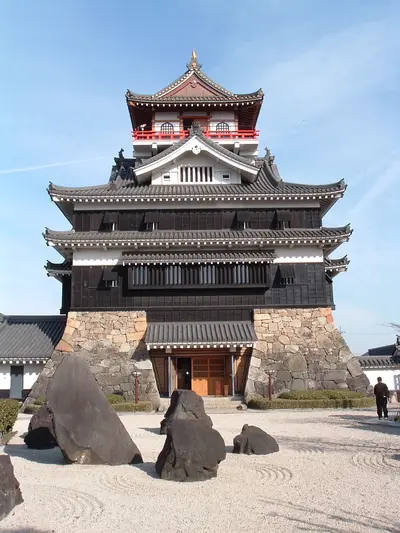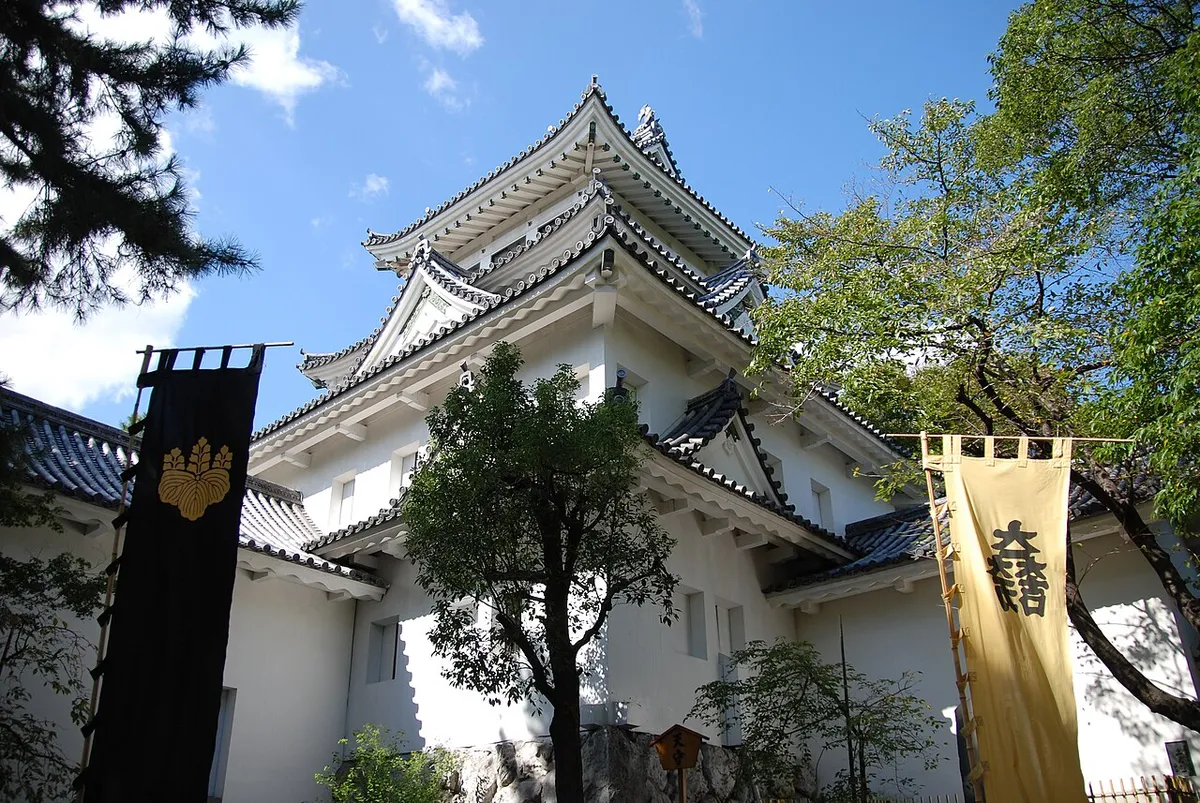
Ogaki Castle

大垣城·Ogaki-jo

D Tourism Score 52/100
B Defense Score 70/100

The crossroads castle where Ishida Mitsunari planned his doomed resistance — Ogaki stood at the hinge of the battle that made Tokugawa Japan.

#40 — 100 Famous Castles Reconstructed
Ogaki Castle (大垣城)
Photo:Kichiverde/Wikimedia Commons/Public domain

Quick Facts

Quick Facts

Admission
¥200

¥0

Hours
09:00 – 17:00

Last entry 16:30

Nearest Station
Ogaki Station (JR Tokaido Main Line / Kintetsu Yoro Line)
Walk from Station
15 min walk
Time Needed
1–1.5 hours including the tower museum

Visitors under 18 free. Covers castle and local history museum combined.

Defense Overview

Defense Overview

Why Ogaki Castle was hard to attack

This castle is hard to attack because it combines managed outer defenses on relatively level ground with enough defensive depth to slow attackers before the center.

An attacker would not simply arrive at the center on open flat ground. They would have to cross water barriers or moat lines, approach through at least some constrained entry space, and push through successive outer areas before the core.

Overall score

70/100

Estimated range

64–76

Confidence

A

Strong multi-source support

This is a site-original comparison score for learning and comparison, not a reconstruction of one historical battle.

Radar view

Terrain 11/20 Entrance 13/20 Internal 16/20 Siege 16/20 Oversight 14/20
How this estimate was built+

This estimate combines broad terrain, approach, layout, and route-control signals. It is meant to explain the castle's defensive logic in plain English, not reconstruct a single historical attack.

Terrain Advantage

How much the terrain itself seems to help: height, slope, ridges, cliffs, water edges, and limited approach directions.

11/20

Entrance Defense

How awkward and dangerous the first entry looks: gates, bridge or moat crossings, chokepoints, and forced turns.

13/20

Internal Complexity

How hard it seems to keep pushing after entry: layered baileys, depth, compartmentalization, and repeated defensive lines.

16/20

Siege Endurance

A rough sense of long-hold potential: moats, water access, space, storage plausibility, and defensive staying power.

16/20

Strategic Oversight

How much the castle appears to command nearby roads, plains, rivers, basins, harbors, or town approaches.

14/20

Why Visit

Ogaki Castle rewards visitors who come for the historical context rather than the physical structure. The reconstructed tower is modest, but standing here and understanding that this was Ishida Mitsunari's headquarters in the days before Sekigahara — the decisive battle that ended the warring states era — gives the site real weight. Combine it with the Matsuo Basho connection and the pleasant moat park, and Ogaki is a worthwhile stop between Nagoya and Gifu. Don't come expecting Himeji; do come if the Sekigahara story fascinates you.

Highlights

1

The Sekigahara Headquarters Castle

In the days before the Battle of Sekigahara in October 1600 — the battle that determined who would rule Japan — Ogaki Castle was the forward headquarters of Ishida Mitsunari and the Western Army. The castle's strategic position controlling the Mino road made it critical to the campaign. After Sekigahara was lost in a single decisive day, the castle was besieged and surrendered, marking the end of resistance to Tokugawa Ieyasu.
2

Matsuo Basho's Final Journey

Ogaki holds a special place in Japanese literary history as the destination of haiku master Matsuo Basho's famous final journey, immortalized in 'The Narrow Road to the Deep North' (Oku no Hosomichi). Basho arrived at Ogaki at the conclusion of his great northern journey in 1689, greeted by friends and disciples. A monument near the Suimon River marks the spot where he departed again by boat. The castle and Basho's journey are now inseparable parts of Ogaki's identity.

3

A Four-Story Tower on a Flatland Plain

Ogaki Castle's four-story tower is a 1959 concrete reconstruction — the original was destroyed in WWII bombing. But the castle's setting in the middle of the Nobi Plain, Japan's largest alluvial flatland, gave it a strategic importance that belied its modest height: controlling this flat crossroads meant controlling movement between eastern and western Japan. The surrounding moats, now partially remaining, reflect the flatland castle's reliance on water defenses.

Structure Details

Visitor tip

The reconstructed tower is compact — four floors with a small museum on Ogaki's castle history and the Sekigahara campaign. The interior is modest, but the historical significance of the site rewards visitors who know the Sekigahara story. The surrounding moat park is pleasant and free to explore.

Castle type

Flatland castle

Flatland castle — built on the Nobi Plain with no natural elevation, relying entirely on water moats and earthworks for defense

Layout type

Concentric layout

Enclosure style — concentric moats and earthwork rings surrounding the central compound

Main tower

Concrete reconstruction (1959) — the original four-story tower, built around 1600, was destroyed by WWII air raids in 1945. The current tower is a reinforced-concrete reproduction matching the exterior of the original.

20.4m4 floors, 1 below

Stone walls

Natural stone stacking

The stone walls of the inner compound survive partially in original form, though much of the outer moat and earthwork system was lost to urban development. The surviving inner moat gives the reconstruction a reasonably authentic setting.

Moats

The inner moat partially survives and surrounds the main compound. The original castle had multiple concentric water moats exploiting the flat, water-rich Nobi Plain — the same geography that made the region agriculturally rich also made it ideal for water castle defense.

Key defensive features

Nobi Plain Crossroads Control

Ogaki controlled the junction of the Mino road (Minoji) connecting Kyoto and eastern Japan through the Nobi Plain. Any army moving between the Kinai heartland and the Tokai/Kanto regions had to pass through or around Ogaki — making it a strategic chokepoint whose value exceeded its physical fortifications.

Water Moat Network

The castle exploited Ogaki's abundant water supply from the Ibi River system to create an extensive moat network. The flat terrain meant that water defenses were the primary obstacle — attackers had to cross multiple water barriers before reaching the stone walls.

Masugata Gate Complexes

The original castle featured square killing-ground gate complexes at its main approaches, forcing any attacking force into a confined space where defenders could fire from three sides before they could reach the main walls.

The Story of Ogaki Castle

Originally built 1535 / Miyakawa Yasusada
Current form 1959 / Ogaki City Government
    1535

    Miyakawa Yasusada constructs the initial fortification on the Nobi Plain, establishing control over the Mino road crossroads. The castle is modest in its first form, positioned primarily for its strategic location rather than defensive strength.

    1600

    Ishida Mitsunari selects Ogaki as the Western Army's forward headquarters in the Sekigahara campaign. The castle holds around 3,000 troops while Mitsunari coordinates the broader strategy. After the Western Army's catastrophic defeat at Sekigahara on October 21, Ogaki Castle is besieged and surrenders within days.

    1635

    The Toda clan becomes the domain lords of Ogaki, governing from the castle through the entire Edo period. The Toda hold the domain for over 230 years, during which the castle and castle town develop into a prosperous regional center.

    1945

    WWII air raids destroy the main tower and most castle buildings. The stone walls and moat partially survive.

    1959

    Ogaki City reconstructs the main tower in reinforced concrete, restoring the castle's exterior appearance and opening it as a local history museum.

Did You Know?

  • Matsuo Basho ended his famous journey 'The Narrow Road to the Deep North' (Oku no Hosomichi) at Ogaki in 1689 — the city was his destination after a 156-day, 2,400-kilometer journey through northern Japan. A small monument at the Suimon River marks where he departed by boat for the Ise Shrine, beginning a new journey almost immediately after arriving.
  • The Battle of Sekigahara (1600) is sometimes called 'the battle that was decided before it began' — key Western Army generals had already secretly defected to Tokugawa. Ogaki Castle, as Ishida Mitsunari's headquarters, was where the doomed Western Army strategy was coordinated. The castle surrendered with barely a fight after Sekigahara was lost.
  • Ogaki is nicknamed 'the city of water' (水の都) due to its exceptional groundwater supply from the Ibi River system. This same abundant water was the basis for its moat defenses and is still celebrated today — Ogaki tap water is considered among the best in Japan, and the city hosts an annual water festival.
  • The Nobi Plain, which Ogaki controls, was the site of Japan's deadliest earthquake in modern history — the 1891 Nobi Earthquake (magnitude 8.0), which killed over 7,000 people. The earthquake heavily damaged Ogaki's castle walls, which were restored in subsequent years.

Score Breakdown

Tourism Score

D 52/100
  • Accessibility 12 /20
  • Foreign-Friendly 7 /20
  • Historical Value 15 /20
  • Visual Impact 10 /20
  • Facilities 8 /20

Defense Score

B 70/100
  • Terrain Advantage 11 /20
  • Entrance Defense 13 /20
  • Internal Complexity 16 /20
  • Siege Endurance 16 /20
  • Strategic Oversight 14 /20

Planning Your Visit

Best Time to Visit

Cherry blossom season (late March to early April) is the best visual time — the moat is lined with cherry trees. Spring and autumn are comfortable for walking the castle park.

Time Needed

1–1.5 hours including the tower museum

Insider Tip

After the castle, walk five minutes to the Suimon River monument marking where Matsuo Basho boarded a boat at the end of his great journey. The small plaque beside the water is easy to miss but carries enormous literary significance — this is one of Japanese literature's most famous journeys, and this is its endpoint.

Map

Getting There

Nearest station: Ogaki Station (JR Tokaido Main Line / Kintetsu Yoro Line)
Walk from station: 15 min walk
Parking: Paid parking available adjacent to the castle park. Ogaki is also well-positioned as a day trip from Nagoya or Gifu.
Accessible with a JR Pass

Admission

Adult¥200
ChildFree

Visitors under 18 free. Covers castle and local history museum combined.

Opening Hours

Open09:00 – 17:00
Last entry16:30

Closed December 29–31. Open year-round otherwise.

Facilities

  • – English guides
  • – Audio guide
  • – Wheelchair access
  • ✓ Restrooms
  • ✓ Gift shop
  • ✓ Food nearby

Nearby Castles

Featured in collections

FAQ

Frequently Asked Questions

How do I get to Ogaki Castle?

The nearest station is Ogaki Station (JR Tokaido Main Line / Kintetsu Yoro Line). From there it is about 15 minutes on foot.

How much does Ogaki Castle cost to enter?

Adult admission is ¥200 and child admission is ¥0.

Is Ogaki Castle worth visiting?

Ogaki Castle rewards visitors who come for the historical context rather than the physical structure. The reconstructed tower is modest, but standing here and understanding that this was Ishida Mitsunari's headquarters in the days before Sekigahara — the decisive battle that ended the warring states era — gives the site real weight. Combine it with the Matsuo Basho connection and the pleasant moat park, and Ogaki is a worthwhile stop between Nagoya and Gifu. Don't come expecting Himeji; do come if the Sekigahara story fascinates you.

What are the opening hours of Ogaki Castle?

09:00 to 17:00, last entry 16:30.

How long should I spend at Ogaki Castle?

Plan for about 1–1.5 hours including the tower museum, depending on how closely you want to explore the grounds.