Inuyama Castle

犬山城·Inuyama-jo

B Tourism Score 78/100
A Defense Score 83/100

The oldest surviving castle tower in Japan — compact, dramatic, and perched above a river just as it was when Oda Nobunaga's family built it in 1537.

#43 — 100 Famous Castles Surviving
Inuyama Castle (犬山城)
Photo:z tanuki/Wikimedia Commons/CC BY 3.0

Quick Facts

Quick Facts

Admission
¥1,000

¥200

Hours
09:00 – 17:00

Last entry 16:30

Nearest Station
Inuyama-Yuen Station or Inuyama Station (Meitetsu Inuyama Line)
Walk from Station
15 min walk
Time Needed
1.5-2 hours

Admission increased to ¥1,000 from March 1, 2026. Children (under 14) ¥200.

Defense Overview

Defense Overview

Why Inuyama Castle was hard to attack

This castle is hard to attack because it uses high ground and difficult natural access to deny attackers an easy approach.

An attacker would first have to fight the site itself before reaching the main defenses. They would have to cross water barriers or moat lines and push through successive outer areas before the core.

Overall score

83/100

Estimated range

77–89

Confidence

A

Strong multi-source support

This is a site-original comparison score for learning and comparison, not a reconstruction of one historical battle.

Radar view

Terrain 19/20 Entrance 17/20 Internal 16/20 Siege 14/20 Oversight 17/20
How this estimate was built+

This estimate combines broad terrain, approach, layout, and route-control signals. It is meant to explain the castle's defensive logic in plain English, not reconstruct a single historical attack.

Terrain Advantage

How much the terrain itself seems to help: height, slope, ridges, cliffs, water edges, and limited approach directions.

19/20

Entrance Defense

How awkward and dangerous the first entry looks: gates, bridge or moat crossings, chokepoints, and forced turns.

17/20

Internal Complexity

How hard it seems to keep pushing after entry: layered baileys, depth, compartmentalization, and repeated defensive lines.

16/20

Siege Endurance

A rough sense of long-hold potential: moats, water access, space, storage plausibility, and defensive staying power.

14/20

Strategic Oversight

How much the castle appears to command nearby roads, plains, rivers, basins, harbors, or town approaches.

17/20
Why Visit

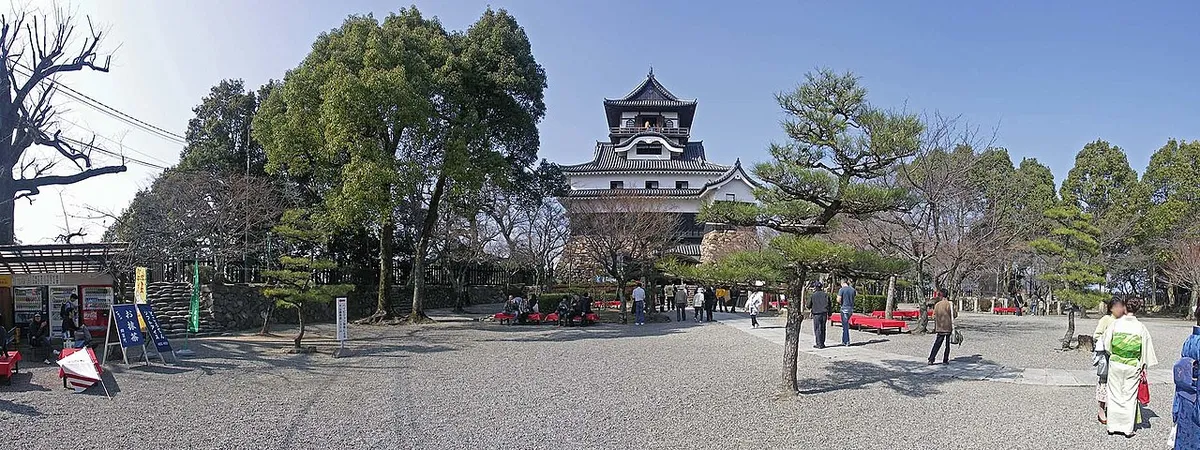
Inuyama punches well above its size. Yes, the tower is small and facilities are limited — but standing on the open-air gallery of the oldest original castle tower in Japan, looking down at the river below, is a genuinely moving experience. Combine it with a walk through Inuyama's well-preserved castle town (one of Japan's best) and a cormorant fishing show on the river for a full day.

Highlights

1

Japan's Oldest Surviving Castle Tower

Inuyama Castle holds the record: its main tower dates to 1537, making it the oldest original castle tower in Japan. While other famous castles have been rebuilt after fires or wars, Inuyama's tower is the genuine article — the same wooden structure that stood here nearly 500 years ago, during the age of warlords and civil war.

2

A National Treasure Owned by a Family

For most of its history, Inuyama Castle was privately owned by the Naruse family — descendants of the samurai lords who governed here in the Edo period. This unusual arrangement lasted until 2004, when the family donated it to a foundation. It's a National Treasure (one of only five castle towers with this designation) that was, until recently, someone's family property.

3

The Open-Air Gallery

Unlike most Japanese castle towers where upper floors are enclosed, Inuyama has a narrow open walkway (engawa) that wraps completely around the top floor. Standing here with the Kiso River below and rolling hills in every direction gives you an exhilarating sense of what it felt like to survey your domain from a medieval mountain fortress.

Structure Details

Visitor tip

The tower is small — four floors, with each floor getting progressively smaller as you go up. The staircases are steep and the spaces are tight. But the open-air walkway at the top is the reward: it offers a 360-degree panoramic view of the river, the hills, and the historic castle town below. Bring a jacket — it can be cold and windy up here.

Castle type

Mountain castle

Mountain castle — built on a rocky cliff above the Kiso River, using the natural terrain as its primary defense

Layout type

Linked compound layout

Compound style — tower and supporting structures connected into a single defensive complex

Main tower

Original wooden tenshu (main keep) — the oldest surviving castle tower in Japan, dating to 1537. One of 12 original towers and one of five National Treasures.

19m4 floors, 2 below

Stone walls

Natural stone stacking

The stone walls are relatively simple — the rocky cliff itself provides most of the defensive barrier. The walls extend naturally from the cliff face, making it difficult to distinguish where natural rock ends and constructed wall begins.

Key defensive features

Cliff Above the Kiso River

The castle sits directly above a rocky cliff dropping down to the Kiso River. Attackers from the north faced an impassable natural barrier. Even today, looking down from the castle to the river far below gives you a visceral sense of how unassailable this position was.

Steep Wooded Approaches

The approaches on the south and east sides climb through steep, wooded terrain where any attacking force would be vulnerable to defenders above them. The paths switch back multiple times, preventing a charging assault.

The Story of Inuyama Castle

Originally built 1537 / Oda Nobuyasu (uncle of Oda Nobunaga)
Current form 1601 / Ogasawara Yoshitsugu
National Treasure
    1537

    Oda Nobuyasu — uncle of the future unifier of Japan, Oda Nobunaga — builds the main tower on the rocky cliff above the Kiso River. This is the tower that still stands today.

    1565

    Oda Nobunaga takes control of Inuyama Castle as part of his campaign to unify the region around Owari Province (modern Aichi). It becomes a strategic outpost on his northern border.

    1600

    At the Battle of Sekigahara, the lord of Inuyama backs the wrong side. Tokugawa Ieyasu wins and distributes the castle to loyal allies.

    1618

    The Naruse clan is installed as lords of Inuyama. They will remain in control of the castle — through the Edo period, the Meiji Restoration, and into the modern era — for nearly 400 years.

    1891

    The Nobi Earthquake causes significant damage to the tower. The Naruse family personally funds the repairs, beginning their long modern tradition of maintaining the castle as private owners.

    1952

    The Japanese government designates Inuyama Castle's main tower a National Treasure — acknowledging it as the oldest surviving castle tower in Japan and an irreplaceable architectural artifact.

    2004

    After nearly 400 years, the Naruse family donates the castle to the Inuyama Castle White Imperial Foundation, ending its unusual status as a privately-owned National Treasure.

In Pop Culture

TV

Nobunaga Concerto

This drama about Oda Nobunaga's era features Inuyama, which was closely tied to the Oda clan's early history.

Did You Know?

  • Until 2004, Inuyama Castle was the only privately-owned castle in Japan — the Naruse family held the deed to a National Treasure for generations, paying for its maintenance out of their own pocket.
  • The castle was built by Oda Nobunaga's uncle, meaning the young Nobunaga grew up knowing this fortress well. It sits just 15 km from his home base of Kiyosu Castle.
  • The open-air walkway (engawa) around the top floor is structurally original — those same narrow wooden planks have supported visitors for centuries. Hold the railing, particularly in windy weather.
  • Inuyama is also famous for 'ukai' — a tradition of fishing using trained cormorant birds on the Kiso River below the castle, practiced here for 1,300 years and still performed today for tourists from May to October.

Score Breakdown

Tourism Score

B 78/100
  • Accessibility 13 /20
  • Foreign-Friendly 11 /20
  • Historical Value 20 /20
  • Visual Impact 18 /20
  • Facilities 16 /20

Defense Score

A 83/100
  • Terrain Advantage 19 /20
  • Entrance Defense 17 /20
  • Internal Complexity 16 /20
  • Siege Endurance 14 /20
  • Strategic Oversight 17 /20

Planning Your Visit

Best Time to Visit

Cherry blossom season is beautiful along the Kiso River below the castle. Summer evenings are worth considering for ukai (cormorant fishing) on the river. Autumn foliage against the stone walls and wooden tower is equally stunning.

Time Needed

1.5-2 hours

Insider Tip

After the castle, walk south through the Honmachi street — this is one of Japan's best-preserved castle town streets, with traditional merchant buildings, sake breweries, and small restaurants. It's entirely free to walk and often overlooked by visitors who go straight to the train station after the castle.

Map

Getting There

Nearest station: Inuyama-Yuen Station or Inuyama Station (Meitetsu Inuyama Line)
Walk from station: 15 min walk
Parking: Paid parking lots near the castle town.

Admission

Adult¥1,000
Child¥200

Admission increased to ¥1,000 from March 1, 2026. Children (under 14) ¥200.

Opening Hours

Open09:00 – 17:00
Last entry16:30

Closed December 29–31. May close during inclement weather (the upper gallery is exposed to the elements).

Facilities

  • – English guides
  • – Audio guide
  • – Wheelchair access
  • ✓ Restrooms
  • ✓ Gift shop
  • ✓ Food nearby

Nearby Castles

Featured in collections

FAQ

Frequently Asked Questions

How do I get to Inuyama Castle?

The nearest station is Inuyama-Yuen Station or Inuyama Station (Meitetsu Inuyama Line). From there it is about 15 minutes on foot.

How much does Inuyama Castle cost to enter?

Adult admission is ¥1,000 and child admission is ¥200.

Is Inuyama Castle worth visiting?

Inuyama punches well above its size. Yes, the tower is small and facilities are limited — but standing on the open-air gallery of the oldest original castle tower in Japan, looking down at the river below, is a genuinely moving experience. Combine it with a walk through Inuyama's well-preserved castle town (one of Japan's best) and a cormorant fishing show on the river for a full day.

What are the opening hours of Inuyama Castle?

09:00 to 17:00, last entry 16:30.

How long should I spend at Inuyama Castle?

Plan for about 1.5-2 hours, depending on how closely you want to explore the grounds.