Nagoya Castle

名古屋城·Nagoya-jo

B Tourism Score 70/100
C Defense Score 62/100

Nagoya Castle is mid-renovation — visit now for the stunning reconstructed palace, return in a few years for the completed wooden tower.

#44 — 100 Famous Castles Reconstructed
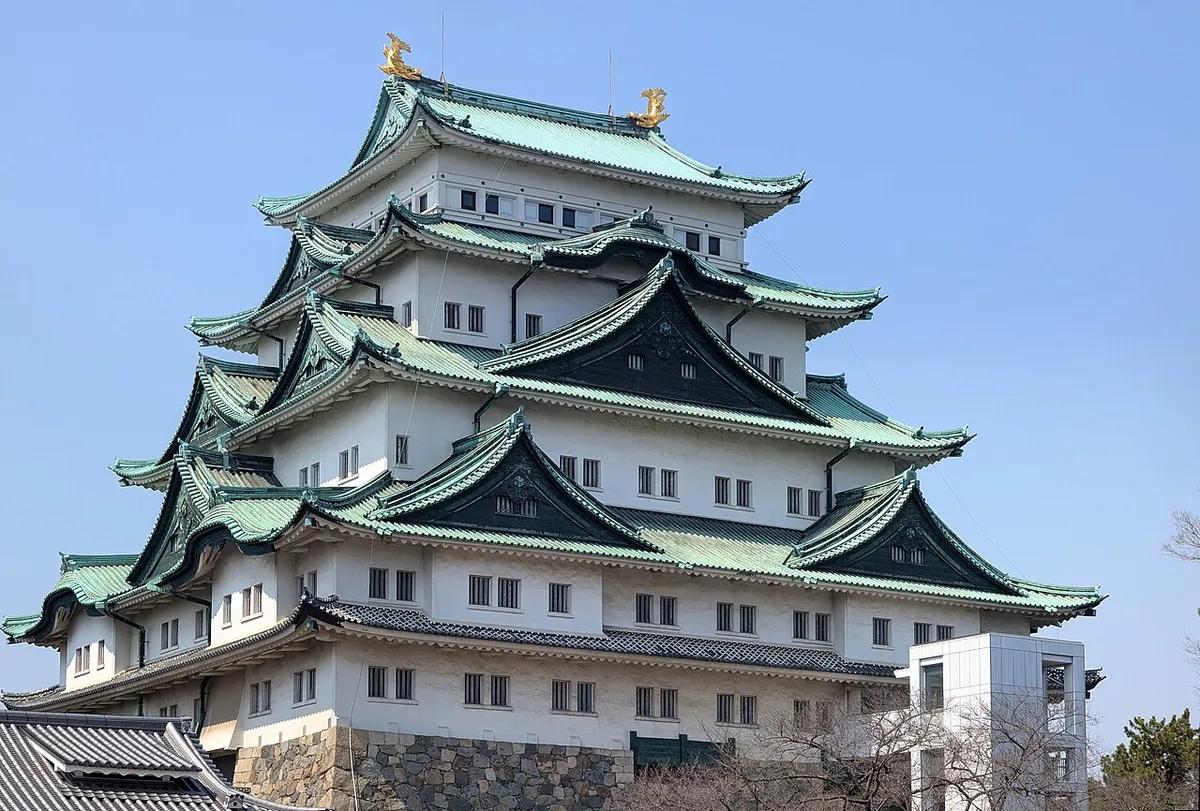
Nagoya Castle (名古屋城)
Photo:Syced/Wikimedia Commons/CC0

Quick Facts

Quick Facts

Admission
¥500

¥0

Hours
09:00 – 16:30

Last entry 16:00

Nearest Station
Shiyakusho Station (Nagoya Municipal Subway Meijo Line)
Walk from Station
5 min walk

Bus also available

Time Needed
2-3 hours

Children (junior high school and under) free. Ticket covers castle grounds and the Honmaru Goten Palace. The main tower is CLOSED as of 2026 due to ongoing wooden reconstruction project. Admission fee reduced to reflect closures.

Defense Overview

Defense Overview

Why Nagoya Castle was hard to attack

This castle is hard to attack because attackers have to work through successive outer spaces before the core instead of getting a direct run at the core.

An attacker would not simply arrive at the center on open flat ground. They would have to cross water barriers or moat lines, approach through at least some constrained entry space, and face more defensive depth after the first line.

Overall score

62/100

Estimated range

56–68

Confidence

A

Strong multi-source support

This is a site-original comparison score for learning and comparison, not a reconstruction of one historical battle.

Radar view

Terrain 10/20 Entrance 12/20 Internal 16/20 Siege 14/20 Oversight 10/20
How this estimate was built+

This estimate combines broad terrain, approach, layout, and route-control signals. It is meant to explain the castle's defensive logic in plain English, not reconstruct a single historical attack.

Terrain Advantage

How much the terrain itself seems to help: height, slope, ridges, cliffs, water edges, and limited approach directions.

10/20

Entrance Defense

How awkward and dangerous the first entry looks: gates, bridge or moat crossings, chokepoints, and forced turns.

12/20

Internal Complexity

How hard it seems to keep pushing after entry: layered baileys, depth, compartmentalization, and repeated defensive lines.

16/20

Siege Endurance

A rough sense of long-hold potential: moats, water access, space, storage plausibility, and defensive staying power.

14/20

Strategic Oversight

How much the castle appears to command nearby roads, plains, rivers, basins, harbors, or town approaches.

10/20
Why Visit

Despite the main tower being closed, Nagoya Castle offers a genuinely fascinating visit — specifically because of the Honmaru Goten Palace, which is one of the finest examples of traditional Japanese palatial architecture you can visit anywhere in the country. The gilded screens and painted walls of the palace show the opulence of the Tokugawa age in a way that no museum exhibit can match. The tower closure is a frustration, but the palace more than compensates.

Highlights

1

The Golden Dolphins on Top

Even from a distance, Nagoya Castle is instantly recognizable by the pair of golden 'shachihoko' — mythological creatures with tiger heads and fish bodies — perched on the roof of the main tower. Standing 2.6 meters tall and weighing 88 kg each, they're some of the most famous symbols in Japan. Replicas can be seen up close at the museum; the originals were destroyed in WWII.

2

The Honmaru Goten Palace — A Living Masterpiece

While the main tower is closed, the Honmaru Goten Palace (completed 2018) is an extraordinary achievement: a full-scale wooden reconstruction of the lord's living quarters and reception halls, built using traditional Edo-period techniques. The gilded screens, painted ceilings, and elaborately carved transoms are meticulously crafted by traditional artisans. This is the real highlight of a visit today.

3

Tokugawa's Showpiece

Nagoya Castle was built by Tokugawa Ieyasu in 1612 as the base for his ninth son Yoshinao — and as a deliberate demonstration of Tokugawa wealth and power to the remaining lords of western Japan. Its construction involved forced labor from lords across the country, with each assigned specific sections of the walls to build (their clan crests are still visible on certain stones).

Structure Details

Visitor tip

IMPORTANT FOR VISITORS: As of 2026, the main tower is CLOSED to visitors while the interior is being reconstructed in wood. You can see the exterior from the grounds but cannot enter. Instead, focus your visit on the Honmaru Goten Palace, which is open and genuinely spectacular. The stone walls and outer compounds are freely explorable and historically significant.

Castle type

Flatland castle

Flatland castle — built on nearly flat terrain, relying on extensive moats and massive earthworks for defense

Layout type

Concentric layout

Enclosure style — concentric rings of moats and earthworks surrounding the main compound

Main tower

Concrete reconstruction (1959) — the current main tower is a reinforced concrete replica built in 1959, replacing the original 1615 tower destroyed in WWII bombing. The city is currently demolishing the concrete interior to rebuild a fully wooden interior (project ongoing as of 2026, tower closed to visitors).

48m7 floors, 2 below

Stone walls

Fitted cut-stone masonry

Nagoya Castle's stone walls are notable for their scale and precision. Different sections were built by different feudal lords under Tokugawa's command — clan crests (kamon) marking territorial responsibility can still be found carved into certain stones.

Moats

A triple moat system (inner, middle, outer) protected the castle. The inner and part of the middle moat survive today; the outer moat has largely been absorbed into the urban landscape.

Key defensive features

Clan-Marked Stone Walls

The forced labor of castle construction was divided among feudal lords, with each responsible for specific sections. As quality control, lords marked their assigned stone sections with their clan crests — these marks still exist today as historical documentation of who built what.

Multiple Moat Rings

The triple-moat system created successive barriers an attacking army would have to cross sequentially, each defended from walls and towers on all sides.

The Story of Nagoya Castle

Originally built 1612 / Tokugawa Ieyasu (for his son Yoshinao)
Current form 1959 / Nagoya City Government (concrete reconstruction)
    1610

    Tokugawa Ieyasu orders the construction of a new castle at Nagoya, mobilizing feudal lords from across western Japan to provide labor and materials. It's both a strategic fortress and a political statement.

    1615

    The castle is completed and presented to Ieyasu's ninth son, Yoshinao, who founds the Owari Tokugawa branch — one of the 'Three Tokugawa Houses' that could produce heirs to the shogunate.

    1695

    The original pair of golden shachihoko (tiger-fish roof ornaments) are replaced with new ones weighing over 200 kg combined, covered in real gold leaf — a display of the domain's enormous wealth.

    1871

    The Meiji government sells off most of the castle buildings. The main tower and palace are purchased by the Army, which occupies the grounds for the next 75 years, inadvertently protecting the structures.

    1945

    US bombing raids in May destroy the main tower and the Honmaru Palace in a single night. The golden shachihoko are saved beforehand and survive, but everything else is lost.

    1959

    Nagoya City completes a concrete reconstruction of the main tower using donated public funds. It becomes a museum and symbol of the city's postwar recovery.

    2018

    The Honmaru Goten Palace — a full wooden reconstruction of the original lord's residence — is completed after years of painstaking traditional craftsmanship, giving visitors a taste of what the original 1615 palace looked like.

In Pop Culture

TV

Various Tokugawa-era historical dramas

As the seat of the Owari Tokugawa branch, Nagoya Castle features in numerous Japanese TV dramas covering the Edo period.

Did You Know?

  • The two golden shachihoko atop the main tower are made of 18-karat gold and required 215 kg of gold leaf between them when originally constructed. The current replicas are slightly less lavish but still genuinely impressive.
  • Different feudal lords were assigned different sections of the stone walls to build — and their clan crests (kamon) can still be found carved into specific stones as territorial markers. Look for them near the Ninomaruguchi Gate area.
  • The Honmaru Goten Palace reconstruction project took 30 years and 11.5 billion yen (about $80 million) to complete, employing over 100 traditional artisans. It is the most expensive castle reconstruction project in modern Japanese history.
  • The ongoing wooden reconstruction of the main tower interior is projected to be completed around 2028–2030, at which point Nagoya Castle will have one of the few castle towers with a fully traditional wooden interior.

Score Breakdown

Tourism Score

B 70/100
  • Accessibility 18 /20
  • Foreign-Friendly 15 /20
  • Historical Value 16 /20
  • Visual Impact 12 /20
  • Facilities 9 /20

Defense Score

C 62/100
  • Terrain Advantage 10 /20
  • Entrance Defense 12 /20
  • Internal Complexity 16 /20
  • Siege Endurance 14 /20
  • Strategic Oversight 10 /20

Planning Your Visit

Best Time to Visit

Cherry blossom season (late March to early April) transforms the grounds, with the castle tower visible behind blossoms from the second moat area. The castle is a central Nagoya attraction year-round.

Time Needed

2-3 hours

Insider Tip

Spend most of your time in the Honmaru Goten Palace — remove your shoes at the entrance and walk through the tatami rooms at a slow pace to appreciate the details. Look up at the transoms and painted ceilings in each room; they change with each chamber. The stone walls along the inner moat have informative panels showing which feudal lord built each section.

Map

Getting There

Nearest station: Shiyakusho Station (Nagoya Municipal Subway Meijo Line)
Walk from station: 5 min walk
Bus: City bus routes also serve the area. The subway is most convenient.
Parking: Large parking area available on site.

Admission

Adult¥500
ChildFree

Children (junior high school and under) free. Ticket covers castle grounds and the Honmaru Goten Palace. The main tower is CLOSED as of 2026 due to ongoing wooden reconstruction project. Admission fee reduced to reflect closures.

Opening Hours

Open09:00 – 16:30
Last entry16:00

Closed December 29–January 1. Check official site for updates on tower reconstruction schedule.

Facilities

  • ✓ English guides
  • ✓ Audio guide
  • ✓ Wheelchair access
  • ✓ Restrooms
  • ✓ Gift shop
  • ✓ Food nearby

Audio guide languages: English, Japanese, Chinese, Korean

Nearby Castles

Featured in collections

FAQ

Frequently Asked Questions

How do I get to Nagoya Castle?

The nearest station is Shiyakusho Station (Nagoya Municipal Subway Meijo Line). From there it is about 5 minutes on foot. City bus routes also serve the area. The subway is most convenient.

How much does Nagoya Castle cost to enter?

Adult admission is ¥500 and child admission is ¥0.

Is Nagoya Castle worth visiting?

Despite the main tower being closed, Nagoya Castle offers a genuinely fascinating visit — specifically because of the Honmaru Goten Palace, which is one of the finest examples of traditional Japanese palatial architecture you can visit anywhere in the country. The gilded screens and painted walls of the palace show the opulence of the Tokugawa age in a way that no museum exhibit can match. The tower closure is a frustration, but the palace more than compensates.

What are the opening hours of Nagoya Castle?

09:00 to 16:30, last entry 16:00.

How long should I spend at Nagoya Castle?

Plan for about 2-3 hours, depending on how closely you want to explore the grounds.